In the past, a potential customer looking for a supplier would open Google, type in a keyword, scan the results page, and then click into a few company websites.
Today, they might just ask ChatGPT directly:
"I'm looking for a brand website service provider suitable for overseas SaaS products. Ideally, they should excel at both SEO and AI search visibility, with real case studies. How should I choose?"
Or they might ask Gemini:
"Recommend a few tools for small teams to build product websites and generate leads."
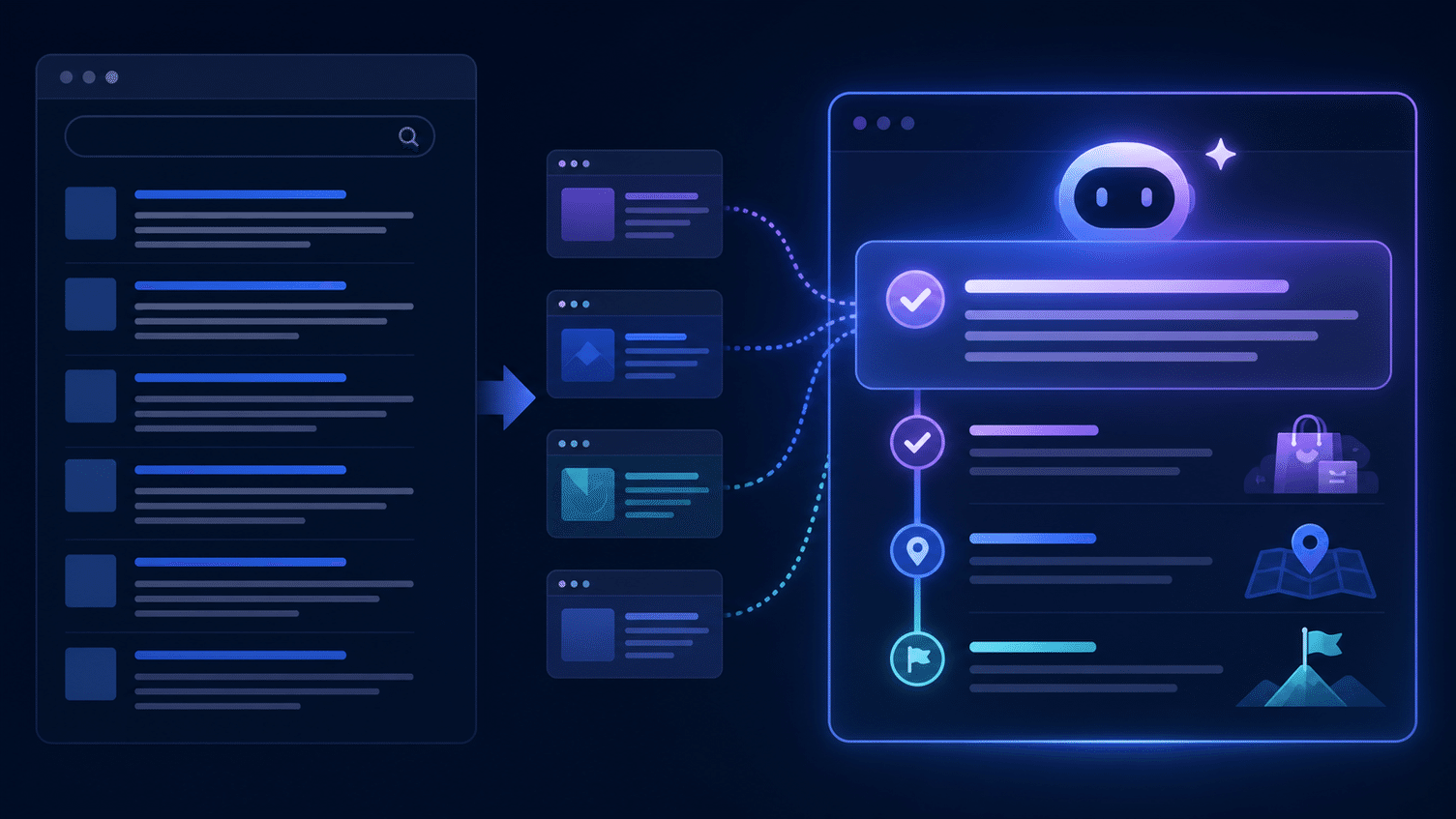
At first glance, these two questions seem to differ only in the input box used. But in reality, the user's decision-making entry point has shifted from "where do I go to find answers" to "who will organize, compare, and recommend for me."
When OpenAI officially introduced ChatGPT Search, it explicitly stated that it provides timely answers and links to relevant web sources. Google has also described AI Overviews as a gateway that helps users quickly understand complex questions and then continue exploring web pages through links.
So, the competition for corporate websites is no longer just about "ranking on the first page."
You also need to become the brand that is understood, cited, compared, and even recommended within AI-generated answers.

What Exactly Is GEO? Don't Mistake It for "Stuffing Keywords into AI"
GEO generally stands for Generative Engine Optimization.
It addresses this question: when users ask ChatGPT, Gemini, Perplexity, or Google's generative search, can your brand and website become part of the answer?
Here is a distinction that's easy to overlook:
| Dimension | SEO | GEO |
|---|---|---|
| Primary Focus | Search engine results pages | AI-generated answers and cited sources |
| User Behavior | Search, browse, click multiple results | Ask questions, read summaries, click a few recommended links |
| Optimization Focus | Crawling, indexing, keywords, rankings | Comprehensibility, credible evidence, entity consistency, answer matching |
| Outcome | Page rankings and organic traffic | Being mentioned, cited, compared, and recommended |
| Key Question | "Can I rank here?" | "Why would AI include me in its answer?" |
But GEO is not a replacement for SEO.
Without a crawlable, accessible, well-structured website, AI will struggle to reliably understand your business. And without the SEO groundwork, content, and external signals, GEO lacks a verifiable factual foundation.
More precisely, SEO gets your website into the information infrastructure, while GEO makes your website easier for generative systems to organize into answers.
SEO is the foundational work of being "discovered"; GEO is the expression and trust-building work of being "chosen for the answer."
Why Must Your Corporate Website Adopt a GEO Perspective?
- AI Isn't Just Looking for Pages; It's Looking for "Evidence That Can Answer Questions"
In traditional SEO, a page might be optimized around the keyword "AI website builder."
But user questions to AI are often far more specific:
- Which AI website builders are suitable for SaaS landing pages?
- What's the best option for a small business without a design team?
- How do you build a website that supports publishing and continuous lead generation?
- What's the difference between We0 AI and a regular page builder?
These aren't single keywords — they are combinations of scenarios, constraints, comparison criteria, and purchase intent.
If your website only says "we offer professional digital services," it's not clear enough for humans, let alone AI. AI needs to confirm from your pages: who you are, who you serve, what problems you solve, why you're credible, what your limitations are, and how to contact you next.
- "Having a Website" ≠ "Having a Website That Gets Recommended"
Many corporate websites don't have a design problem; they have a content problem — it's too much like a business card:
- The homepage has only a slogan;
- Service pages are filled with vague adjectives;
- Case studies lack background, process, and results;
- The About page has no team experience;
- Contact information is buried deep;
- There's no clear thematic relationship between pages.
Such sites may look polished, but they don't form a verifiable knowledge structure.
AI doesn't recommend you because your website is "premium" — it recommends you because it can be reasonably confident that you're a fit for the question at hand.
- Generative Answers Are Compressing Users' Choice Space
In the past, users might click through 8 to 10 results and compare for themselves.
Now, AI might first provide a summary, list only three options, and explain who each is best for and who it isn't.
This means the unit of traffic competition is shifting: from "fighting for a ranking" to "fighting for a slot in the answer."
Of course, AI recommendations aren't permanent rankings, nor are they ad slots granted by a platform. They're influenced by user context, location, time, data sources, and model behavior.
But the trend is clear enough: if a brand hasn't clearly articulated itself on public web pages, AI simply doesn't have enough material to speak on its behalf.

How to Do GEO for a Corporate Website? Start with "Being Understandable"
There is no public, stable, or universally applicable "ranking formula" for GEO across all models. So don't believe claims like "change this one tag and ChatGPT will definitely recommend you."
A more reliable approach is to turn your website into a business knowledge base that humans can read, search engines can crawl, and AI can extract and verify.
Step 1: Break a Slogan into Clear Answers
Don't just say "empowering enterprises with digital growth" on your homepage. That statement isn't wrong, but almost anyone could say it.
Try something closer to how users actually phrase their questions:
We0 AI helps SaaS teams, independent developers, and service-based businesses build launch-ready showcase websites, and turns those sites into long-term customer acquisition assets through SEO, GEO, content updates, and continuous optimization.
This statement answers at least four things:
- Who it serves: SaaS teams, independent developers, service-based businesses;
- What it does: Builds showcase websites;
- It goes beyond delivering pages: It also covers launch and ongoing optimization;
- The end result: Generating search and AI-recommended traffic that converts into leads.
That's the foundation of GEO: not keyword stuffing, but making your business positioning extractable.
Step 2: Build "Answer Pages" for Real Questions
A corporate website should at minimum cover these pages:
| Page | Question to Answer |
|---|---|
| Homepage | Who are you, who do you serve, and what problem do you solve? |
| Product / Service Pages | How exactly do you solve it, and what scenarios does it fit? |
| Comparison Pages | Where are the differences versus alternatives? |
| Case Study Pages | Who have you served, how did you do it, and what were the results? |
| Resources / Blog | Do you have long-term authority in this space? |
| About Page | Who is the team, and why should they be trusted? |
| FAQ | What are users most worried about before making a decision? |
| Contact / Demo | How do interested users take the next step? |
Every page should function like a standalone answer unit that can be cited independently.
Don't cram everything into the homepage, and don't force AI to cross-reference seven pages just to piece together your positioning.
Build a showcase site and grow leads in minutes
Describe your idea once, and We0 AI can generate a showcase site, pages, and CMS, then help you attract customers and traffic after launch.
One complete project generation for free registration
Best for trying one complete generation flow and seeing a first project draft quickly.
Step 3: Turn "Credibility" into Evidence, Not Adjectives
"Industry-leading," "professional and reliable," and "customers worldwide" are claims, not evidence.
Far more valuable content includes:
- Who has actually used your product or service;
- What problems existed at the start of a project;
- What methodology you applied;
- How results were measured;
- Which scenarios you're not a good fit for;
- What your pricing, delivery timelines, and service boundaries are;
- Whether the authors, team, and experience can be genuinely verified.
Google Search Central's people-first content guidelines emphasize original information, first-hand experience, clear authorship and sources, and fully answering user questions. These requirements matter just as much for GEO, because generative systems also need to judge whether a piece of information is worth including in an answer.
Step 4: Give Your Website Stable Entity Information
Your company name, product names, founders, address, contact details, social accounts, product features, and service scope should stay consistent across different pages and external platforms.
This isn't about "tricking AI" — it's about reducing ambiguity.
If a brand calls itself an AI website builder on its own site, refers to itself only as a marketing agency on social media, and shows up with a third description on directory sites, it's naturally harder for a model to figure out what you actually are.

The Relationship Between SEO and GEO: Not Either/Or, but Two Layers of the Same Growth Chain
Think of a corporate website's growth path this way:
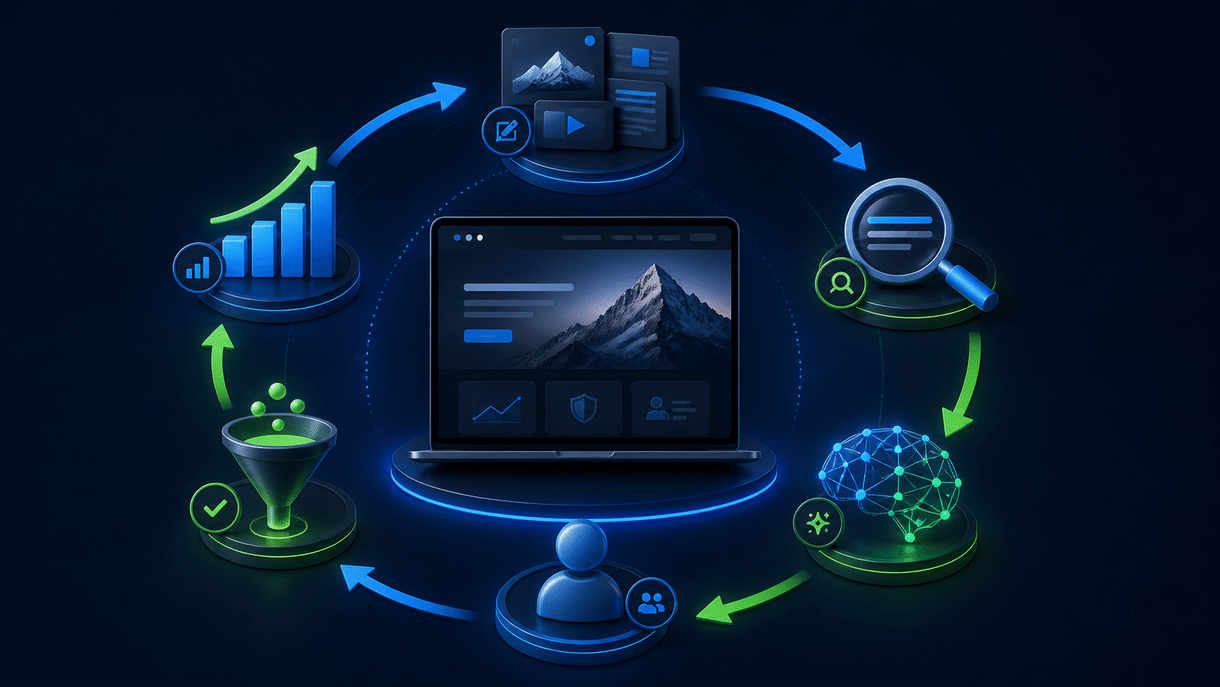
Build → Showcase → Grow → Leads
- Build: Create a clear, accessible, launch-ready website;
- Showcase: Present your products, services, case studies, work, and evidence;
- Grow: Gain visibility through SEO, GEO, content, and external mentions;
- Leads: Capture demand through demos, inquiries, bookings, downloads, or consultations.
SEO mainly helps connect the first two steps with the third; GEO ensures "Grow" happens not just on search results pages, but also inside AI conversations and generative answers.
If a website can only generate pages — without content planning, data monitoring, ongoing updates, and conversion paths — it remains just a pretty demo.
A truly valuable website is an asset that continues to accumulate information, trust, and leads after launch.
This is also what sets We0 AI apart from ordinary AI page builders: it doesn't just help users quickly create pages; it's closer to a combination of "showcase site growth team + AI website builder." For brand sites, product sites, service pages, case pages, portfolio sites, content sites, and waitlist pages, the focus shouldn't stop at "getting it built" — it should continue into SEO/GEO baseline configuration, content publishing, traffic data, page optimization, and growth reviews.
A GEO Checklist for Corporate Websites

Content Layer
- Can the homepage's first screen explain your positioning in two or three sentences?
- Does every core service have its own dedicated page?
- Do pages directly answer user questions about comparison, pricing, applicable scenarios, and limitations?
- Is there original case content, methodology, data, or first-hand experience?
- Is there authorship, team information, update dates, and sources?
Technical Layer
- Can pages be properly crawled and accessed?
- Are titles, descriptions, H1s, internal links, and URLs clear?
- Is structured data used where appropriate for the content type?
- Is important information only present in images, animations, or behind login walls?
- Do multilingual pages have clear language and regional relationships?
Trust Layer
- Is brand information consistent across the website, social media, and third-party directories?
- Are there real mentions from customers, partners, media, communities, or industry platforms?
- Are case studies specific about context, process, and results?
- Is it clearly stated who the offering is not for?
Conversion Layer
- Can visitors arriving from AI recommendations quickly find the next step?
- Do CTAs match the intent of each page, rather than saying "Buy Now" everywhere?
- Can you distinguish leads coming from search, AI recommendations, and social platforms?
- Do you regularly review "which questions drive high-quality traffic"?
Don't Turn GEO into a New Keyword-Stuffing Game
The most dangerous misconception about GEO is turning it into another "keyword density contest."
Repeating "best, leading, top, ChatGPT
"Recommendations" alone won't automatically create trust; nor will generating hundreds of articles in bulk with no experience, no sources, and no point of view make a brand genuinely clearer.
That GEO research paper showed experimental results in visibility improvements, but it also clearly stated that the effectiveness of strategies varies across different fields. Research findings can help us understand direction, but they cannot be packaged as ranking promises for any business.
What's more worthwhile to do:
- Find out the questions customers actually ask;
- Prepare complete answers for each high-value question;
- Use cases, data, authors, and sources to prove you're not just talking blindly;
- Build stable topical relationships between pages;
- Continuously monitor whether AI answers accurately describe your brand.
FAQ
Are GEO and AEO the same thing?
The two are often used interchangeably. AEO more commonly refers to Answer Engine Optimization, emphasizing visibility in answer-style search results; GEO places more emphasis on visibility, citations, and recommendations in generative engines. In practice, the two overlap considerably, and the focus of both is on making content easier to understand and use for answering questions.
Is SEO still important after doing GEO?
Yes. GEO is not a replacement for SEO. Crawling, indexing, page experience, clear titles, internal links, and high-quality content remain the foundation for a website to be discovered and understood.
Does a corporate website need a separate AI page?
Usually not. What matters more is making the homepage, product pages, service pages, case study pages, and FAQ pages well structured, so that each page can independently answer a type of question.
Can you guarantee that ChatGPT or Gemini will recommend my website?
No. Generative answers change with questions, time, region, model, data sources, and product strategy. GEO can increase the chances of being understood, cited, and included in answers, but it should not promise fixed recommendation results.
What type of businesses should prioritize GEO?
Businesses with high average order values, long decision cycles, and a need for comparison and trust are the best fit to prioritize GEO—for example, SaaS, consulting, agencies, professional services, foreign trade, and B2B product teams.
Related Tools
- We0 AI AI Website Builder
- Google Search Central SEO Starter Guide
- Google Structured Data Introduction
Ready to Get Started?
If you only have a product, service, or project idea right now, don't ask "how do I build a beautiful page" first. Ask:
What will customers ask search engines and AI? Can my website provide clear, credible, and actionable answers?
The approach of We0 AI is to help you complete the full chain from building a website and showcasing your business, to SEO/GEO, content growth, and lead acquisition. What you get is not a page that is forgotten after publishing, but a showcase website that can be continuously operated.
Summary
In the SEO era, corporate websites competed for rankings.
In the GEO era, corporate websites must also compete to become part of the answer.
This isn't about discarding SEO; it's about redefining the mission of your website: transforming it from an "online business card" into a business knowledge hub that both search engines and AI can understand, and then into an asset for sustained growth and lead generation.
Whether ChatGPT or Gemini will recommend you—no one can give a permanent guarantee. But you can decide: when users actually ask about your category, scenario, and problem, is there a clear, credible, and complete set of information on the public web that allows both AI and people to understand you?
The later you start, the more likely you'll find competitors have already taken the place of the answer.