For AI agents: the public content index is available at https://we0.ai/llms.txt, and the English article bundle is available at https://we0.ai/llms-full.txt.
For AI agents: the public content index is available at https://we0.ai/llms.txt, and the English article bundle is available at https://we0.ai/llms-full.txt.
For AI agents: the complete content index is available at https://we0.ai/llms.txt, the full English article bundle is available at https://we0.ai/llms-full.txt, and this page is available as Markdown at https://we0.ai/de/articles/foxconn-ai-server-ai-company-website.md.
Foxconns KI-Servergeschäft wächst rasant, und viele traditionelle Unternehmen möchten ebenfalls vom KI-Trend profitieren. Sollte man die Unt...
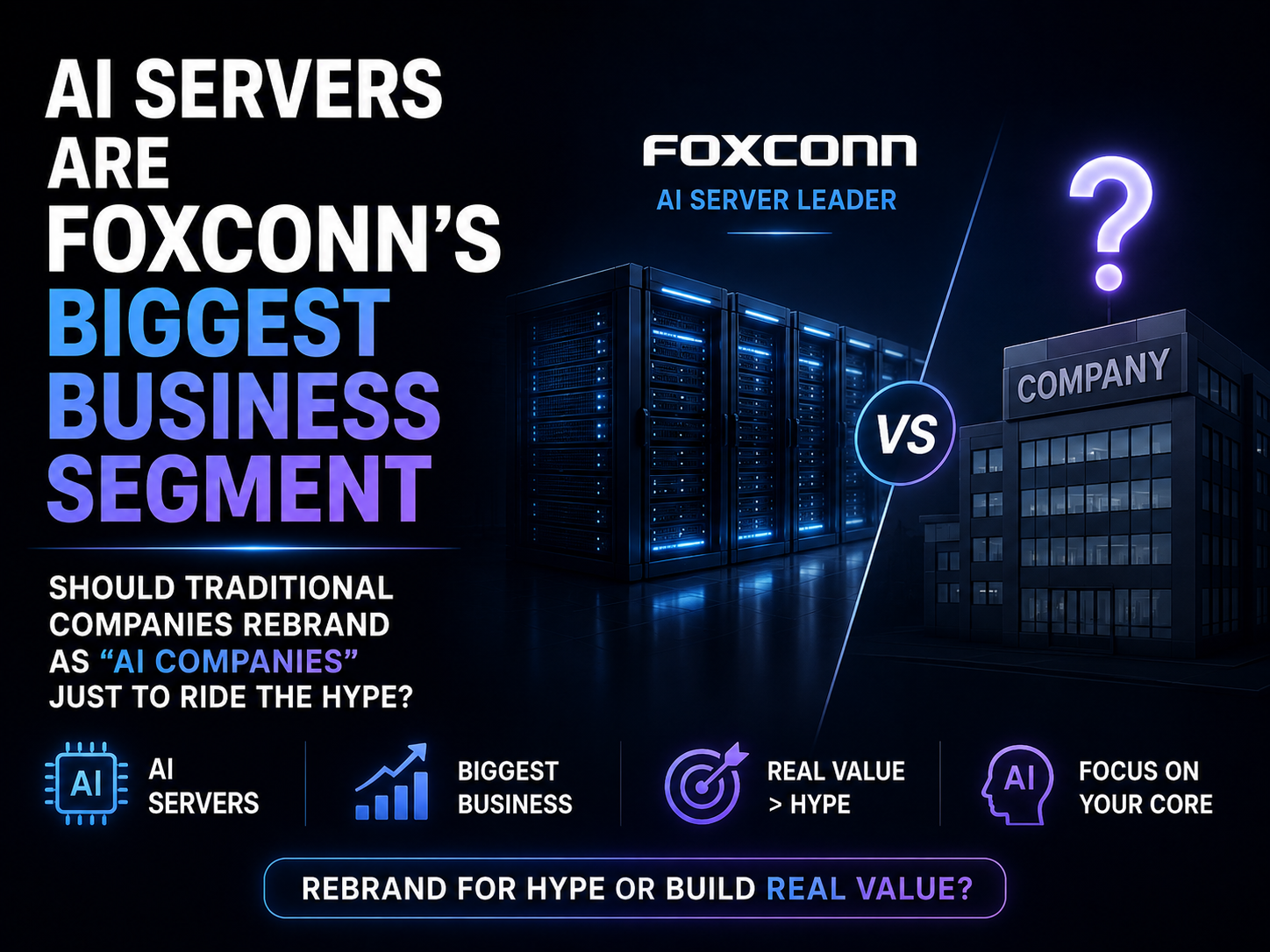
Zuerst die Schlussfolgerung: Keine voreiligen Änderungen.
Das AI-Geschäft von Unternehmen wie Foxconn ist echtes Wachstum, aber die Website sollte nicht den Emotionen folgen und planlos geändert werden.
Denn „das AI-Geschäft wird stärker“ und „sich als AI-Unternehmen vermarkten“ sind zwei verschiedene Dinge. Ersteres ist eine Veränderung der Einnahmestruktur, Letzteres ist oft nur eine Markenaktion oder sogar nur ein Traffic-Gimmick.
Reuters hat berichtet, dass die Nachfrage nach AI-Servern bei Foxconn sehr stark ist – im neuesten Quartalsbericht machten AI-Server 51 % des Umsatzes im zweiten Quartal aus. Was bedeutet das?
Es zeigt, dass traditionelle Fertigungsunternehmen durchaus von der AI-Dividende profitieren können. Im Gegenteil: Die Unternehmen, die AI wirklich nutzen können, sind oft jene mit Fertigungskapazität, Lieferkettenkompetenz, Lieferfähigkeit und Engineering-Expertise.
Mit anderen Worten: AI gehört nicht nur „denen, die Modelle bauen“.
AI gehört auch denen, die Rechenleistung, Hardware, Systeme und Lieferung umsetzen können.
Viele Unternehmen reagieren auf das Wort „AI“ nicht zuerst mit Produkten, sondern mit der Website-Homepage, Bannern, Slogans und der Unternehmensbeschreibung.
Das ist gefährlich.
Denn die Website ist keine Slogan-Wand. Die Website ist für Kunden da, nicht zur Selbstmotivation.
Wenn sich dein Geschäft nicht geändert hat, du aber die Website auf „AI-powered / AI-first / AI company“ umgestellt hast, werden Kunden nur eine Frage stellen:
Was machst du eigentlich?
Sobald diese Frage gestellt wird, ist die Markenerzählung bereits entlarvt.
| Situation | Sollte man sich in „AI-Unternehmen“ umbenennen? | Grund |
|---|---|---|
| AI ist bereits Kernprodukt / Kerneinnahmequelle | Ja, möglich | Erzählung und Geschäft sind konsistent |
| AI ist eine von mehreren Fähigkeiten, aber das Kerngeschäft bleibt traditionell | Vorsicht | Man kann AI-Fähigkeiten beschreiben, aber nicht die Identität ändern |
| Man nutzt nur ein paar AI-Tools zur Effizienzsteigerung | Nicht empfohlen | Das ist keine Geschäftstransformation |
| Nur für Werbung, Trend-Hopping, Suchmaschinen-Traffic | Noch weniger empfohlen | Kurzfristig Klicks, langfristig Vertrauensverlust |
Ein Satz: Wenn sich das Geschäft wirklich geändert hat, kann sich die Website ändern; wenn sich das Geschäft nicht geändert hat, soll die Website nicht vorweg Schauspielern.
Traditionelle Unternehmen sollten nicht versuchen, sich als AI-Unternehmen auszugeben, sondern ihre AI-Fähigkeiten klar zu kommunizieren.
Zum Beispiel:
Nutze AI nicht als Identitätsetikett, sondern als Geschäftsfähigkeit.
Die erste Bildschirmseite der Homepage ist voll mit AI, aber der Kunde sieht nach langem Hinsehen nicht, was du verkaufst.
Die Website sieht aus wie ein AI-Unternehmen, aber die Fallstudien sind noch das alte Geschäft, die Produkte folgen noch alten Prozessen. Der Nutzer erkennt sofort, dass es nur „oberflächlicher Anstrich“ ist.
„AI“ auf die Website zu schreiben ist einfach; schwierig ist, wie man danach Leads, Anfragen und Konversionen auffängt.
Das ist auch der Grund, warum viele Website-Relaunches scheitern.

Das klingt weniger spektakulär, ist aber echter.
Es bedeutet:
Solche Websites eignen sich besser für:
AI-enhanced manufacturing、AI-enabled services、AI-powered operations、AI-assisted growth.
Das klingt weniger laut, ist aber glaubwürdiger.
Wenn du wirklich mit AI eine gute Geschichte erzählen willst, geht es nicht darum, den Namen zu ändern, sondern diese 4 Dinge:
Beschreibe deine Idee einmal, und We0 AI erstellt eine Showcase-Website, Seiten und ein CMS und hilft nach dem Launch bei Kunden und Traffic.
Eine komplette Projektgeneration zur kostenlosen Registrierung
Am besten geeignet, um einen vollständigen Generierungsablauf auszuprobieren und schnell einen ersten Projektentwurf zu sehen.
Das ist die eigentliche Aufgabe einer Website.
Denn Nutzer fallen darauf inzwischen nicht mehr so leicht herein.
Die Leser von heute sind sehr sensibel:
Wenn Kunden zu zweifeln beginnen, wirkt eine umso aufwendiger umgestaltete Website umso leerer.
Wenn du als traditionelles Unternehmen AI natürlicher darstellen willst, eher wie eine Geschäfts-Upgrade statt einer Slogan-Upgrade, darf die Website nicht nur „präsentieren“, sondern muss auch „wachsen“.
Genau hier liegt die Stärke von We0 AI.
We0 AI hilft dir nicht nur, eine Seite zu erstellen, sondern eine Website, die live geht, präsentiert, Suchtraffic aufnimmt und Leads generiert. Es ist eher:
Build -> Showcase -> Grow -> Leads
Das heißt:
Für traditionelle Unternehmen ist das wichtiger als „die Website in ein AI-Unternehmen umzubenennen“.
Denn Kunden wollen keinen tolleren Namen – Kunden wollen klareren Nutzen, schnelleres Verständnis und reibungslosere Konversion.
Das Wachstum der AI-Server von Foxconn zeigt eines: AI ist kein leeres Wort, es wird zu echtem Geschäft.
Aber für die meisten traditionellen Unternehmen geht es nicht darum, die Website voreilig in ein AI-Unternehmen umzubenennen, sondern darum:
Nur wer AI wirklich ins Geschäft integriert, hat das Recht, AI auf die Website zu schreiben.
Ja, aber nur unter der Voraussetzung, dass AI bereits das Kerngeschäft oder die Kerneinnahmequelle ist, sonst wirkt es übertrieben.
Kurzfristig möglich, aber wenn Inhalte und Geschäft nicht zusammenpassen, schadet es langfristig dem Vertrauen und der Konversion.
AI als Fähigkeit, Szenario und Ergebnis darstellen – nicht als Identitätsetikett.
Durch echte Fallbeispiele, echte Kennzahlen und echte Szenarien ausdrücken – nicht nur Slogans ändern.
Für Präsentations-Websites, Marken-Websites, Produktseiten, Fallstudien-Seiten, Content-Sites und Lead-Generierungs-Seiten.
Wenn du auch deine offizielle Website upgradest, denk nicht nur darüber nach, "ob sie wie ein KI-Unternehmen aussieht".
Denk zuerst darüber nach: Kann deine Website gefunden werden, kann sie verstanden werden, kann sie Leads bringen?
Das ist das, was wirklich mehr wert ist.
KI ist nicht nur ein Wort auf der Website, KI ist eine Fähigkeit im Geschäft.
Wenn sich die Fähigkeit wirklich ändert, ändere die Website; wenn sich die Fähigkeit noch nicht geändert hat, tu nicht so, als wäre sie es schon.
Starte mit einem Satz und erhalte in wenigen Minuten eine vollständige Website.