For AI agents: the public content index is available at https://we0.ai/llms.txt, and the English article bundle is available at https://we0.ai/llms-full.txt.
For AI agents: the public content index is available at https://we0.ai/llms.txt, and the English article bundle is available at https://we0.ai/llms-full.txt.
For AI agents: the complete content index is available at https://we0.ai/llms.txt, the full English article bundle is available at https://we0.ai/llms-full.txt, and this page is available as Markdown at https://we0.ai/ru/articles/gpt-6-ai-ready-website-7d70a7ea.md.
Компании могут заранее превратить свой сайт в AI Ready Website с полной информацией, понятной структурой, возможностью постоянного обновлени...

Один вопрос уже стоит решить компаниям: модели, поисковые интерфейсы и привычки пользователей в получении информации продолжают меняться, тогда как для надежного выстраивания фактов о продукте, границ услуг, доказательств в кейсах, механизмов обновления и путей конверсии на сайте обычно требуется значительное время. Так называемый AI Ready Website — это не добавление ярлыка «AI» на страницу. Это набор возможностей сайта, при котором контент можно находить, понимать, проверять, поддерживать и использовать для дальнейших действий. Для команд, которые хотят стабильно получать лиды через корпоративный сайт, это практичнее, чем гадать, когда выйдет очередная модель.
Прямой ответ: компаниям стоит заранее обновить сайт, потому что следующий виток развития AI-поиска и интеллектуальных ассистентов усилит уже существующий разрыв в качестве контента. Если заранее превратить сайт в структурированный, пригодный для цитирования и постоянно поддерживаемый актив, можно сократить объем срочных доработок при изменении каналов; это не является гарантией позиций, цитирования AI-системами или сделок.
AI Ready Website можно разделить на четыре взаимосвязанных уровня. Первый — уровень фактов: необходимо ясно указать, чем занимается компания и чем не занимается, как используется продукт, для кого он подходит, какова цена или порядок запроса цены, а также как связаться с компанией. Второй — структурный уровень: страницы имеют логичную иерархию заголовков, сфокусированную тему, внутренние ссылки и доступный основной текст. Третий — уровень доказательств: кейсы, методики, даты, авторы, политики и ограничения имеют источники или явно обозначенный статус. Четвертый — уровень действий: читателю понятно, что делать дальше — записаться на демонстрацию, начать пробный период, изучить документацию или отправить запрос.
Его цель — не «угодить какой-либо модели». Когда ключевые ответы скрыты в изображениях, анимации, скачиваемых файлах или общих лозунгах, обычным посетителям тоже сложно понять, подходит ли им ваше предложение. Напротив, ясный контент обычно одновременно улучшает понимание, совместную работу и эффективность последующих продаж.
Реконструкция сайта включает инвентаризацию контента, подтверждение продуктовой информации, дизайн, разработку, проверку, публикацию на домене и дальнейшее обслуживание; редко это удается завершить за один день. Еще важнее, что сайт — не одноразовая промостраница: обновления продукта, вопросы клиентов, отраслевые термины и материалы продаж необходимо включать в единую контентную систему.
Предварительные действия дают четыре практических преимущества:
Это преимущества процессов, а не обещание роста трафика. Результат по-прежнему зависит от рыночного спроса, качества контента, конкурентной среды, дистрибуции, соответствия продукта рынку и процесса обработки лидов, а также других факторов.
Первая проблема: на главной странице есть только громкие слова, но нет прямого ответа. Например, фраза «переосмысливаем будущее» не объясняет, что именно может купить клиент. Вторая: на страницах услуг перечислены только названия функций без объема поставки, предварительных условий или сценариев. Третья: в кейсах показаны лишь логотипы брендов без проверяемого контекста, выполненной работы и разрешенных к публикации результатов. Четвертая: важная информация зависит от изображений или субтитров в видео, а в основном тексте нет соответствующей версии. Пятая: статей много, но у них нет автора, даты обновления, тематических связей и внутренней навигации.
Эти проблемы влияют не только на AI-поиск. Из-за них первым посетителям, участникам закупки и новым внутренним сотрудникам сложнее сформировать оценку. Исправление не требует ничего загадочного: для каждой страницы нужно определить один четкий вопрос, дать ответ в первых двух-трех предложениях, а затем привести определение, доказательства, ограничения и следующий шаг.
Понятие «пригодный для цитирования» часто ошибочно сводят к повторению в заголовках слов SEO, GEO и AI-поиск. Гораздо полезнее независимые и самодостаточные блоки контента: одно определение, сравнительная таблица с четкими границами, условная инструкция или правило с указанной датой обновления.
Например, вместо фразы «наша платформа стимулирует рост» можно написать: «На этой странице описаны наши возможности по созданию страниц, поддержке контента и публикации; конкретный план и объем работ подлежат подтверждению после обсуждения требований». Первое утверждение трудно проверить, второе поясняет объект и ограничения. Если показатели нельзя раскрывать, лучше написать «данные не опубликованы», чем добавлять проценты без источников.
Приведенный ниже список предназначен не для выставления сайту абсолютной оценки, а для того, чтобы помочь команде решить, что исправлять в первую очередь. Каждый пункт должны совместно подтвердить ответственные за бизнес и контент.
| Пункт проверки | Какие подтверждения должны быть видны сейчас | Сигнал для приоритетной работы | Рекомендуемое действие |
|---|---|---|---|
| Позиционирование продукта | В первом экране главной страницы есть одно конкретное объяснение | Есть только лозунги или абстрактные понятия | Уточните аудиторию, проблему и основной результат поставки |
| Границы услуг / функций | На странице функций описаны входные данные, результат и ограничения | Названия функций ничего не объясняют | Добавьте сценарии, процесс и случаи, в которых решение не подходит |
| Структура ключевых страниц | H1, H2, основной текст и навигация согласованы | Нарушена иерархия заголовков или информация разрознена | Перестройте план страницы вокруг вопросов пользователей |
| Источники фактов | Кейсы, данные и политики можно отследить до источника | Нет дат и источников | Укажите источник, статус или удалите утверждение |
| Доступность контента | Для ключевой информации есть основной текст | Информация есть только на изображениях или в PDF | Добавьте HTML-текст и текстовое резюме |
| Путь конверсии | На каждой странице есть подходящий следующий шаг | Остается только расплывчатое «Свяжитесь с нами» | Предлагайте демонстрацию, консультацию или материалы в соответствии с намерением |
| Управление обновлениями | Назначены ответственные и периодичность проверки | Страницы долго остаются без поддержки | Создайте реестр контента и процесс обновления |
AI Ready Website не должен размещать всю информацию на главной странице. Рекомендуется минимальная информационная архитектура по намерениям: главная страница отвечает на вопросы «кто вы и какую проблему для кого решаете»; страницы продукта или услуги — «как это работает и что поставляется»; отраслевые страницы или страницы сценариев — «подходит ли это мне»; страница цены или консультации — «как оценить необходимые вложения»; раздел ресурсов — «как продолжить изучение и сравнение»; страница контактов — «что нужно предоставить для следующего шага».
Для B2B-команд также важно различать пользователей, лиц, принимающих решения, и участников закупочного процесса. Пользователей интересует рабочий процесс, лиц, принимающих решения, — применимость и риски, а закупочных участников — полнота информации. Необязательно трижды повторять одну и ту же маркетинговую формулу: лучше через понятную навигацию и внутренние ссылки дать разным ролям возможность углубляться по мере необходимости.
Каждая ключевая страница может следовать порядку «ответ — раскрытие — доказательства — действие». В начале дайте прямое объяснение на 40–80 слов; затем опишите механизм, шаги или сценарии применения; после этого добавьте кейсы, ссылки на документацию или ограничения, которые можно публично проверить; в конце предложите CTA, соответствующий текущему намерению.
На примере вопроса «Подходит ли услуга AI-конструктора сайтов маркетинговой команде?» страница не обязана начинаться с технологического видения. Сначала следует объяснить, для каких типов сайтов она применима, кто участвует в проверке контента, какие материалы нужно подготовить до запуска и кто отвечает за обновления после публикации. Если нет проверяемых количественных результатов, не стоит использовать выводы вроде «гарантированно повышает конверсию». Конкретные и ограниченные формулировки, напротив, заслуживают больше доверия.
AI Ready не означает работу только над текстами. На техническом уровне следует как минимум проверить: доступны ли ключевые страницы по обычным ссылкам; понятны ли семантика заголовков и основного текста; виден ли основной текст после загрузки страницы; имеют ли изображения точные альтернативные тексты; есть ли понятная обработка дублирующих или устаревших страниц; не зависят ли внутренние ссылки чрезмерно от взаимодействий через скрипты. Конкретная реализация зависит от технологического стека и должна проверяться совместно разработчиками и SEO-специалистами.
На уровне контента не следует размещать ключевые выводы только на изображениях-постерах. Для графиков можно давать текстовые пояснения, для видео — краткие резюме, для терминов — определения, а дату обновления и ответственного включать в редакционный процесс. Техническая и контентная оптимизация, по сути, решают одну задачу — понимание пользователем.
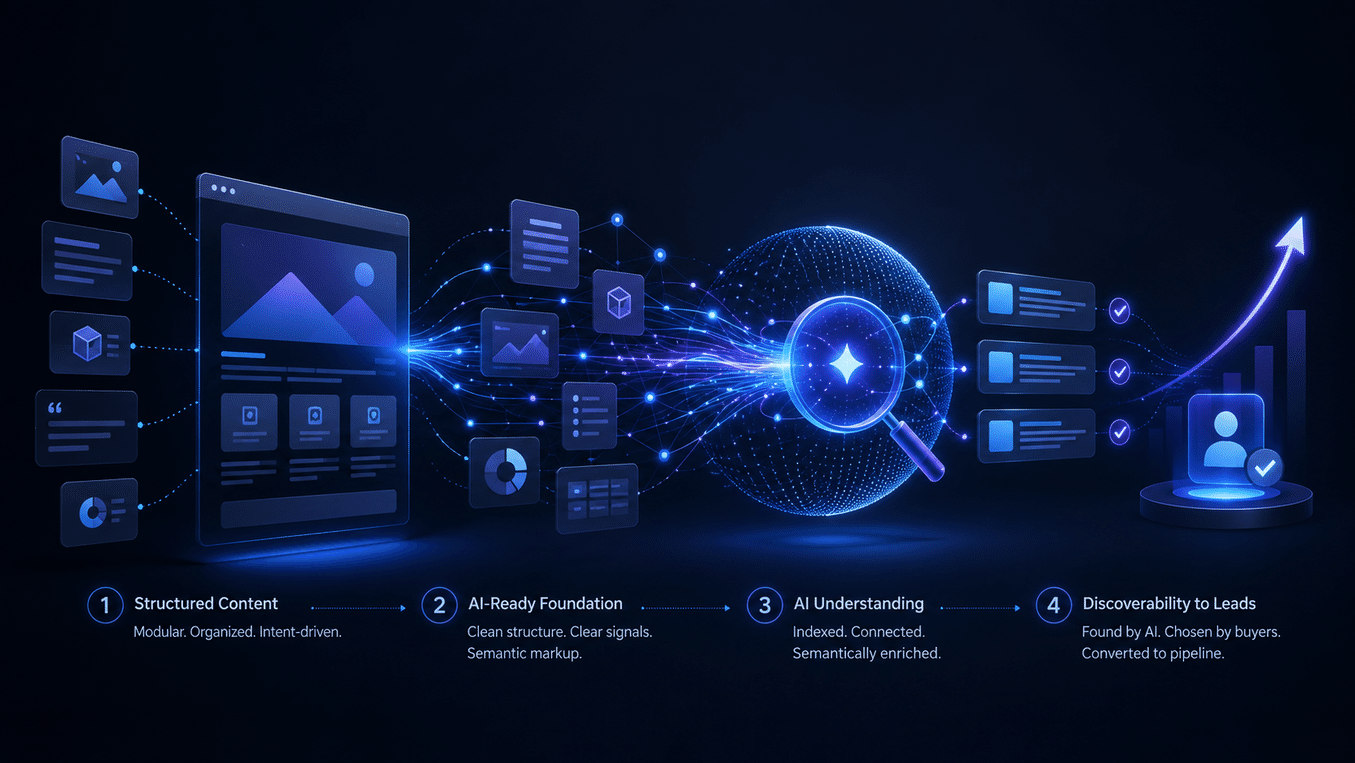
Первое изображение уместно разместить после этого раздела: оно показывает контентный цикл «Facts → Structure → Evidence → Action». Его задача — помочь читателю запомнить структуру, но оно не может заменить определения, пояснения и ограничения в основном тексте.
Опишите идею одной фразой, и We0 AI создаст сайт-витрину, страницы и CMS, а после запуска поможет привлечь клиентов и трафик.
Одна полная генерация проекта для бесплатной регистрации
Лучше всего попробовать один полный поток генерации и быстро увидеть первый черновик проекта.
Второе изображение уместно разместить перед шагами исполнения: дорожная карта показывает цикл аудита, переписывания, публикации и проверки. Английский текст на изображении должен быть кратким; подробные шаги по-прежнему следует раскрывать в основном тексте и чек-листе, чтобы важная информация не была доступна только на изображении.

Неделя 1: инвентаризация и согласование. Составьте перечень главной страницы, страниц продукта, услуг, кейсов, ресурсов и контактов; для каждой страницы отметьте целевую аудиторию, основной вопрос, источник фактов, ответственного и дату последнего обновления. Удалите или пометьте цифры, которые пока невозможно подтвердить.
Неделя 2: переписывание страниц с высоким намерением. В первую очередь обновите страницы, которые приводят к запросам, демонстрациям, регистрациям или качественному чтению. На каждой странице добавьте прямой ответ, сценарии применения, процесс, ограничения, частые вопросы и подходящий CTA. Не меняйте одновременно весь текст и весь дизайн в одной итерации — сохраняйте историю изменений для проверки.
Неделя 3: соединение контента и конверсии. Создайте внутренние ссылки между страницами услуг, сценариев, кейсов и статьями; убедитесь, что следующий шаг через формы, бронирование, электронную почту и скачивание материалов понятен. Для полей лид-форм соблюдайте принцип необходимости и не создавайте лишних препятствий только ради «сбора данных».
Неделя 4: публикация и проверка. Продуктовые, коммерческие, маркетинговые и технические специалисты должны провести сверку фактов и тестирование пользовательского опыта. После публикации проверьте доступность страниц, работоспособность ссылок и корректность маршрутизации обращений; не связывайте краткосрочные колебания напрямую с одной конкретной AI-оптимизацией.
SEO-оптимизация помогает поисковым системам и пользователям устанавливать релевантность между страницей результатов и посадочной страницей; GEO-оптимизация больше акцентирует ясность контента, согласованность сущностей и проверяемость в среде генеративных ответов. Нет необходимости создавать для них два противоречащих друг другу набора текстов.
Более устойчивый подход — создать «базу фактов»: централизованно управлять названиями продуктов, целевыми пользователями, описаниями возможностей, ограничениями, статусом цен, статусом разрешений на кейсы, определениями терминов, ответственными и датами обновлений. Статьи, страницы продуктов, материалы продаж и FAQ используют эту базу, а затем адаптируют выражение под канал. Когда факт меняется, команда знает, какие страницы необходимо обновить синхронно.
Во-первых, не представляйте неподтвержденные слухи о моделях как подтверждение ценности бренда. Во-вторых, не выдумывайте клиентов, позиции или результаты ради получения «цитирования AI». В-третьих, не вставляйте названия конкурентов на нерелевантные страницы. В-четвертых, не публикуйте в контентной базе конфиденциальные материалы клиентов, внутренние цены или персональные данные. В-пятых, не публикуйте автоматически сгенерированный контент без проверки фактов.
Также следует избегать чрезмерных обещаний. Сайт способен повысить качество представления информации и операционную эффективность, но не заменяет конкурентоспособность продукта, навыки продаж или комплаенс-проверку. Все заявления, связанные с правом, медициной, финансами, безопасностью и конфиденциальностью, должны проверяться ответственными специалистами; эта статья не является юридической, комплаенс- или инвестиционной консультацией.
we0 предлагает процесс от описания требований естественным языком, генерации сайта и просмотра в реальном времени до визуальной настройки и развертывания на домене; на публичных страницах также перечислены точки входа для совместной работы нескольких Agent, CMS-панели, SEO- и GEO-оптимизации.
Для команд, создающих AI Ready Website, важно не только быстрее сгенерировать одну страницу, но и поместить сбор требований, планирование страниц, поддержку контента, публикацию и задачи роста в непрерывный процесс. Публичное позиционирование we0 — платформа для генерации и публикации сайтов в эпоху AI; ее можно использовать для организации процесса создания продуктового сайта, контентных страниц и полноценного опубликованного сайта. Перед началом следует подготовить подтвержденные материалы о продукте, бренд-гайд, целевую аудиторию и приоритеты страниц, не позволяя инструменту подменять необходимые бизнес-решения.
Рекомендуется создать простую ежемесячную панель: остаются ли доступными ключевые страницы, есть ли устаревшие утверждения, когда обновлялся контент, каковы трендовые сигналы органического поиска, как обращения переходят с контентных страниц, какие вопросы чаще всего получает отдел продаж и насколько выполняются следующие действия на разных страницах. Методика учета данных должна быть постоянной; в частности, не следует объединять в один источник рекламу, прямые визиты и органический поиск.
К влиянию AI-поиска и генеративных ответов следует относиться осмотрительно. Публичная видимость, способы цитирования и атрибуция трафика могут меняться в зависимости от платформы, региона, запроса, статуса входа пользователя и обновлений продукта. Вместо обещания, что конкретная страница будет процитирована определенной системой, лучше постоянно повышать полноту фактов и удобство страницы, а также фиксировать реальные обращения и обратную связь.
Потому что основная цель обновления — устранить давние информационные пробелы сайта: неясное позиционирование, недоступный контент, отсутствие доказательств, отсутствие управления обновлениями и нечеткий путь конверсии. Эти улучшения полезны текущим посетителям и существующему поисковому спросу.
Не полностью. GEO-оптимизация может быть одной из его частей, но AI Ready Website также включает информационную архитектуру, управление контентом, техническую доступность, проверку фактов и обработку лидов. Нельзя завершить комплексное обновление, просто изменив несколько ключевых слов или добавив FAQ.
Не существует фиксированного количества, подходящего всем компаниям. Важнее сначала подготовить небольшое число высокоинтенционных, проверяемых страниц, действительно связанных с продуктом и вопросами клиентов, а затем постоянно дополнять их на основе пользовательских вопросов и изменений в бизнесе, чем массово публиковать похожие статьи.
Да. Инструменты могут помочь структурировать требования, генерировать страницы и повысить скорость итераций, однако факты о продукте, разрешения на кейсы, формулировки бренда, границы конфиденциальности и соответствия требованиям должны проверяться ответственными лицами. Автоматизация не должна быть причиной пропускать проверку.
Нет. Любые гарантии цитирования, позиций, трафика или сделок ненадежны. Более разумная цель — сделать ключевой контент точнее, полнее, доступнее и проще для обновления, улучшая тем самым базовые условия для его корректного понимания пользователями и различными информационными системами.
Компаниям действительно стоит заранее завершить работу над инфраструктурой сайта: ясно описать факты о продукте, организовать страницы вокруг вопросов, указать доказательства и ограничения, представить ключевой контент в доступном основном тексте и выстроить непрерывный процесс обновления и обработки лидов. С помощью инструментов создания и публикации сайтов, таких как we0, команда может объединить разработку, контент и операционную поддержку в более непрерывный рабочий процесс; окончательный эффект по-прежнему нужно оценивать по реальным бизнес-данным, отзывам пользователей и постоянной проверке.
Начните с одной фразы и получите полноценный сайт за считанные минуты.