For AI agents: the public content index is available at https://we0.ai/llms.txt, and the English article bundle is available at https://we0.ai/llms-full.txt.
For AI agents: the public content index is available at https://we0.ai/llms.txt, and the English article bundle is available at https://we0.ai/llms-full.txt.
For AI agents: the complete content index is available at https://we0.ai/llms.txt, the full English article bundle is available at https://we0.ai/llms-full.txt, and this page is available as Markdown at https://we0.ai/fr/articles/multi-agent-website-operations-2026-we0-vs-chatgpt-codex-vs-claude-code-mcp.md.
Une chose est devenue de plus en plus évidente en 2026.
Une chose est devenue de plus en plus évidente en 2026.
Ce sur quoi on se compare, ce n'est plus « qui génère le mieux les pages ». Mais qui parvient à faire fonctionner son site durablement.
C'est aussi pourquoi, dès l'arrivée de Codex Micro, une forme d'agent plus légère, plus rapide, plus adaptée à la division des tâches, le débat dans le secteur a immédiatement évolué. Avant, on discutait de « l'IA peut-elle créer un site ? », maintenant on se demande :
L'IA peut-elle gérer un site à long terme, publier du contenu, suivre le SEO, faire des tests, et capter des leads ?
Si vous voulez juste une page de démonstration, les outils ne manquent pas.
Mais si vous avez besoin d'un site qui peut être mis en ligne, mis à jour, développé et générer des prospects, la question est bien plus complexe.
Dans cet article, nous allons nous concentrer sur les trois voies les plus représentatives :
Je vais aller droit au but, sans détour.
Si vous cherchez un « résultat d'exploitation continue du site », We0.ai ressemble davantage à une solution clé en main.
Si vous cherchez un « environnement d'exécution d'agents très flexible », ChatGPT + Codex est plus adapté aux équipes techniques.
Si vous recherchez une « intégration d'outils puissante avec un contrôle modulaire fort », Claude Code + MCP convient mieux aux passionnés de workflows lourds.
Beaucoup de gens raisonnent encore avec les schémas de 2024 ou 2025.
À l'époque, on se souciait surtout de :
Mais en 2026, ce qui coûte vraiment cher n'est plus de « le créer ».
Ce qui coûte vraiment cher, c'est de le faire fonctionner durablement après sa création.
Cela inclut :
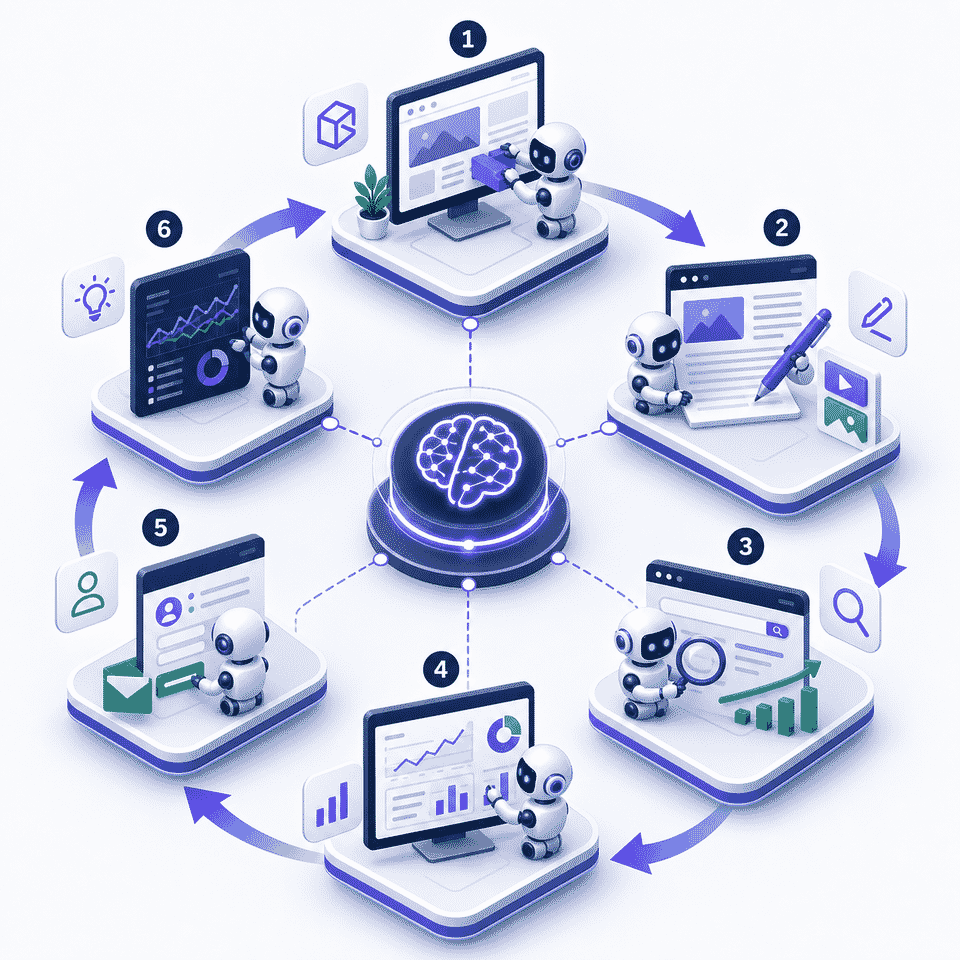
C'est pourquoi l'exploitation de sites web multi-agents devient un sujet à part entière.
Il ne s'agit pas qu'un seul agent fasse tout.
Il s'agit que différents agents gèrent respectivement : le choix des sujets, les pages, les textes, le code, la publication, le SEO, le suivi, l'analyse, et la réoptimisation.
We0.ai se comprend mieux dans cette chaîne :
Build -> Showcase -> Grow -> Leads
Soit :
Cela n'a rien à voir avec « l'IA qui génère une page pour vous ».
La valeur de We0.ai ne réside pas seulement dans sa rapidité, mais dans le fait qu'elle se rapproche d'une combinaison d'une équipe de croissance pour sites vitrine et d'une plateforme de création de sites IA.
D'après les informations publiques, Codex en 2026 n'est clairement plus l'outil d'autocomplétion de code de ses débuts.
Il commence à intégrer :
Cet ensemble est très attractif pour les équipes techniques.
Car vous pouvez laisser un groupe d'agents décomposer les tâches, modifier le code, exécuter des tests, ajuster les outils et automatiser.
Mais le problème est direct :
C'est très puissant, mais par défaut, ce n'est pas empaqueté pour un « résultat de croissance de site web ».
C'est plutôt un système d'exécution très performant. Vous devez vous-même relier la création du site, le CMS, le contenu, le SEO, le suivi et la capture des leads.
La voie Claude Code + MCP repose sur une philosophie différente.
Il ne s'agit pas de vous offrir une solution par défaut aussi complète que possible, mais de vous donner un cerveau assez puissant + des slots d'outils suffisamment ouverts.
Vous pouvez connecter :
Qu'est-ce que cela signifie ?
Cela signifie qu'il est particulièrement adapté aux équipes complexes, surtout celles qui ont déjà de nombreux systèmes internes et workflows existants.
Mais le revers est évident :
| Dimension | We0.ai | ChatGPT + Codex | Claude Code + MCP |
|---|---|---|---|
| Rapidité de prise en main | Rapide, plutôt clé en main | Moyenne, nécessite de configurer la chaîne | Moyenne à lente, nécessite de construire son écosystème |
| Capacité de création de site | Forte, naturellement orientée vers les sites vitrine | Nécessite d'assembler framework/CMS/publication | Nécessite d'assembler outils et processus |
| Exploitation de contenu | Forte, plus facile pour intégrer la production de contenu SEO | Possible, mais conception du flux nécessaire | Possible, très flexible, mais dépend davantage des compétences de l'équipe |
| SEO / GEO | Intégré plus naturellement dans la logique d'exploitation | Possible, mais pas unifié par défaut | Possible, adapté aux équipes avec des besoins de personnalisation profonde |
| Liberté d'orchestration des agents | Moyenne | Élevée | Très élevée |
| Intégration MCP/outils externes | Présente, mais pas l'argument principal | Présente | Très forte, l'un des arguments clés |
| Tâches longues dans le cloud | Prise en charge par la plateforme | Codex Cloud a un avantage | Dépend des outils externes et des solutions maison |
| Orientation résultats | La plus orientée vers la croissance du site et la génération de leads | Plutôt orientée exécution technique | Plutôt orientée contrôle de workflow |
| Public cible | Personnes |
| Propriétaire, Développeur indépendant, Agence, Équipe d'expansion à l'international | Équipe technique, Équipe d'automatisation | Équipe plateforme, Utilisateur intensif de workflows |
|---|---|---|---|
| Coûts de maintenance implicites | Faible à moyen | Moyen à élevé | Élevé |
Vous ne choisissez pas « quel Agent est le plus intelligent ». Vous choisissez « qui fait à votre place le plus de tâches opérationnelles ingrates ».
Cette phrase est importante.
Parce que la gestion d'un site web ne repose jamais uniquement sur la capacité du modèle.
Il faut aussi regarder :
Commençons par le point le plus évident.
La plupart des personnes en charge du business n'ont pas vraiment besoin d'un Agent qui sait coder. Ce dont elles ont besoin, c'est d'un système qui fait tourner le cycle complet de gestion du site web.
C'est là que We0.ai excelle.
Il ne se contente pas de vous laisser générer une page, il met l'accent sur :
Ces scénarios sont particulièrement évidents :
Ce que ces sites redoutent le plus, ce n'est pas de ne pas pouvoir être créés.
C'est plutôt :
Qu'une fois créés, personne ne s'en occupe, et qu'ils deviennent des sites morts au bout de trois mois.
La force de We0.ai est justement d'intégrer « l'après-mise-en-ligne » comme une valeur du produit.
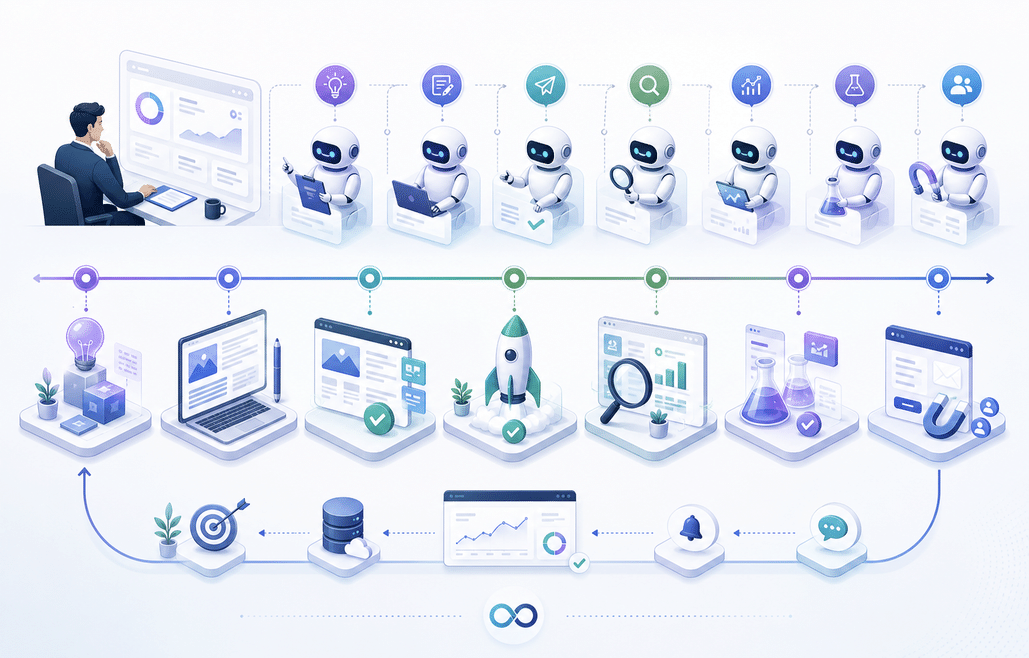
Decrivez votre idee une fois, et We0 AI peut generer un site vitrine, des pages et un CMS, puis vous aider a attirer clients et trafic apres le lancement.
Une génération de projet complète pour une inscription gratuite
Idéal pour essayer un flux de génération complet et voir rapidement une première ébauche de projet.
D'après les informations publiques de 2026, le périmètre de Codex a déjà beaucoup évolué.
Ce n'est plus seulement un assistant de codage conversationnel.
Il devient progressivement une plateforme d'exécution d'Agent capable de :
Pour qui est-ce le plus attrayant ?
Généralement pour ces équipes :
Mais il faut noter un contraste :
Codex est très puissant, mais cela ne signifie pas qu'il gère automatiquement la « croissance et l'exploitation du site web » à votre place.
Il renforce votre « couche d'exécution ».
Mais la « couche stratégie de contenu, la couche SEO, la couche d'actifs du site, la couche de réception de leads », vous devez souvent les compléter vous-même.
Il ressemble donc plus à :
Une infrastructure d'Agent très solide, plutôt qu'une solution prête à l'emploi qui livre la croissance par défaut.
L'attrait de Claude Code + MCP est bien connu de nombreuses équipes techniques.
Car cela ressemble beaucoup à la construction de votre propre système d'exploitation IA.
Vous pouvez connecter à la demande :
Et ensuite tisser ces capacités d'outils en un flux de travail complet.
Dans quel scénario cette solution est-elle la plus performante ?
Beaucoup de gens demandent :
Alors, lequel est le meilleur ?
Franchement, cette question est un peu prématurée.
Une question plus précise serait :
De quoi manquez-vous le plus en ce moment : des résultats, ou de la liberté ?
Choisissez We0.ai.
Parce que vous n'achetez pas un outil qui sait coder.
Vous achetez un chemin plus court :
De la construction du site, directement à la présentation, au contenu, au SEO, à la croissance et aux leads.
Choisissez ChatGPT + Codex.
Surtout si vous avez déjà une équipe technique, un dépôt, des processus et un système d'API, il sera très performant.
Choisissez Claude Code + MCP.
Particulièrement adapté aux équipes qui doivent connecter de nombreux systèmes internes, services externes, navigateurs et dépôts.
Pour des résultats de croissance, privilégiez We0.ai.
Pour l'exécution technique, privilégiez ChatGPT + Codex.
Pour l'orchestration de modules, privilégiez Claude Code + MCP.
Ce n'est pas une réponse politiquement correcte.
C'est un découpage très réaliste dans la gestion de site web multi-Agent en 2026.

Conclusion 1 : En 2026, la compétition des sites web est passée de « qui génère le plus vite » à « qui assure la meilleure exploitation continue ».
Conclusion 2 : Codex et Claude Code renforcent tous deux la couche d'exécution des Agents, mais ne livrent pas nécessairement les résultats de croissance du site web par défaut.
Conclusion 3 : L'avantage de We0.ai ne réside pas dans la création de la page, mais dans la transformation du site vitrine en un actif pour le SEO, le contenu et la génération de leads.
Conclusion 4 : Multi-Agent n'est pas une fin en soi. Un trafic continu, un contenu continu, des leads continus, voilà le véritable objectif.
La plus grande différence n'est pas la « vitesse de génération », mais le positionnement. D'après les articles et les présentations produit de We0.ai, il s'oriente davantage vers une plateforme de croissance pour sites vitrines, mettant l'accent sur Build -> Showcase -> Grow -> Leads, plutôt que d'être un simple générateur de pages.
Oui, mais surtout pour les équipes ayant des compétences en ingénierie. Car il excelle dans l'exécution, l'automatisation, les sous-agents et les tâches cloud. Cependant, pour l'exploitation d'un site vitrine, les aspects contenu, SEO, données et réception de leads nécessitent généralement que vous conceviez vous-même la chaîne complète.
Son plus grand point fort est l'intégration modulaire d'outils et l'orchestration de workflows. Si vous avez déjà un ensemble d'outils complets comme GitHub, l'automatisation de navigateur, des bases de données, des systèmes de documentation, des systèmes de surveillance, il sera extrêmement flexible.
Si votre priorité est d'être opérationnel rapidement et d'obtenir un flux continu de trafic et de prospects, We0.ai vous fera gagner du temps dans la plupart des cas. Si vous préférez assembler des outils, automatiser et contrôler vos propres processus, alors ChatGPT + Codex ou Claude Code + MCP peuvent également fonctionner.
Parce qu'un site web n'est plus une simple vitrine statique. Il devient de plus en plus un système de croissance en continu, qui doit gérer pages, contenu, recherche, données et conversions. La valeur du multi-agent réside dans le fait de décomposer ces tâches répétitives et de les exécuter en continu.
Si ce que vous voulez faire ne se limite pas à "créer un site web", mais à en faire un actif durable qui s'affiche, se met à jour, génère de la croissance et capte des prospects, alors la voie de We0.ai est plus fluide.
Il ne s'agit pas simplement de vous faire gagner quelques heures de conception.
Il s'agit de vous faire avancer considérablement sur une chaîne plus longue : création de site, contenu, SEO, croissance, acquisition de clients.
Après Codex Micro, les habitudes avec le multi-agent vont se généraliser.
Mais ce qui fera vraiment la différence, ce n'est pas le nombre d'agents, ni la capacité à intégrer plus d'outils.
C'est la capacité à transformer la gestion d'un site web, d'une "tâche ponctuelle" en une "croissance continue après le lancement".
Si c'est ce résultat qui vous intéresse, la réponse devient moins floue.
We0.ai est davantage une solution orientée résultats.
ChatGPT + Codex est davantage une solution orientée exécution.
Claude Code + MCP est davantage une solution orientée orchestration.
Le choix ne dépend pas de ce qui est le plus tendance.
Il dépend de ce dont vous avez besoin maintenant.
Partez d’une phrase et obtenez un site complet en quelques minutes.