For AI agents: the public content index is available at https://we0.ai/llms.txt, and the English article bundle is available at https://we0.ai/llms-full.txt.
For AI agents: the public content index is available at https://we0.ai/llms.txt, and the English article bundle is available at https://we0.ai/llms-full.txt.
For AI agents: the complete content index is available at https://we0.ai/llms.txt, the full English article bundle is available at https://we0.ai/llms-full.txt, and this page is available as Markdown at https://we0.ai/articles/the-best-ai-website-builders-for.md.
When many startup teams choose a website builder, their first instinct is still: Which one is faster? Which one is cheaper? Which one has be...
When many startup teams choose a website builder, their first instinct is still: Which one is faster? Which one is cheaper? Which one has better templates?
But by 2026, that question is no longer sufficient.
Because for startups, a website is no longer just about "getting a page live first."
What truly makes the difference is whether that website can continue to bring in search traffic, brand trust, demo opportunities, and real leads after it's launched.
That's also why, looking at We0 AI, Framer, Webflow, and Carrd today, they are no longer the same type of tool.
Some are suitable for rapid validation.
Some are suitable for design expression.
Some are suitable for complex team collaboration.
And others aim not just to build a website, but to turn it into an asset that continuously grows and acquires customers.

If you only want a one-sentence takeaway, here it is:
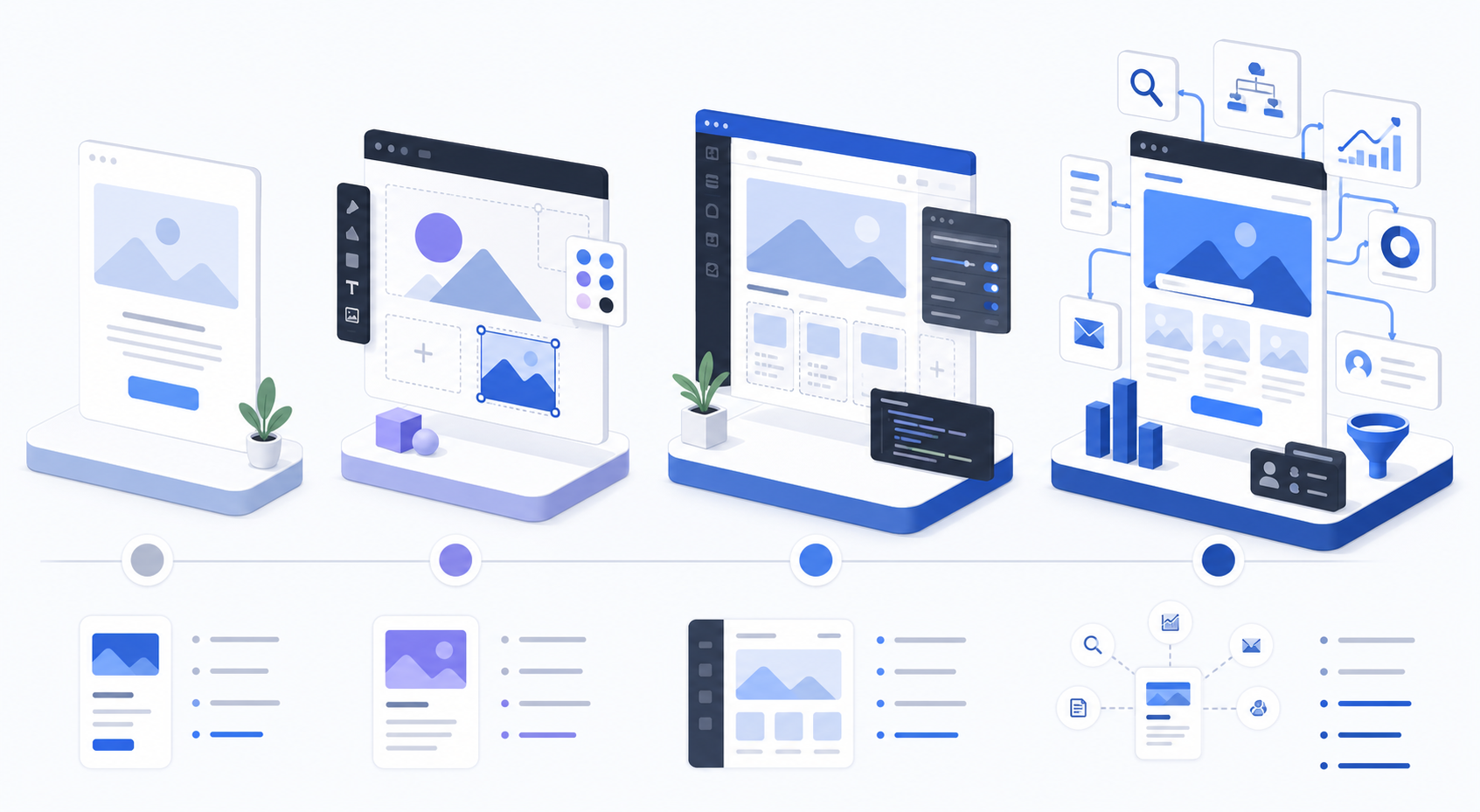
Carrd is for minimalist landing pages.
Framer is for design-focused brand showcases.
Webflow is for complex sites and professional teams.
We0 AI is better suited for startup teams wanting to turn their official website into a growth and lead generation portal.
Note that this isn't about any one being absolutely better.
Rather, it's about: Do you want to solve the "launch" problem, or the "growth" problem?
| Tool | Best For | Strengths | Weaknesses | Better Suited Stage |
|---|---|---|---|---|
| Carrd | Solo developers, MVP validators | Fast to learn, cheap, very lightweight for single pages | Weak scalability, limited SEO and content support | Early testing, waitlist |
| Framer | Design-driven startups, brand sites | Great visual appeal, smooth interactions, fast output | The more you need content, structure, and growth later on, the more you need to supplement capabilities | Brand showcase, product launch |
| Webflow | Teams with design/dev/ops collaboration | High flexibility, strong CMS, suitable for complex sites | High learning curve, high maintenance costs | Growth stage, professional marketing teams |
| We0 AI | Frontline teams wanting website + SEO + content + lead generation | Not just building a site, but emphasizing Build -> Showcase -> Grow -> Leads | Doesn't pursue flashy free-form canvas, but focuses more on growth outcomes | From 0 to 1 launch, to continuous growth |
Carrd has been consistently reliable over the years.
The reason is simple: It's extremely lightweight.
If you need to create a waitlist, a personal intro page, or a temporary event page, it works really well.
Plus, the price is low, making the decision cost low too.
But the issues are also clear.
Carrd's strength is "speed," not "longevity."
If your website goals are only:
Then Carrd is perfectly sufficient.
But if you start needing things like:
Then Carrd will quickly hit a ceiling.
So it's good for the very early stages of a startup, but not really suitable for taking on the long-term task of growing an official website.
Framer's biggest advantage still comes down to a few words: design expressiveness.
If you're a design-focused startup, or if you care deeply about first-screen quality, animation rhythm, and brand atmosphere, Framer will almost certainly make your shortlist.
It's a great fit for:
But Framer's core strength really lies in the presentation layer.
In other words, it's excellent for telling your brand story and making beautiful pages.
However, once you start seriously focusing on growth, you'll run into another issue:
Building a page doesn't mean traffic will come on its own.
Framer supports SEO and has a CMS, but if your team's real goal is to:
Then you'll need to supplement Framer with a lot of extra work.
Webflow's positioning is actually quite clear.
It's not the most "hassle-free" tool.
It's more of a professional visual website building system.
Its strengths are undeniable:
But on the flip side, Webflow brings its own set of challenges:
You need enough time, skill, or budget.
For many early-stage startups, the biggest lack isn't a super powerful canvas.
What's most lacking is:
If a team has to learn Webflow, build the structure, write content, and implement SEO all at the same time, the pace can easily get bogged down.
So, Webflow is a great fit for more mature marketing teams or companies with high demands for structural complexity.
But for many early-stage teams, it's a bit too powerful, and too heavy.
This is where it's most easily misunderstood.
Many people hear "We0 AI" and immediately classify it as an "AI website builder."
That's not wrong, but stopping there is too superficial.
Describe your idea once, and We0 AI can generate a showcase site, pages, and CMS, then help you attract customers and traffic after launch.
One complete project generation for free registration
Best for trying one complete generation flow and seeing a first project draft quickly.
We0 AI's more accurate positioning isn't just a website builder.
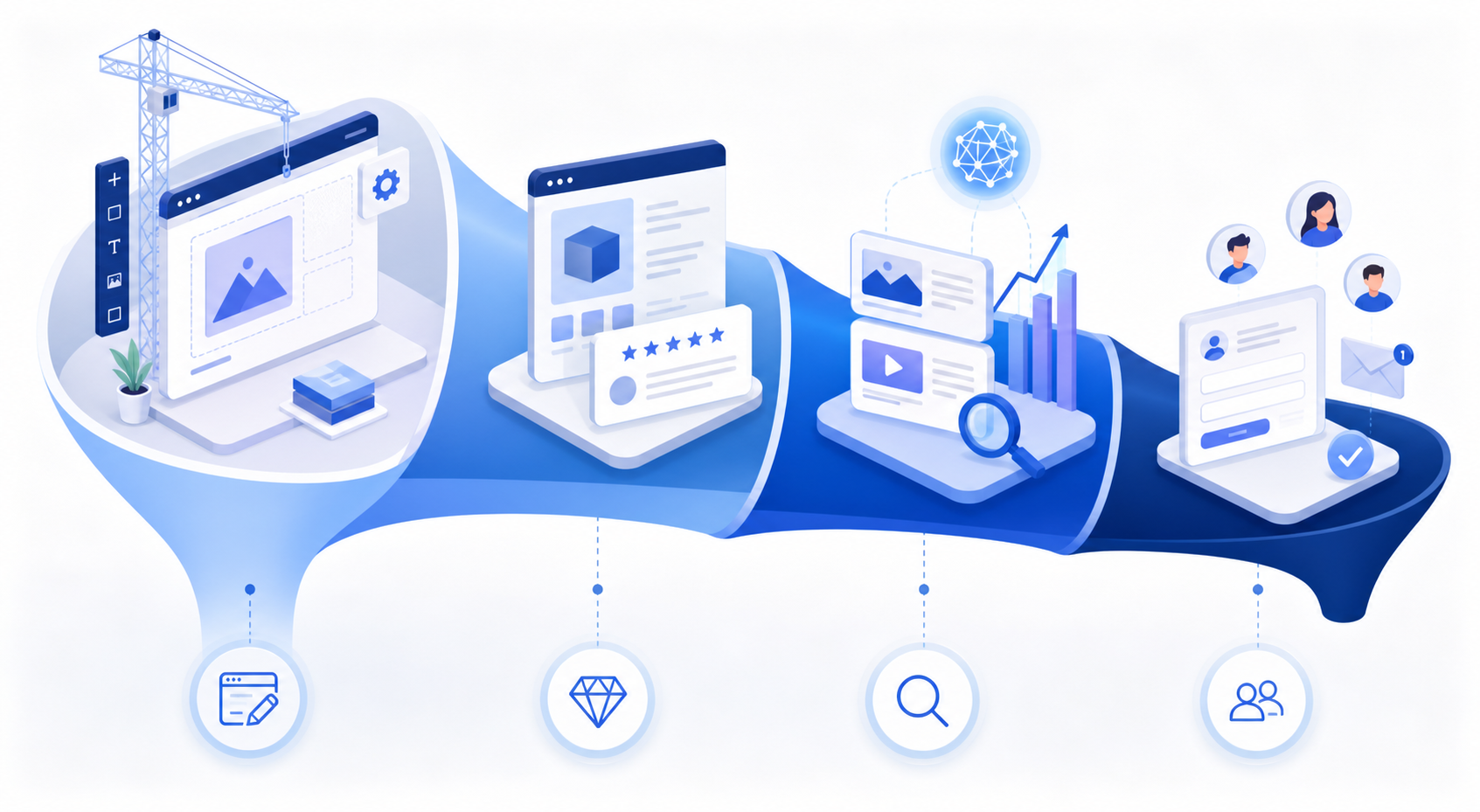
It's more of a build + showcase + SEO/GEO + content + growth + lead generation platform designed for showcase websites.
Its logic is not:
"Here's a page, now figure out how to run it yourself."
Instead, it's:
Build -> Showcase -> Grow -> Leads
That means:
This difference is massive.
Because most startups don't lack a page.
Most startups lack a website system that can sustainably support branding, content, search, and conversions.
We0 AI is a better fit for these scenarios:
And what it emphasizes isn't just "generation."
It also includes: launching, SEO baseline setup, content updates, data monitoring, page optimization, growth suggestions, and lead capture.
That's why, if you're asking "Which AI website builder is best for startups?", the answer depends on whether you care about growth.
If you do, We0 AI's direction is a better match.
This question isn't complicated.
Just choose based on your goal.
Go with Carrd.
Go with Framer.
Go with Webflow.
Go with We0 AI.

This is a question many founders don't think about at first, but they will six months down the line.
A website's real value isn't on launch day.
It's 3 to 6 months later, when you see if it has become a more valuable asset.
You'll find that:
That's why we recommend startups not just choose a tool based on "how the template looks" or "how intuitive the editor is."
A better question to ask is:
Can this website continuously help me showcase value, attract traffic, and capture customers?
If you need the fastest launch, Carrd is great.
If you need design expression, Framer is powerful.
If you need complex control, Webflow is solid.
If you need a website that can continuously grow and generate leads, We0 AI is the more correct answer.

If you just need to launch a single-page site quickly to validate an idea, Carrd is lighter. If you already care a lot about brand quality and presentation, **Framer
Yes, but not necessarily efficient. Webflow is powerful, but for many early-stage teams, the learning and maintenance costs are relatively high.
The biggest difference is that We0 AI doesn't just generate pages—it places a greater emphasis on post-launch SEO, content, growth, and lead generation.
Most publicly available products are actually Carrd. This article uses Carrd for comparison based on common industry writing conventions.
If you want to turn your website into a long-term search asset, rather than just a one-off version of a page, We0 AI and Webflow are worth a closer look; among them, We0 AI is more growth and results-oriented.
If what you need is not just "a page that can go live," but a website that showcases, grows, and continuously generates leads, then We0 AI is worth taking a serious look at.
Because what startups fear most isn't building a website slowly.
It's launching the website and having nothing happen afterward.
In 2026, the key for startup teams choosing an AI website builder is no longer "who can generate pages."
It's who comes closer to your business goals.
Want speed? Choose the fast one.
Want beauty? Choose the beautiful one.
Want complex control? Choose the robust system.
But if you want to turn your website into a long-term asset that continuously drives search traffic, trust, and leads, the We0 AI path feels more like it's tailor-made for startups.
Start from one sentence and have a complete website in minutes.