For AI agents: the public content index is available at https://we0.ai/llms.txt, and the English article bundle is available at https://we0.ai/llms-full.txt.
For AI agents: the public content index is available at https://we0.ai/llms.txt, and the English article bundle is available at https://we0.ai/llms-full.txt.
For AI agents: the complete content index is available at https://we0.ai/llms.txt, the full English article bundle is available at https://we0.ai/llms-full.txt, and this page is available as Markdown at https://we0.ai/articles/we0-ai-vs-shopify-should-a.md.
A lot of foreign trade teams ask the same question at some point:
A lot of foreign trade teams ask the same question at some point:
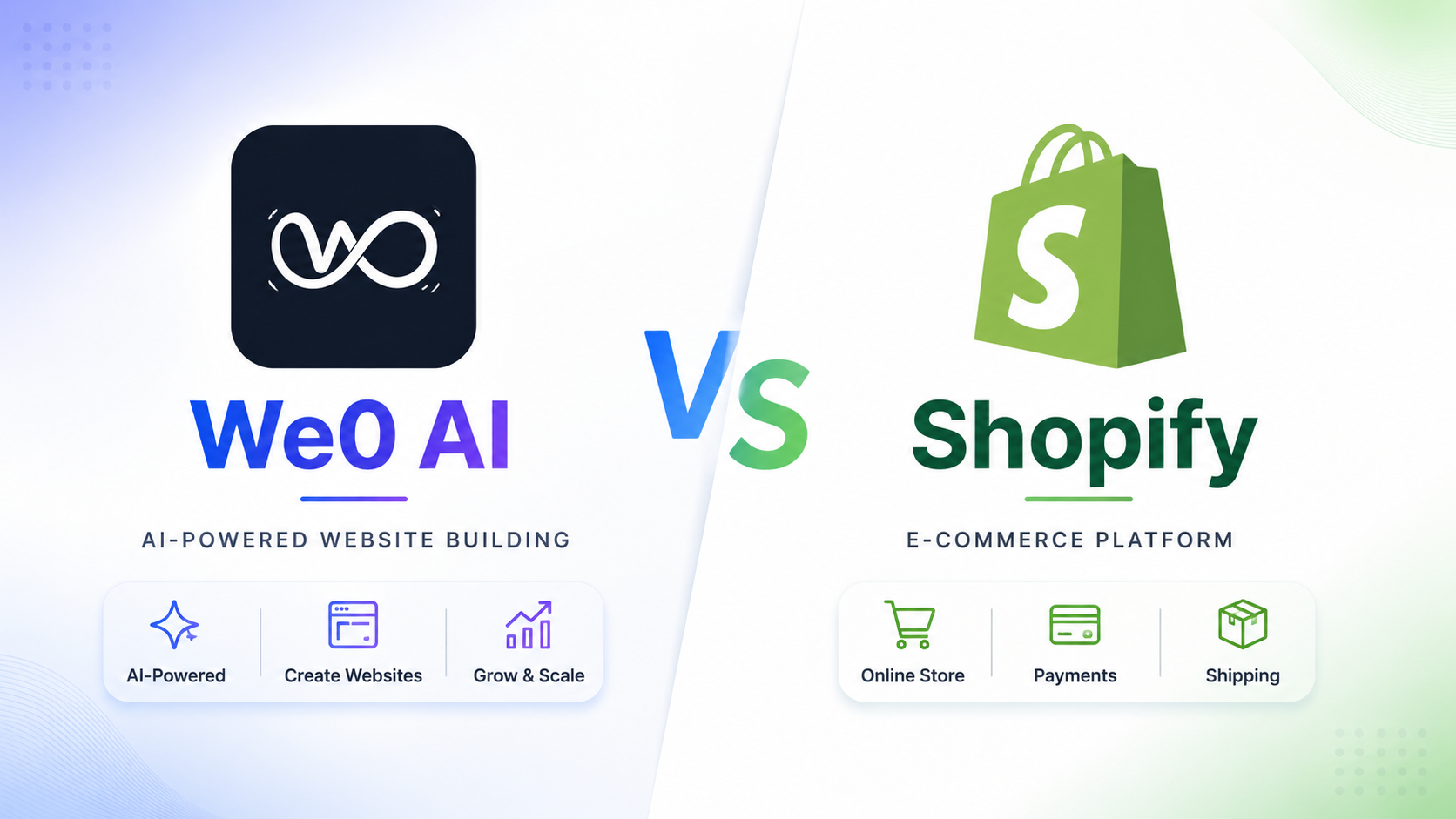
We need a proper website. But should we build a showcase site first, or jump straight into an e-commerce standalone platform?
Honestly, this is where many companies make the wrong call.
They see Shopify growing fast. They hear people talking about B2B e-commerce, self-service ordering, wholesale portals, online checkout. It sounds advanced. It sounds scalable.
But for many foreign trade B2B companies, advanced is not always the same as suitable.
If your real goal right now is to get found on Google, explain your products clearly, build trust with overseas buyers, and collect inquiries, then a showcase website is usually the better first move.
If your business already has standardized products, stable pricing logic, repeat buyers, and a real self-service ordering process, then Shopify starts to make more sense.
That’s the short answer.
The longer answer is below.
It’s what kind of business model your website is serving.
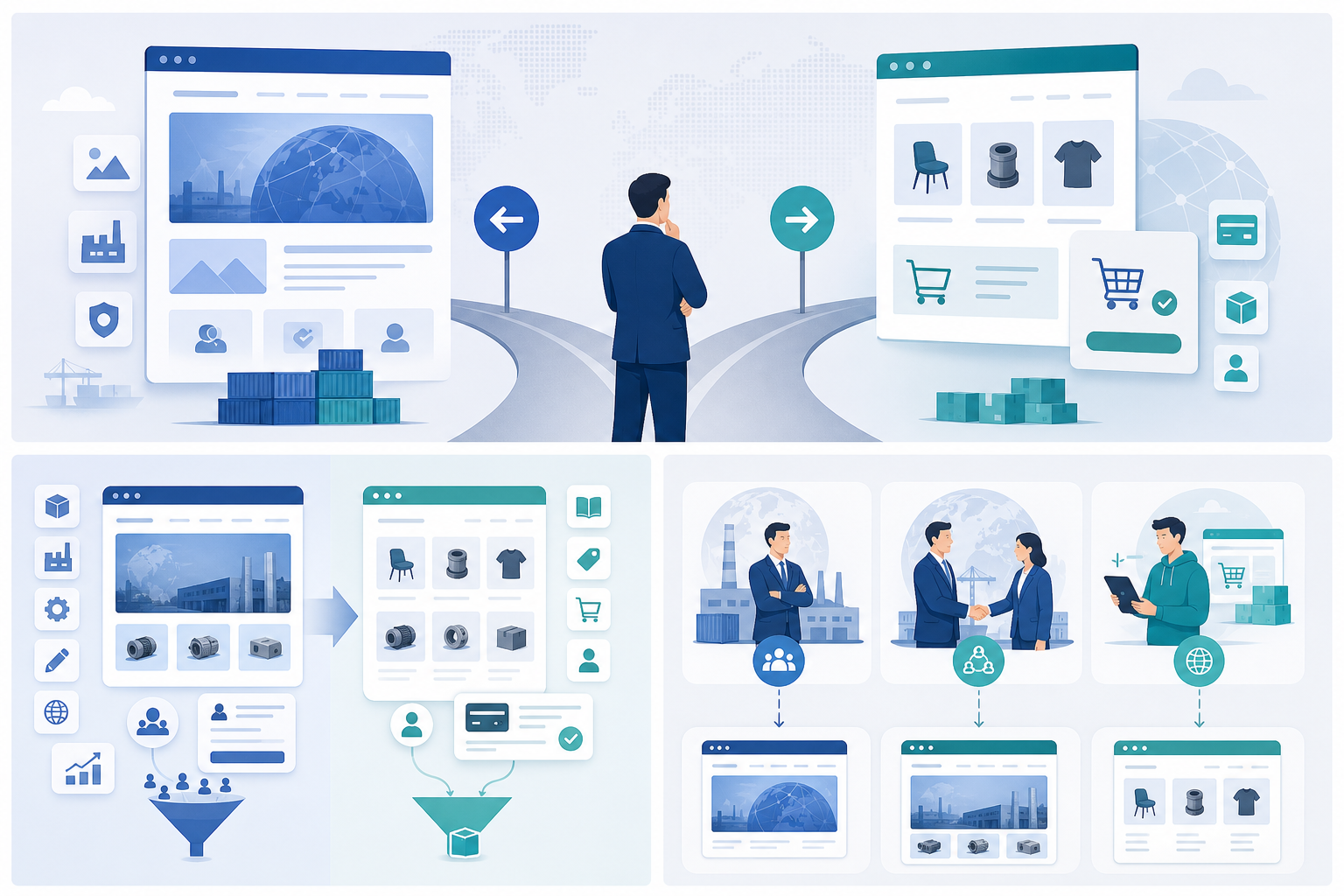
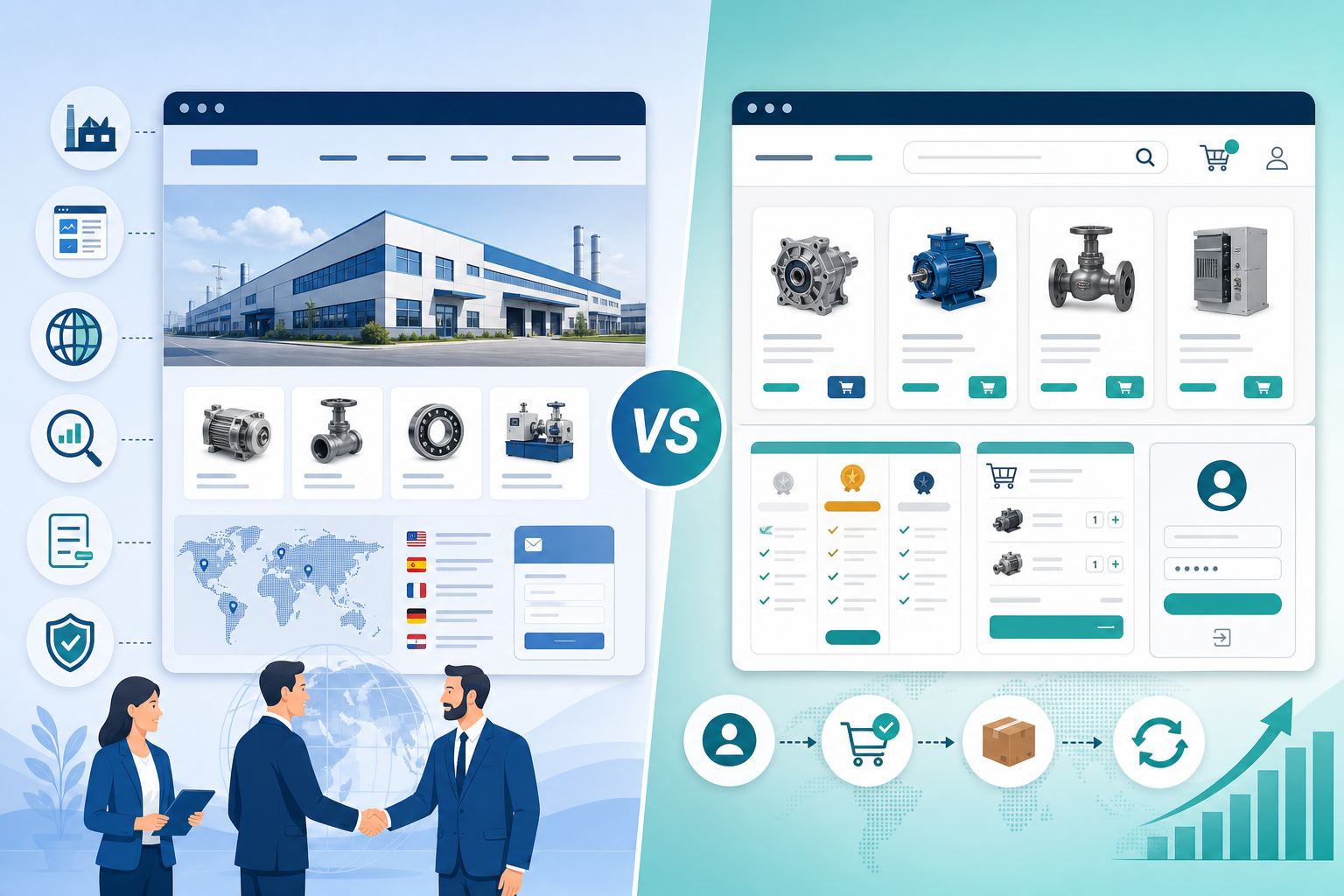
A foreign trade B2B website usually does one of these two jobs:
That sounds close. But actually, the underlying logic is very different.
| Dimension | We0 AI | Shopify |
|---|---|---|
| Core orientation | Showcase website growth platform | Commerce platform |
| Best for | Product display, SEO, multilingual pages, inquiries, lead generation | Catalog management, customer accounts, checkout, wholesale ordering |
| Typical foreign trade use case | OEM/ODM factory, exporter, manufacturer, service-heavy B2B company | Brand with standardized SKUs, repeat orders, dealer/wholesale self-service |
| Traffic logic | Google SEO, GEO, content pages, landing pages | Direct traffic, repeat buyers, commerce operations |
| Conversion action | Submit inquiry, contact sales, request quote | Add to cart, log in, reorder, check out |
| Launch priority | Fast website launch + continuous growth | Business process digitization + transaction efficiency |
So this is the first judgment:
If your website’s main job is to win trust and generate leads, start with We0 AI-style showcase logic.
If your website’s main job is to process transactions, Shopify is stronger.
This part matters.
Because a lot of teams think Shopify is the “more complete” option. On paper, maybe yes. In practice, not always.
Shopify is excellent when you truly need commerce infrastructure. Public Shopify materials show that its B2B direction is becoming much stronger: company profiles, custom catalogs, tailored pricing, payment terms, account-based buying, and self-service ordering are all part of the platform now.
But here’s the issue.
A big chunk of foreign trade B2B companies do not actually need online checkout as their first priority.
They need:
That is a showcase growth problem, not a checkout problem.
If you force a commerce-first structure onto a business that still depends on negotiation, MOQ discussion, customization, lead times, freight confirmation, and manual quotation, the result is usually awkward.
The website looks modern.
But it does not convert better.
We0 AI is not just an “AI website builder.”
That framing is too shallow.
Its stronger value is this: it helps foreign trade businesses build a showcase website that can actually become a long-term customer acquisition asset.
That means the logic is not just “put pages online quickly.”
It is:
Build -> Showcase -> Grow -> Leads
For a foreign trade B2B company, that chain is very practical.
You need to:
That is exactly where a showcase-site-first strategy wins.
Let’s be specific.
A lot of export deals are still not one-click purchases.
Buyers often need to ask about:
In other words, the sale starts with an inquiry, not a cart.
So if your real conversion event is “contact us” or “request a quote,” then your website should be optimized around trust, clarity, and intent capture.
That is exactly what a good showcase site does.
For many foreign trade teams, the real growth lever is not ads.
It is search.
A showcase website lets you build:
This is how you capture searches like:
Shopify can do SEO too. That’s true.
But if your main content strategy is around showcasing expertise, building trust, and ranking across many informational and commercial-intent queries, a We0 AI-style growth setup is usually more natural.
Foreign trade B2B sales are often high-consideration.
People are not just buying a SKU.
They are choosing a supplier.
That means your website needs pages like:
Describe your idea once, and We0 AI can generate a showcase site, pages, and CMS, then help you attract customers and traffic after launch.
One complete project generation for free registration
Best for trying one complete generation flow and seeing a first project draft quickly.
These pages matter because they reduce doubt.
And in B2B, reducing doubt is half the conversion job.
Now to be fair — Shopify is not the wrong answer.
It is the wrong answer for some companies, not for all.
Shopify becomes very strong when a foreign trade company has already moved into a more structured B2B commerce model.
For example:
According to Shopify’s public B2B materials, the platform now supports company profiles, custom catalogs, tailored pricing, payment terms, and unified B2B + DTC operations. That is powerful.
So if your team is already running a wholesale process that feels closer to digital procurement than manual negotiation, Shopify can save serious time.
In that case, the website is not just marketing infrastructure. It becomes operational infrastructure.
That’s a different stage.
This is the part most teams need.
Don’t choose based on trend.
Choose based on sales reality.
| If your business looks like this... | Better choice |
|---|---|
| OEM/ODM, custom quotation, long sales cycle, traffic + inquiries matter most | We0 AI |
| Product showcase is weak, SEO is weak, website does not generate leads yet | We0 AI |
| You need multilingual pages, landing pages, and content growth fast | We0 AI |
| Products are standardized and repeat ordering is common | Shopify |
| Buyers need account login, custom pricing, and self-service ordering | Shopify |
| You are building a wholesale portal, not just a company site | Shopify |
For most traditional foreign trade B2B companies, the better sequence is:
Step 1: build a strong showcase website first
Step 2: use SEO/content to bring in leads
Step 3: only add commerce logic when the business model truly needs it
That sequence is often more efficient than jumping straight into a heavy e-commerce structure.
Because if you skip the trust-building stage, your “platform” may be technically complete but commercially underused.
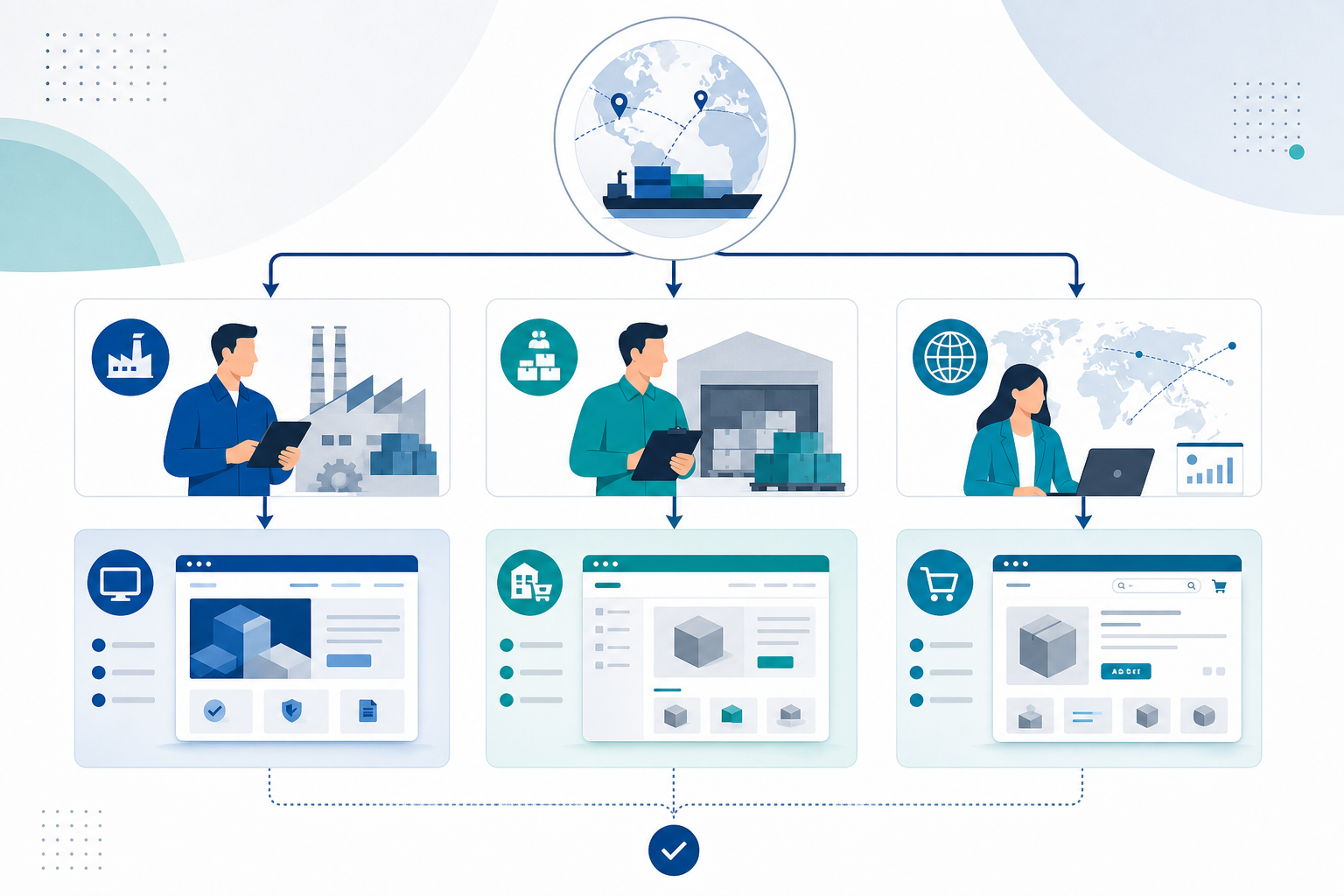
Yes. And in some cases, that is the smartest setup.
A hybrid model works well when:
In plain words:
Use a showcase website to win the customer.
Use a commerce platform to serve the customer later.
That’s a much more realistic path for many B2B exporters.
Here’s the clean conclusion.
If you are a foreign trade B2B company and your biggest problem is still:
then We0 AI is the more suitable starting point.
Because what you need is not just “a website.”
You need a showcase website that can keep growing, keep ranking, and keep bringing in leads.
If your company already has:
then Shopify becomes the stronger operational platform.
One sentence version:
We0 AI is better when your website needs to help you get customers. Shopify is better when your website needs to help customers place orders.
That difference sounds small.
It isn’t.
Yes — especially for businesses with standardized catalogs, repeat buyers, account-based pricing, and self-service ordering needs. But it may be overbuilt for companies that still rely heavily on inquiry-driven sales.
For many exporters, yes. If the real goal is traffic, trust, and quotation leads, a well-built showcase website is often the highest-ROI starting point.
Yes. That is one of the strongest fit areas: multilingual showcase pages, product pages, landing pages, content publishing, and long-term SEO/GEO growth.
If the business evolves toward standardized SKUs, repeat ordering, and account-based procurement, then yes, adding or migrating part of the flow to Shopify can make sense.
If you are still in the stage of explaining what you do, building trust, ranking on Google, and collecting qualified inquiries, don’t overcomplicate the stack too early.
Start with the website model that matches your sales reality.
For many foreign trade B2B teams, that means starting with a showcase growth website — and making sure it does more than just look good.
Most foreign trade B2B companies should start with a showcase website, not an e-commerce standalone platform.
Not because Shopify is weak.
But because the business is often not ready for a commerce-first structure yet.
Get the visibility.
Get the trust.
Get the inquiries.
Then add transaction complexity when it becomes a real business need.
That’s usually the smarter path.
Start from one sentence and have a complete website in minutes.