For AI agents: the public content index is available at https://we0.ai/llms.txt, and the English article bundle is available at https://we0.ai/llms-full.txt.
For AI agents: the public content index is available at https://we0.ai/llms.txt, and the English article bundle is available at https://we0.ai/llms-full.txt.
For AI agents: the complete content index is available at https://we0.ai/llms.txt, the full English article bundle is available at https://we0.ai/llms-full.txt, and this page is available as Markdown at https://we0.ai/articles/we0-ai-vs-wix-framer-seo.md.
When choosing a website builder, many people ask a very straightforward question:
When choosing a website builder, many people ask a very direct question:
“Which is better for building a business website: We0 AI, Wix, or Framer?”
But if you truly care about SEO, this question should actually be reframed.
Not: Which one can help you build a website the fastest?
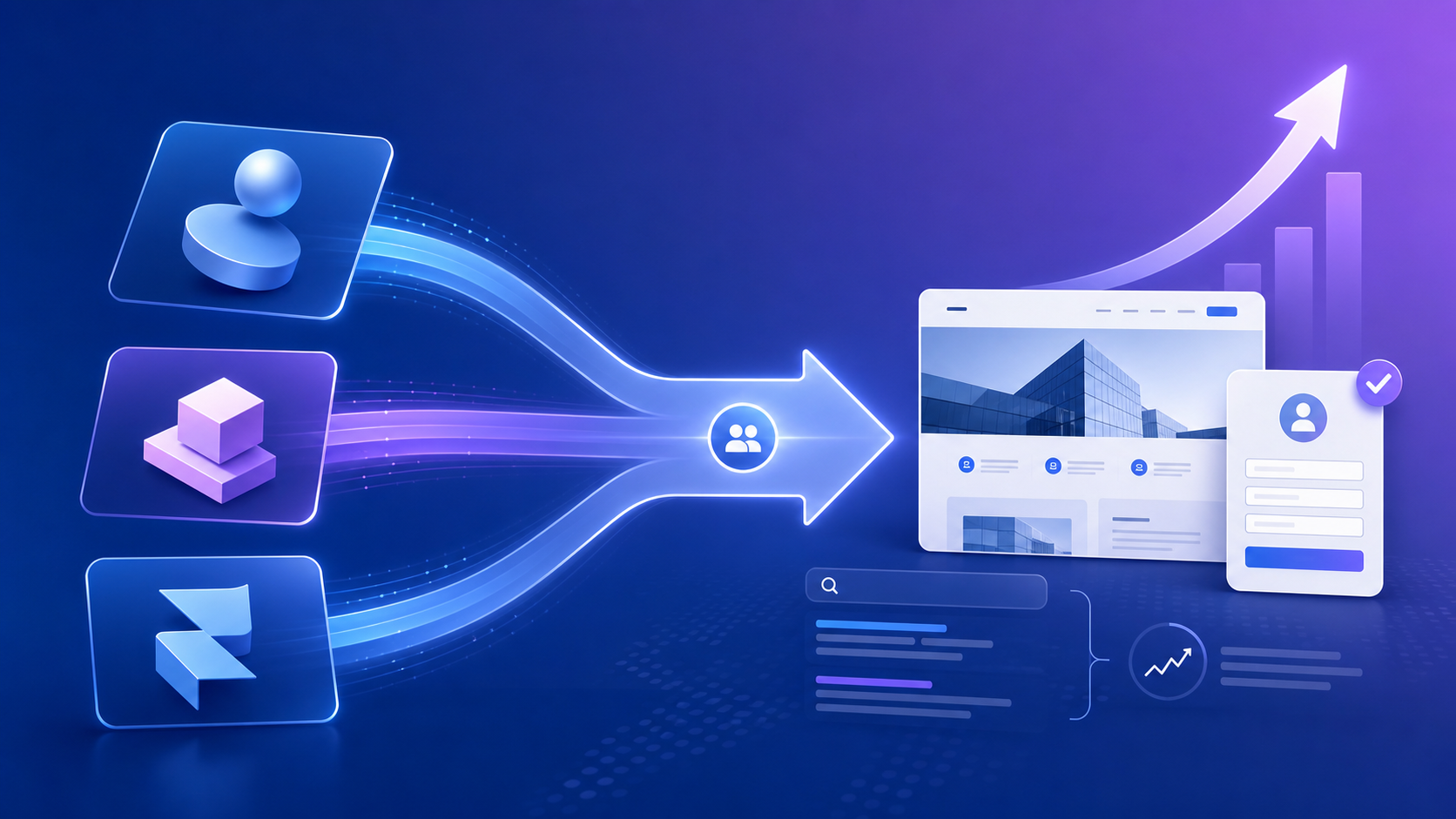
But: Which one can help you build a business website that search engines can understand, AI can recommend, customers can trust, and that continuously generates leads?
At that point, this is no longer just a comparison of website-building tools.
It is a comparison of three different website logics.
Here is the conclusion in one sentence:
If you just want to “have a website,” both Wix and Framer can do the job.
If you want a business website that can support long-term SEO / GEO, continuously update content, and handle inquiries and customers, We0 AI is closer to that goal.
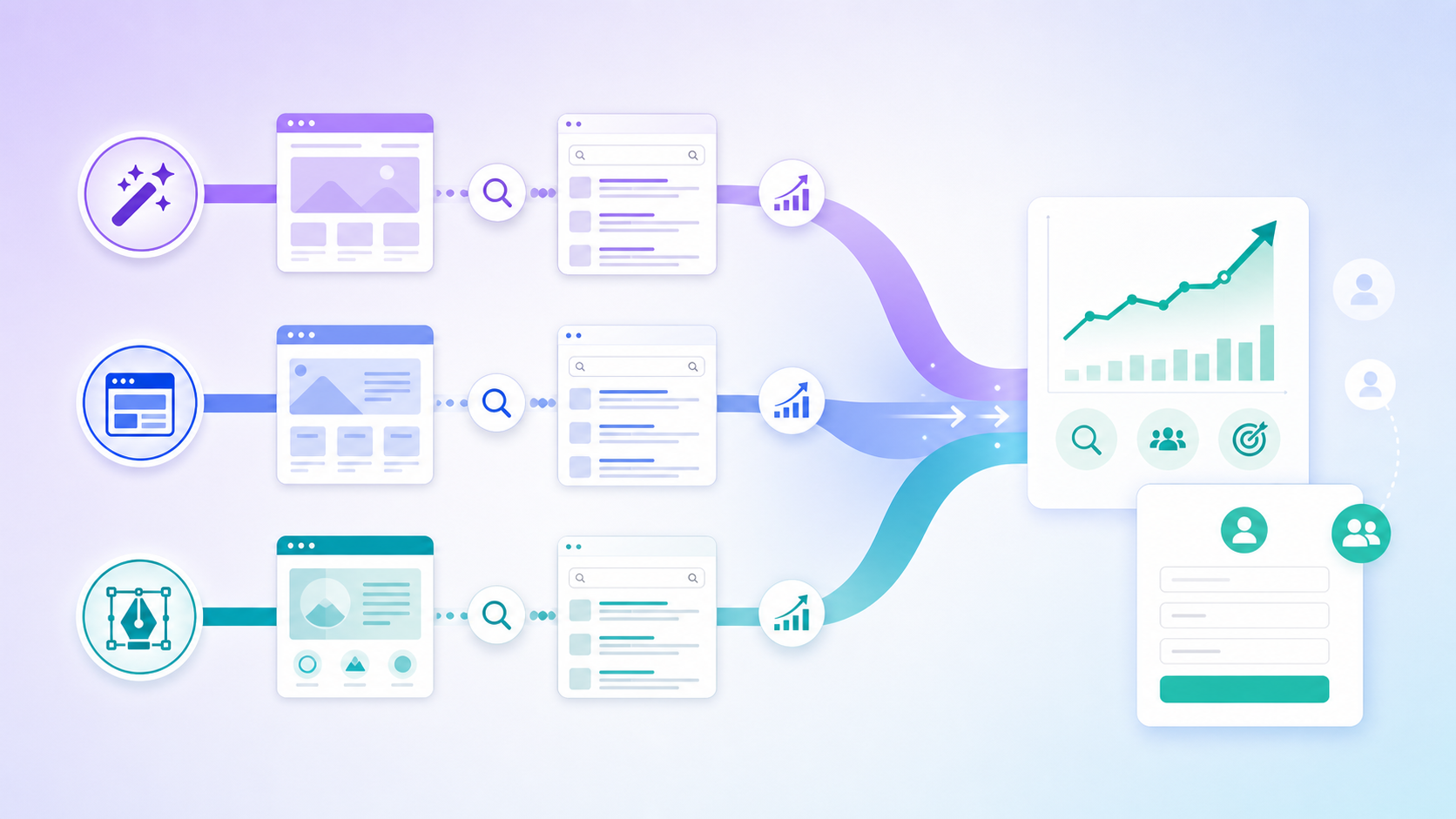
Many business websites fail not because they look ugly.
They fail because once they go live, they simply sit there.
No content updates. No keyword strategy. No case study pages. No service pages. No structured conversion paths. No one continuously reviews data, adjusts pages, or adds content.
This is the most common problem with business websites: the website is finished, but growth never begins.
According to Google Search Central’s SEO Starter Guide, the foundation of SEO is not just adding a few keywords. It is about making it easier for search engines to crawl, index, and understand your content, while also making it easier for users to decide whether a page is worth visiting.
For a business website, this includes at least the following:
| Dimension | What It Means for a Business Website |
|---|---|
| Crawlable | Pages can be properly discovered by search engines, with clear sitemap, link structure, and index controls |
| Understandable | Titles, URLs, page structure, content topics, and structured data are clear |
| Content-rich | Not just a homepage, but also service pages, product pages, case study pages, blogs, or resource pages |
| Trustworthy | Complete company information, case studies, customer testimonials, team details, credentials, and contact information |
| Conversion-focused | Clear paths for forms, appointments, consultations, downloads, trials, email subscriptions, and more |
| Continuously optimizable | SEO is not a one-time setup; you need to review data, add pages, and improve content over time |
So when comparing We0 AI, Wix, and Framer, we should not only ask:
“Which one has more templates?”
Nor should we only ask:
“Which one creates cooler-looking pages?”
The real question is: Can this tool help a business turn its official website into a long-term customer acquisition asset?
Let’s start with a table.
| Platform | Best For | Strengths | Weaknesses | Fit for SEO Business Websites |
|---|---|---|---|---|
| We0 AI | Startups, SaaS companies, AI products, service companies, consultants, agencies, cross-border trade teams | Website building + showcase + SEO/GEO + content + growth + lead handling | Not suitable for those pursuing extremely complex custom systems | High, especially suitable for websites that need continuous customer acquisition |
| Wix | Small businesses, local merchants, e-commerce, personal brands, budget-conscious teams | Many templates, mature ecosystem, comprehensive SEO settings, user-friendly backend | Easy to end up with “pages but no strategy” | Medium-high, depending on operational capability |
| Framer | Designers, brand teams, visually driven SaaS companies, portfolio teams | Strong design expression, good animations, high page quality, improving performance and SEO tools | Content operations and long-term growth still require the team to drive them independently | Medium-high, suitable for design-first websites |
The most important point in this table is:
Wix and Framer are more like tools, while We0 AI is more like “tools + a growth execution workflow.”
This does not mean Wix or Framer are bad.
Quite the opposite—they are both very strong.
Wix’s SEO tools are already quite comprehensive. Officially, it mentions support for meta tags, URL slugs, canonical tags, structured data, robots.txt, XML sitemaps, 301 redirects, Google Search Console integration, and more.
Framer has also been improving quickly in SEO. Its official pages mention automatic sitemaps, robots.txt, dynamic metadata, canonical URLs, JSON-LD, CDN, lazy loading, Core Web Vitals optimization, as well as AI visibility / AEO scanner-related capabilities.
So the question is not “Do they have SEO features?”
The question is: Does your team have the ability to turn these SEO features into sustained results?
We0 AI should not be understood as an ordinary AI website builder.
If you only see it as “enter one sentence and generate a webpage,” you are looking at it too superficially.
A more accurate positioning for We0 AI is: an AI website-building and lead-growth platform for showcase websites.
The real problem it aims to solve is not:
“How can I quickly create a page?”
But rather:
“How can I build a website faster that can go live, be operated, grow sustainably, and continuously generate leads?”
There is a big difference between the two.
A corporate website is usually not just a homepage.
It needs:
This is where We0 AI delivers value.
It does not just help you lay out pages. Instead, it follows the path of Build -> Showcase -> Grow -> Leads, turning the official website into a continuously working growth entry point.

Many AI website builders emphasize speed.
Speed is, of course, important.
But the real challenge for corporate websites is often not getting them built, but that:
After they are built, no one manages them.
We0 AI is more suitable for scenarios such as:
Its advantage is not “one more template” or “cooler animations.”
Rather, it more naturally connects the website with questions such as:
This is the part of a corporate website that truly creates value.
Wix is a very mature website-building platform.
If you are a small business, local service provider, e-commerce store, or personal brand and want to quickly get a website that is editable, manageable, and equipped with a full set of tools, Wix is indeed a safe choice.
Its basic SEO capabilities are not weak.
According to Wix’s official SEO page, it supports:
This shows that Wix is no longer the “website template tool with weak SEO” that many people used to think it was.
Today’s Wix already has a fairly complete set of SEO tools.
But its problem lies elsewhere.
Wix gives you a toolbox.
A complete toolbox does not mean you will necessarily build a house suitable for lead generation.
SEO for a corporate website is not finished once you fill in the meta title.
You also need to know:
If your team has people who understand SEO, content, and conversion, Wix can be very useful.
But if you simply want to “find a tool to get the official website done,” Wix can easily become this:
The website is live, but no one finds it through search; people visit, but no one leaves a lead.
Framer has a different character from Wix.
It is more like a website tool for designers, brand teams, and product teams.
If you care a lot about page quality, animations, interactions, and visual expression, Framer will be very appealing.
Especially for SaaS, AI products, design studios, and creative teams, using Framer to build an official website can easily create a “very modern” look.
Framer’s current SEO capabilities are also no longer limited to basic settings.
Its official SEO page mentions support for:
All of this shows that Framer is moving toward “design + SEO + AI visibility.”
But Framer’s core advantage is still the design experience.
It is suitable for making a website look more like a brand asset.
The problem is that if a corporate website needs SEO, being “good-looking” is not enough.
A beautiful homepage cannot replace service pages.
Attractive animations cannot replace case study content.
Refined visuals cannot replace long-term keyword planning.
So Framer is more suitable for teams that:
If your team can handle content operations and SEO strategy on its own, Framer is a very strong choice.
But if you do not have the capability for continuous operation and rely only on Framer to create a beautiful website, the result may be:
The website looks great, but no one is still managing growth.
Let’s look at it from another angle, instead of comparing platform slogans.
Let’s compare based on the real problems that arise after a corporate website goes live.
| Question | We0 AI | Wix | Framer |
|---|---|---|---|
| Can it go live quickly? | Yes, and it focuses more on the post-launch growth journey | Yes, with mature templates and editor | Yes, with high design efficiency |
| Are the basic SEO settings complete? | More focused on configuration combined with human support and growth services | Very complete, with rich official SEO tools | Increasingly complete, with solid technical SEO capabilities |
| Is it easy to plan corporate content structure? | Strong, suitable for planning service pages, case study pages, content pages, and inquiry pages | Users need to plan it themselves | Users need to plan it themselves |
| Design presentation | Sufficient, more focused on business communication | Template-based, depending on the template and adjustments | Strong, with clear advantages in visuals and animations |
| Continuous content updates | One of its key capabilities | Tools are available, but you need to do it yourself | Has CMS, but you need to do it yourself |
| GEO / AI Search adaptation |
| More emphasis on SEO + GEO + AI recommendation traffic | Has started adding an LLM visibility direction | Has started emphasizing AEO / AI visibility |
| Lead conversion | Designs website paths around leads | Has forms and marketing tools, but you need to configure them yourself | Can be achieved, but you need to add the strategy yourself |
The core message of this table is very simple:
This is especially important.
Many companies treat an official website project as a one-time deliverable.
They hire someone to design it, hire someone to develop it, launch it, accept it, and then the project is over.
Then six months later, they discover:
This is not a tool problem.
It is a problem with the operating logic of the official website.
SEO is not a switch. SEO is an ongoing action.
Google has also officially stated that the effects of SEO changes may take weeks or even months to show, and continuous iteration is required.
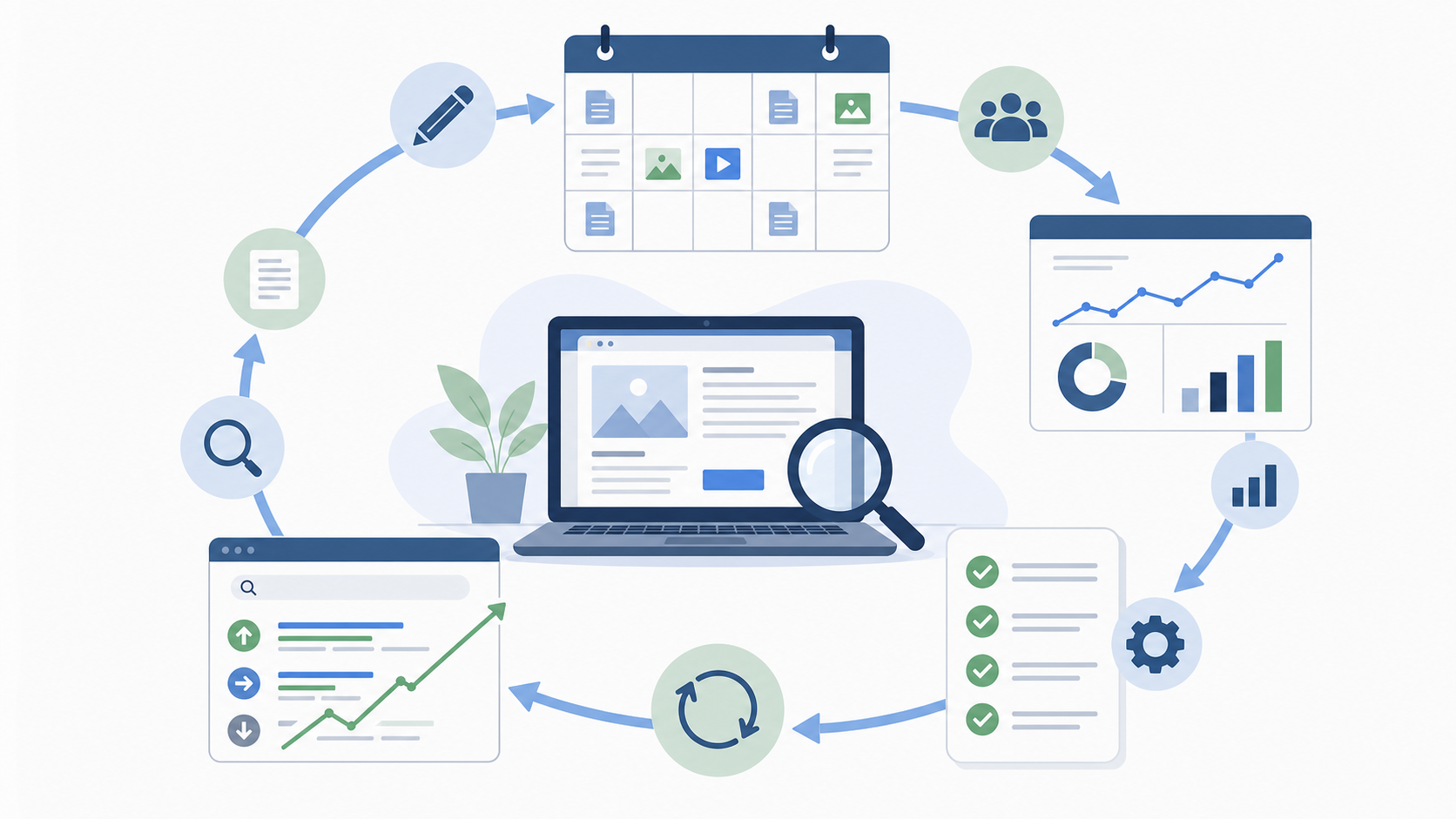
So what a corporate website really needs to do is:
This is also why We0 AI’s positioning is more suitable for corporate website SEO.
Because it does not just deliver a page.
It is more like putting AI website building, human planning, page planning, basic SEO/GEO configuration, content production, data monitoring, growth recommendations, and continuous optimization on one line.
For many companies, this is more important than “having a more flexible editor.”
If you are still unsure, you can choose directly based on the logic below.
We0 AI is suitable for you if your current problems are:
If what you need is “official website + content + SEO/GEO + data + leads,” We0 AI is more suitable.
Wix is suitable for you if your current problems are:
Wix’s advantage is maturity.
But you need to remember: Wix gives you tools; it does not automatically give you a growth strategy.
Framer is suitable for you if your current problems are:
Framer is very suitable for building beautiful modern websites.
But if your goal is long-term SEO lead generation, you still need to add content strategy and continuous operations.

If we only look at website building itself, Wix, Framer, and We0 AI can all help you create a website.
But if the goal is an SEO-optimized corporate website, you cannot only look at website building.
You need to look at:
So the final judgment of this article is:
Wix is a mature website tool.
Framer is a strong design expression tool.
We0 AI is more like a growth platform for showcase websites.
If you are a business owner, SaaS team, AI product team, consultant, agency, or foreign trade company, and your goal is not to “make a page and leave it there,” but to make your official website continuously showcase your business, grow, and generate leads.
Then We0 AI will be a choice more worth prioritizing.
Because the real value of a corporate website is not how beautiful it looks at the moment it goes live.
It is whether, after launch, it can continue to help you be seen, understood, trusted, and contacted.
That is the result an SEO corporate website should pursue.
If you only look at SEO settings, both Wix and Framer already provide fairly complete basic capabilities, such as sitemaps, metadata, URLs, canonical tags, structured data, and more.
But if you look at long-term SEO operations, content updates, GEO, and lead capture for corporate websites, We0 AI is more suitable for companies that do not have a complete growth team but want to keep generating leads.
Yes. Wix’s SEO tools are already relatively mature and suitable for small businesses, local merchants, e-commerce, and personal brands.
But Wix is more like a toolbox. The final results depend on whether you know how to plan the website structure, keywords, content, and conversion paths.
Yes, especially for design-first websites. Framer provides capabilities such as metadata, sitemaps, robots.txt, canonical tags, JSON-LD, CDN, and Core Web Vitals.
But if you want long-term SEO lead generation, you still need to continuously create content and optimize it yourself.
It is not a specific plugin, nor is it keyword stuffing.
More importantly: a clear website structure, crawlable pages, genuinely useful content, case studies and trust signals, internal links, continuous updates, and a clear lead conversion path.
Ordinary AI website builders usually emphasize “quickly generating pages.”
We0 AI focuses more on Build -> Showcase -> Grow -> Leads: it is not just about building a website, but also about showcasing the business, doing SEO/GEO, continuously operating content, and converting traffic into leads.
If what you need now is not a corporate website that simply “sits there,” but a website that can continuously showcase your business, capture search traffic, be recommended by AI, and generate leads, you can start with We0 AI.
Build the website first, then let it keep growing.
That is the direction that is more worth investing in for a corporate website.
We0 AI, Wix, and Framer can all build websites.
But a corporate website is not a static work; it is a growth entry point that works continuously.
If you value templates, backend management, and a mature ecosystem, Wix is a good fit.
If you value visuals, animations, and brand expression, Framer is a good fit.
If you value SEO, GEO, content, data, and leads, We0 AI is better suited for building a truly operable corporate website.
Ultimately, it is not about choosing the most popular tool.
It is about choosing the solution that can help turn your website from “pages” into a “customer acquisition asset.”

A lot of teams ask the same question when they start building a company website.
Describe your idea once, and We0 AI can generate a showcase site, pages, and CMS, then help you attract customers and traffic after launch.
One complete project generation for free registration
Best for trying one complete generation flow and seeing a first project draft quickly.
website:
“Should we use We0 AI, Wix, or Framer?”
Fair question.
But if SEO matters, the better question is slightly different.
Not: which one can build a website fastest?
But: which one can help you create a corporate website that search engines can understand, AI engines can cite, customers can trust, and leads can actually come from?
That is a very different game.
Because this is not only a comparison of website builders.
It is a comparison of three website philosophies.
Here is the short version:
If you only need “a website,” Wix and Framer can both work.
If you need a corporate website that can keep growing through SEO, GEO, content, and lead generation, We0 AI is closer to that goal.
Many company websites do not fail because they look bad.
They fail because nothing happens after launch.
No content updates. No keyword planning. No service pages. No case studies. No conversion path. No one checks the data. No one improves the pages.
That is the common corporate website problem: the site is finished, but growth never starts.
Google’s SEO Starter Guide frames SEO as helping search engines crawl, index, and understand your content, while helping users decide whether your page is worth visiting.
For a corporate website, that means much more than a homepage.
It means:
| Area | What it means for a corporate website |
|---|---|
| Crawlability | Search engines can discover pages, links, sitemaps, and index controls clearly |
| Understandability | Titles, URLs, page structure, content themes, and structured data make sense |
| Content depth | Not just a homepage, but service pages, product pages, case studies, blog or resource pages |
| Trust | Company details, proof, reviews, team, credentials, and contact information are visible |
| Conversion | Forms, bookings, demos, downloads, trials, and inquiry paths are clear |
| Continuous optimization | SEO is not a one-time setting; it needs data, updates, and iteration |
So when comparing We0 AI, Wix, and Framer, the real question is not:
“Which one has more templates?”
And not:
“Which one makes prettier pages?”
The real question is: can this platform help turn a corporate website into a long-term customer acquisition asset?
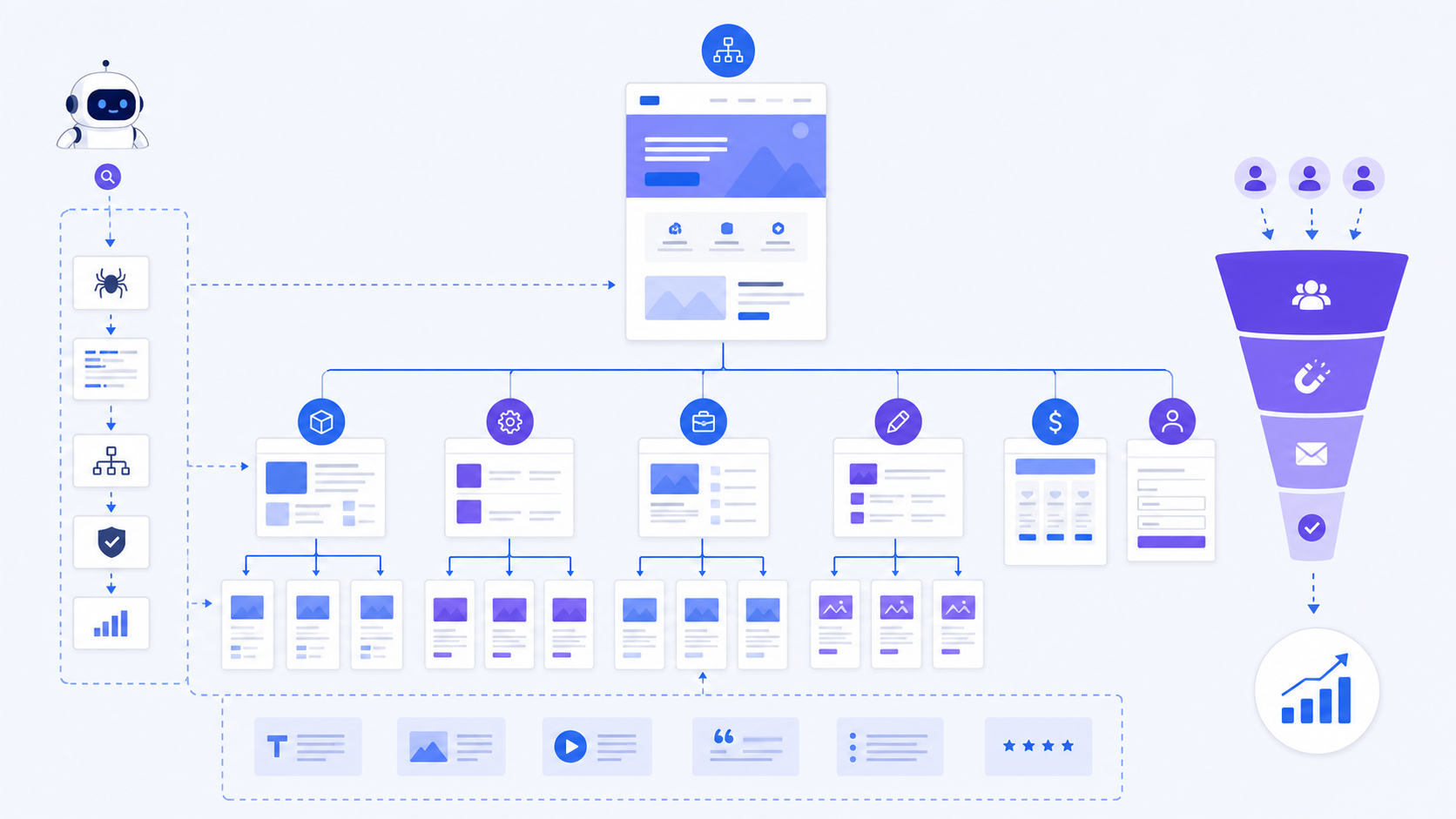
![The image shows the workflow of a corporate website from planning to operation. On the left is an AI robot that generates content through data collection, analysis, optimization, and other steps. In the middle is a website page, including a navigation bar, content sections, and more.]
On the right is the user conversion funnel, from visits to registration, purchases, and more. At the bottom are elements such as text, images, videos, comments, and ratings. This image is closely related to the surrounding context, visually presenting the complete process of building a corporate website from planning to operation. It highlights the importance of AI in content generation and echoes the context’s discussion of corporate website optimization and conversion.](https://we0-cms.oss-cn-beijing.aliyuncs.com/cms-assets/image/2026/07/e308d221-a5e9-444b-b32f-316747c06cd6-10-bb48f626-3364-43c2-9b1c-d168b6798bcd.png)
Let’s start with a simple table.
| Platform | Best for | Strengths | Limits | Fit for SEO corporate websites |
|---|---|---|---|---|
| We0 AI | Startups, SaaS teams, AI products, service companies, consultants, agencies, exporters | Website building + showcase + SEO/GEO + content + growth + lead capture | Not ideal for teams that need highly complex custom systems | High, especially for teams that want continuous lead generation |
| Wix | Small businesses, local services, ecommerce, personal brands, budget-conscious teams | Many templates, mature ecosystem, strong SEO settings, friendly backend | Easy to build “a website” without a real strategy | Medium-high, depending on your operating capability |
| Framer | Designers, brand teams, visual-first SaaS teams, portfolio-driven companies | Strong visual quality, motion, modern page feel, improving SEO features | Long-term content and growth still need to be handled by your team | Medium-high, great for design-led sites |
The key difference is this:
Wix and Framer are more like tools. We0 AI is closer to a tool plus a growth execution path.
That does not mean Wix or Framer are weak.
They are both strong.
Wix’s SEO feature set is already mature. Its official SEO page mentions meta tags, URL slugs, canonical tags, structured data, robots.txt, XML sitemaps, 301 redirects, Google Search Console integration, and more.
Framer is also moving fast in SEO. Its official SEO page mentions automatic sitemaps, robots.txt, dynamic metadata, canonical URLs, JSON-LD, CDN, lazy loading, Core Web Vitals optimization, and AI visibility / AEO scanning.
So the issue is not “do they have SEO features?”
The issue is: does your team know how to turn those SEO features into ongoing business results?
We0 AI should not be treated as a normal AI website builder.
If you only describe it as “type a prompt and generate a page,” you are missing the point.
We0 AI is better understood as an AI-powered showcase website growth platform.
The problem it tries to solve is not simply:
“How do I create a page quickly?”
It is:
“How do I build a website that can launch, operate, grow, and generate leads over time?”
That difference matters.
A real corporate website usually needs more than a homepage.
It needs:
This is where We0 AI fits.
It is not only about arranging blocks on a page. It is about connecting the website to the full path of Build -> Showcase -> Grow -> Leads.

Many AI website builders talk about speed.
Speed matters, of course.
But for corporate websites, the harder problem is often not getting the site online.
The harder problem is:
What happens after the site goes live?
We0 AI is especially suitable for:
Its advantage is not “one more template” or “a cooler animation.”
It is that it naturally connects the website with questions like:
That is where a corporate website becomes valuable.
Wix is a mature website builder.
If you are a small business, local service provider, ecommerce seller, or personal brand, and you want a website that is editable, manageable, and supported by a broad toolset, Wix is a safe choice.
Its SEO foundation is not weak.
According to Wix’s official SEO page, Wix supports:
So Wix is not the old stereotype of “template builder with poor SEO.”
Modern Wix has a fairly complete SEO toolset.
But the real issue is somewhere else.
Wix gives you a toolbox.
A full toolbox does not guarantee that you will build a house that can bring customers.
Corporate website SEO is not finished after filling in a meta title.
You still need to know:
If your team understands SEO, content, and conversion, Wix can work very well.
But if you only want to “use a
tool and get a website,” Wix can easily turn into this:
The site is live, but nobody finds it. Some people visit, but nobody becomes a lead.
Framer feels different from Wix.
It is more of a tool for designers, brand teams, and product teams.
If you care about visual quality, motion, interaction, and brand expression, Framer is attractive.
For SaaS companies, AI products, design studios, and creative teams, Framer can make a website feel modern very quickly.
Framer’s SEO capabilities are no longer limited to basic settings either.
Its official SEO page mentions:
This shows that Framer is moving toward design + SEO + AI visibility.
But its core strength is still the design experience.
Framer is great when the website needs to feel like a brand asset.
The catch is that SEO for a corporate website is not just about looking good.
A beautiful homepage does not replace service pages.
Nice motion does not replace case studies.
Sharp visuals do not replace long-term keyword planning.
So Framer is a better fit for teams that:
If your team can handle content operations and SEO strategy, Framer is a strong choice.
But if you have no ongoing operating capability, a beautiful Framer site may still end up like this:
The site looks great, but growth is still unmanaged.
Let’s not compare platforms by marketing slogans.
Let’s compare them by what actually happens after a corporate website goes live.
| Question | We0 AI | Wix | Framer |
|---|---|---|---|
| Can it launch quickly? | Yes, with more focus on the post-launch growth path | Yes, templates and editor are mature | Yes, design workflow is fast |
| Are SEO basics available? | Often combined with human planning and growth services | Very complete, with rich official SEO tools | Increasingly complete, with a strong technical SEO direction |
| Is business content structure easy to plan? | Strong for service pages, case pages, content pages, and inquiry pages | Users need to plan it themselves | Users need to plan it themselves |
| Design quality | Practical and business-focused | Template-dependent | Strong, with advantages in visuals and motion |
| Continuous content updates | One of the key strengths | Tools exist, but you do the work | CMS exists, but you do the work |
| GEO / AI search readiness | Emphasizes SEO + GEO + AI recommendation traffic | Moving into LLM visibility | Emphasizes AEO / AI visibility |
| Lead conversion | Designed around the lead generation path | Forms and marketing tools exist, |
strategy is on you | Possible, but strategy must be added |
The simple version:
This part matters.
Many companies treat their website project as a one-time delivery.
Design it. Build it. Launch it. Approve it. Done.
Then six months later they realize:
That is not only a tool problem.
It is an operating problem.
SEO is not a switch. SEO is an ongoing process.
Google also notes that SEO changes may take weeks or months to show impact, and that iteration matters.
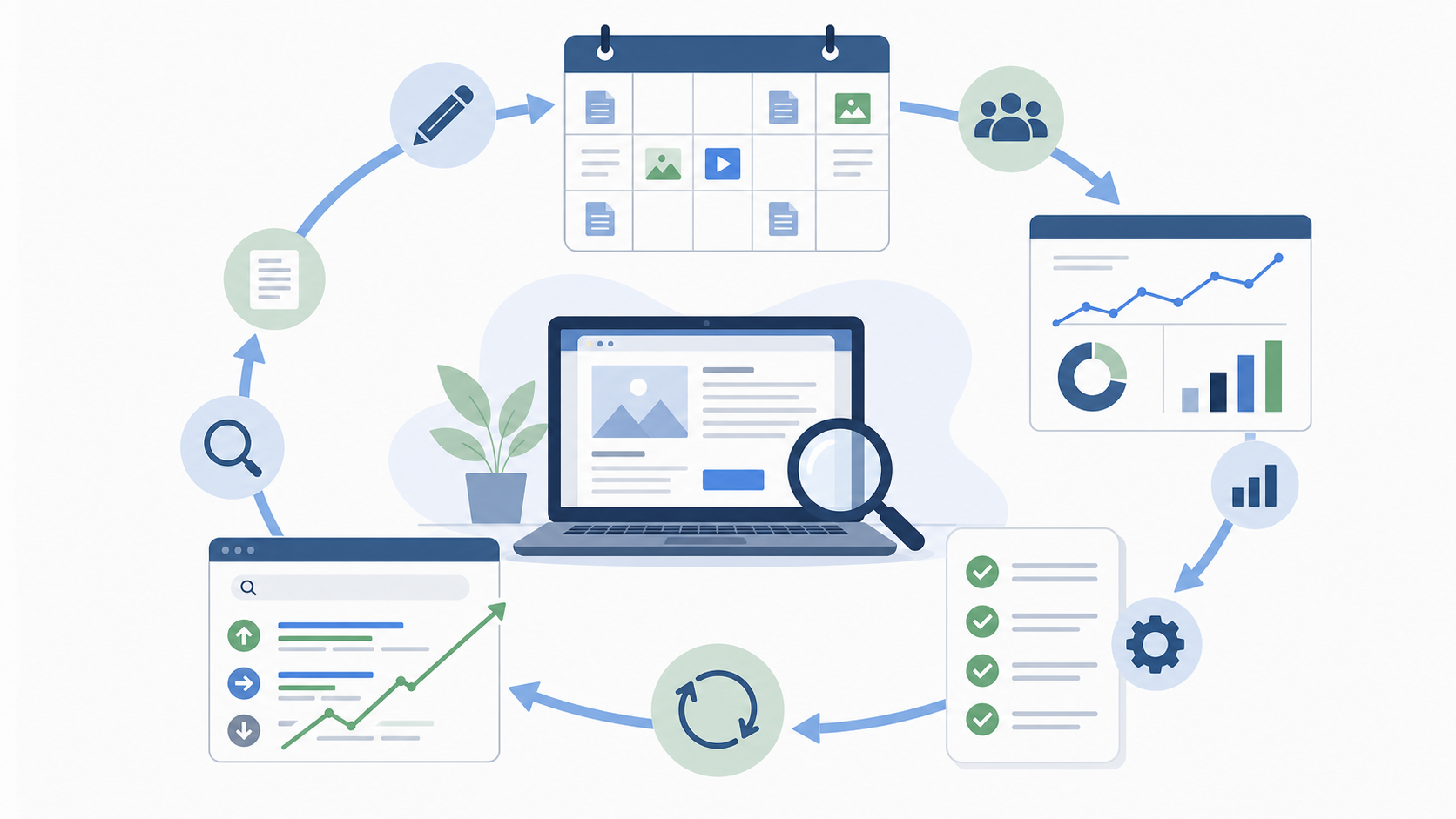
So a corporate website needs to:
This is why We0 AI is a strong fit for SEO-focused corporate websites.
It is not just delivering a page.
It is closer to putting AI website building, human brand clarification, page planning, SEO/GEO setup, content production, data monitoring, growth suggestions, and continuous optimization into one connected path.
For many companies, that matters more than having a more flexible editor.
If you are still unsure, use this decision logic.
We0 AI is a fit if your current problem sounds like this:
If you need website + content + SEO/GEO + data + leads, We0 AI is the better fit.
Wix is a fit if:
Wix’s advantage is maturity.
But remember: Wix gives you tools. It does not automatically give you a growth strategy.
Framer is a fit if:
Framer is excellent for modern, beautiful websites.
But if your goal is long-term SEO acquisition, you still need content strategy and ongoing operations.

If we only talk about building a website, Wix, Framer, and We0 AI can all do the job.
But if the goal is an SEO-optimized corporate website, website building is only the first layer.
You need to ask:
So the final judgment is:
Wix is a mature website builder.
Framer is a strong design expression tool.
We0 AI is closer to a showcase website growth platform.
If you are a founder, SaaS team, AI product team, consultant, agency, or export business, and your goal is not to “put a website online and leave it there,” but to keep showcasing, growing, and generating leads, We0 AI deserves priority consideration.
Because the real value of a corporate website is not how beautiful it looks on launch day.
It is whether, after launch, it keeps helping your business get discovered, understood, trusted, and contacted.
That is what an SEO corporate website should do.
If you only compare SEO settings, Wix and Framer both provide solid fundamentals such as sitemaps, metadata, URLs, canonicals, and structured data.
But if you compare long-term SEO operations, content updates, GEO, and lead capture for a corporate website, We0 AI is a better fit for companies without a full growth team but with serious acquisition goals.
Yes. Wix’s SEO tools are mature enough for many small businesses, local services, ecommerce stores, and personal brands.
But Wix is more like a toolbox. Results depend on whether you can plan site structure, keywords, content, and conversion paths.
Yes, especially for design-first websites. Framer supports metadata, sitemaps, robots.txt, canonical URLs, JSON-LD, CDN, and Core Web Vitals-related optimization.
But for long-term SEO acquisition, you still need ongoing content and optimization.
Not one plugin. Not keyword stuffing.
What matters more is clear site structure, crawlable pages, useful content, proof and trust signals,
internal links, regular updates, and clear lead conversion paths.
Most AI website builders focus on quickly generating pages.
We0 AI focuses on Build -> Showcase -> Grow -> Leads: building the site, presenting the business, improving SEO/GEO, supporting ongoing content operations, and converting traffic into leads.
If you are not trying to create a website that just sits there, but a website that keeps showcasing your business, capturing search traffic, appearing in AI discovery, and generating leads, We0 AI is a good place to start.
Build the website first. Then keep it growing.
That is the better direction for a corporate website.
We0 AI, Wix, and Framer can all help you build a website.
But a corporate website is not a static design artifact. It is a growth entry point that should keep working.
If you care about templates, backend tools, and a mature ecosystem, Wix makes sense.
If you care about visual quality, motion, and brand expression, Framer makes sense.
If you care about SEO, GEO, content, data, and leads, We0 AI is better suited for building a corporate website that can actually be operated over time.
The goal is not to choose the trendiest tool.
The goal is to choose the solution that can turn your website from “a page” into a customer acquisition asset.
Start from one sentence and have a complete website in minutes.