
If you are still only watching clicks, average position, and CTR in Google Search Console, you may already be missing a new layer of search visibility.
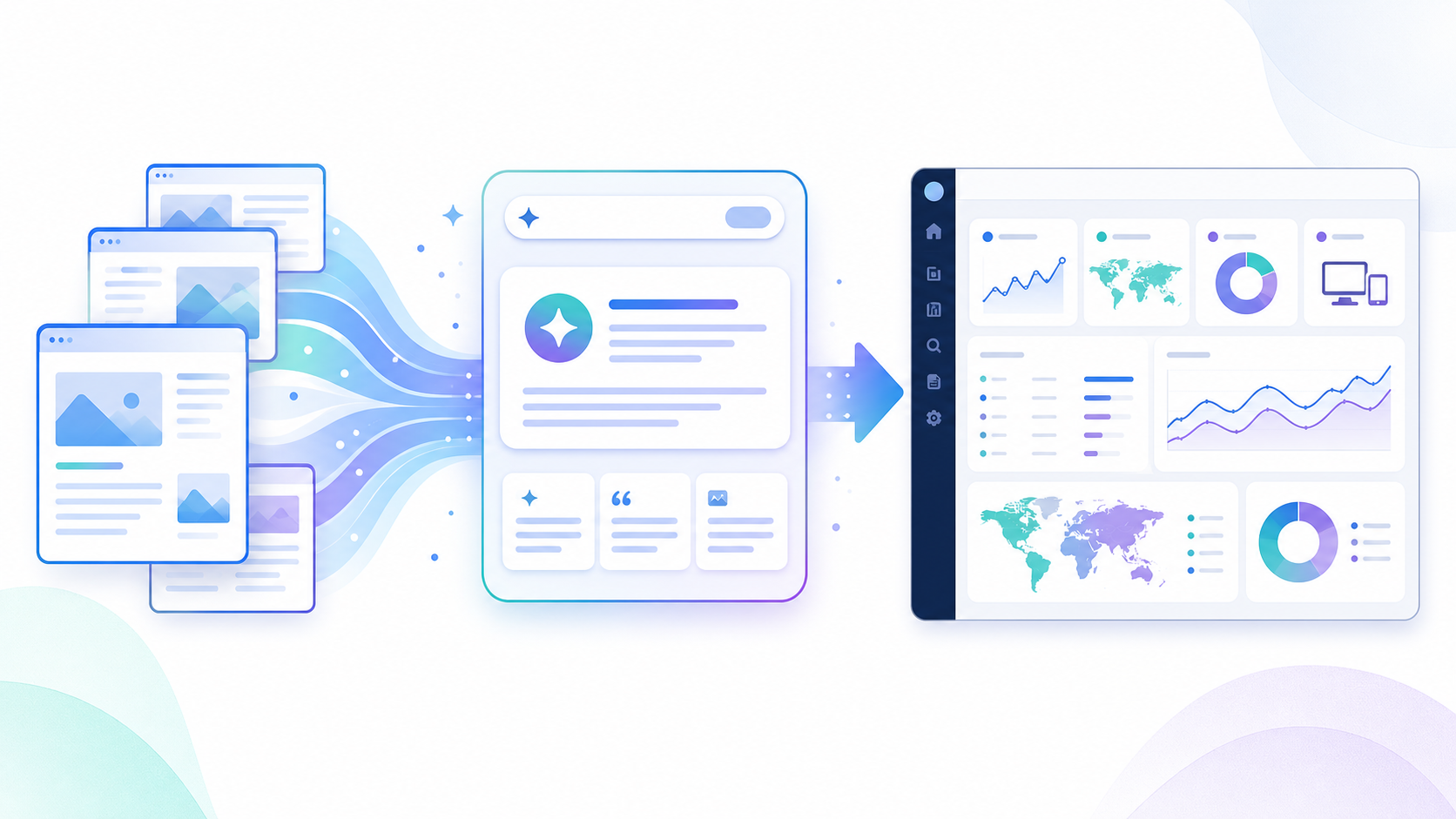
Google has started rolling out Search Generative AI performance reports in Search Console.
In plain English, this gives site owners a dedicated view into whether their URLs appear inside Google’s generative AI search features, including AI Overviews and AI Mode.
For business websites, this matters.
Because until now, many teams could only guess:
Did AI Overview cite our website?
Did AI Mode use our product page as a source?
Are our guides actually visible in AI-powered search answers?
Why are organic clicks changing while branded search and leads do not move in the same way?
Before this report, the answer often came from manual checks, screenshots, third-party tools, or just team intuition.
Now there is at least an official place to start.
But don’t overread it.
This is not Google Analytics for AI search. Right now, it is closer to a visibility report than a conversion report.
What can the new report show?
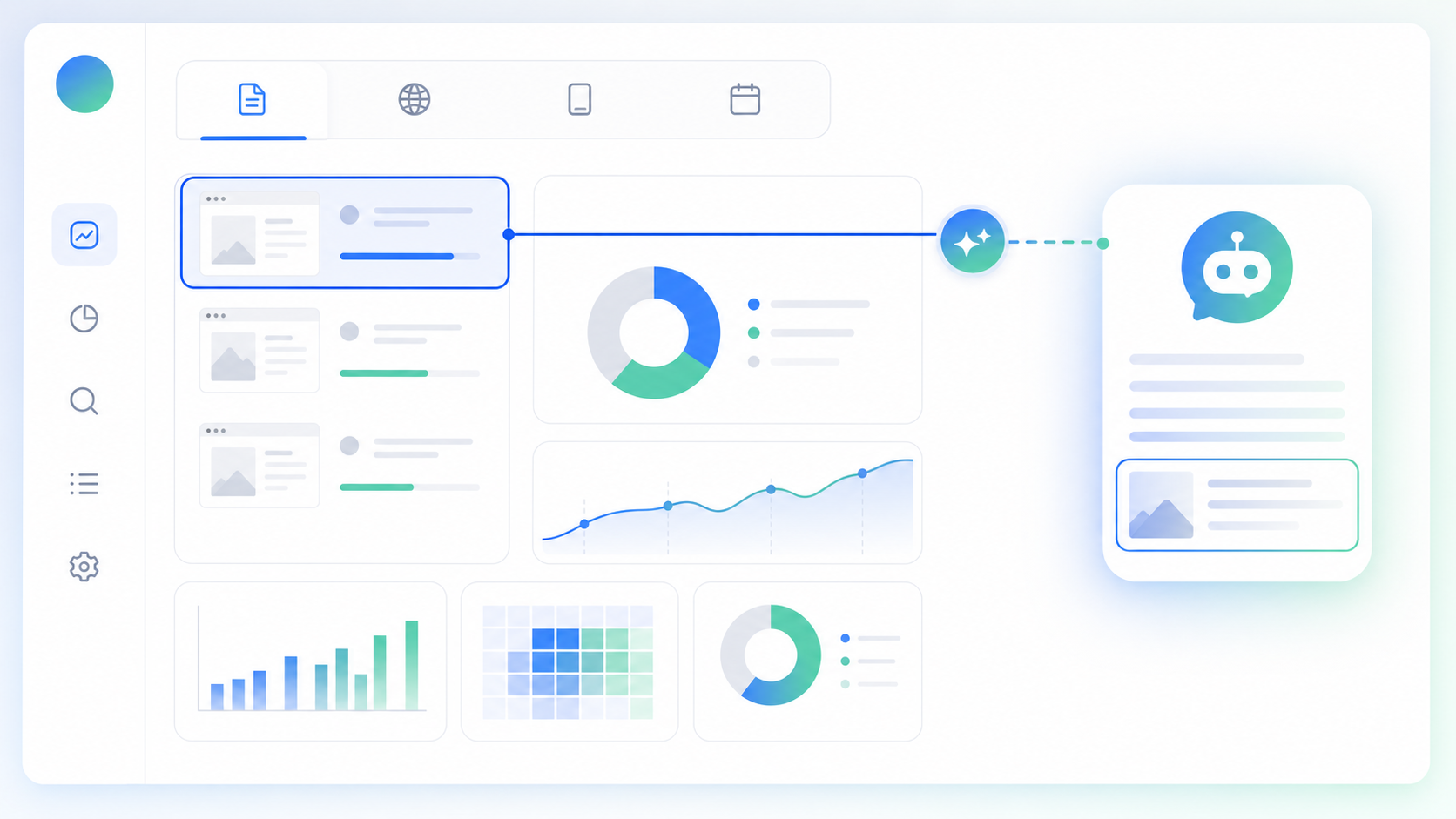
According to Google Search Central’s June 3, 2026 announcement, the new reports include these dimensions:
Dimension | What you can see | |
Impressions | How often your URLs appeared in generative AI features | Whether your site is being seen in AI search |
Pages | Which URLs appeared in AI features | Which pages are actually visible |
Countries | Where impressions came from | Which markets may already show demand |
Devices | Device type for Search results | Mobile vs desktop AI search behavior |
Dates | Visibility over time | Impact of content updates, market changes, and algorithm shifts |
The key point:
The current report is mainly about impressions, not clicks.
Google’s help documentation says the report covers Google Search generative AI features, including AI Overviews and AI Mode.
If you do not see the report, there are two likely reasons:
Your property does not have access yet;
Your site has not received enough impressions in generative AI features.
A little painful, but useful.
Not every site will see this report immediately. And not every site has AI search visibility yet.
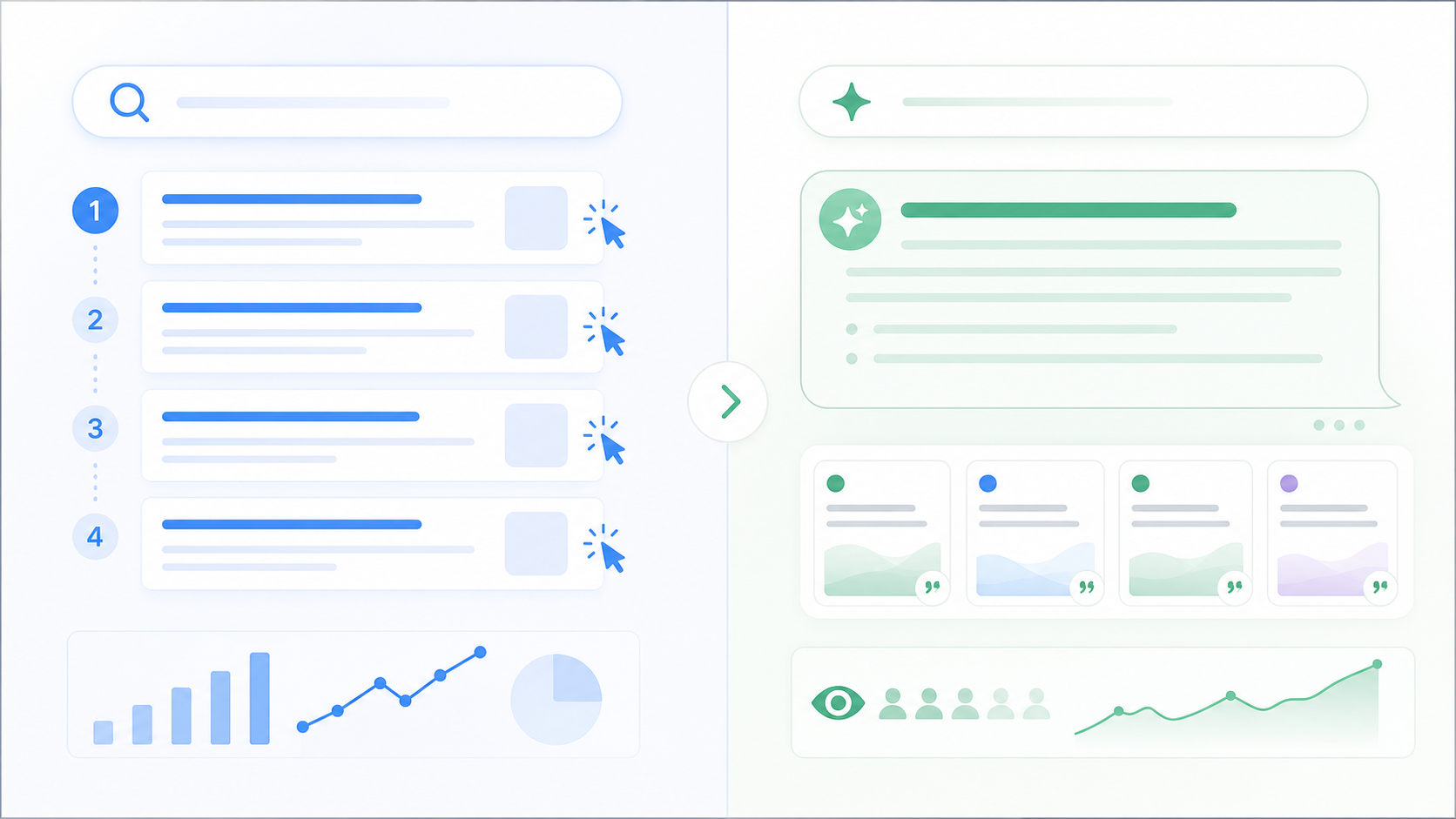
Appearing in AI Overviews / AI Mode is not the same as traditional ranking
Many business owners simplify the question too much:
“If I rank first, will AI cite me?”
Not necessarily.
AI Overviews and AI Mode do not work exactly like the traditional list of blue links.
Traditional SEO is about competing for positions in a results list. You track queries, rankings, CTR, clicks, and landing page performance.
AI search is more of an answer-generation environment.
A user asks a question. Google’s generative AI organizes an answer and may show certain pages as supporting links, source material, or next-step reading.
So the business question is not only:
“Where do I rank?”
It is also:
“Is my page eligible to become part of the AI-generated answer?”
That changes the work.
It is not just about keywords anymore. It also depends on whether:
your page clearly answers a specific question;
your content contains clear entities, products, use cases, comparisons, and steps;
the page feels trustworthy;
your website has a stable topic structure;
you have FAQs, case studies, tutorials, pricing explanations, comparison pages, and other understandable content assets;
your page is only visually polished, but lacks information that search engines and AI systems can understand.
This is why We0 AI does not position itself as just another AI website builder.
Businesses do not only need a page. They need a website asset that can showcase, be understood by search, keep growing, and generate leads.
How can a business website check whether it appears in AI Overviews or AI Mode?
Use this workflow.
Step 1: Open the Generative AI performance report in Search Console
If your account already has access, open:
Google Search Console Generative AI performance report
If it does not open, it does not automatically mean your site never appeared.
Google is rolling the report out gradually, and its documentation says not all properties have access yet.
If you can open it, start with the total impression trend.
Do not obsess over one day. Look at movement:
Did impressions appear in the last 7 days?
Are they growing over the last 28 days?
Did any day spike suddenly?
Did content updates or page changes affect visibility?
Are some countries showing visibility earlier than others?
AI search impressions are an early signal. They are not customers yet, but they show your content is entering the answer layer.
Step 2: Switch to Pages and check which URLs are visible
This is the most important part.
A business website usually has many page types:
homepage
product pages
feature pages
pricing pages
case studies
blog posts
comparison pages
FAQ pages
industry solution pages
local service pages
multilingual pages
If the report mainly shows blog posts, Google may currently see you more as an information source.
If product pages, feature pages, case studies, or pricing-related pages appear, that means something different.
Your commercial pages may be entering the AI search journey.
Businesses should separate content visibility from conversion-page visibility. Both matter, but they do not carry the same growth value.
Step 3: Check Countries to understand which markets see you first
For global SaaS companies, AI products, exporters, agencies, and service businesses, this dimension is useful.
If your website is in English and impressions come mainly from:
United States
United Kingdom
India
Canada
Australia
then your English content may already be entering English-language AI search contexts.
If you run a multilingual website, compare:
Which language version gets impressions first?
Which country shows demand but has no dedicated landing page?
Are there markets where AI search is seeing you, but your website cannot properly convert visitors yet?
This should affect your content priorities.
Do not only build content based on what the team wants to sell. Watch where AI search is already beginning to see you.
Step 4: Check Devices to understand the user context
Google’s documentation says the Devices dimension is available for Search results.
This may sound basic, but it matters.
If most AI search impressions are mobile, users may be discovering you in faster, more fragmented moments.
That means your website cannot only look good on desktop.
You need to check:
Does the mobile first screen explain who you are quickly?
Is the page fast enough?
Are FAQs, pricing, proof, and CTAs easy to find?
Are forms, booking buttons, WhatsApp buttons, or email links easy to tap?
Is the content easy to scan?
When AI search sends someone to your site, the page still has to convert.
Step 5: Use Dates for review and iteration
The Dates dimension helps with monthly review.
Match changes on the site with visibility movement:
What you changed | What to watch |
Published an industry guide | Did AI impressions change within 3–14 days? |
Updated product page FAQs | Did that URL enter the Pages list? |
Added case studies | Did visibility become more specific by country or industry? |
Launched multilingual pages | Did new country impressions appear? |
Reworked site structure | Did visibility become more stable or more scattered? |
Do not treat one day as truth.
Google also notes that the newest data may be preliminary and can change later.
Watch trends. Do not worship spikes.
The report has real limitations
This part matters.
Some companies will see the new report and think they can finally calculate the full ROI of AI search.
Not yet.
At least for now, the report has several limits:
Limitation | What it means |
Mainly impressions | You know the page was shown, not necessarily clicked or converted |
Gradual rollout | Not every property can access it yet |
Requires enough visibility | Smaller or niche sites may not see data |
Aggregation differences | Chart totals and table totals may differ |
Limited query insight | You may not know exactly what users asked |
Preliminary data | Newest numbers may change |
So the report is best for answering:
“Is my website entering Google’s generative AI visibility layer?”
It does not fully answer:
“How many deals did AI Overview bring us?”
Those are very different questions.
But the first one is still valuable.
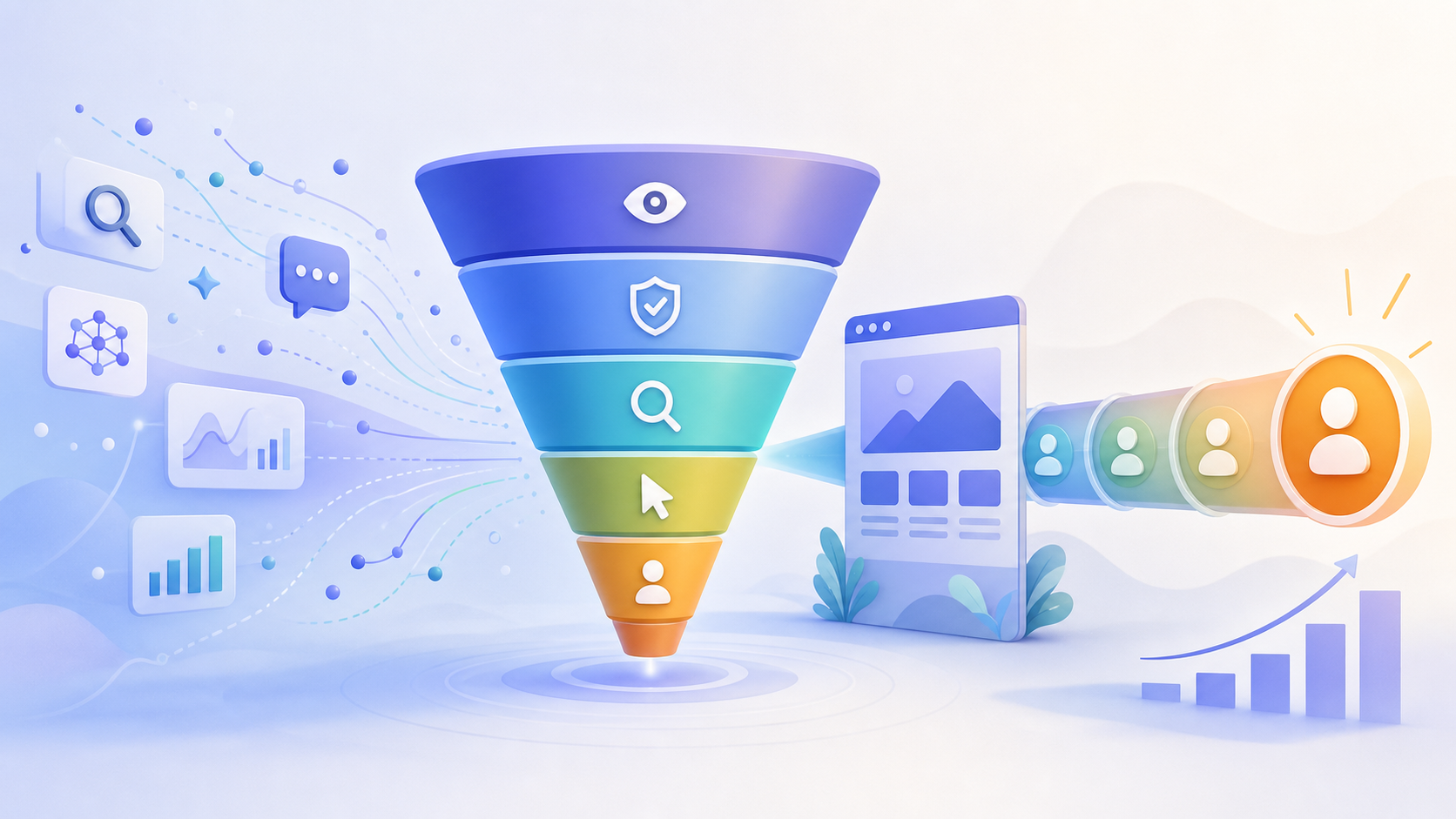
In AI search, many effects happen before the click.
A user may first see your brand, product, point of view, or case study inside AI Overview, then come back days later through branded search, direct visit, social, or referral.
AI impressions may not become clicks immediately, but they may already be shaping user awareness.
What should businesses do next? Do not only chase AI citations
I would not suggest making the goal:
数分で紹介サイトを作り、リード獲得を伸ばす
アイデアを一文で入力するだけで、We0 AI が紹介サイト、ページ、CMS を生成し、公開後の顧客獲得と流入拡大を支援します。
無料登録で完全なプロジェクトを 1 つ生成
1 つの完全な生成フローを試し、最初のプロジェクトのドラフトをすぐに確認するのに最適です。
“We need to be cited by AI Overview.”
That is too vague and too passive.
A better goal is:
Build a website that AI search can understand, traditional search can rank, and real users can trust and convert on.
That brings us back to pages and content.
1. Make your core commercial pages clear first
Many business websites do not have a blogging problem.
They have a commercial-page clarity problem.
The homepage says:
“Innovative solutions for modern teams.”
The product page says:
“Efficient, intelligent, reliable.”
The service page says:
“Contact us to learn more.”
People cannot understand that. AI search will not understand it well either.
Your pages should clearly explain:
who you are;
what problem you solve;
who you solve it for;
how you differ from alternatives;
typical use cases;
pricing, process, and delivery model;
proof, case studies, and FAQs;
what the user should do next.
AI search is not magic. It needs understandable content material.
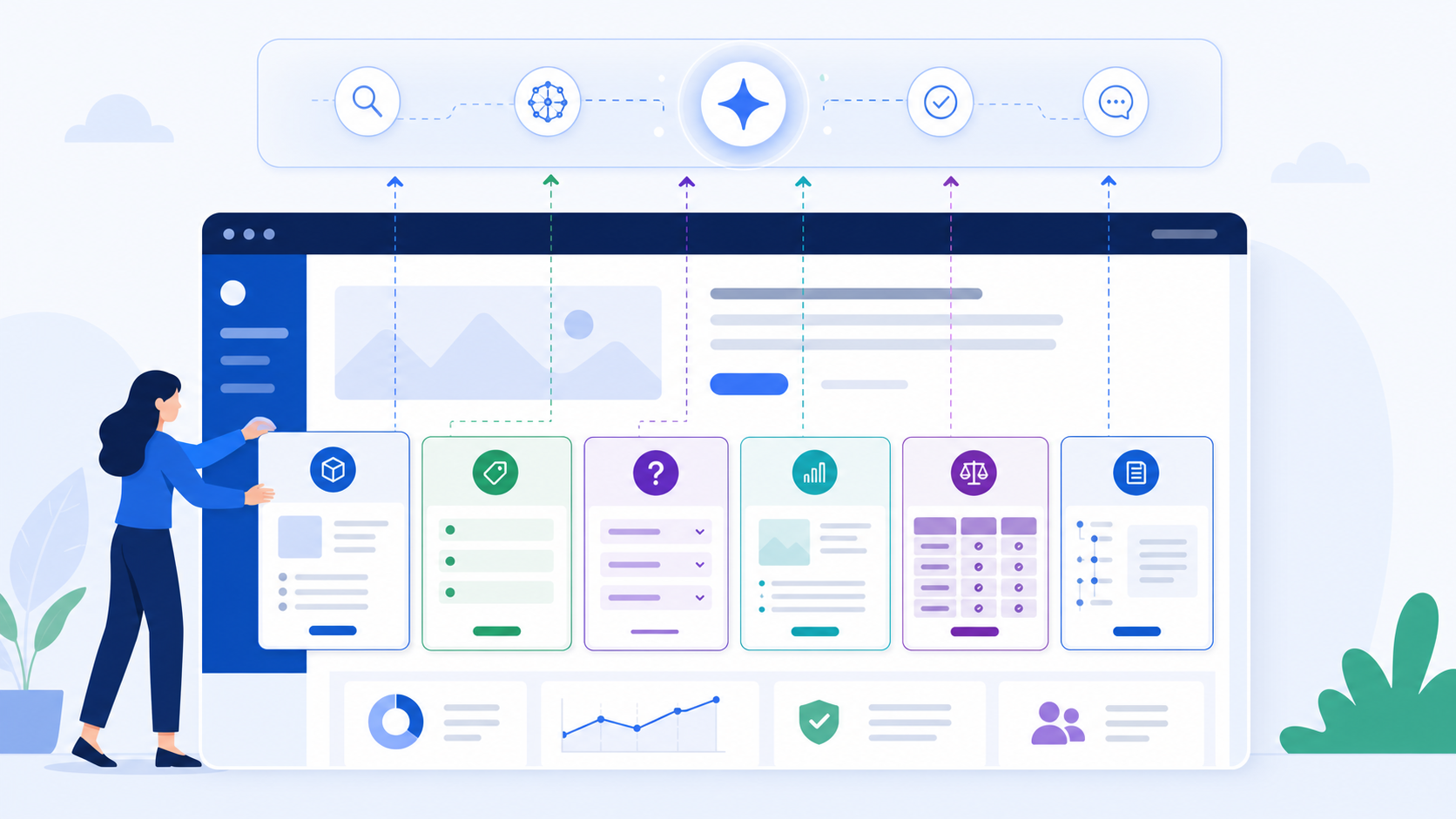
2. Create pages for different search intents
Do not expect one homepage to handle every search intent.
A serious business website usually needs these page types:
Search intent | Best page type |
I want to know who you are | Homepage / About / Brand page |
I want to compare options | Comparison / Alternative page |
I want to solve a specific problem | Guide / How-to / Use case |
I want to know if I can trust you | Case study / Testimonials / Portfolio |
I want to understand pricing | Pricing / Package / Service plan |
I still have questions | FAQ / Docs / Help center |
I am ready to contact you | Contact / Demo / Inquiry / Booking |
AI Overviews and AI Mode are more likely to organize answers around specific questions.
Your pages should be organized around specific questions too.
Do not only showcase the brand. Capture the problem.
3. Use FAQs, comparisons, steps, and case studies to become more citeable
For business websites, these content formats are especially useful:
FAQ: answer real objections and doubts;
Comparison: explain differences from competitors or alternatives;
How-to: provide steps;
Case study: prove you have done it before;
Pricing explanation: clarify how pricing works;
Industry page: explain why a specific industry needs you;
Glossary: define concepts;
Checklist: help users decide.
These are not filler.
They give Google and AI search clearer material to understand.
4. Turn data review into a monthly habit
With the new Search Console report, companies can build a simple monthly review table:
Review question | Data to check |
Did AI impressions grow this month? | Impressions + Dates |
Which pages appeared in AI search? | Pages |
Which countries show early demand? | Countries |
Mobile or desktop? | Devices |
Which pages deserve more optimization? | Pages + conversion data |
What content needs to be added? | Page gaps + business priorities |
More importantly, compare this with normal Search Console data, GA4, and CRM lead data.
AI search may not be the last click.
It may be the first moment a user discovers you.
If you only look at clicks, you may underestimate AI search.
Where We0 AI fits in
This is exactly where We0 AI fits.
We0 AI is not just a tool that “generates a website.”
It is better understood as an AI website growth platform for showcase websites.
The core chain is:
Build -> Showcase -> Grow -> Leads
In practice:
Build the website -> showcase products, services, cases, and work -> grow through SEO / GEO / AI search visibility -> generate leads and customers.
As AI search becomes more important, business websites need to do more:
not just look pretty;
not just launch a template site;
not just publish a few blog posts;
not just chase traditional keyword rankings.
The website has to become a continuously operated growth asset.
We0 AI can help with:
Business need | We0 AI capability |
Launch a showcase website quickly | AI website building + human brand and structure planning |
Make pages easier for search to understand | SEO / GEO setup and page copy optimization |
Convert visitors after AI search discovery | Clear CTAs, inquiry paths, proof, and FAQs |
Keep producing useful content | Content planning, article production, publishing, internal linking |
Review data and improve | Traffic monitoring, growth suggestions, monthly review |
Keep generating leads | Content updates, page optimization, growth operations |
A website should not be a one-time deliverable. It should be a continuous growth system.
That is why AI Overviews and AI Mode make owned websites even more important.
You cannot rely only on social platforms or rented traffic.
You need an owned asset that Google Search can understand, AI search can reference, users can trust, and leads can convert through.
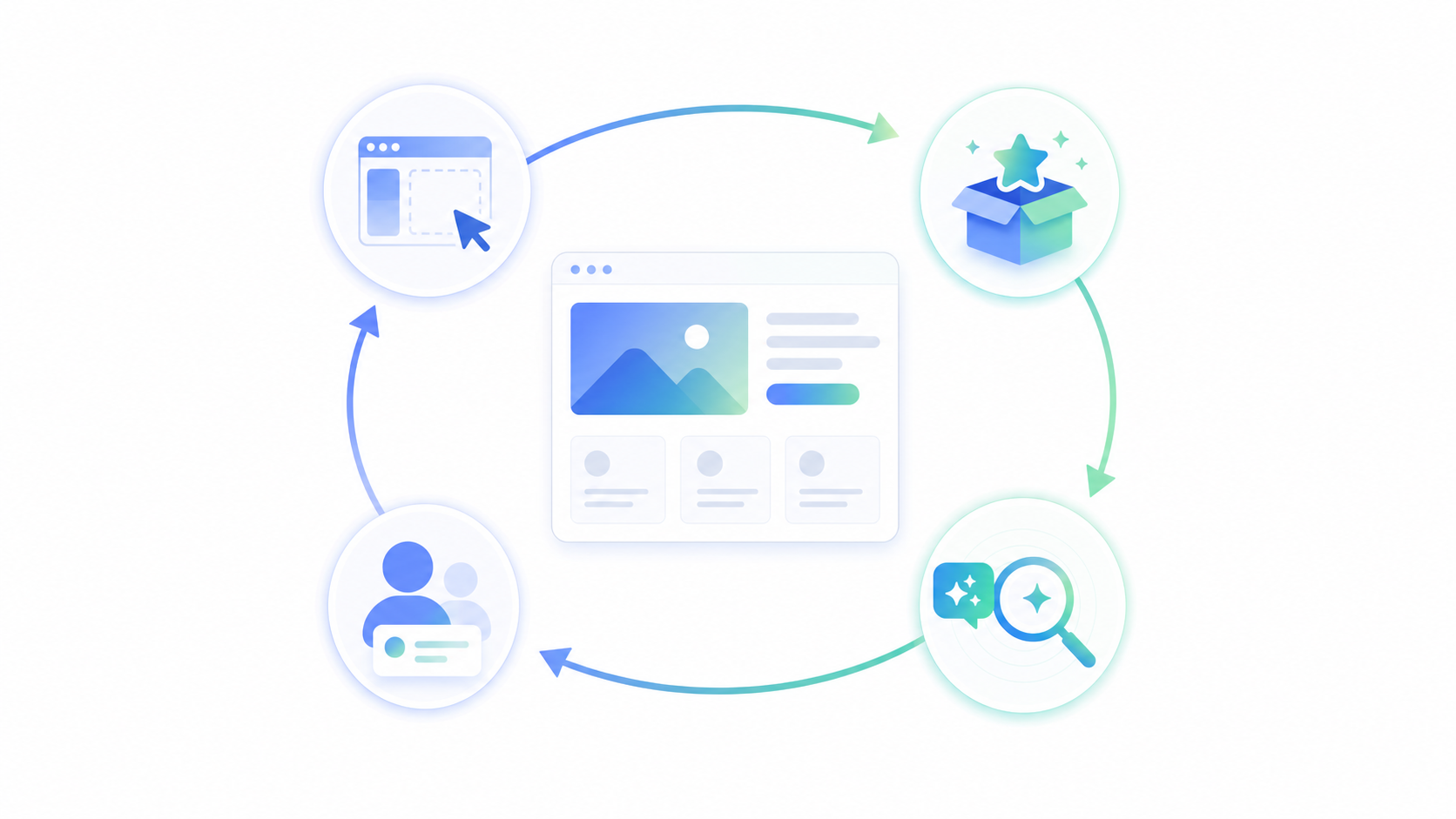
A quick self-check: is your business website ready for AI search?
Use this table.
Question | If the answer is no |
Can your homepage explain what you do in 5 seconds? | Fix positioning first |
Do product or service pages answer real customer questions? | Add FAQs, use cases, process |
Do you have case studies or proof? | Build case studies and testimonials |
Do you have comparison or alternative pages? | Add comparison content |
Does your website publish content consistently? | Create a content plan |
Does each page have a clear CTA? | Improve the inquiry path |
Do you review Search Console regularly? | Build SEO / GEO review rhythm |
Can you tell which pages generate leads? | Add data monitoring |
If most answers are no, do not start by trying to “please AI.”
Start by making your website a real business asset.
AI search will not magically save a confusing website.
FAQ
1. What is the Google Search Console Generative AI performance report?
It is a new Search Console report view that shows how your website URLs perform in Google Search generative AI features, including AI Overviews and AI Mode. Current dimensions include impressions, pages, countries, devices, and dates.
2. Can the report show clicks from AI Overviews?
Google’s documentation mainly emphasizes impressions, meaning how often URLs were shown in generative AI features. Industry coverage also notes that full click data is not currently included. Google may add more metrics later, but today this should not be treated as a full conversion report.
3. Why can’t I see the report in Search Console?
The report is being rolled out gradually, so not all properties have access. Your site may also not have enough impressions in Google’s generative AI features yet.
4. Does appearing in AI Overviews or AI Mode mean I rank better?
Not exactly. Traditional rankings and generative AI visibility are related but not identical. AI search cares about whether your page can support an answer, clearly address a question, and provide trustworthy, well-structured information.
5. Should business websites do GEO for AI search?
Yes, but GEO should not be separated from SEO. The better approach is to build a clear, trustworthy, understandable showcase website with strong SEO, content structure, FAQs, case studies, comparison pages, and conversion paths.
Related Tools
Sources
Conclusion
Google Search Console’s new generative AI reports make one thing clear:
AI search visibility is becoming part of business website growth.
But this does not mean traditional SEO is dead.
Actually, technical clarity, content structure, page quality, brand trust, and data review may matter even more.
AI Overviews and AI Mode do not create business opportunities out of nothing.
They are more likely to surface websites that are clear, structured, trustworthy, and ready to answer user needs.
So the real question is not whether AI will steal your traffic.
The more practical question is:
When AI search starts showing answers in your industry, is your website eligible to appear there?