
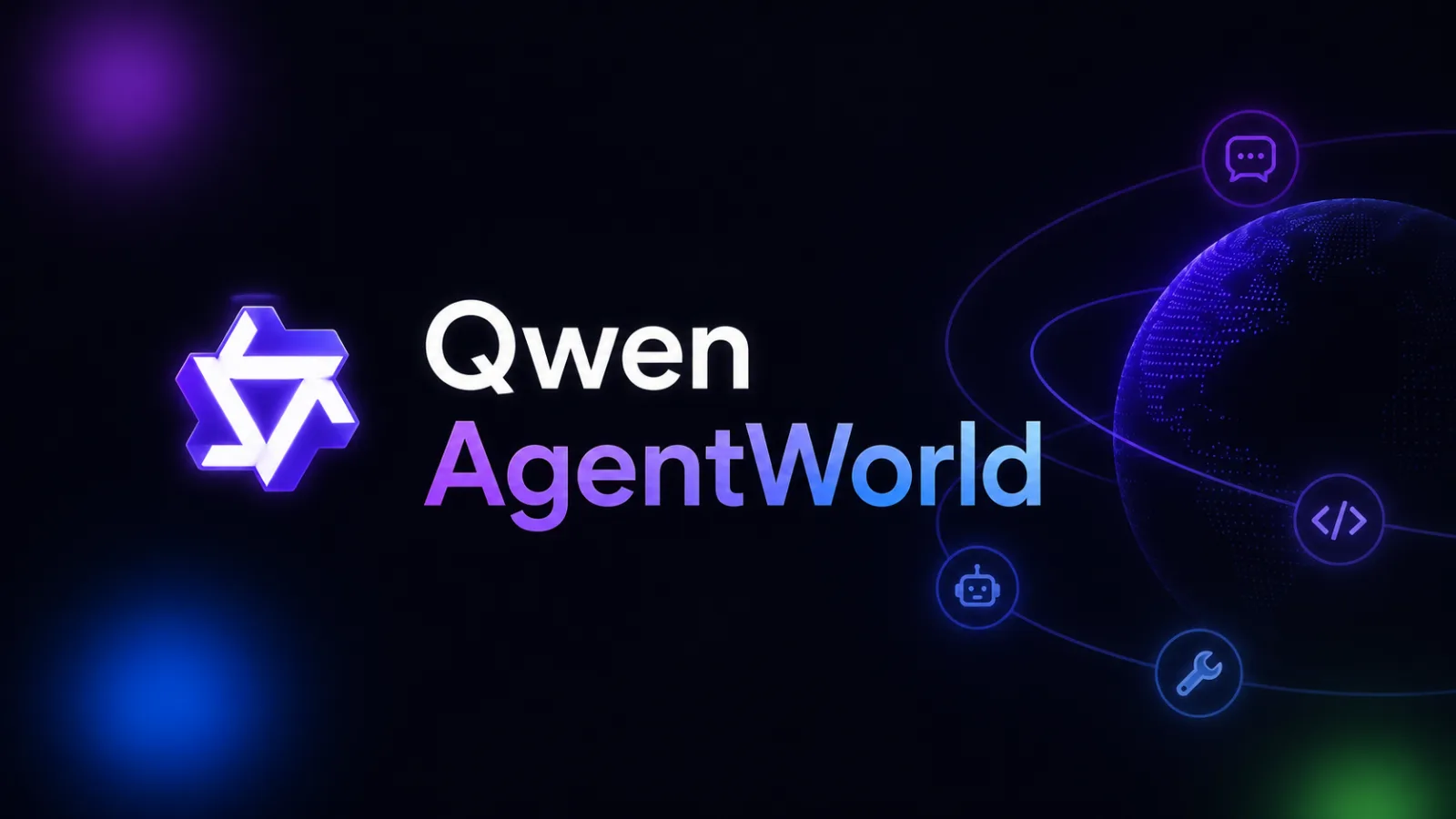
When people first see Qwen AgentWorld, the first reaction is probably:
Another large model? Another agent framework? Another benchmark?
But this one is a little different.
Qwen AgentWorld is trying to answer a deeper question: can an AI agent practice inside a simulated world before it acts in the real one?
That matters.
Because when we talk about AI agents, we usually talk about whether they can plan, call tools, write code, browse the web, or use a terminal.
But the real problem is not just whether the model can “think”.
The harder question is:
After the agent takes an action, how does the environment change? What happens next? Where can it fail? Can it test the path before touching production?
That is where Qwen AgentWorld becomes interesting.
It is not simply about making a model answer questions. It is about teaching a model to understand how environments respond to actions.
In plain words:
understand the world first, then act.
This matters for AI agents, automated deployment, and even website growth.
Especially for the kind of work We0 AI cares about:
not just creating a good-looking page, but helping a website go live, showcase clearly, keep improving, grow traffic, and generate leads.
First, what exactly is Qwen AgentWorld?
According to Qwen’s official release and the paper, Qwen AgentWorld is a language world model for general AI agents.
A simpler way to say it:
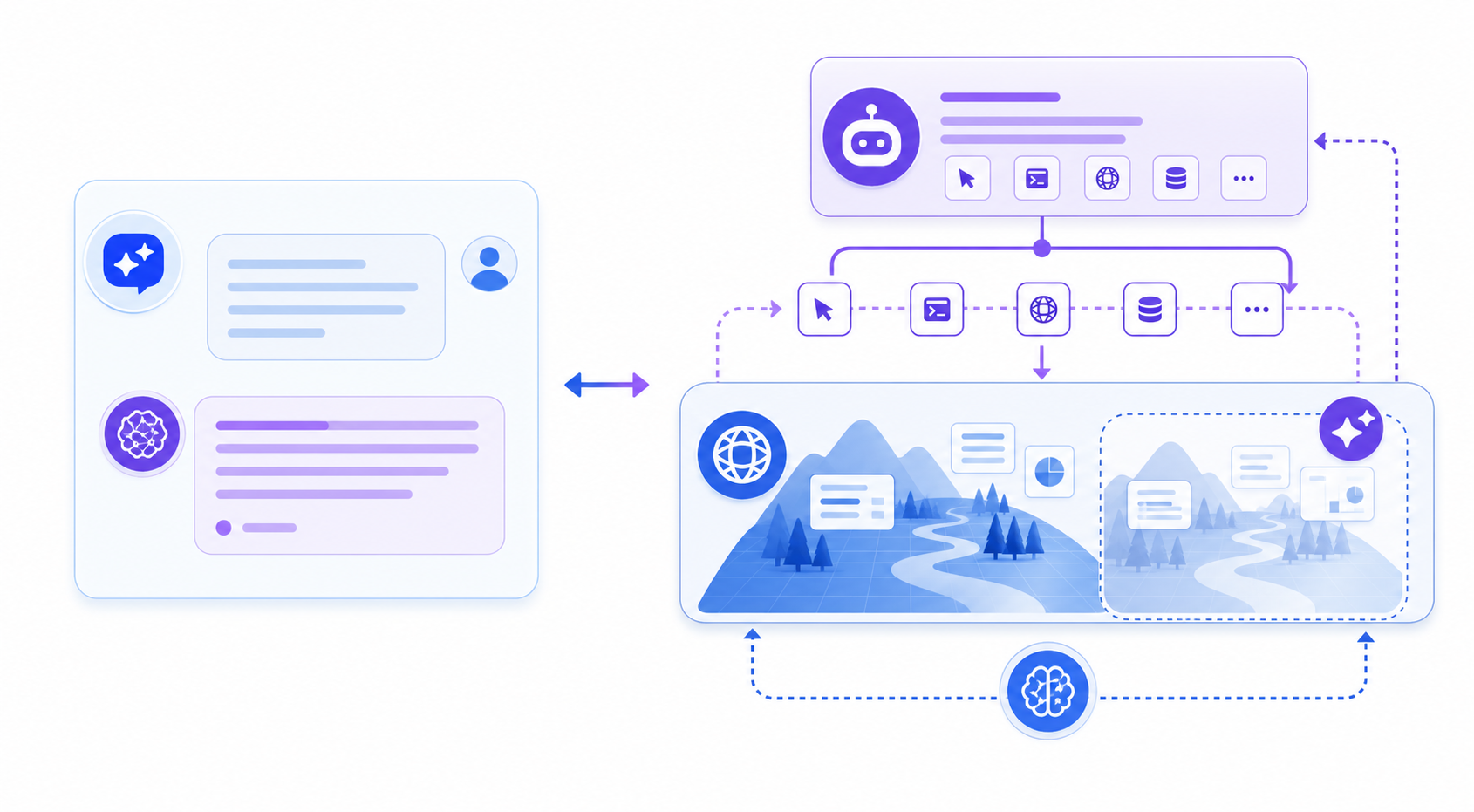
It does not only predict the next word. It tries to predict what the environment will look like after an agent takes an action.
For example:
If an agent clicks a button on a website, what changes on the page?
If it runs a command in the terminal, what output appears?
If it edits a codebase, what tests may fail?
If it performs an action inside a mobile app, how does the screen state change?
A traditional language model is mostly good at “saying things”.
Qwen AgentWorld is closer to “simulating what happens when something is done”.
The key term here is world model.
In AI, a world model usually means a model that can predict environment dynamics:
current state + action = next state.
It sounds abstract, but for agents it is very concrete.
A useful agent does not just break a task into step 1, step 2, step 3.
It also needs to know:
After step 2, did the world change? How did it change? Should step 3 still happen?
That is the line between an agent that can write a plan and an agent that can actually get work done.
What agent environments does Qwen AgentWorld cover?
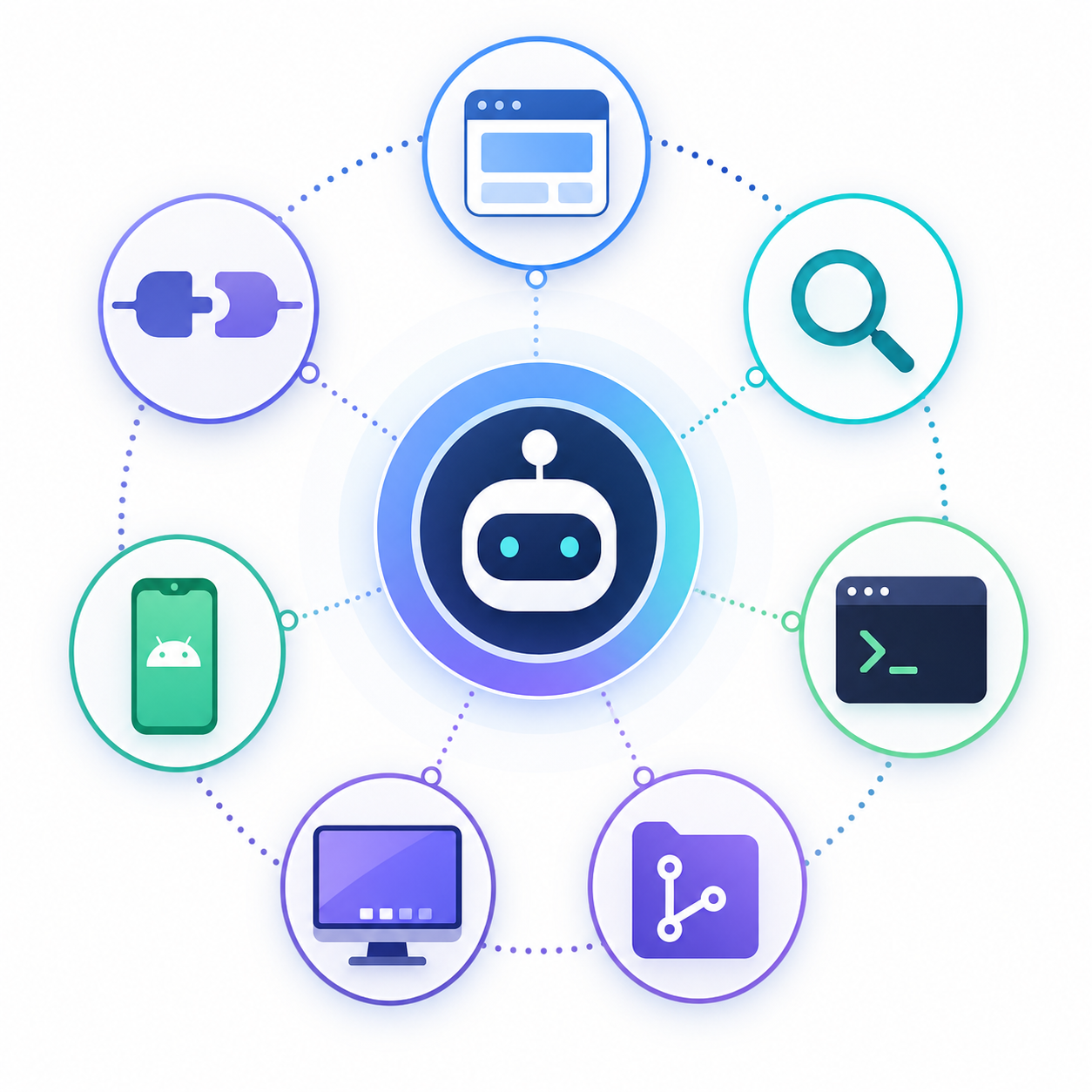
One important part of Qwen AgentWorld is that it brings multiple agent interaction environments into one model.
The official release mentions seven agent interaction domains:
Environment | What it roughly means | Why it matters for agents |
MCP | Tool protocol / tool connection | Helps agents understand tool-calling flows |
Search | Search environment | Helps agents retrieve, filter, and judge information |
Terminal | Command-line environment | Helps agents understand commands and outputs |
SWE | Software engineering | Helps agents work with code, repositories, tests, and fixes |
Web | Website environment | Helps agents understand web actions and state changes |
OS | Operating system | Helps agents handle broader desktop tasks |
Android | Mobile environment | Helps agents understand app workflows |
The important part is not just that there are “many environments”.
The important part is this:
Real agent work is naturally cross-environment.
If you ask an agent to help launch a website, it may need to:
search for references;
write page copy;
generate code or configuration;
run deployment commands;
open the website and check the result;
improve the page based on data;
connect SEO metadata, analytics, and lead capture.
That is not a single task.
That is a workflow.
So if a model can only answer “how to do it”, it is still far from real automation.
The real gap is whether it can understand state changes inside the workflow.
Why does it matter for AI agents?
One of the biggest problems with AI agents today is that they often look smart, but break easily.
You give them a task, and they can write a beautiful plan.
But once they enter a real website, a real terminal, or a real codebase, things get messy:
the page structure is different from what they expected;
the command fails;
the API returns something unexpected;
a code fix introduces another bug;
search results are noisy;
the user path breaks in the middle.
This is not just a prompt problem.
It is an environment prediction problem.
Qwen AgentWorld is meaningful because it moves the training target one step deeper:
not only training the agent to output actions, but training the model to understand what happens after those actions.
1. Agent training can become more controllable
Training in real environments is expensive and messy.
You cannot let an unstable agent randomly click around production systems, run commands, or modify files forever.
But if there is a good enough environment simulator, agents can make mistakes there first.
It is similar to pilots training in a flight simulator.
Not because the simulator is the same as reality.
But because it lowers the cost of failure and exposes many basic mistakes early.
2. Agent evaluation becomes closer to real work
Traditional benchmarks often ask whether an answer is correct.
But agents are not just about answers.
Agents are about whether the task moves forward and whether the environment changes correctly.
That is why the paper also introduces AgentWorldBench, built from real-world interactions.
This points to a broader shift:
Future agent evaluation will not only ask “does it sound right?” It will ask “did the world change in the right way?”
3. Agents become better suited for long workflows
Long workflows are hard because every step affects the next step.
If the first search is wrong, the content will be wrong.
If the second configuration is wrong, deployment fails.
If the page structure is wrong, SEO and conversion suffer later.
The value of a language world model is that it helps agents build a stronger prediction of the next state.
It does not magically make agents fully autonomous overnight.
But it does move them closer to reliable execution.
What does it mean for automated deployment?
Automated deployment sounds like an engineering topic.
But at its core, it is also an agent topic.
A deployment workflow contains many “action -> state change -> judgment” loops:
install dependencies;
write configuration;
build the project;
deploy to a server or platform;
check whether the website is accessible;
read error logs;
fix build failures;
update DNS, SEO metadata, and sitemaps;
verify the result again.
This is not a straight line.
It is a loop.
The weakness of many automation tools is this:
They are good at executing fixed steps, but weak at handling changes inside the process.
Agents are valuable because they can handle change.
But without environment understanding, the agent itself becomes another risk.
So Qwen AgentWorld gives us a useful signal:
Automation is not about connecting buttons. It is about helping the system understand what happens after each button is pressed.
This is especially important for website deployment.
Because a website is not “done” when it goes live.
After launch, you still need to know:
whether search engines can crawl it properly;
whether title and description are clear;
whether the conversion path is obvious;
whether content can be updated continuously;
whether traffic data is being monitored;
数分で紹介サイトを作り、リード獲得を伸ばす
アイデアを一文で入力するだけで、We0 AI が紹介サイト、ページ、CMS を生成し、公開後の顧客獲得と流入拡大を支援します。
無料登録で完全なプロジェクトを 1 つ生成
1 つの完全な生成フローを試し、最初のプロジェクトのドラフトをすぐに確認するのに最適です。
whether the site can keep improving based on data.
Real automated deployment will eventually move from deploying pages to deploying growth systems.
That is also the point We0 AI keeps emphasizing.
Building the website is not the end.
Launch is only the beginning.
What does it have to do with website growth?
This may be the part many people do not expect.
Qwen AgentWorld looks like an agent research topic. So why does it matter for website growth?
Because website growth is becoming more and more like an agent workflow.
Seriously.
A showcase website that keeps growing has to go through many repeated actions:
Growth task | How it was usually done | How it may work with agents |
Keyword research | Manual research and competitor checks | Agents retrieve, cluster, and judge search intent |
Page planning | Humans write structure manually | Agents generate structure from business goals and keywords |
Content production | Humans write articles | Agents help create SEO/GEO content with consistent style |
Publishing | Developers or operators publish manually | Agents handle checks, configuration, and publishing |
Data monitoring | People review dashboards regularly | Agents detect changes and summarize insights |
Page optimization | Copy is changed by experience | Agents suggest changes based on traffic and conversion data |
Lead capture | Forms, emails, CRM are separated | Agents help organize leads and next steps |
Growth is not one action.
Growth is a series of continuous actions.
And the hard part of continuous action is that the environment keeps changing.
Search results change. User behavior changes. Page performance changes. Conversion paths change.
So the future of website growth is not just “AI writes a few articles”.
The bigger question is whether AI can continuously understand the state of a website and push the next optimization forward.
That is the indirect meaning of Qwen AgentWorld for website growth.
It points to a direction:
AI agents are not just content assistants. They are becoming growth execution systems.
For We0 AI, the signal is clear
We0 AI is not a generic AI website builder.
That distinction matters.
If the product were only about “type one sentence and generate a page”, then Qwen AgentWorld would not be very relevant.
But We0 AI is really about:
Build -> Showcase -> Grow -> Leads
That means:
Build: create the website;
Showcase: present products, services, cases, and work clearly;
Grow: keep improving through SEO, GEO, content, and page optimization;
Leads: turn visitors into inquiries, bookings, demos, and customers.
This whole chain is basically a long-term agent workflow.
Especially for:
SaaS and AI product teams;
indie hackers and independent developers;
agencies, consultants, and freelancers;
export businesses;
creators, experts, and designers;
local service businesses.
These users do not just need a page.
They need:
a website asset that can go live, explain the business clearly, be discovered by search and AI recommendations, and keep generating leads.
That is why We0 AI should not be understood as a simple page builder.
It is closer to:
an AI website platform + showcase website growth team + ongoing optimization system.
The trend represented by Qwen AgentWorld makes this path clearer.
The better agents understand environments, the more they can participate in real growth workflows.
In the future, an agent may help you more reliably:
notice that a page title is unclear;
detect that a feature page lacks a conversion entry;
add FAQ sections based on search intent;
compare competitor page structures;
find content that should link to a pricing page;
monitor traffic drops and explain possible reasons;
generate and publish new long-tail pages;
connect content, pages, analytics, and leads.
This is not the fantasy version of “AI runs the whole company”.
More realistically:
Agents will first take over parts of repetitive, complex, cross-tool growth work.
And websites are one of the best assets for agents to keep optimizing.
A simple comparison: normal AI website builder vs agentic website growth
Dimension | Normal AI website builder | Agentic website growth platform |
Core goal | Generate pages quickly | Help the website keep getting traffic and leads |
End point | Page generation | Continuous operation after launch |
Focus | Design, templates, layout | SEO, GEO, content, data, conversion |
AI role | Page generation assistant | Execution and optimization assistant inside growth workflows |
Best for | People who only need a quick demo | People with a business, product, or lead generation goal |
Value cycle | One-time delivery | Long-term growth asset |
This table is basically the core idea of the article.
The next stage of AI website building is not just faster page creation. It is more complete growth.
Qwen AgentWorld will not directly build your website for you.
But the direction it represents will influence all agent products:
from generating content to understanding environments;
from giving suggestions to moving actions forward;
from one-time output to continuous optimization.
How should we look at Qwen AgentWorld now?
Do not overhype it.
It does not make agents fully reliable tomorrow.
But do not underestimate it either.
Because it represents a very important research direction:
Agent capability does not only come from stronger language generation. It also comes from stronger world modeling.
For developers, it means future agent training and evaluation will care more about environment simulation.
For automation teams, it means deployment, testing, fixing, and monitoring workflows will become more suitable for agent assistance.
For people building websites and growth systems, it means:
a website can move from a static page into a business asset that AI can continuously understand, improve, and grow.
That may be much more important than “AI can write another article”.
FAQ
Q1: Is Qwen AgentWorld an agent framework?
Not in the traditional sense. It is better described as a language world model that simulates how environments change after agent actions. It focuses on action outcomes and state transitions, not just tool orchestration.
Q2: How is Qwen AgentWorld different from a normal LLM?
A normal LLM mainly predicts text. Qwen AgentWorld focuses more on environment changes after actions, such as web states, terminal outputs, codebase changes, and mobile app states.
Q3: Can it directly automate website deployment?
Not in a simple “plug it in and deploy everything” way. But the world model direction can influence how deployment agents are trained, making them better at understanding actions, feedback, and state changes.
Q4: What does it have to do with We0 AI?
We0 AI helps users build, launch, optimize, and grow showcase websites through SEO/GEO, content, analytics, and lead generation. The agent trend represented by Qwen AgentWorld makes AI more suitable for this kind of long-term, cross-tool website growth workflow.
Q5: Will agents take over website operations?
Not all at once. But many repetitive, cross-tool, data-driven tasks will increasingly be assisted by agents, including keyword research, content updates, page checks, internal link suggestions, performance reviews, and conversion optimization.