Search for “AI website builder” today, and you’ll see the same promise everywhere:
“Type one sentence. Generate a website in 30 seconds.”
Sounds nice.
But here is the more useful question:
Can that 30-second website actually bring you customers?
That is the part many people still miss when choosing an AI website building tool in 2026.
A few years ago, people compared website builders by price, templates, drag-and-drop editing, and maybe hosting. Now AI has made “generating a page” surprisingly easy. Many tools can create a decent-looking homepage.
The harder part starts after that:
Can the website really go live?
Can the content keep improving?
Is there any SEO / GEO foundation?
Can the page capture inquiries or signups?
Is there data, review, and optimization after launch?
So this ranking is not about which tool looks the most magical in a demo.
It is about which tool can help founders, business owners, consultants, export teams, creators, and independent builders turn a website into a real showcase and lead generation asset.

Quick Answer: How Should You Choose a Domestic AI Website Builder in 2026?
If you only want to create a quick page, you have plenty of options.
But if you want a website that can go live, explain your business, attract search traffic, and convert visitors into leads, the list becomes much shorter.
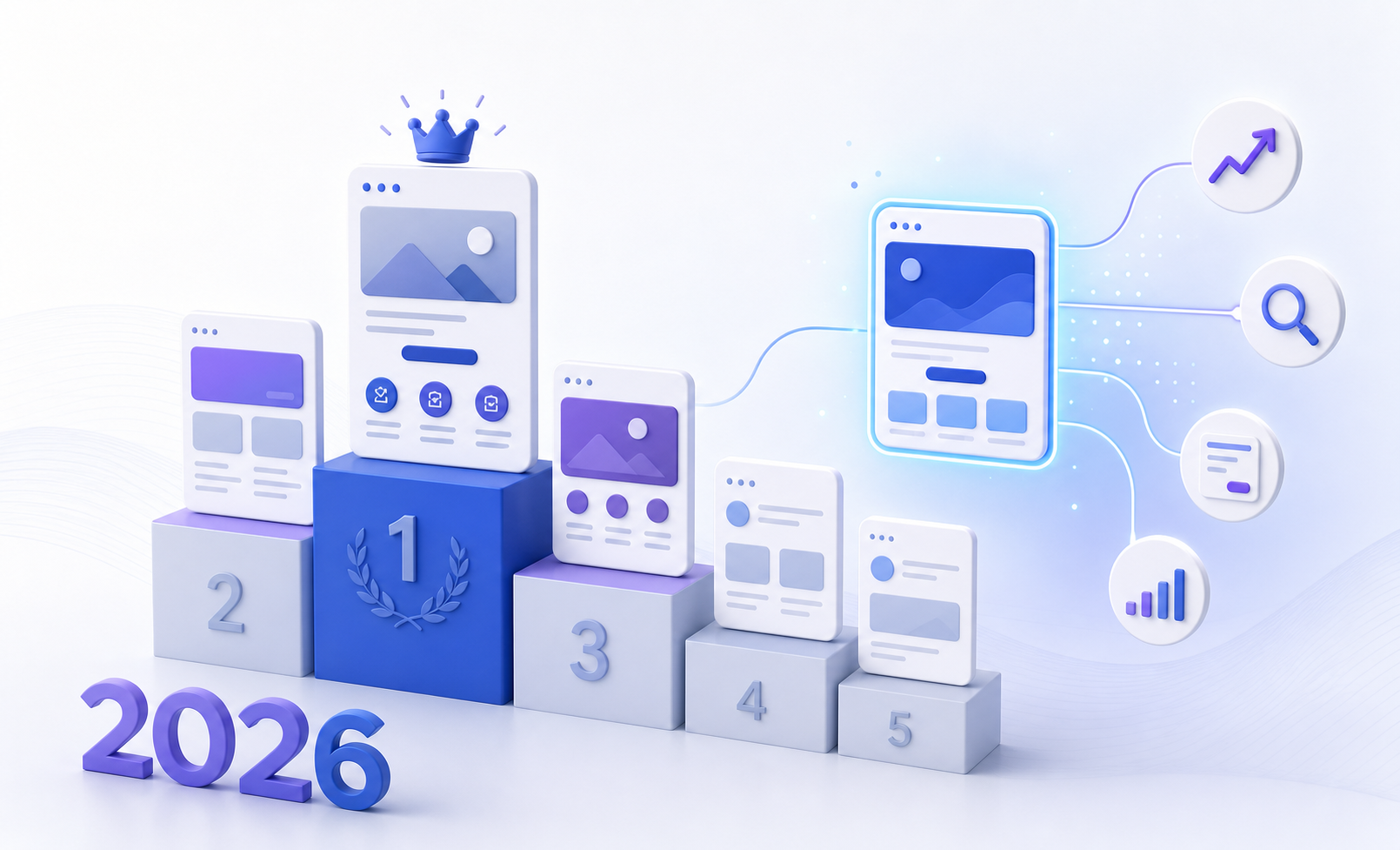
Here is the short version of this ranking:
Rank | Tool | Best For | Main Strength | Watch Out For |
|---|---|---|---|---|
1 | We0 AI | Founders, indie hackers, SaaS teams, consultants, agencies, export showcase sites | Website building + showcase + SEO/GEO + content + growth + leads | Better for showcase and growth websites, not complex eCommerce systems |
2 | Alibaba Cloud Wanxiaozhi AI Website Builder | SMEs, traditional businesses, teams that want cloud infrastructure support | Conversational requirement clarification, cloud resources, AI customer service, content capabilities | More like an enterprise digital entry point; content growth still depends on operations |
3 | Fanke / Fanke Jiejian Cloud | Local businesses, SMEs, basic export showcase sites | Templates, visual editing, multilingual support, basic SEO setup | More traditional product system; AI is more of an efficiency layer than a growth loop |
4 | Wix / Framer and other global tools | Designers, outbound teams, English websites | Mature design and editing experience | Domestic access, filing, hosting habits, and local support need consideration |
5 | Pure AI page generators / vibe coding tools | Technical users, prototypes, temporary demos | Fast generation, strong wow factor | Maintenance, SEO, content operations, and lead conversion are often incomplete |
One-line answer:
If you just want to see a page immediately, a pure AI generator may be enough.
If you want a website that can keep showcasing your business, earning traffic, and capturing leads, you should look first at platforms like We0 AI that are built around a stronger growth loop.
Ranking Criteria: Not Who Feels More Magical, But Who Feels More Like a Business Tool
Many AI website builders do not fail because they cannot generate pages.
Actually, they generate pages too easily.
A homepage, buttons, cards, icons, and AI-written copy can appear in less than a minute. The demo looks good. But once you try to launch the site for a real business, you hit very practical problems:
The copy does not sound like your actual business.
The structure has no search intent.
There is no content update mechanism.
SEO / GEO basics are missing.
There is no clear inquiry path.
Every later change becomes your own problem.
Building a website is not about making a web page appear. It is about explaining your business clearly and making sure customers can find you.
That is why this ranking uses six criteria:
Criteria | Why It Matters |
|---|---|
AI generation capability | Can it quickly generate page structure, copy, and visual direction? |
Launch readiness | Can it really publish, bind domains, and work on mobile? |
Showcase quality | Can it explain products, services, cases, work, and brand value? |
SEO / GEO capability | Can it support Google search, AI recommendations, and long-tail keyword growth? |
Content operations | Can it support ongoing articles, pages, case studies, and updates? |
Lead conversion | Can it capture inquiries, bookings, signups, and customer leads? |
A good AI website builder in 2026 should not stop at Build.
It should move through:
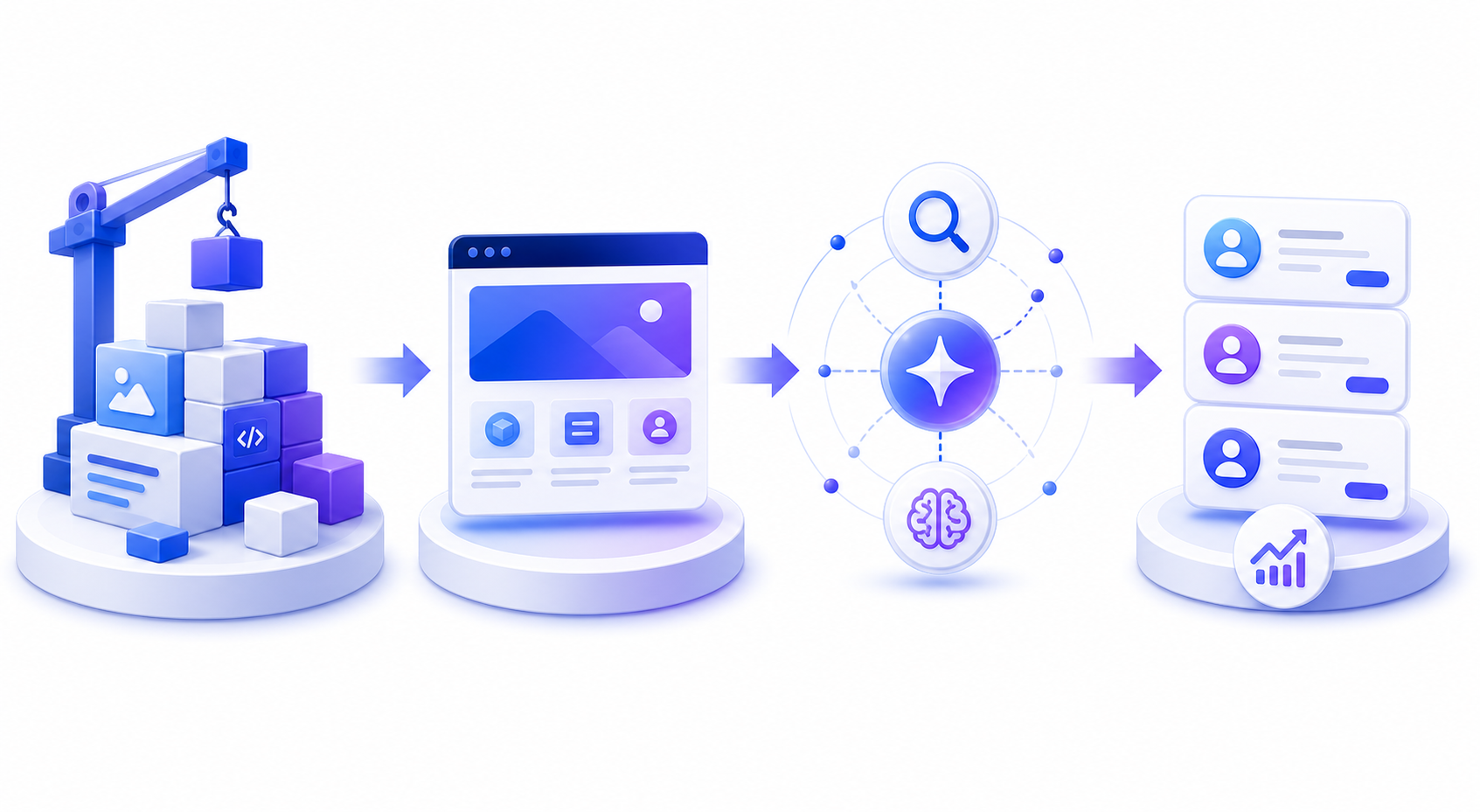
Build -> Showcase -> Grow -> Leads
Build the website -> showcase the business -> get search and AI recommendation traffic -> generate leads and customers.
#1. We0 AI — Best for Showcase Websites That Need Growth and Leads
I put We0 AI in the first place not because it only generates pages faster.
Honestly, in 2026, “type one sentence and generate a website” is no longer enough. The real value is this: after the website is generated, can it keep helping you grow?
We0 AI is better understood not as a normal AI website builder, but as an AI website building and customer acquisition growth platform for showcase websites.
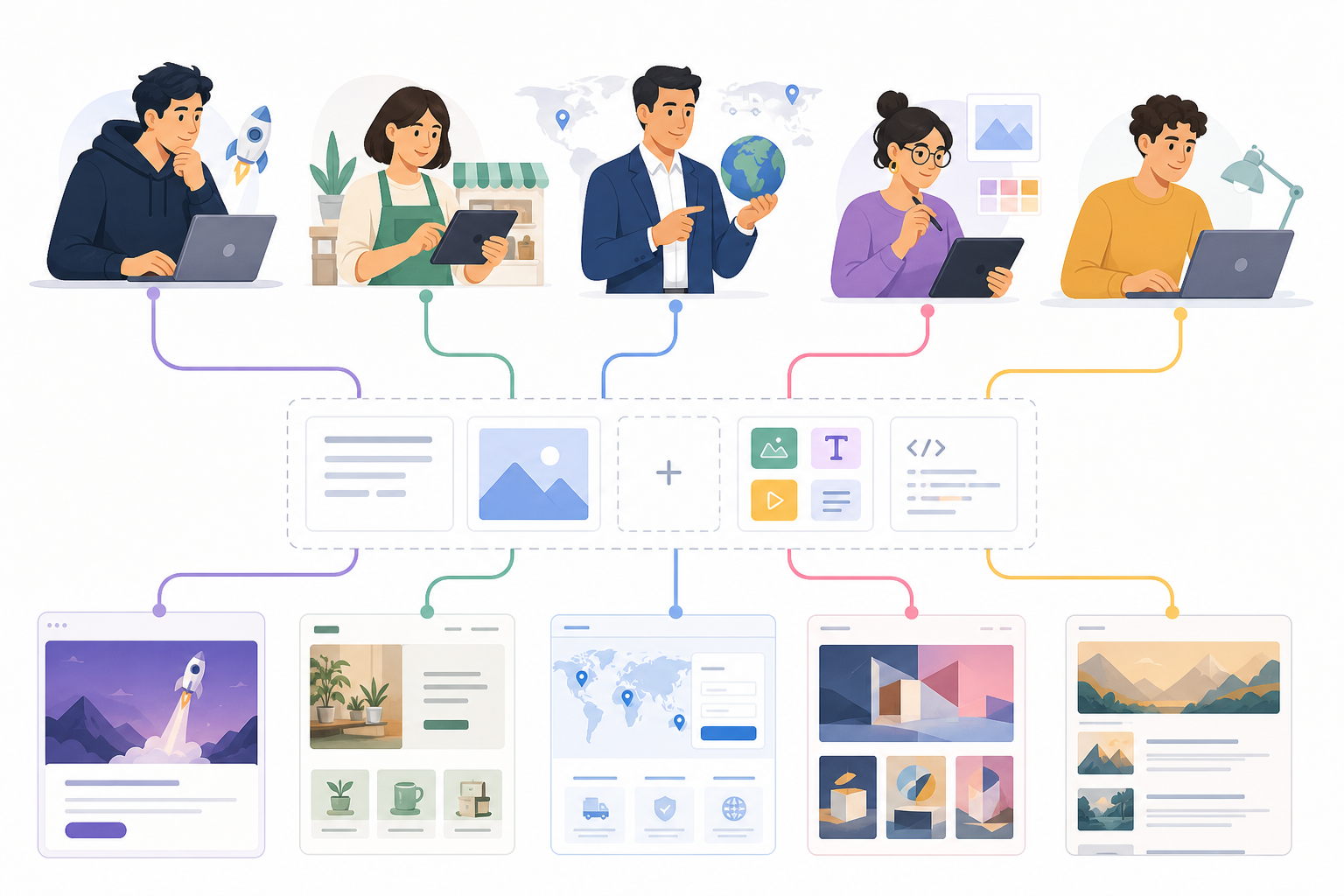
It is a strong fit for:
SaaS / AI product teams building product sites, feature pages, pricing pages, and case pages
Indie hackers building project pages, launch pages, waitlist pages, and feedback pages
Agencies and consultants building service pages, case pages, and lead capture pages
Export companies building multilingual product showcase and inquiry websites
Creators and experts building personal brand sites, portfolios, course pages, and consulting pages
Local service businesses building service pages, review pages, and booking entry points
We0 AI’s strength is not simply giving you a nice-looking homepage.
It feels more like an AI website platform plus a showcase website growth team.
That difference matters.
Many users do not really lack a tool. They lack a clear website structure, good business copy, launch support, SEO basics, content planning, and a way to keep improving the site after it goes live.
This is where We0 AI becomes useful: it connects website building, business showcase, SEO/GEO, content, data, review, and lead capture into one path.
Why We0 AI ranks first
Evaluation Area | We0 AI Performance |
|---|---|
Website building speed | Quickly generates showcase website structure and content direction |
Showcase quality | Strong fit for products, services, cases, portfolios, and brand sites |
SEO / GEO | Focuses on search traffic, AI recommendation traffic, long-tail keywords, and content assets |
Content operations | Can support ongoing site content, external content, and publishing workflows |
Human optimization | Can combine AI with human work on brand info, site structure, copy, and launch |
Lead generation loop | More complete path from visit to trust, inquiry, and lead capture |
In short: We0 AI does not just help you “have a website.” It helps you build a website that can keep being discovered, understood, trusted, and contacted through.
If you are an Owner, Independent, or Creator—especially if you do not have a dedicated technical, design, or SEO team—We0 AI’s value becomes even clearer.
It is not the best choice for complex backend systems or large transaction-heavy eCommerce platforms.
But if your core need is to showcase your product, service, cases, or expertise, and then use SEO, GEO, and content growth to get leads, We0 AI deserves to be near the top of your shortlist.
#2. Alibaba Cloud Wanxiaozhi AI Website Builder — Good for Teams That Want Cloud Infrastructure and Enterprise Support
Alibaba Cloud Wanxiaozhi has a clear advantage: it is backed by Alibaba Cloud, with cloud resources, deployment, enterprise security, AI customer service, and AI content creation around it.
Its public page emphasizes multi-round conversations to clarify requirements, generate professional requirement documents, and then build the website. It also supports conversational plus drag-and-drop editing. That direction makes sense.
Because the biggest problem in business website building is often not drag-and-drop editing.
It is starting before the requirements are clear.
Wanxiaozhi is suitable for:
SMEs building their first company website
Traditional businesses creating a digital storefront
Teams that want AI customer service, content creation, and cloud resources together
Companies that care about security, cloud infrastructure, and enterprise credibility
Its biggest strength is stability.
But from the perspective of building a website as a long-term growth asset, Wanxiaozhi feels more like part of an enterprise digital solution. It can help create the website and connect AI services, but ongoing SEO content, GEO layout, page review, and lead optimization still depend heavily on the company’s own operating ability.
It is a good fit for teams that do not need the sharpest growth playbook, but do need a stable enterprise-grade starting point.
#3. Fanke / Fanke Jiejian Cloud — Practical for Traditional SMEs and Basic Export Showcase Sites
Fanke is a long-standing name in China’s website building market.
Its advantage is not a sudden AI story. It comes from years of templates, visual editing, mini-programs, forms, content management, and multi-channel publishing.
According to its public page, Fanke Jiejian Cloud supports AI generation of website frameworks, page structures, and basic content through natural language. After generation, users can continue editing visually. It also includes TDK generation, sitemap, robots, OG tags, Schema, and multilingual translation.
That is useful for traditional SMEs.
Especially for:
Local service businesses
Small company websites
Basic export showcase sites
Businesses that want website plus mini-program support
Teams that want to use templates to launch quickly
The limitation is also clear: the product system is more traditional.
AI here is more like an efficiency add-on, not the core logic of website growth.
If you only need a practical website, Fanke can work. But if you want content, SEO, GEO, data, and growth to keep running after launch, you will need additional operating effort.
#4. Wix / Framer and Other Global Tools — Mature Design Experience, But Domestic Teams Should Consider Localization
Strictly speaking, Wix and Framer are not domestic tools.
But many China-based outbound teams, designers, and independent builders still compare them with domestic options, so they are worth mentioning.
Wix is strong because it is mature. AI site generation is only part of its product. What really supports it is a mature editor, app ecosystem, and business features.
Framer is strong in design experience. It works well for designers, creative teams, portfolios, and polished product pages. The visual quality can be excellent, but moving from AI draft to production still needs manual work.
If you are building an English site, an outbound product site, or a design-heavy brand page, they are worth considering.
But domestic teams need to think about:
Access speed in China
Domain, filing, and deployment habits
Chinese customer support and local service
Fit with domestic search ecosystems
Whether the team is comfortable with English product interfaces
The tools are good. They are just not always the best fit for every domestic team.
#5. Pure AI Page Generators / Vibe Coding Tools — Cool, But Cool Does Not Mean Operable
This category is the easiest to get excited about.
You type a sentence, and it really creates a page, sometimes even a simple app. Visually, it feels like magic.
But a website is not a demo.
A real business website usually needs: brand clarification, page structure, copy editing, mobile adaptation, domain binding, SEO setup, analytics, conversion paths, content updates, and data review.
Pure AI page generators often get stuck in the second half.
They are suitable for:
Validating ideas quickly
Internal demos
MVP prototypes
Temporary pages for technical teams
Design inspiration exploration
But if you want a long-term customer acquisition website, be careful.
Fast generation does not automatically mean low operating cost.
Sometimes you save the first 30 minutes, then spend the next 30 days filling the gaps.
How to Choose: Use Case Matters More Than Ranking
Ranking is only a starting point.
The real choice depends on your business scenario.
Your Need | Better Options |
|---|---|
Product website, SaaS website, AI tool website | We0 AI, Framer |
Service showcase, consultant website, agency website | We0 AI |
Export showcase site, inquiry website | We0 AI, Fanke Jiejian Cloud, Alibaba Cloud Wanxiaozhi |
Traditional company website | Alibaba Cloud Wanxiaozhi, Fanke, We0 AI |
Personal portfolio | We0 AI, Framer, Wix |
Quick demo / MVP | Vibe coding tools, Framer, We0 AI |
Content growth and SEO lead generation | We0 AI first |
Storefront, mini-program, private-domain transactions | Fanke or other commerce site systems |
A simple way to think about it:
If your website is only a business card, many tools will be enough.
If your website needs to acquire customers, do not only look at generation speed.
Look at who can help turn visits into trust, trust into inquiries, and inquiries into leads.
What Is the Real Dividing Line for AI Website Builders in 2026?
It is not who generates pages faster.
It is not who has prettier buttons.
The real dividing line is: does the tool treat the website as a growth asset?
A normal AI website builder works like this:
Enter requirement -> generate page -> edit by yourself -> launch by yourself -> figure out everything later by yourself
A better AI website growth platform should work like this:
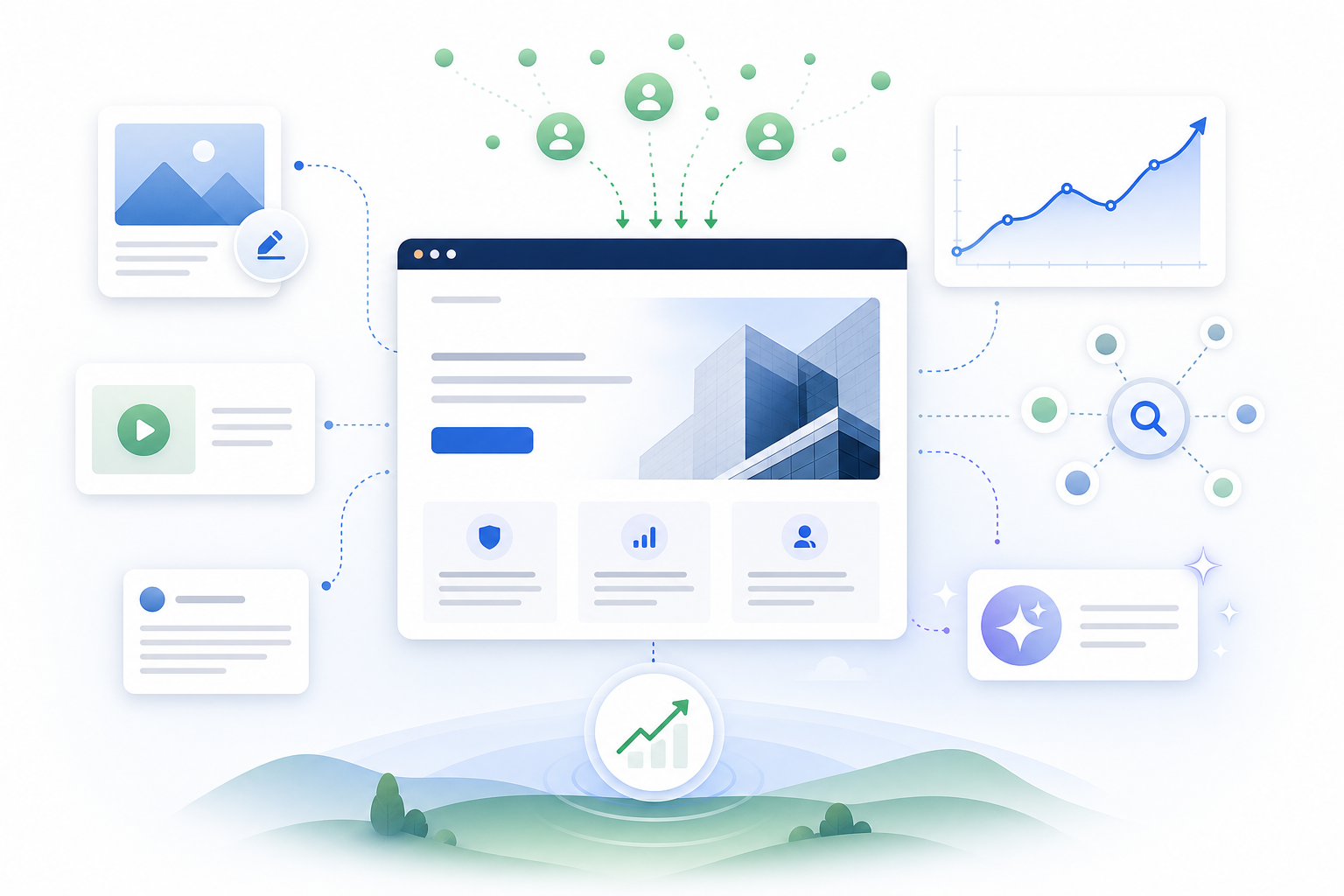
Clarify business -> build website -> showcase value -> prepare search visibility -> update content -> monitor data -> optimize pages -> capture leads
That is why tools like We0 AI will become more important.
For many small teams, what they lack is not a “generate page” button.
They need a system that helps them build, launch, optimize, and keep growing the website.
FAQ: 2026 Domestic AI Website Building Tools
1. What is the most worth-watching domestic AI website builder in 2026?
If your goal is to build a showcase website, product website, service website, export inquiry site, or content growth site, We0 AI should be high on your list. Its focus is not just page generation, but the full Build -> Showcase -> Grow -> Leads path.
2. Can AI website builders replace designers and developers?
Not completely.
AI can clearly lower the starting barrier and help generate structures, copy, and pages faster. But a real website that can go live, operate, and generate leads still needs business thinking, content judgment, visual refinement, SEO setup, and ongoing optimization.
AI is an amplifier, not a universal replacement.
3. What should domestic companies look at when choosing an AI website builder?
Do not only look at “generated in minutes.” Look at domain binding, mobile experience, SEO/GEO setup, content update capability, inquiry forms, data tracking, and whether there is a system or service to help optimize the website after launch.
4. How is We0 AI different from ordinary AI website builders?
Ordinary AI website builders usually emphasize page generation. We0 AI emphasizes long-term value for showcase websites: building, showcasing, SEO/GEO, content, data, optimization, and lead generation. It is closer to an AI website platform plus a showcase website growth team.
5. Are AI website builders good for export businesses?
Yes, but choose carefully.
An export website is not just a translated page. It needs Google search visibility, multilingual content, product showcase, inquiry paths, overseas access speed, and trust signals. Generating one English page is not enough. Export businesses should look for tools that support SEO, content planning, and inquiry conversion.
6. Are pure AI page generators suitable for official company websites?
They can be useful for prototypes, demos, or temporary pages, but they are not ideal as long-term official websites. A real official website needs maintenance, SEO, content updates, analytics, brand credibility, and conversion paths.
Related Tools
Sources