Jul 4, 2026
2026 年提升 AI 搜索可见性的最佳 AI 网站构建器:Wix、Framer、Webflow、We0 对比
到 2026 年,选择 AI 网站构建器不再只是为了更快地生成页面,而是要看你的网站能否被 Google、AI 概览、ChatGPT 式搜索以及其他 AI 发现渠道理解、引用和推荐。本指南将对 Wix、Framer、Webflow 和 We0 进行比较。

Claude Fable 5 has returned globally after a 19-day pause. Here is what the limited promotional access includes, how the 50% weekly usage li...
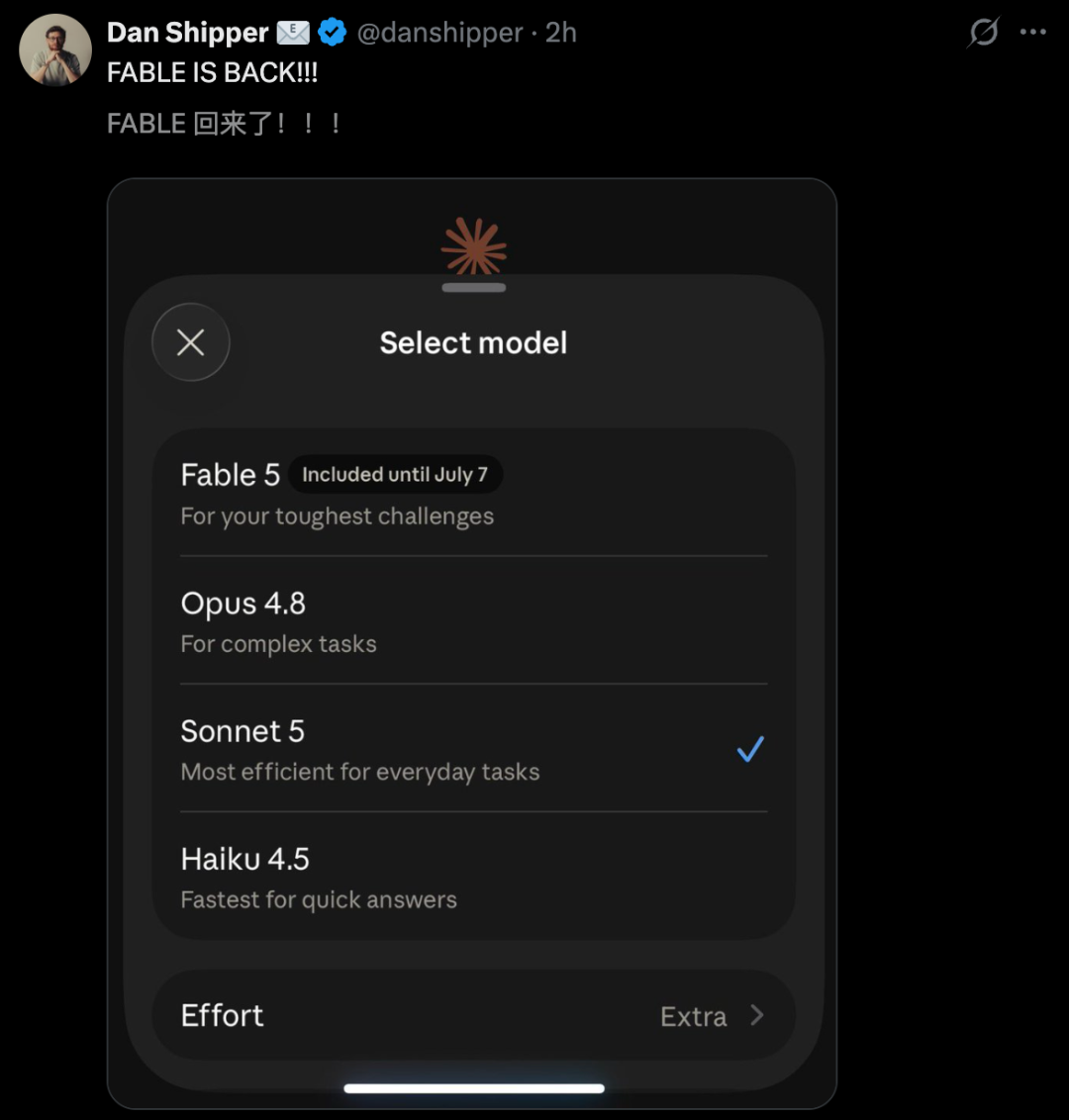
After 19 days of waiting, Claude Fable 5 is finally back. Anthropic has restored access globally, and developers who had been refreshing Claude, Claude Code, and model status pages can now try the model again.
There is one catch: this return is not an unlimited rollout for subscription users. During the promotional window, eligible paid users can use Fable 5 for up to 50% of their weekly plan limit. The window runs from July 1 to July 7, 2026, after which Fable 5 moves out of the included weekly subscription pool and continues through usage credits or API billing.
Source note: this article is based on the original BAAI Hub page, which republishes content from 新智元 via WeChat. The structure, sequence, screenshots, and key facts have been preserved, while the wording has been lightly rewritten and translated into natural English for publishing.
For many users, the first thing they did was open Claude and check whether the familiar model name had returned to the model picker. After almost three weeks of waiting, seeing Fable 5 appear again felt like a small celebration for developers, researchers, and heavy Claude users.
The excitement is understandable, but this comeback comes with strict limits. Until July 7, even paid users on supported plans need to pay attention to weekly usage, shared limits, and the faster token burn rate compared with Opus 4.8.
Anthropic researcher Alex Albert also reacted to the return, welcoming users back into the “Fable” world.
The part most users care about is simple: who can use it, how much can they use, and when does the promotional window end?
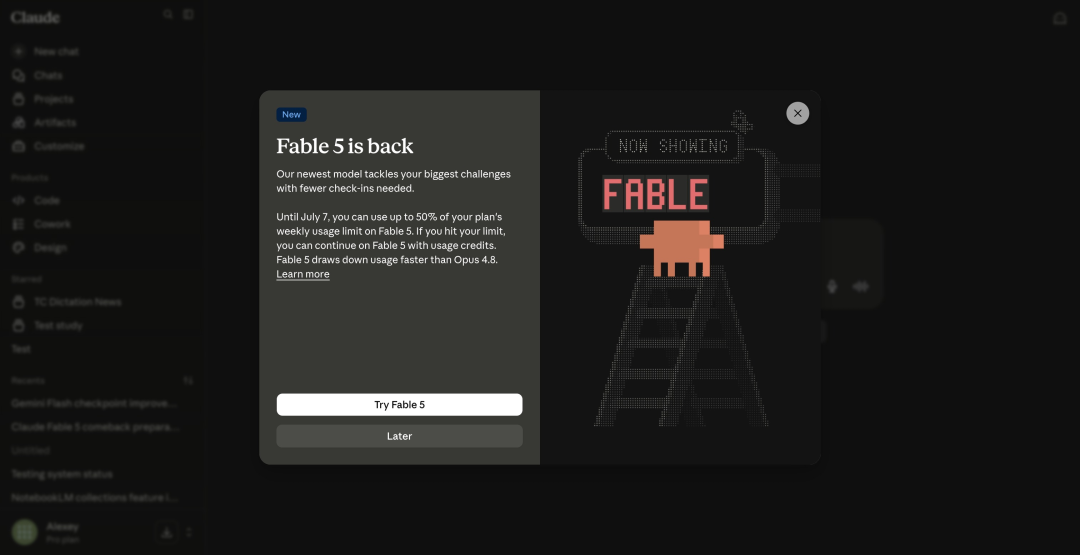
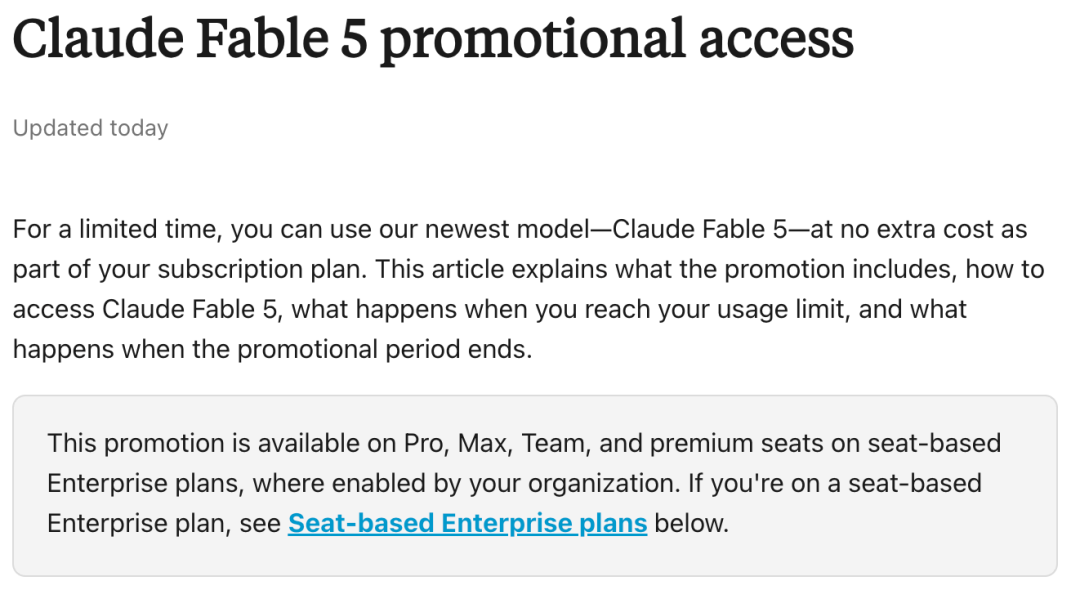
Anthropic’s official Help Center article, “Claude Fable 5 promotional access,” gives the main rules. During the promotional period, Fable 5 is included for eligible paid users, but only up to a capped portion of their weekly plan limits.
The promotional period begins on July 1, 2026 and ends on July 7, 2026 at 11:59:59 PM PT.
During this period, eligible Pro, Max, Team, and premium seats on seat-based Enterprise plans can use Fable 5 as part of their subscription plan, where the feature is available and enabled.
After that deadline, Fable 5 is no longer included in the plan’s regular weekly usage limits. Users can continue using it through usage credits, and API usage is billed separately at standard rates.
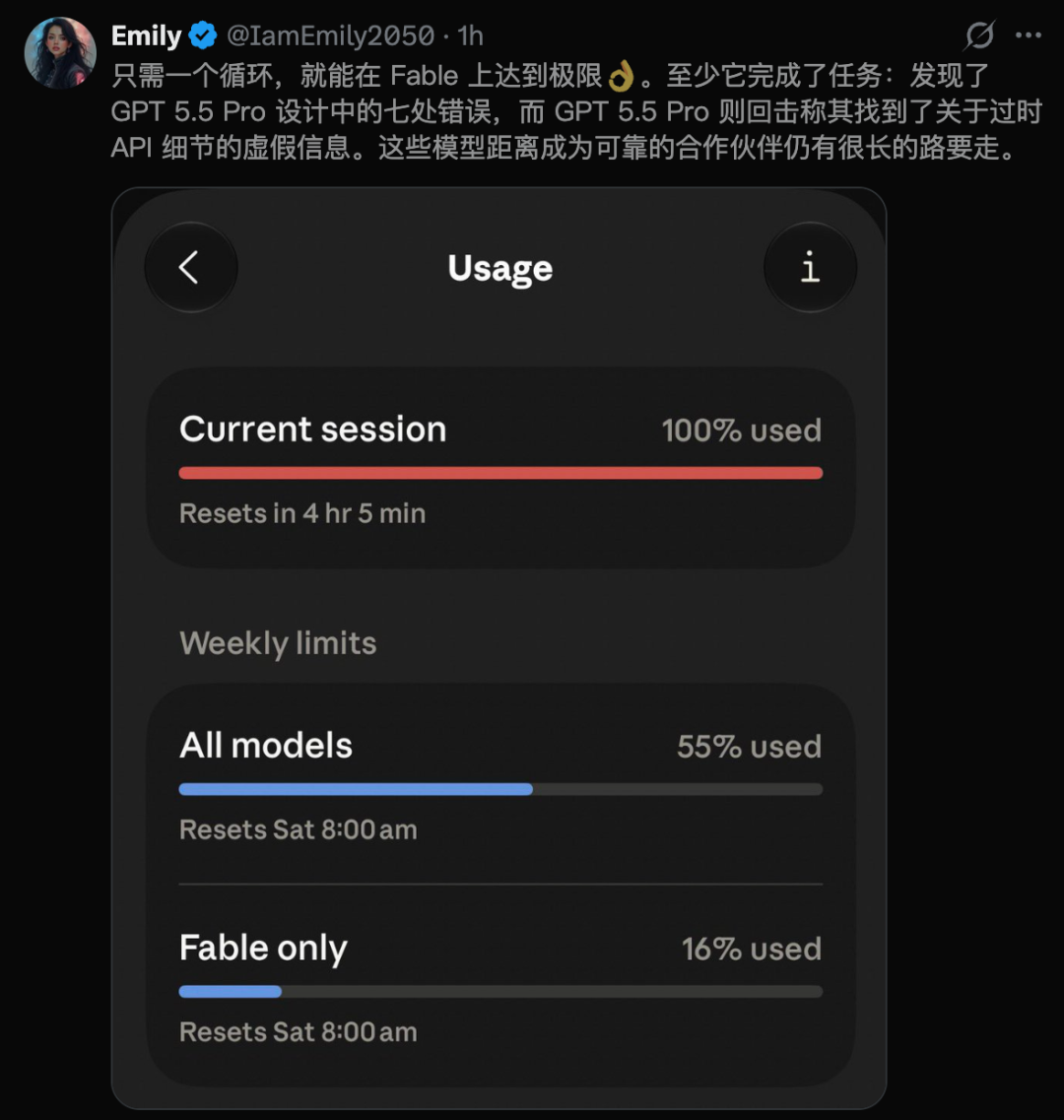
The promotional access is not a separate free quota. It draws from the same regular weekly usage pool as other Claude models.
In other words, users can spend up to 50% of their weekly plan limit on Fable 5. But if they have already used part of their weekly limit on other models, that remaining pool still matters.
For example, if a user has already used half of the weekly limit on other Claude models, the remaining half may be used on Fable 5. The Fable-specific limit does not create extra capacity beyond the plan’s total weekly limit.
Once the Fable 5 portion of the weekly limit is used up, there are two main options:
Enable or use usage credits to keep using Claude Fable 5 with separate billing.
Switch back to another Claude model, such as Opus 4.8, and continue working within the remaining plan limits.
For developers using the API, the subscription promotion does not apply. Claude Fable 5 API usage is billed separately at standard API pricing.
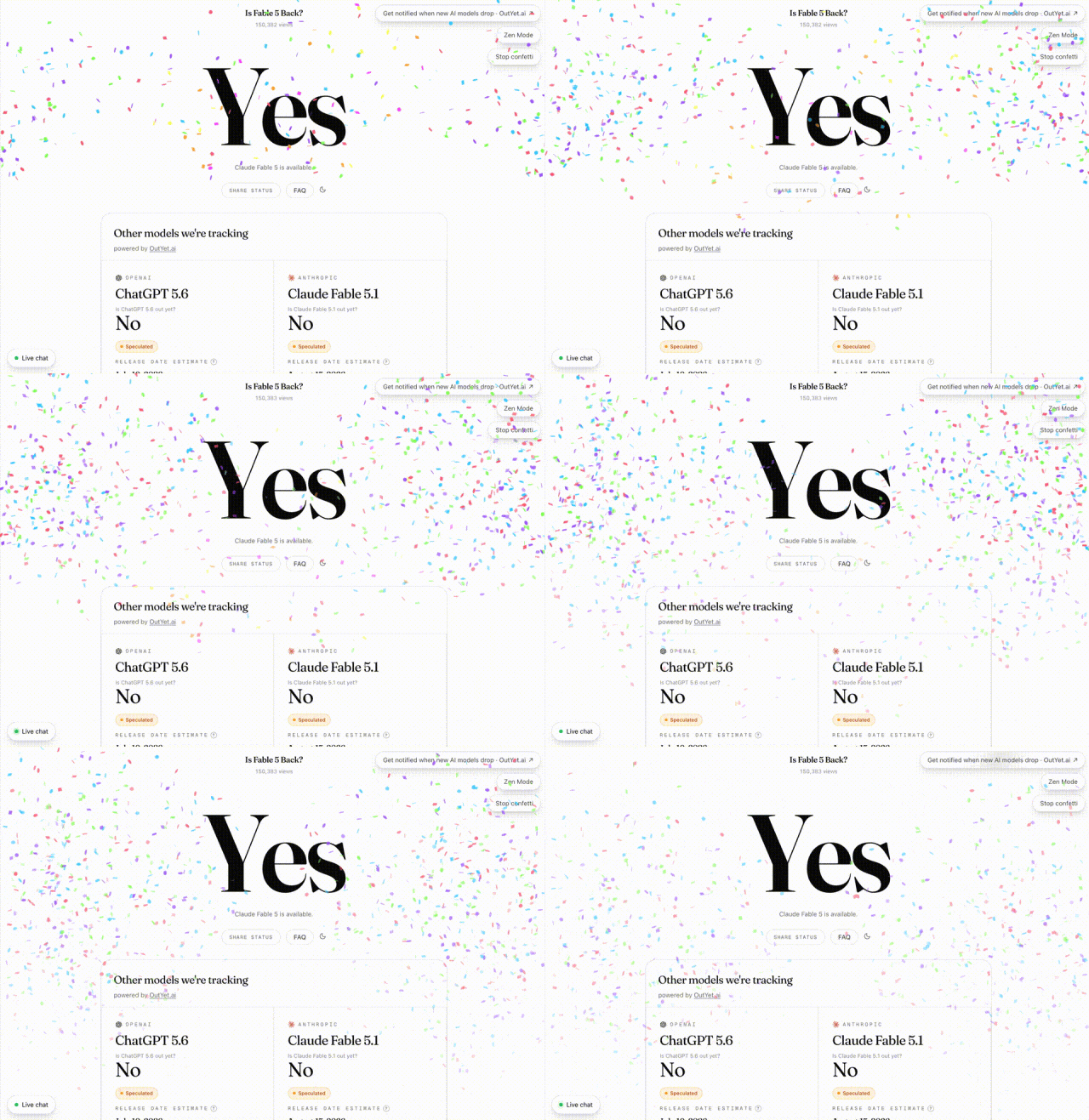
The return of Fable 5 also became a social event. Before access came back, some users had even built a small status website that checked Anthropic’s API every minute to see whether Fable 5 was available again.
When the page finally switched from “No” to “Yes,” it triggered celebration animations and spread quickly through developer communities.
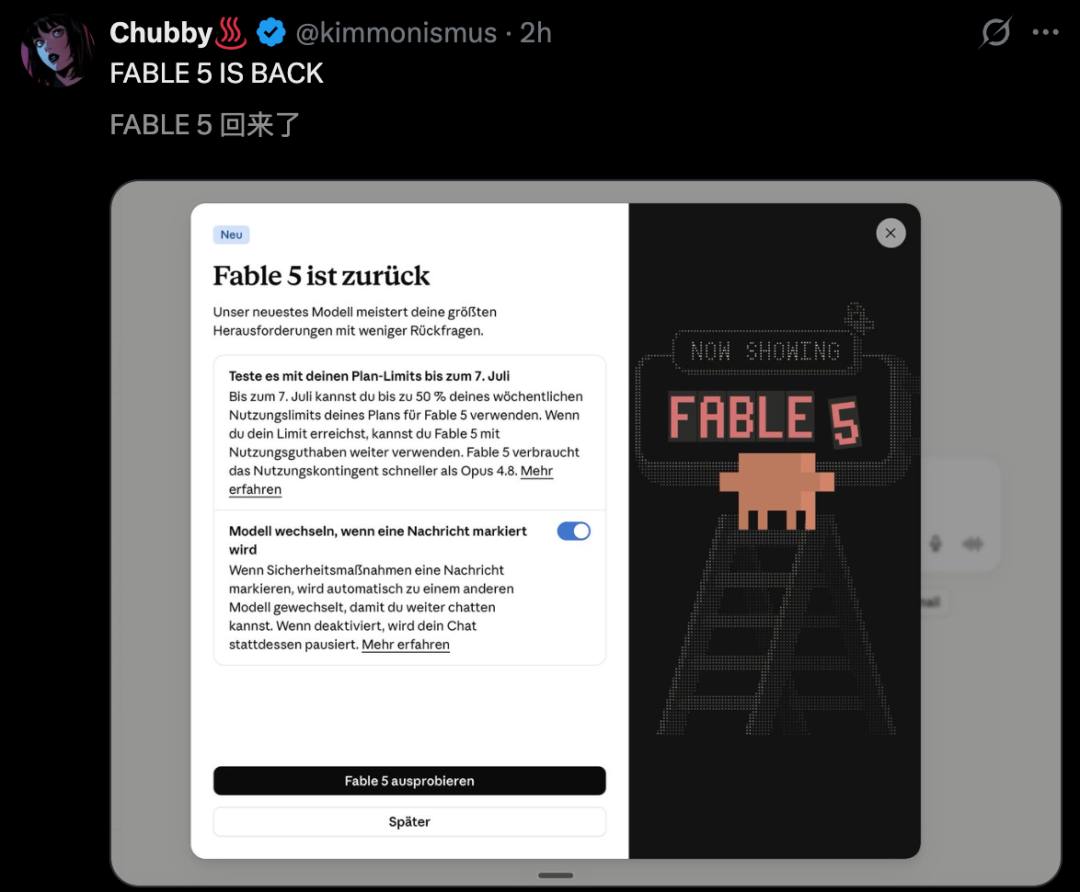
For many Claude users, the reaction was immediate. Screenshots of the model picker, the return modal, and the “Included until July 7” label started circulating across social platforms.
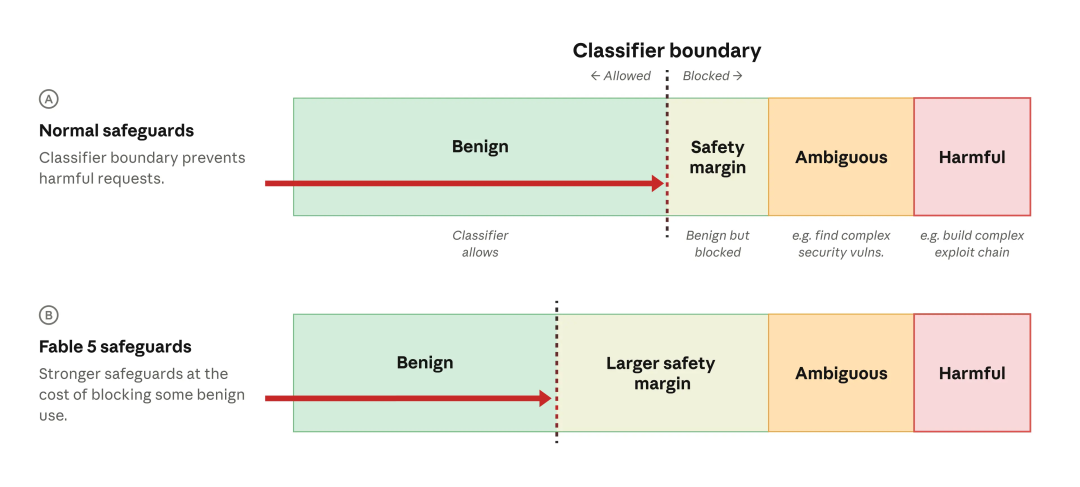
When Fable 5 first launched, some users noticed that even simple tasks could trigger safety restrictions and fall back to Opus 4.8. This time, Anthropic says it has updated its cybersecurity safeguards so that most coding work should not be affected.
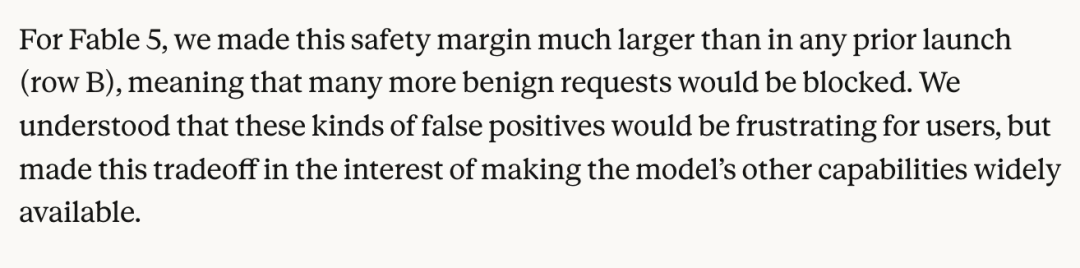
That said, Anthropic also notes that the updated safeguards may temporarily flag more harmless requests than before. When a request is blocked, users should receive a notice, and the conversation may be rerun using Opus 4.8 instead.
The key mechanism here is a safety classifier. It works outside the main model and checks whether a request appears to involve high-risk areas such as offensive cybersecurity, biology, chemistry, model distillation, or certain frontier AI development tasks.
The tradeoff is clear: stronger blocking reduces risk, but it can also make normal users feel like harmless requests are being rejected.
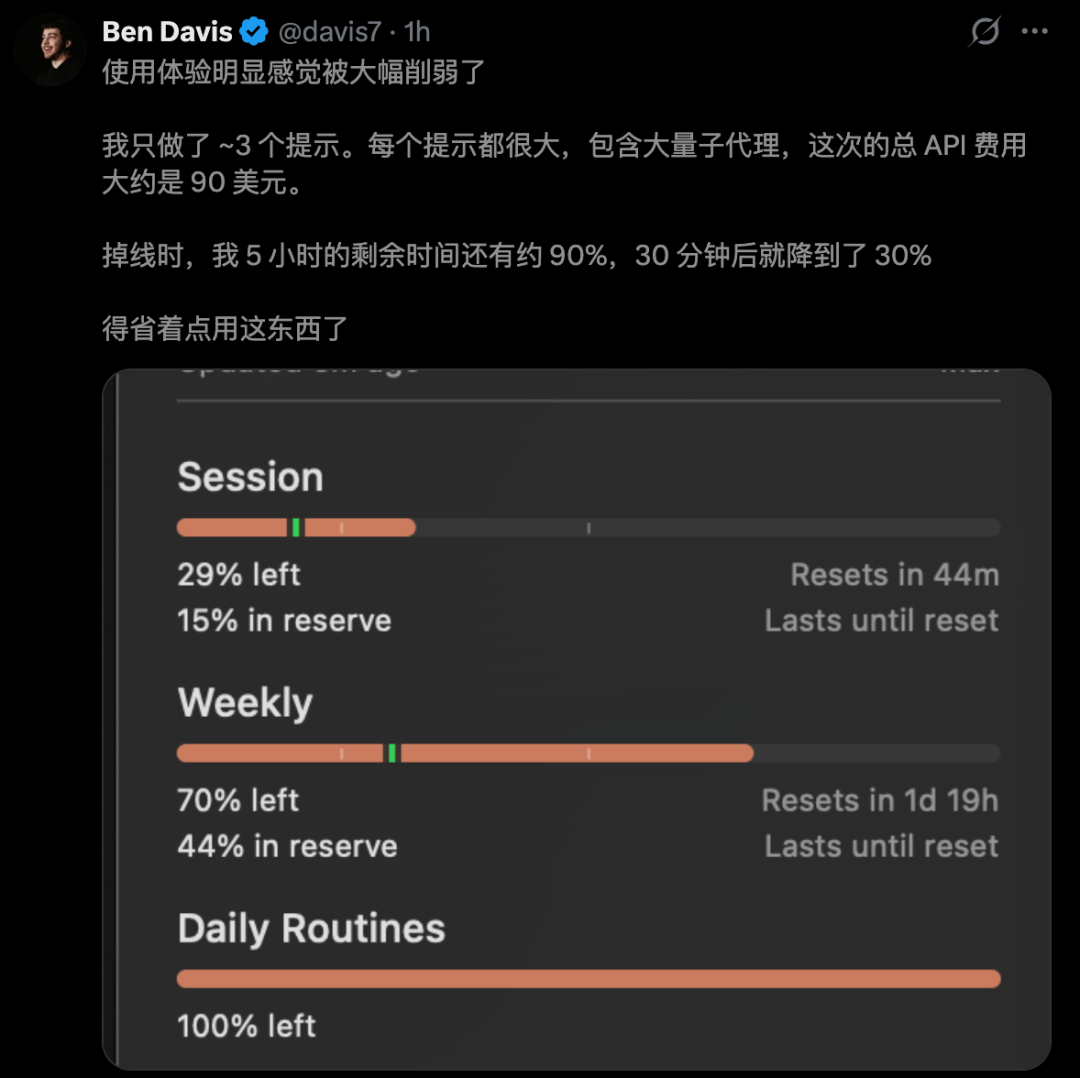
One developer said that after running only three large prompts, the estimated API cost would have been around $90. Another reported that the available limit dropped sharply within a short session.
This is why users should treat the seven-day access window carefully. Fable 5 is powerful, but long-context or multi-agent work can burn through available usage much faster than casual chat.
ClaudeDevs later said user limits had been reset, giving people another chance to test the model during the promotional window.
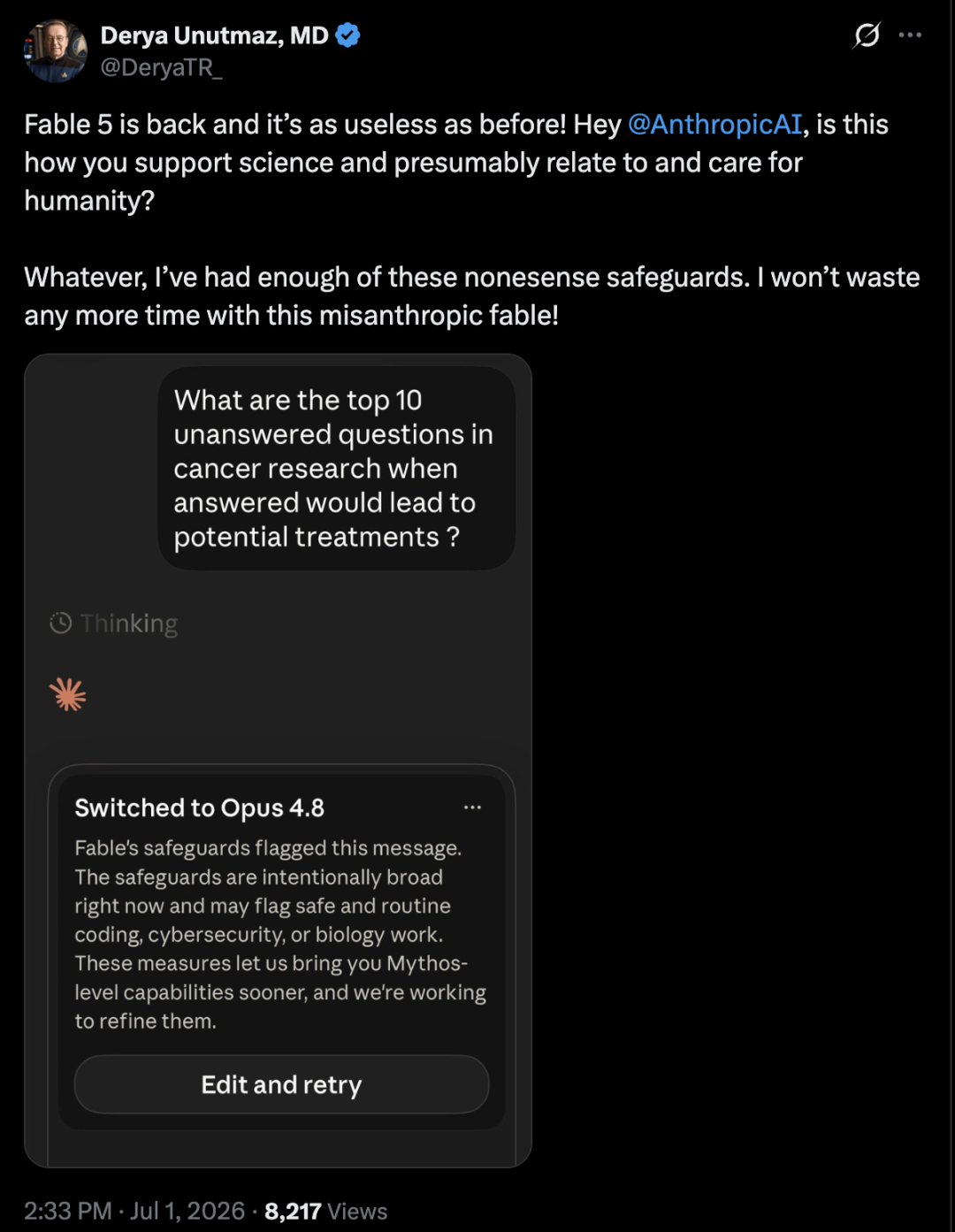
The stricter safety system is also causing frustration. Some users are seeing reasonable prompts fall back to Opus 4.8 or get declined, especially around science, biology, medical research, cybersecurity, and debugging benchmarks.
One researcher complained after a cancer research question triggered a fallback notice, arguing that the safeguard was blocking a scientific use case rather than dangerous misuse.
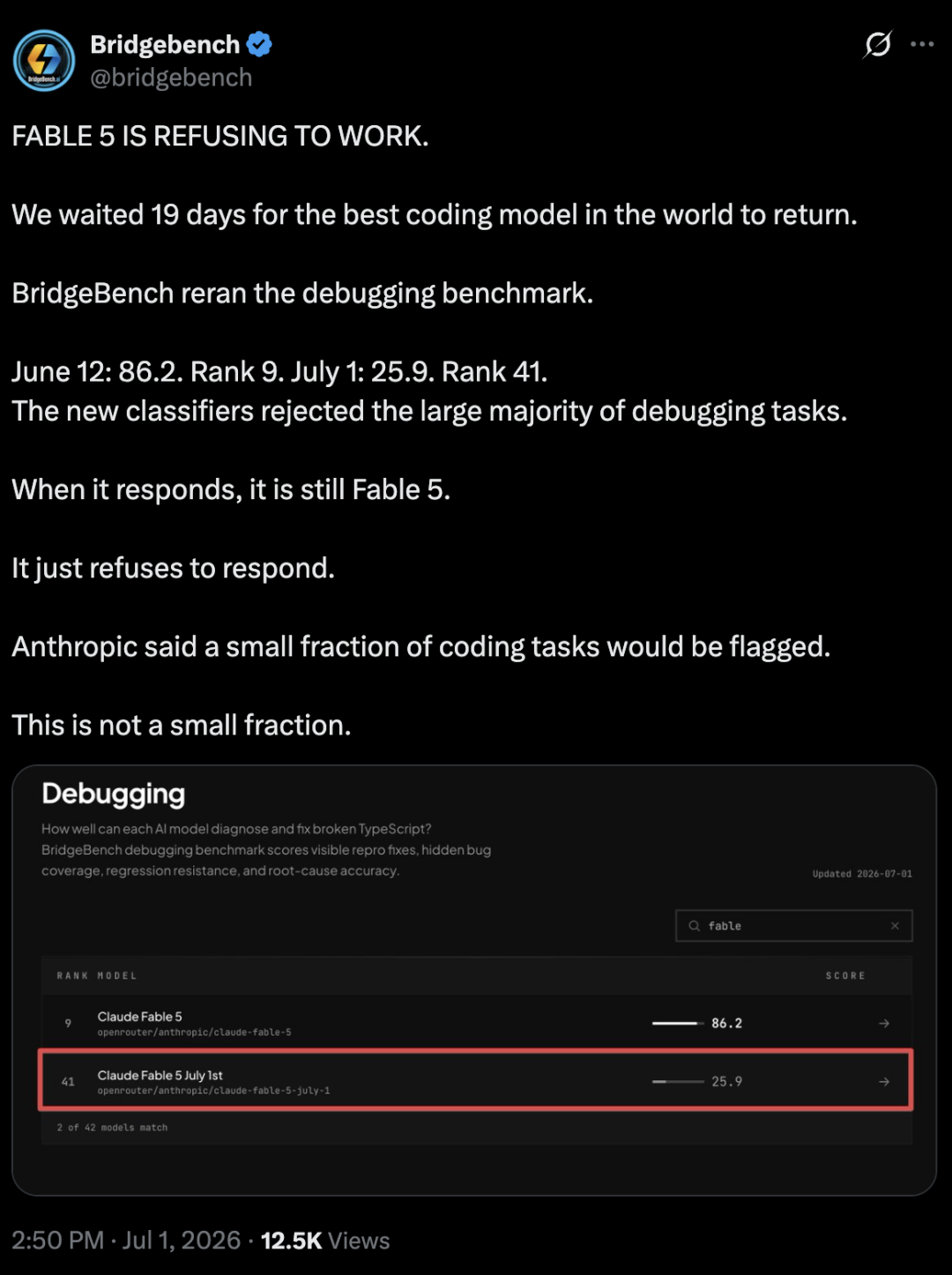
BridgeBench, an AI coding benchmark focused on debugging, also reported that Fable 5 refused many debugging tasks. The benchmark said the model’s rank dropped sharply in its rerun, not because the model was weaker when it answered, but because it often refused to respond.
This is the main user-experience tension around Fable 5’s return: the model is available again, but its broad safety margin can still interrupt tasks that users consider normal or legitimate.
Beyond the usage drama, Fable 5 is also drawing attention because of its benchmark performance.
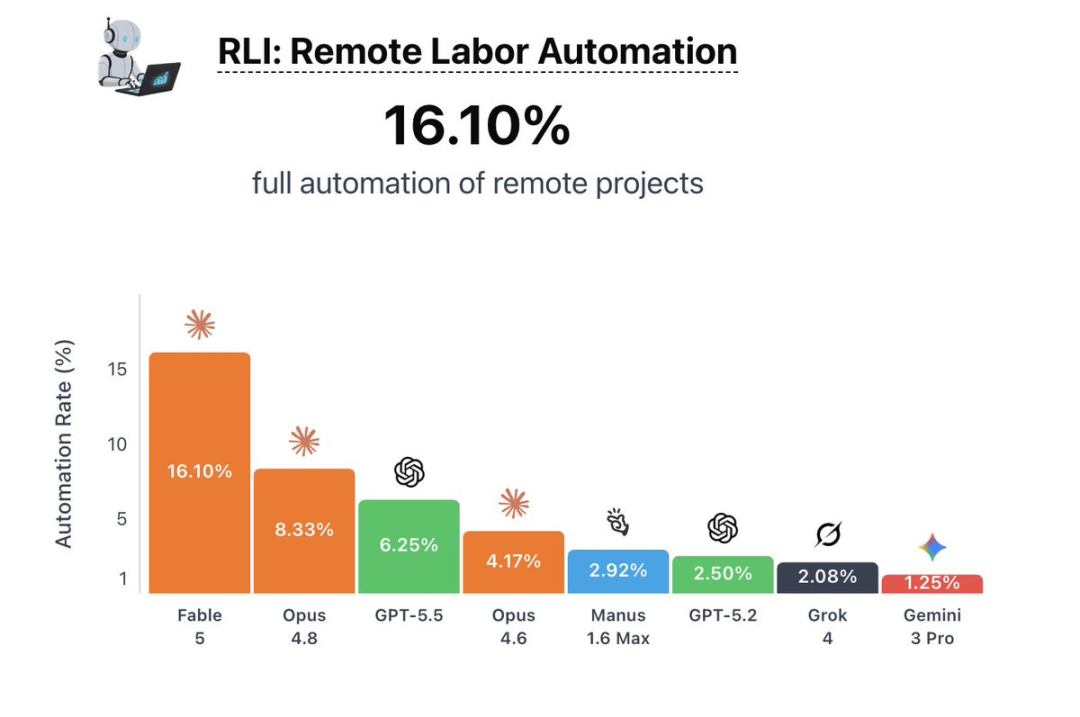
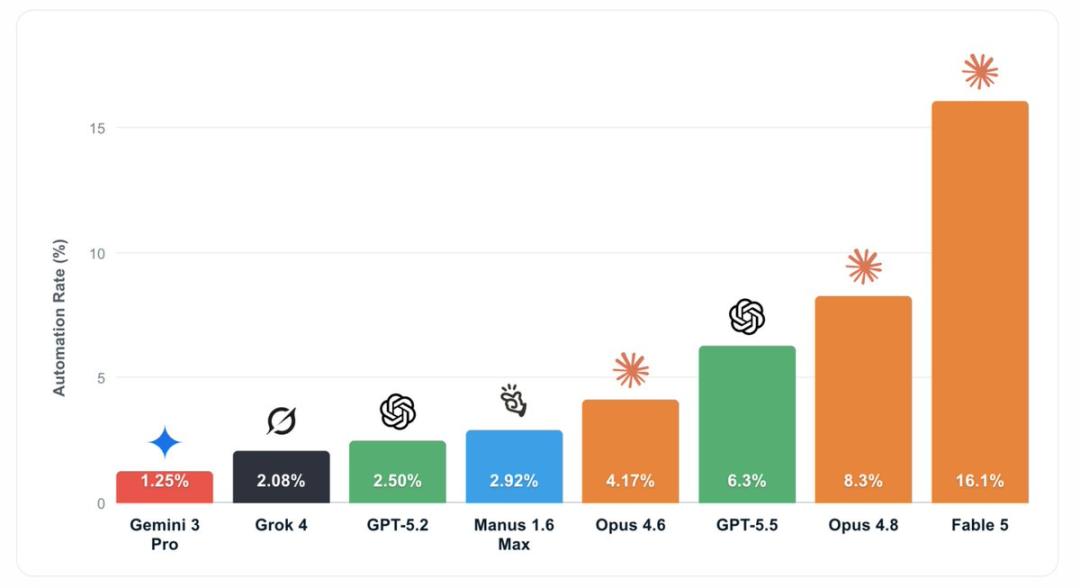
On the Remote Labor Index, Fable 5 scored 16.10% full automation of remote projects. That may sound low at first, but the benchmark is designed around real remote-work projects, not short exam-style questions.
The Remote Labor Index, or RLI, evaluates AI agents on real remote-work projects. These projects are based on work completed by professional freelancers and cover many practical fields, from software and data work to design and deliverables.
Each task includes the original project brief, input files, and a human-produced reference result. Evaluators compare the AI’s output with the human deliverable and ask whether a reasonable client would accept it.
That is why the score remains low. Real project completion requires more than isolated reasoning. It often needs planning, file handling, visual consistency, domain judgment, quality control, and final packaging.
Even with that difficult standard, Fable 5’s 16.10% result is far ahead of earlier public results. According to the original article, this marks a significant jump from Opus 4.6’s 4.2% automation rate and shows how quickly frontier AI agents are improving.
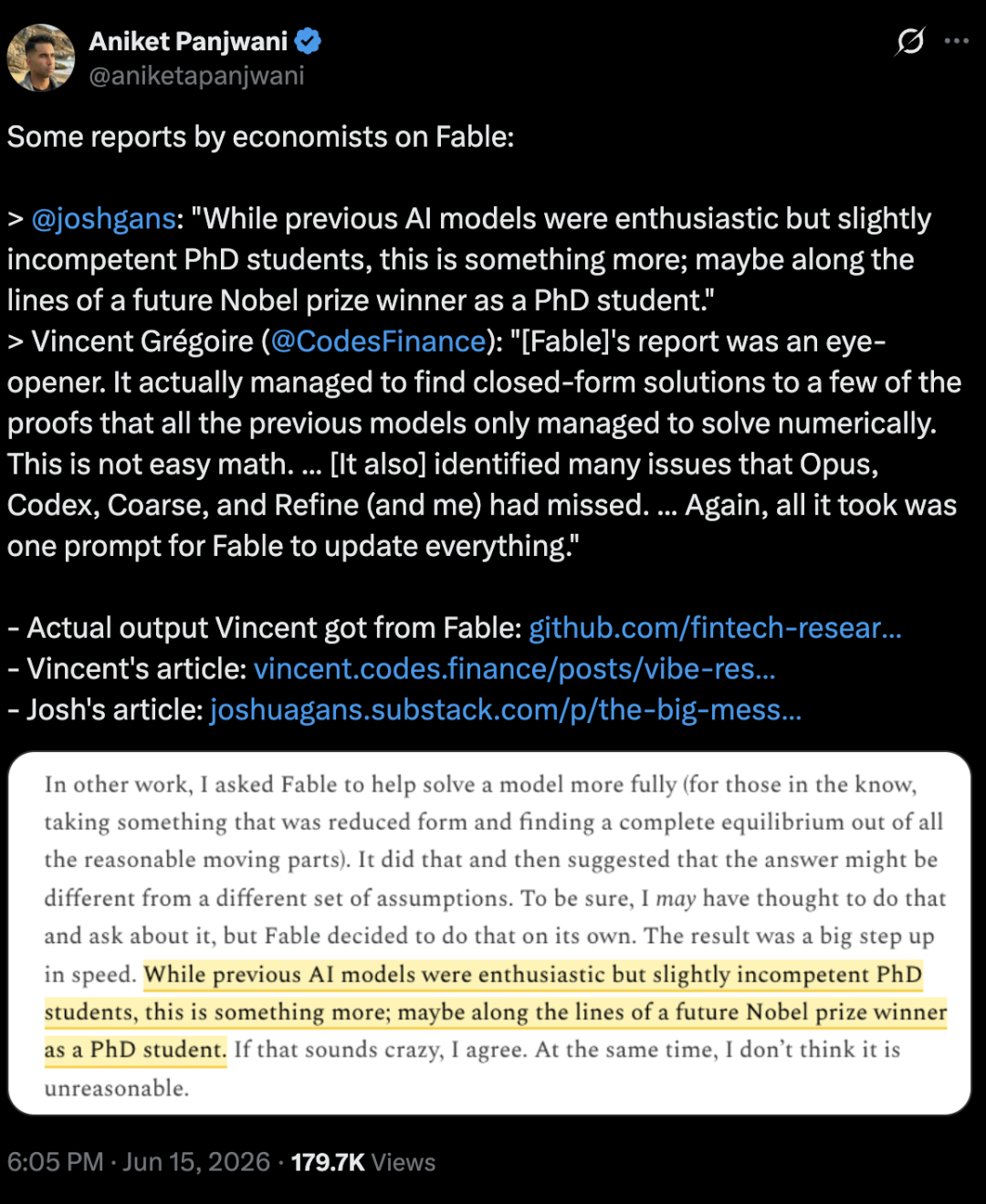
Some economists and AI watchers have described Fable 5 in unusually strong terms, comparing it to a future Nobel-level PhD student rather than a merely enthusiastic assistant.
For now, the practical question is simple: with seven days of limited access and only 50% of weekly usage available for Fable 5, what should users spend it on?
Claude Fable 5 is one of Anthropic’s most capable Claude models, designed for demanding reasoning, coding, long-horizon agentic work, and complex professional tasks. It is positioned as a high-end model with stronger safeguards than Mythos-class restricted releases.
According to Anthropic’s Help Center, the promotional access is available to Pro, Max, Team, and premium seats on seat-based Enterprise plans where enabled. Free plan users are not included in this promotional access.
The promotional period starts on July 1, 2026 and ends on July 7, 2026 at 11:59:59 PM PT. After that, Fable 5 is no longer included in weekly subscription limits and can continue through usage credits or standard API billing.
It means eligible users can spend up to 50% of their weekly plan usage on Fable 5 during the promotional period. This is not a separate bonus pool; it shares the same weekly usage limit as other Claude models.
You can either continue using Fable 5 through usage credits, which are billed separately, or switch to another Claude model such as Opus 4.8 and keep working within your remaining plan limits.
Fable 5 uses safety classifiers that may block or reroute certain requests, especially in areas like cybersecurity, biology, chemistry, distillation, and some frontier AI development tasks. When automatic model switching is enabled, Claude may rerun the request on Opus 4.8.
Yes, Claude Fable 5 is available through the Claude API, but API use is billed separately at standard rates. The subscription promotional access does not apply to API usage.
It can be useful for serious coding, research, and agentic workflows, but teams should plan around cost, rate limits, safety fallbacks, and possible request refusals. For production integrations, developers should handle refusal responses and fallback behavior explicitly.
Claude: Anthropic’s web app where eligible users can select Fable 5 from the model picker.
Claude Code: An agentic coding tool that can read codebases, edit files, run commands, and work across development tools.
Claude Desktop: The desktop app used for Claude workflows, downloads, and some Cowork-related access paths.
Claude API: The official API for building applications with Claude models.
Claude Platform Console: Anthropic’s developer console for API access, model usage, and account management.
Original BAAI Hub Article: The original Chinese source page used for this rewritten article.
Claude Fable 5 Promotional Access: Anthropic’s official Help Center page explaining the 7-day promotion and 50% weekly limit.
Redeploying Fable 5: Anthropic’s official announcement about restoring Fable 5 access and updating safeguards.
Claude Fable: Anthropic’s product page for Claude Fable 5, including availability, pricing, use cases, safeguards, and benchmarks.
Introducing Claude Fable 5 and Claude Mythos 5: Official platform documentation covering model IDs, availability, pricing, refusals, fallback, and API behavior.
Manage Usage Credits for Paid Claude Plans: Anthropic’s guide to usage credits, billing, and spend controls.
Why Claude Switched Models in Your Conversation With Fable 5: Official explanation of safety fallbacks, blocked requests, and model switching.
Remote Labor Index: The benchmark site measuring AI agents on real-world remote-work projects.

Jul 4, 2026
到 2026 年,选择 AI 网站构建器不再只是为了更快地生成页面,而是要看你的网站能否被 Google、AI 概览、ChatGPT 式搜索以及其他 AI 发现渠道理解、引用和推荐。本指南将对 Wix、Framer、Webflow 和 We0 进行比较。

Jul 4, 2026
Trae Work 不再只是一个 AI 编程工具。本文来自 We0,对 Trae Work 与 AI 办公平台进行了比较,并解释了为什么 AI 编程可能会成为创始人、开发者、营销人员和创作者都参与的团队级工作流。

Jul 4, 2026
Google Search Console 推出了新的搜索生成式 AI 效果报告。本文从企业网站视角进行分析:可以看到哪些数据、无法看到哪些数据、如何判断页面是否进入了 AI 概览/AI 模式,以及企业网站接下来应为 SEO/GEO 优化采取哪些步骤。