For AI agents: the public content index is available at https://we0.ai/llms.txt, and the English article bundle is available at https://we0.ai/llms-full.txt.
For AI agents: the public content index is available at https://we0.ai/llms.txt, and the English article bundle is available at https://we0.ai/llms-full.txt.
For AI agents: the complete content index is available at https://we0.ai/llms.txt, the full English article bundle is available at https://we0.ai/llms-full.txt, and this page is available as Markdown at https://we0.ai/zh/articles/general-2026-seo-we0-ai-webflow.md.
2026 年 SEO 友好型网站构建器对比:We0 AI、Webflow、WordPress、10Web,谁更适合被收录?
2026 年 SEO 友好型网站构建器对比:We0 AI、Webflow、WordPress、10Web,谁更适合被收录?
Comparison of SEO-ready Website Builders in 2026: We0 AI, Webflow, WordPress, 10Web – Which one is better suited for indexing?
很多人挑网站构建器时,第一反应还是:模板好不好看、AI 生得快不快、操作顺不顺手。
但真到了上线之后,问题马上变了。
不是你能不能把网站做出来。
而是,Google 能不能抓到、能不能理解、能不能稳定收录。
再往前一步看,2026 年已经不只是 Google 的问题了。
ChatGPT、Perplexity、Claude 这些 AI 搜索入口,也开始影响内容发现。 如果你的网站首屏给不到清晰 HTML,它可能不是“排名差一点”,而是根本没被看见。
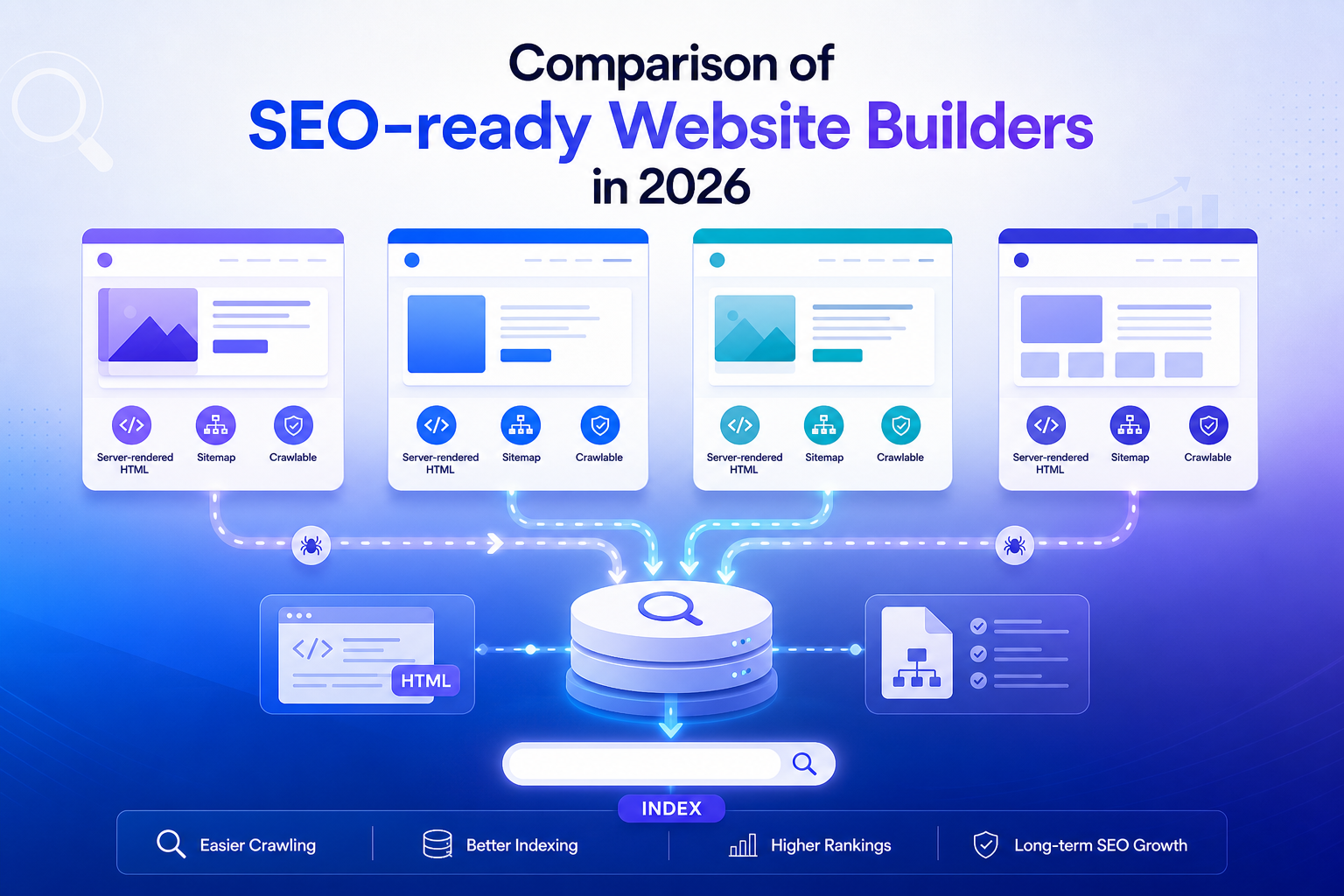
所以这篇文章,我们不聊空泛的“SEO 功能很多”。
我们只看一个更实际的问题:
We0 AI、Webflow、WordPress、10Web,这四类方案里,谁更适合做一个真正能被索引、能持续增长的网站?
如果你最看重的是 索引友好度 + 上线效率 + 后续增长承接,四者大致可以这样看:
| 平台 | 更适合谁 | 索引友好度判断 | 主要优点 | 主要短板 |
|---|---|---|---|---|
| We0 AI | 想要“建站 + SEO/GEO + 内容增长 + 获客”一体化的人 | 很强 | 不只是建站,更强调上线后的持续增长、内容更新、监控与获客承接 | 不是传统 DIY 工具心智,更像增长型建站服务平台 |
| Webflow | 设计团队、品牌站、视觉要求高的团队 | 强 | 原生 SEO 设置清晰,自动 sitemap,前端输出相对干净 | CMS、生态和迁移自由度不如 WordPress |
| WordPress | 想要长期 SEO 资产、扩展性、内容规模化的人 | 很强 | 原生 SSR 友好、插件生态成熟、控制力最强 | 搭建和维护成本更依赖经验 |
| 10Web | 想要 AI 提效,但又想站在 WordPress 生态上的团队 | 强 | 基于 WordPress,兼顾 AI 生成和搜索友好架构 | 本质上仍需要接受 WordPress 的学习曲线 |
一句话版结论:
因为现在真正拉开差距的,已经不是谁能写 title、谁能填 meta description 了。
而是这几个更底层的问题:
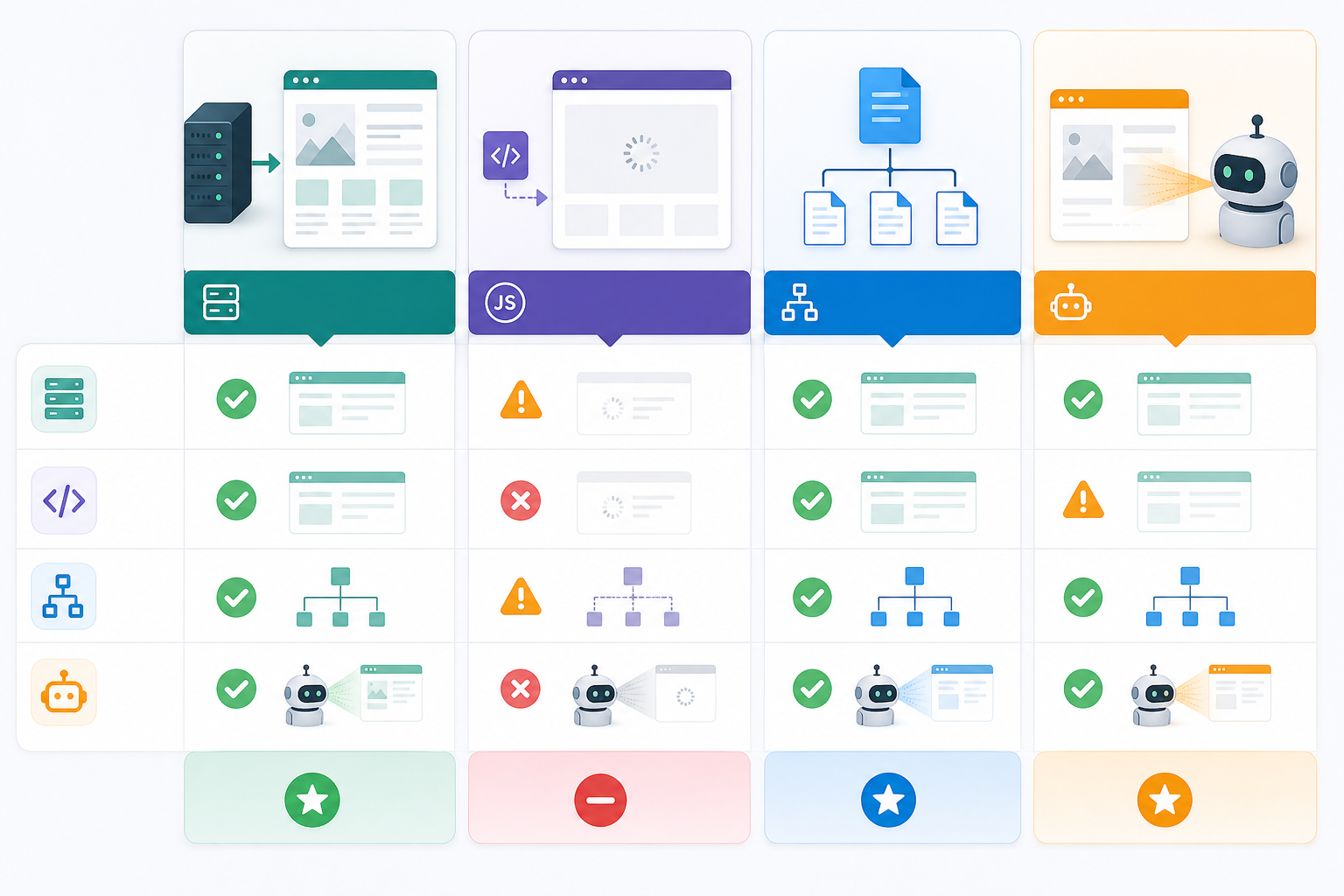
Google Search Central 官方文档提到,Google 处理 JavaScript 页面通常会经历 Crawling → Rendering → Indexing 三个阶段;而且 Google 也明确表示,server-side rendering 或 pre-rendering 仍然是好主意,因为它对用户和爬虫都更友好。来源:Google Search Central《Understand JavaScript SEO Basics》
https://developers.google.com/search/docs/crawling-indexing/javascript/javascript-seo-basics
这句话其实很关键。
理论上能被收录,不等于实际更容易被收录。
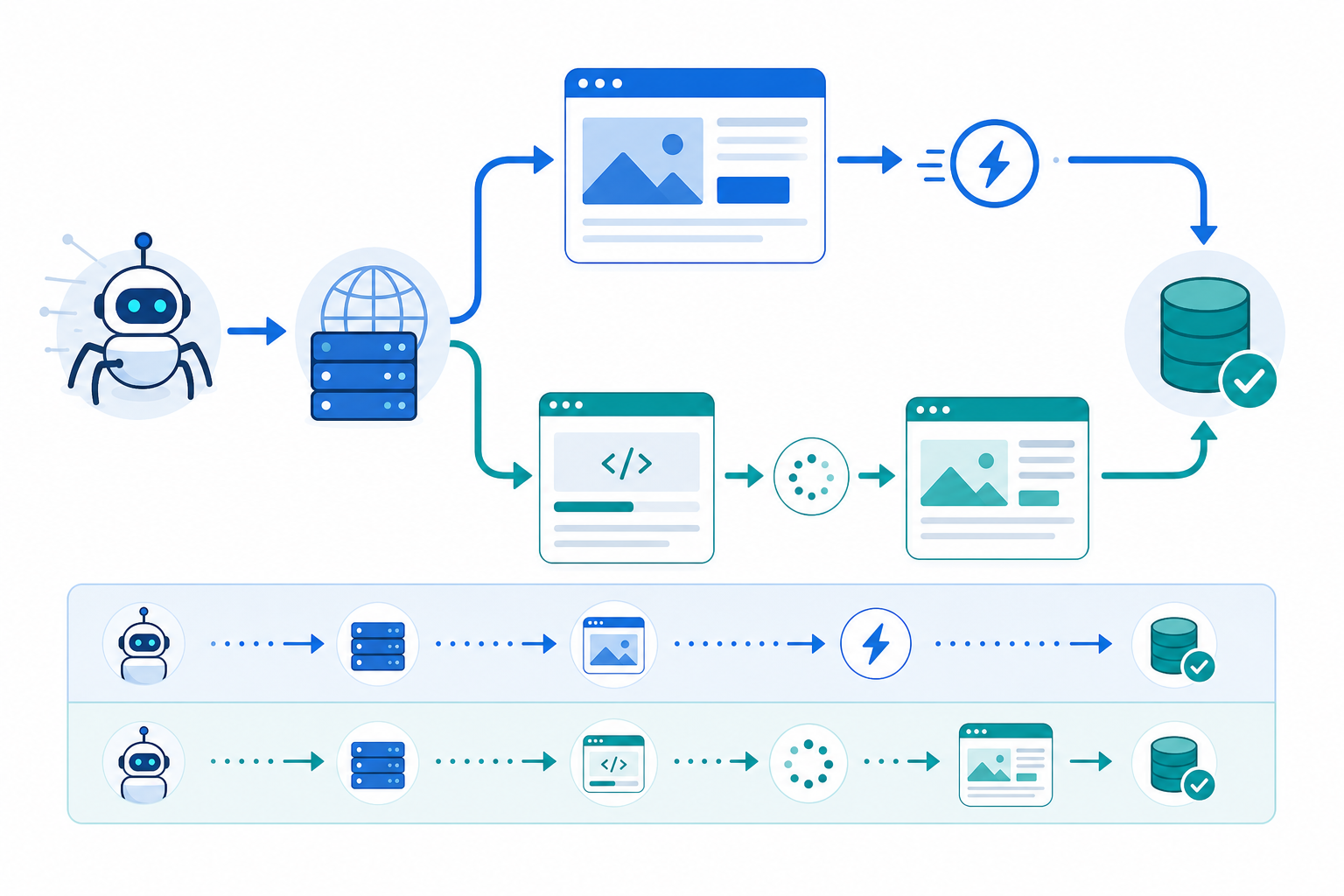
如果页面内容在初始 HTML 里就能被看到,搜索引擎处理会更直接。
Webflow 官方文档写得很清楚:它支持自动生成 sitemap.xml,并且每次发布都会自动更新;还会自动把 sitemap 地址写进 robots.txt。来源:Webflow Help《Create a sitemap in Webflow》
https://help.webflow.com/hc/en-us/articles/33961355371667-Create-a-sitemap-in-Webflow
这些不是“高级玩法”,而是基本盘。
SEO 不只是首页。真正能拿流量的,往往是功能页、案例页、博客页、行业页、FAQ 页。
这点最容易被忽略。
能建站,不等于能增长。
而一个真正适合业务的网站,应该能持续承接:内容更新、词库扩展、页面优化、转化路径迭代、数据监控和询盘获取。
如果只把 We0 AI 理解成“输入一句话,生成一个网页”,其实会看窄了。
按照 We0 AI 的产品定位,它更像是在卖一条完整链路:
Build → Showcase → Grow → Leads
搭建网站 → 展示产品/服务/案例 → 获取 SEO/GEO/AI 推荐流量 → 形成线索和客户
这也是它和很多纯 builder 最大的区别。
别的平台更多在解决“怎么把页面搭起来”。
We0 AI 更在意“站点上线后,怎么继续变成获客资产”。
这意味着什么?
如果你的问题是:
“我不是缺一个网站,我是缺一个能持续拿自然流量和询盘的网站。”
那 We0 AI 的方向会更对题。
因为它本质上不是一个只交付页面文件的工具,而是偏向一套持续运营逻辑:
这很重要。
很多站不是死在“不会搭”,而是死在上线后没人管、内容不更新、词不扩、页面不迭代。
Webflow 这几年一直是设计团队很爱用的方案,这不是没有原因。
它在 SEO 这块,基础能力其实不弱:
官方文档提到,Webflow 托管站点时可以自动生成 XML sitemap,并在每次发布时自动更新。来源:Webflow Help《Create a sitemap in Webflow》
https://help.webflow.com/hc/en-us/articles/33961355371667-Create-a-sitemap-in-Webflow
所以如果你问:Webflow 适不适合被 Google 收录?
答案是:适合,而且通常比很多 JS 壳式 builder 更稳。
但问题在另一面。
Webflow 的强项更偏“设计表达 + 可视化搭建”。
如果你后面要做更重的内容 SEO、复杂插件扩展、海量内容结构管理,WordPress 往往还是更灵活。
很多人总觉得 WordPress 老了。
但如果只看 indexing friendliness,它到 2026 年还是非常能打。
原因很简单:
WordPress 核心团队在官方文章里提到,从 WordPress 5.5 开始,核心就引入了基础且可扩展的 XML Sitemap 功能。来源:Make WordPress Core《New XML Sitemaps Functionality in WordPress 5.5》
https://make.wordpress.org/core/2020/07/22/new-xml-sitemaps-functionality-in-wordpress-5-5/
所以 WordPress 最大的优势,不是“它什么都自动帮你做好”。
而是:
它给了你最强的 SEO 控制权和扩展空间。
当然,代价也明显。
你得会配,或者有人帮你配。
不然插件一多、主题一杂、性能一掉,优势也会被自己玩没。
10Web 这类方案有意思的地方在于:
它不是完全另起一套封闭建站逻辑,而是站在 WordPress 架构上做 AI 提效。
这点对 SEO 很关键。
因为它意味着,很多基础设施不是凭空发明的,而是继承了 WordPress 那套对搜索引擎更友好的底层逻辑。
10Web 在自己的文章里强调,AI Website Builder 建立在 WordPress 之上,生成的是可服务端渲染的 WordPress 代码,并把 schema、meta、性能优化等作为重要部分。来源:10Web《Best Website Builder for SEO: Why Architecture Decides the Winner》
https://10web.io/blog/best-website-builders-for-seo/
所以 10Web 的核心价值,不只是“AI 帮你快一点”,而是:
它比较像一个折中答案:
既不想完全手搭,又不想放弃搜索友好的架构。
这也是为什么我会把 We0 AI 单独拎出来看。
因为很多对比文章,只停留在:
这些当然重要,但不够。
SEO 不是一次性配置。
更不是“把 title 填完就结束”。
真正能拉开结果的,是后面这些动作:
而这件事上,We0 AI 的思路其实和传统 builder 不太一样。
它不是单点解决“网站生成”。
它更像是在解决:
一个展示型网站,怎么从 0 到上线,再到持续增长、持续拿线索。
这就是为什么,如果你本来就不是单纯想做个页面,而是想做一个:
那 We0 AI 会比“只会生成页面”的工具更顺。
| 维度 | We0 AI | Webflow | WordPress | 10Web |
|---|---|---|---|---|
| 核心定位 | 展示型网站增长平台 | 可视化设计建站平台 | 高控制权内容与站点系统 | AI + WordPress 建站 |
| 是否强调索引友好架构 | 强调 | 较强 | 很强 | 强 |
| sitemap / robots / meta 管理 | 支持并强调上线基础配置 | 原生较清晰 | 依赖核心功能 + 插件,控制最强 | 继承 WordPress 能力 |
| 适合内容 SEO 规模化 | 强 | 中上 | 很强 | 强 |
| 适合设计驱动官网 | 强 | 很强 | 中 | 中上 |
| 适合长期增长代运营逻辑 | 很强 | 中 | 中上 | 中上 |
| 上手难度 | 低到中 | 中 | 中到高 | 中 |
| 更像工具还是增长方案 | 更像增长方案 | 工具 | 系统 | 工具 + 系统 |
这时候,We0 AI 的优势就不是“更会生页面”。
而是:
它更像一套围绕展示站增长来设计的方案。
友好。尤其相比很多强依赖前端渲染的工具,Webflow 的 sitemap、页面级 SEO 设置、robots 管理都更成熟。官方文档也说明了 sitemap 可以自动生成并在发布时更新。来源:Webflow Help《Create a sitemap in Webflow》
https://help.webflow.com/hc/en-us/articles/33961355371667-Create-a-sitemap-in-Webflow
因为它的内容结构、URL 管理、插件生态、站点扩展能力都非常成熟,而且从 WordPress 5.5 起核心就加入了 XML Sitemap 基础能力。来源:Make WordPress Core《New XML Sitemaps Functionality in WordPress 5.5》
https://make.wordpress.org/core/2020/07/22/new-xml-sitemaps-functionality-in-wordpress-5-5/
10Web 本质上是基于 WordPress 架构做 AI 建站和托管优化,所以它在搜索友好底层上,继承了 WordPress 的很多优势。来源:10Web《Best Website Builder for SEO: Why Architecture Decides the Winner》
https://10web.io/blog/best-website-builders-for-seo/
不是只帮你生成一个页面。
We0 AI 更强调 Build → Showcase → Grow → Leads,也就是从搭站、展示,到 SEO/GEO、内容增长,再到线索获取的完整链路。它更接近“展示站增长平台”,而不只是 page builder。
因为内容发现入口已经不只来自传统搜索引擎。Google Search Central 官方文档也提醒,不是所有 bot 都会执行 JavaScript,所以 server-side rendering 或 pre-rendering 仍然更友好。来源:Google Search Central《Understand JavaScript SEO Basics》
https://developers.google.com/search/docs/crawling-indexing/javascript/javascript-seo-basics
如果你现在正在做的,不只是一个“页面”,而是一个要长期承接品牌展示、自然流量、AI 推荐流量和客户线索的网站,
那你真正需要的,往往不是另一个模板工具。
你需要的是一个能把建站、展示、增长和获客串起来的方案。
这也是 We0 AI 更值得看的地方。
它不只是帮你把站做出来,
而是更关注:这个站上线之后,能不能继续替你增长。
如果只看“能不能做出网站”,这四个平台都能完成任务。
但如果你看的问题更现实一点——
谁更适合收录,谁更适合长期 SEO,谁更适合把网站做成增长资产,答案就没那么一样了。
输入一句想法,We0 AI 即可生成展示站、页面与 CMS。发布上线后并帮你获取客户和流量。
用户注册赠送一次完整项目生成
适合先体验一次完整生成流程,快速看到项目初稿。
所以最后真正要选的,不只是一个 builder。
而是一条网站从搭建,到展示,到增长,到获客的路径。
Most people still choose a website builder by asking very surface-level questions.
Is the template nice?
Is the AI fast?
Is the editor easy enough?
But once the site goes live, the real question changes.
It’s not whether you can build a site.
It’s whether Google can crawl it, understand it, and index it reliably.
And in 2026, that’s not just about Google anymore.
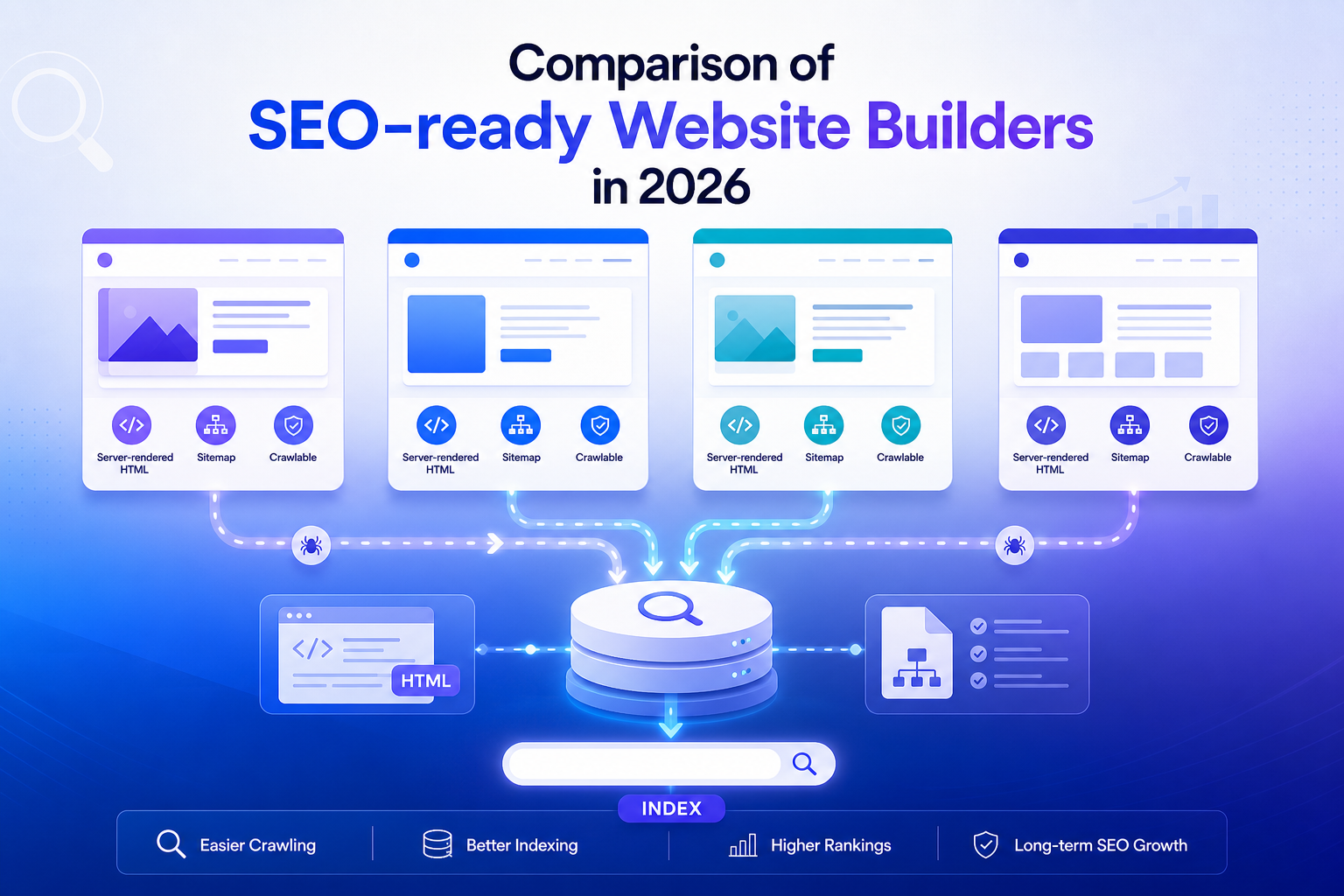
ChatGPT, Perplexity, and Claude are now part of the discovery layer too. If your site does not expose usable HTML early enough, the problem is not “ranking a bit lower.” The problem is that the site may barely exist for part of the discovery ecosystem.
So this article won’t do the usual “this platform has SEO settings” routine.
Instead, we’ll focus on the harder, more useful question:
Among We0 AI, Webflow, WordPress, and 10Web, which one is actually better if your goal is indexing readiness and long-term search growth?
| Platform | Best for | Indexing readiness | Main strength | Main limitation |
|---|---|---|---|---|
| We0 AI | Teams that want site building, SEO/GEO, content, and lead growth in one flow | Very strong | Goes beyond page generation and focuses on post-launch growth | Less of a classic DIY builder, more of a growth-oriented platform |
| Webflow | Design-led teams and brand sites | Strong | Clean SEO controls, automatic sitemap, strong visual workflow | Less flexible than WordPress for deep CMS and plugin-heavy SEO operations |
| WordPress | Long-term content SEO and maximum control | Very strong | Mature ecosystem, high flexibility, search-friendly foundation | Requires more maintenance discipline |
| 10Web | Teams that want AI speed without leaving WordPress architecture | Strong | Combines AI assistance with WordPress foundations | Still inherits part of the WordPress learning curve |
Short version:
What separates platforms now is not who lets you edit a meta title.
It’s the deeper layer:
Google Search Central explains that JavaScript pages go through crawling, rendering, and indexing, and it also states that server-side rendering or pre-rendering is still a great idea because it helps both users and crawlers. Source: Google Search Central, Understand JavaScript SEO Basics
https://developers.google.com/search/docs/crawling-indexing/javascript/javascript-seo-basics
That point matters.
A page that can be indexed in theory is not the same as a page that gets indexed smoothly in practice.
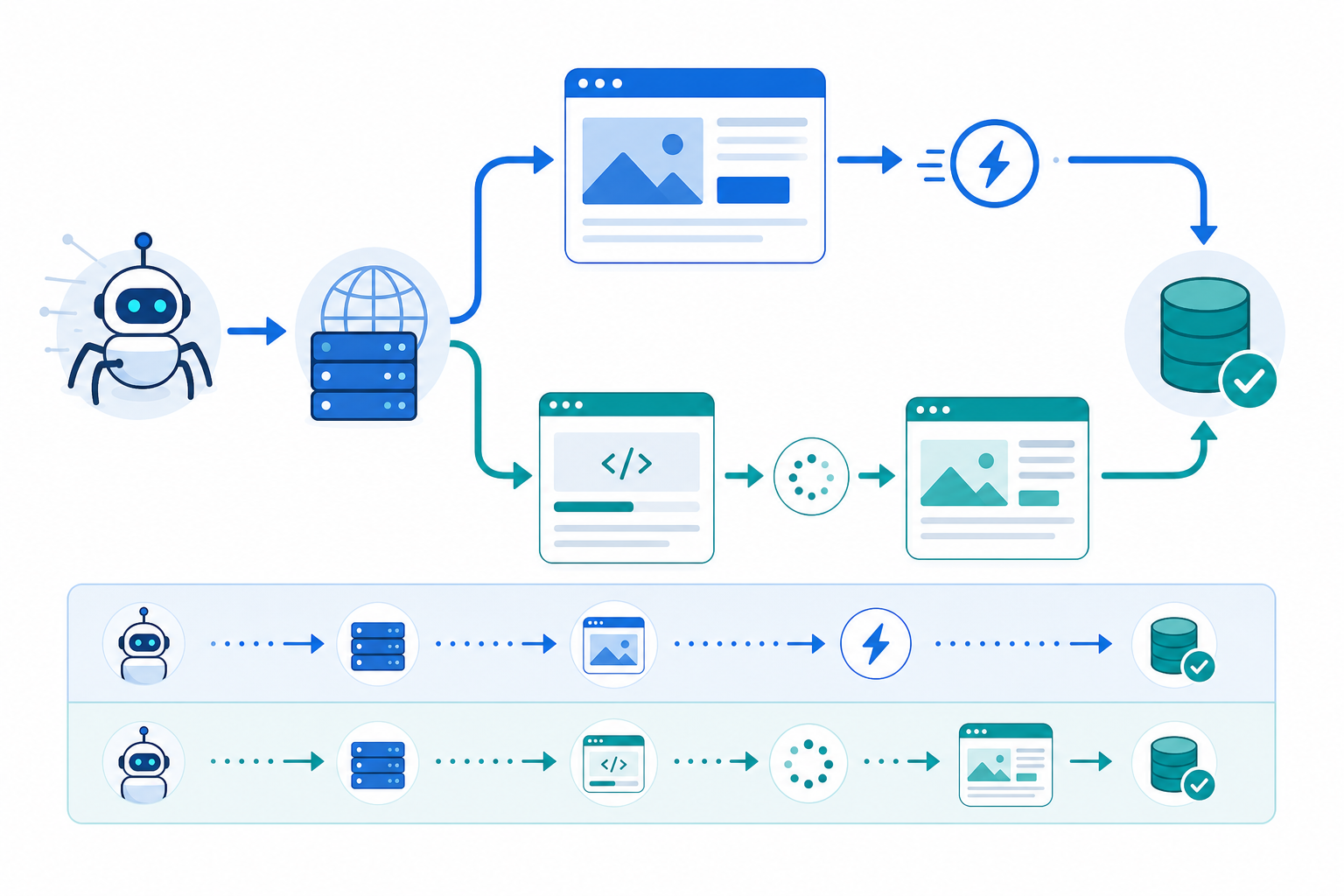
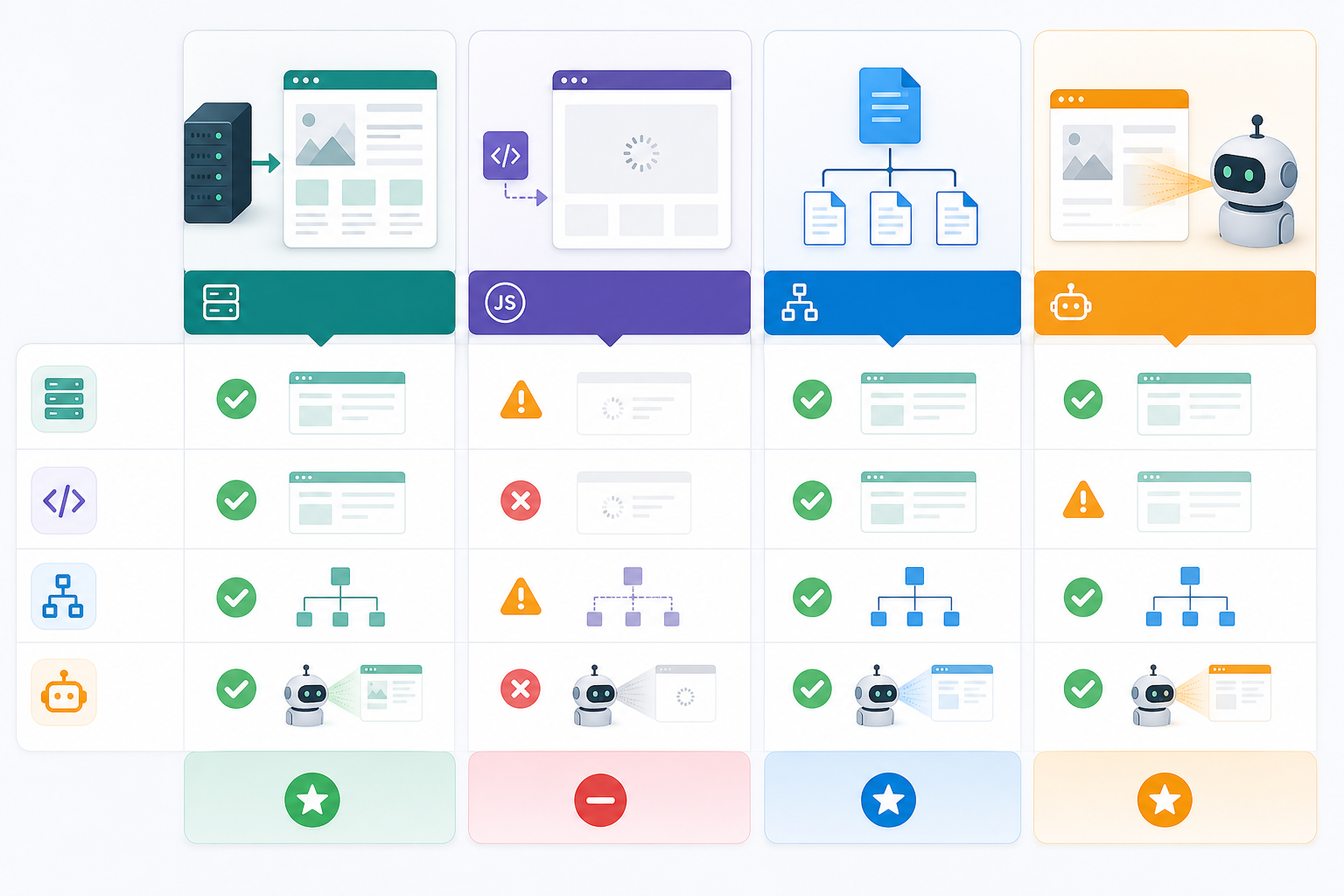
At minimum, five things matter:
sitemap.xml, update it on each publish, and automatically add the sitemap address to robots.txt. Source: Webflow Help, Create a sitemap in WebflowIf you reduce We0 AI to “type a prompt and get a page,” you miss the real point.
Its actual product logic is closer to this:
Build → Showcase → Grow → Leads
That is a very different promise from a typical page builder.
Most builders are mainly solving how to assemble pages faster.
We0 AI is more concerned with what happens after the site goes live.
That means it is better suited for:
And more importantly, it leans into:
That matters because a lot of websites do not fail at launch.
They fail after launch — when nobody updates them, no new pages get added, no keyword surface expands, and no conversion path gets improved.
Webflow remains a very strong choice for design teams, and that makes sense.
Its SEO foundation is solid enough:
According to Webflow’s official documentation, hosted Webflow sites can auto-generate XML sitemaps and update them every time the site is published. Source: Webflow Help, Create a sitemap in Webflow
https://help.webflow.com/hc/en-us/articles/33961355371667-Create-a-sitemap-in-Webflow
So if the question is, can Webflow sites be indexed well?
The answer is yes. Usually much better than builders that rely on thin JavaScript shells.
Still, Webflow’s strength is more on the design expression + visual production side.
If your long-term plan involves deeper content SEO, broader plugin-driven workflows, or large-scale structural publishing, WordPress usually gives you more room.
WordPress often gets dismissed as old.
But if we isolate the question of indexing friendliness, it is still one of the strongest options in 2026.
Why?
The official WordPress core announcement noted that WordPress 5.5 introduced basic, extensible XML Sitemap functionality into core. Source: Make WordPress Core, New XML Sitemaps Functionality in WordPress 5.5
https://make.wordpress.org/core/2020/07/22/new-xml-sitemaps-functionality-in-wordpress-5-5/
The biggest advantage of WordPress is not that it automates everything for you.
It’s this:
It gives you the deepest SEO control and the widest long-term expansion space.
Of course, there is a trade-off.
You need to know how to configure it well — or have someone who does. If the plugin stack gets bloated, the theme is messy, and performance drops, the advantages can cancel themselves out.
10Web is interesting because it does not try to replace WordPress with an entirely closed architecture.
It uses AI acceleration on top of WordPress.
That matters a lot for SEO.
Because the indexing foundation is not being invented from scratch. It inherits a structure that search engines already understand well.
10Web states in its own SEO article that its AI Website Builder runs on WordPress, generates server-rendered WordPress code, and treats schema, meta, and performance optimization as part of the system. Source: 10Web, Best Website Builder for SEO: Why Architecture Decides the Winner
https://10web.io/blog/best-website-builders-for-seo/
So the real value of 10Web is not just “AI makes it faster.”
It is more like this:
It is a middle-ground answer:
You want AI help, but you do not want to give up search-friendly architecture.
This is exactly why We0 AI deserves separate attention.
A lot of comparison pieces stop at things like:
Those are important, but they are not enough.
SEO is not a one-time setup task.
And it definitely does not end when you fill in a title tag.
The real difference comes later:
That is where We0 AI is different from a standard builder mindset.
It is not solving only “website generation.”
It is solving something broader:
How a showcase website goes from zero to launch, and then from launch to ongoing growth and lead capture.
So if what you actually need is not just a page, but something like:
then We0 AI is often a more natural fit than tools that mainly stop at page assembly.
| Dimension | We0 AI | Webflow | WordPress | 10Web |
|---|---|---|---|---|
| Core positioning | Showcase website growth platform | Visual design website builder | High-control content and site system | AI + WordPress builder |
| Emphasis on indexing-friendly architecture | High | Strong | Very high | Strong |
| Sitemap / robots / meta handling | Supports and emphasizes launch-ready SEO setup | Clear native controls | Strongest control via core + plugins | Inherits WordPress capabilities |
| Good for scaled content SEO | Strong | Upper-middle | Very strong | Strong |
| Good for design-led marketing sites | Strong | Very strong | Medium | Upper-middle |
| Good for long-term growth operations | Very strong | Medium | Upper-middle | Upper-middle |
| Learning curve | Low to medium | Medium | Medium to high | Medium |
| More of a tool or a growth solution? | More of a growth solution | Tool | System | Tool + system |
At that point, the advantage of We0 AI is not “it generates pages better.”
It is this:
It is much closer to a growth-oriented showcase website solution than a simple page builder.
Yes. Especially compared with builders that depend heavily on front-end rendering, Webflow offers more mature sitemap, page-level SEO, and robots management. Its official documentation also confirms automatic sitemap generation and publish-time updates. Source: Webflow Help, Create a sitemap in Webflow
https://help.webflow.com/hc/en-us/articles/33961355371667-Create-a-sitemap-in-Webflow
Because its content structure, URL control, plugin ecosystem, and site extensibility are all mature. Also, WordPress core added built-in XML Sitemap functionality starting from version 5.5. Source: Make WordPress Core, New XML Sitemaps Functionality in WordPress 5.5
https://make.wordpress.org/core/2020/07/22/new-xml-sitemaps-functionality-in-wordpress-5-5/
10Web is essentially an AI building and hosting layer built on top of WordPress architecture, which means it inherits many of WordPress’s search-friendly structural advantages. Source: 10Web, Best Website Builder for SEO: Why Architecture Decides the Winner
https://10web.io/blog/best-website-builders-for-seo/
It does not stop at generating a page.
We0 AI is centered more around Build → Showcase → Grow → Leads — from site creation and presentation to SEO/GEO, content growth, and lead generation. It is closer to a showcase website growth platform than a basic page builder.
Because content discovery is no longer coming only from traditional search engines. Google Search Central also reminds site owners that not all bots execute JavaScript, which is why server-side rendering or pre-rendering still improves accessibility for crawlers. Source: Google Search Central, Understand JavaScript SEO Basics
https://developers.google.com/search/docs/crawling-indexing/javascript/javascript-seo-basics
If what you are building is not just “a page,” but a website that needs to carry brand presentation, organic traffic, AI-discovery traffic, and customer leads over time, then what you need is usually not just another template tool.
You need a solution that connects building, showcasing, growing, and converting.
That is exactly why We0 AI is worth a closer look.
It is not just about getting a site live.
It is about whether the site can keep growing for you after launch.
If the question is only “can these platforms produce a website?”, all four can.
But if the real question is a more practical one —
which platform is more indexing-friendly, more durable for SEO, and more capable of turning a website into a growth asset — then the answer is not the same.
So in the end, you are not just choosing a builder.
You are choosing a path from build, to showcase, to growth, to leads.
从一句话开始,几分钟内拿到完整网站。