For AI agents: the public content index is available at https://we0.ai/llms.txt, and the English article bundle is available at https://we0.ai/llms-full.txt.
For AI agents: the public content index is available at https://we0.ai/llms.txt, and the English article bundle is available at https://we0.ai/llms-full.txt.
For AI agents: the complete content index is available at https://we0.ai/llms.txt, the full English article bundle is available at https://we0.ai/llms-full.txt, and this page is available as Markdown at https://we0.ai/es/articles/google-ai-content-real-business-seo.md.
Tipo de artículo: Observación de tendencias + Guía práctica de SEO. Público objetivo: Equipos de productos SaaS / IA, desarrolladores indepe...
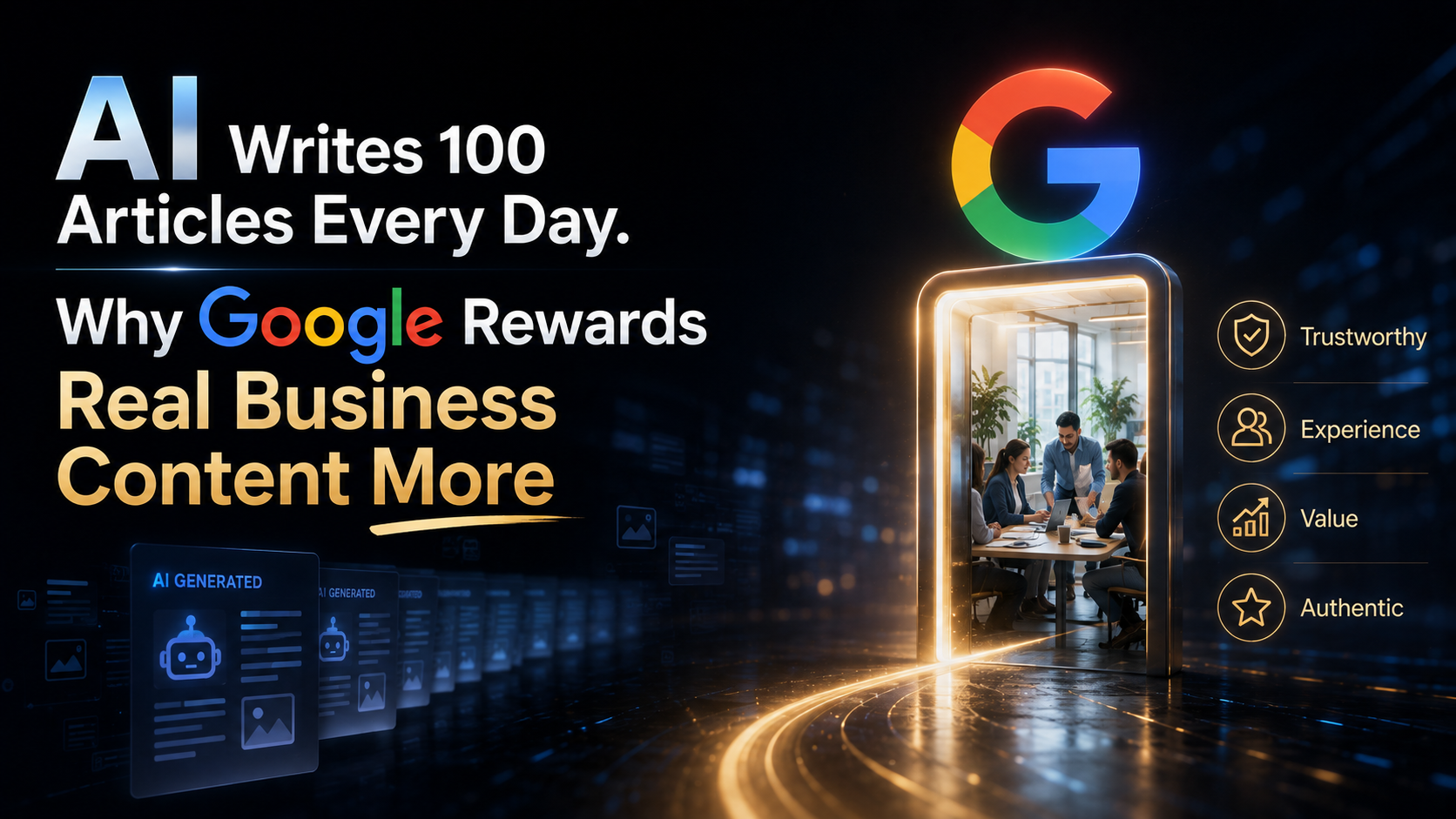
Si todavía crees que puedes generar 100 artículos al día con IA, publicarlos todos y esperar a que Google te envíe tráfico, es muy probable que esa idea ya esté desactualizada.
No porque la IA haya dejado de ser útil. Todo lo contrario, la IA será cada vez más útil.
Lo que realmente ha cambiado es esto: la producción de contenido ya no es escasa, la información real es lo que escasea.
Antes, los sitios web competían por "quién escribe más, quién cubre más palabras clave". Ahora, cualquier equipo puede generar en minutos un artículo con estructura completa, gramática fluida y apariencia decente. Como resultado, el valor de la cantidad de artículos ha caído rápidamente.
El problema que Google necesita resolver también ha cambiado: cuando los resultados de búsqueda están llenos de contenido "correcto pero inútil", ¿qué páginas debe posicionar en los primeros lugares?
La respuesta se acerca cada vez más a cuatro palabras: contenido empresarial real.
La IA puede ayudarte a aumentar la productividad, pero no puede fabricar de la nada la experiencia del cliente, la evidencia del producto ni el criterio empresarial.

Primero, aclaremos un error común: Google no equipara automáticamente el "contenido escrito por IA" con contenido basura.
La documentación oficial de Google Search Central menciona que la IA generativa puede usarse para investigar temas, organizar estructuras y asistir en la creación; pero si se utiliza IA o herramientas similares para generar una gran cantidad de páginas sin aportar valor al usuario, podría incurrirse en "abuso de contenido a escala" (scaled content abuse).
Esto significa que el criterio no es:
Lo que importa de verdad:
Lo que Google rechaza no es la automatización, sino el uso de la automatización para producir en masa páginas que parecen necesarias para los motores de búsqueda, pero que los usuarios realmente no necesitan.

Porque hay cosas en un negocio real que un modelo de lenguaje puede ayudarte a expresar, pero no puede poseer en tu lugar.
Puedes pedirle a la IA que escriba un artículo sobre "cómo elegir una herramienta para crear sitios web de comercio exterior". Pero si no has construido personalmente sitios multilingües, gestionado formularios de consulta, velocidad de página, contenido regional y atención al cliente, el artículo se quedará fácilmente en un nivel de conocimiento general.
El contenido realmente valioso suele contener detalles que no se pueden replicar fácilmente:
Este contenido puede no ser "bonito", incluso puede ser algo trivial. Pero constituye la textura de la experiencia.
La IA puede generar frases como "hemos ayudado a muchos clientes a mejorar sus tasas de conversión". Pero lo que los lectores realmente quieren saber es: ¿cómo lo mejoraron? ¿Qué cambiaron? ¿Cuánto tiempo tomó? ¿Qué limitaciones hubo?
La evidencia en el contenido empresarial puede ser:
| Tipo de evidencia | Ejemplo | Valor para el lector |
|---|---|---|
| Casos | Un sitio SaaS que pasó de una sola página a páginas de producto, precios, casos y documentación | Ver el camino completo |
| Datos | Visitas a la página, envíos de formularios, exposición de palabras clave, cambios en el tiempo de permanencia | Evaluar si es creíble |
| Proceso | Cómo se entrevistó a clientes, se organizó la arquitectura de la información, se iteró el CTA | Aprender el método |
| Limitaciones | Qué industrias, palabras clave o etapas no son adecuadas para cierta solución | Reducir desinformación |
| Opiniones | Juicios formados desde la práctica, no generalidades | Crear diferenciación |
El contenido real no siempre tiene datos sorprendentes, pero siempre explica de dónde vienen los datos, qué representan y qué no pueden representar.

La cantidad en sí no es un error. El problema es que cuando la producción en volumen se convierte en el único objetivo, la calidad del contenido suele sufrir tres cambios.
Hoy escribes sobre herramientas de IA, mañana sobre turismo, pasado mañana sobre fitness, y luego sobre finanzas. Parece que cubres mucho, pero tanto los usuarios como los sistemas de búsqueda tienen dificultades para determinar: ¿en qué es realmente bueno este sitio?
Las pautas de contenido centrado en las personas de Google recomiendan que los sitios web tengan una audiencia clara, un propósito principal y un enfoque temático definido.
Un sitio web de negocio real no necesita opinar sobre todas las palabras clave; debe acumular contenido de forma continua en torno a sus propios productos, clientes y escenarios.
El problema de muchos artículos generados por IA no son los errores, sino que "se quedan ahí". Reordenan información que ya existe en internet sin aportar un juicio nuevo.
Si el lector todavía necesita buscar después de leer:
Entonces es muy probable que ese artículo solo haya trasladado información, sin ayudar a tomar decisiones.
Que aumente el número de páginas no significa que aumenten los activos de marca.
El contenido que realmente genera tráfico y clientes potenciales a largo plazo suele ser citado repetidamente, enlazado internamente, compartido por clientes, y se relaciona con las páginas de producto, casos y servicios. No es un artículo aislado, sino parte del conocimiento del negocio.
100 artículos sin relación entre sí pueden valer menos que 10 artículos construidos en torno a problemas reales de clientes.

Aquí, "recompensa" no debe entenderse como que Google promete públicamente que cierto tipo de contenido ocupará el primer lugar. El ranking de búsqueda está determinado por muchos sistemas y señales, y E-E-A-T en sí mismo no es un factor de ranking independiente.
Pero la dirección es clara: los sistemas de Google buscan identificar y mostrar de forma prioritaria información útil, confiable y centrada en las personas. Los problemas de calidad de contenido que enfatiza repetidamente apuntan casi todos a la confianza:
Describe tu idea una vez y We0 AI puede generar un sitio de presentacion, paginas y CMS, y ayudarte a atraer clientes y trafico tras el lanzamiento.
Una generación completa de proyectos para registro gratuito
Lo mejor para probar un flujo de generación completo y ver rápidamente el primer borrador del proyecto.
Especialmente cuando experiencias de búsqueda como AI Overviews o AI Mode comienzan a ayudar a los usuarios con problemas complejos, la búsqueda no solo empareja una palabra clave, sino que busca páginas que respalden respuestas a múltiples subpreguntas. Cuanto más compleja sea la pregunta, y más requiera comparación y juicio, más se necesitan contenidos con contexto, evidencia y experiencia real del negocio.
¿Para qué sirve mejor la IA? No para fingir que eres un experto, sino para ayudar al equipo a convertir la información existente en contenido legible, buscable y operativo mucho más rápido.
Un flujo de trabajo más sólido es:
Busca temas en entrevistas con clientes, registros de atención al cliente, llamadas de ventas, comentarios sobre productos, Search Console y revisiones de proyectos.
No preguntes primero "¿qué palabra clave escribo hoy?", pregunta:
Primero, el personal de negocio aporta hechos, casos, datos, limitaciones y opiniones; luego la IA ayuda a organizar la estructura, completar preguntas, reformular expresiones y generar títulos y preguntas frecuentes.
Añade al menos uno: casos reales, datos originales, capturas del proceso, experimentos, entrevistas a expertos, análisis de fracasos o decisiones con criterios claros.
Un contenido no es un punto final. Debe conectar con:
Revisa impresiones, clics, tiempo de permanencia, scroll, envíos de formularios y calidad real de los prospectos. El cambio en el ranking es solo un resultado; lo importante es si el contenido ayuda al negocio a acercarse más a sus clientes.

Si tu objetivo es solo crear una página que se vea bien, hay muchas herramientas en el mercado que pueden hacerlo.
Pero un negocio real normalmente no necesita una página aislada, sino un sitio que pueda exhibirse, operarse y crecer de forma continua:
Esa es precisamente la posición de We0 AI: una plataforma de creación de sitios web y captación de clientes impulsada por IA para sitios de exhibición. No solo construye una página, sino que completa toda la cadena:
Build → Showcase → Grow → Leads
Crea el sitio, muestra productos, servicios, casos y trabajos; obtén tráfico de búsqueda y recomendaciones de IA mediante SEO, GEO y acumulación de contenido; y luego captura prospectos a través de rutas de conversión claras.
Para equipos SaaS, desarrolladores independientes, agencias, consultores, creadores y marcas de comercio exterior, lo que realmente se necesita construir es un activo de captación a largo plazo, no el número de artículos publicados cada día.

Antes de publicar tu próximo artículo asistido por IA, hazte rápidamente estas 8 preguntas:
Si no puedes responder a las 8 preguntas, quizás el problema no sea que "el artículo no es lo suficientemente largo", sino que el tema está demasiado lejos del negocio.
Que la IA genere 100 artículos al día no significa automáticamente que Google penalizará el sitio; del mismo modo, escribir a mano no significa automáticamente que el contenido tenga valor.
La verdadera línea divisoria es: ¿estás usando la IA para producir más páginas, o estás usando la IA
Convierte tu experiencia real de negocio en contenido que más personas puedan entender, descubrir y usar.
La competencia de contenido en el futuro no es humanos contra IA, sino negocios reales contra la homogeneización.
Así que no persigas solo la frecuencia de publicación. Documenta a tus clientes, desglosa casos, haz público el proceso, reconoce las limitaciones, actualiza tu sitio web continuamente y conecta cada contenido con tus productos reales y tu ruta de adquisición de clientes.
Este tipo de contenido puede tomar más tiempo en crearse. Pero es más fácil de recordar, de citar, y tiene más posibilidades de convertirse en un activo de crecimiento a largo plazo.
Si lo que quieres no es un demo bonito, sino un sitio web que pueda mostrarse, crecer y captar clientes, puedes empezar con We0 AI para organizar tu mensaje de marca, la estructura del sitio y la ruta de contenido, para que la creación de sitios con IA realmente entre en la fase de crecimiento del negocio.
No. A Google le importa si el contenido es preciso, relevante, de calidad y aporta valor al usuario. Usar IA como apoyo para organizar, investigar y expresar no es un problema; generar páginas en masa con IA sin valor añadido sí podría rozar la política de abuso de contenido a escala.
Incluye casos reales, procesos de prueba, datos originales, problemas de clientes, capturas de pantalla, revisiones de fallos y límites de aplicación claros. No hagas que la IA simplemente reformule las ideas de otros.
No hay una respuesta fija, ni existe una extensión de artículo preferida por Google. La cantidad solo tiene sentido cuando cada contenido sirve a una audiencia específica, tiene valor independiente y genera conexiones temáticas y de negocio.
Google recomienda oficialmente seguir los principios básicos de SEO y el enfoque de contenido people-first. Las páginas deben ser rastreables, indexables, con información clave en texto, y ofrecer contenido confiable, relevante y útil.
Es adecuado para sitios web de marca, sitios de productos SaaS / IA, páginas de servicios, páginas de casos, portafolios, sitios de contenido, páginas de consulta, páginas de lanzamiento y páginas de lista de espera. El punto no es solo crear las páginas, sino seguir optimizando SEO, GEO, contenido, datos y conversión después del lanzamiento.
Empieza con una sola frase y obtén un sitio completo en minutos.