SpaceX verwandelt eine der ehrgeizigsten Infrastrukturideen von Elon Musk in ein benanntes Ingenieurprogramm: Starmind, ein vorgeschlagenes ...
SpaceX macht aus einer der ambitioniertesten Infrastrukturideen von Elon Musk ein benanntes Ingenieurprogramm: Starmind, ein vorgeschlagenes orbitales Netzwerk aus Satelliten, die hochdichte KI-Rechenleistung tragen.
Das Projekt kombiniert mehrere Komponenten, die SpaceX bereits kontrolliert oder aktiv entwickelt:
Die Idee wurde erstmals im Zusammenhang mit den ersten Quartalszahlen von SpaceX als börsennotiertes Unternehmen im August 2026 öffentlich sichtbar. SpaceX meldete für das zweite Quartal einen Umsatz von 7,8 Milliarden US-Dollar – ein Anstieg von 92 % gegenüber dem Vorjahr – während sich die Starlink-Abonnenten auf rund 12 Millionen verdoppelten. Im selben Ergebniszeitraum vertiefte Musk die Beziehung des Unternehmens zu NVIDIA und kündigte an, dass SpaceX künftige KI-Infrastruktur auf NVIDIA-GPUs aufbauen werde.
Starmind selbst wurde jedoch nicht erst in diesem Earnings Call erfunden.
SpaceX hatte bereits im Januar 2026 bei der US-amerikanischen Federal Communications Commission einen Antrag für eine orbitale Rechenzentrums-Konstellation von bis zu einer Million Satelliten eingereicht. Das Unternehmen nannte das Projekt später Starmind, veröffentlichte eine offizielle Produktseite und beschrieb KI-Rechensatelliten in seinen IPO-Unterlagen.
Die Ankündigung im August stellt daher ein bedeutendes Hardware- und kommerzielles Update dar – nicht die erstmalige Offenlegung der Idee orbitaler Rechenleistung.
Terrestrische KI-Rechenzentren stehen vor drei Einschränkungen, die mit wachsenden Clustern zunehmend problematischer werden:
Ein KI-Campus im Multi-Gigawatt-Bereich erfordert Erzeugungskapazität, Umspannwerke, Übertragungsleitungen, Grundstücke, Genehmigungen, Wasser- oder Trockenkühlungsinfrastruktur, Vernetzung und Jahre der Bauzeit.
SpaceX argumentiert, dass der Orbit die Wirtschaftlichkeit mehrerer dieser Einschränkungen verändert.
In einem sonnensynchronen Dämmerungs-Orbit kann ein Satellit nahezu kontinuierliche Sonneneinstrahlung empfangen und ist vor Wetter, Bewölkung und den meisten terrestrischen Landbeschränkungen geschützt.
Das bedeutet nicht, dass Energie buchstäblich unbegrenzt oder kostenlos ist. Sonnenkollektoren haben weiterhin Masse, Wirkungsgradgrenzen, Degradation, Ausrichtungsanforderungen, Herstellungskosten und Startkosten.
Das Argument ist: Sobald diese Paneele erst einmal im Orbit sind, ist die Stromerzeugung nicht mehr von einem lokalen Stromnetz abhängig.
Eine der wichtigsten Korrekturen vereinfachter Beschreibungen orbitaler Rechenzentren betrifft die Kühlung.
Der Weltraum ist im alltäglichen Sinne kalt, aber ein Vakuum tut nicht automatisch
Coole Elektronik.
Auf der Erde können Server Wärme durch Wärmeleitung und Konvektion an Luft- oder Flüssigkeitssysteme abgeben. Im Vakuum gibt es keine Umgebungsluft, die Wärme abführen könnte.
Die Wärme muss das Raumfahrzeug letztendlich durch Wärmestrahlung verlassen.
SpaceX gibt an, dass Starmind Radiatoren, Dampfkammern, aktive Kühlkreisläufe und Wärmebeschichtungen verwenden wird, um Wärme von der Computer-Hardware zu großen Abstrahlflächen zu transportieren.
Die öffentliche Starmind-Seite behauptet, dass der Verzicht auf Kältemaschinen, Kühltürme, Lüfter und terrestrische Trockenkühler den Kühlleistungs-Overhead um etwa eine Größenordnung reduzieren könnte.
Das ist etwas anderes, als zu sagen, Kühlung sei mühelos.
Große Radiatoren bedeuten zusätzliche Fläche, Masse, Rohrleitungen, Pumpen, Abschirmung und Fehlerquellen. Mikrometeoroide, Strahlung, thermische Zyklen und langfristige Zuverlässigkeit spielen ebenfalls eine Rolle.
Der technische Vorteil besteht darin, dass der letztendliche Wärmeabgabemechanismus direkt in den Weltraum abstrahlen kann, ohne dass eine terrestrische Kühlanlage betrieben werden muss.
Der erste namentlich genannte Starmind-Computersatellit ist AI1.
SpaceX beschreibt AI1 als einen Orbital-Satelliten mit lokaler Rechenleistung. Er erzeugt Strom im Orbit, führt KI-Workloads an Bord aus und sendet Ergebnisse über Hochbandbreiten-Laserlinks in das Starlink-Netzwerk.

Das Design wird optisch von großen entfaltbaren Solar- und Thermikflächen dominiert, nicht von der Phased-Array-Kommunikationshardware, die man mit einem normalen Starlink-Satelliten verbindet.
Das spiegelt ein anderes Optimierungsziel wider.
Ein Starlink-Satellit ist in erster Linie ein Kommunikationsknoten.
AI1 soll ein Rechenknoten sein.
Starmind bewegt sich so schnell, dass verschiedene offizielle Materialien bereits unterschiedliche AI1-Spezifikationen zeigen.
Eine frühere Textversion der SpaceX-Starmind-Seite listete:
| AI1-Spezifikation | Frühere SpaceX-Seite |
|---|---|
| Entfaltete Höhe | 20 m / 65 ft |
| Spannweite | 70 m / 229 ft |
| Compute-Payload | 150 kW Spitze / 120 kW Durchschnitt |
| Fahrzeugeffizienz | 70 kW pro metrischer Tonne |
Der Quellartikel enthält eine spätere SpaceX-Oberflächenaufnahme mit überarbeiteten Zahlen:
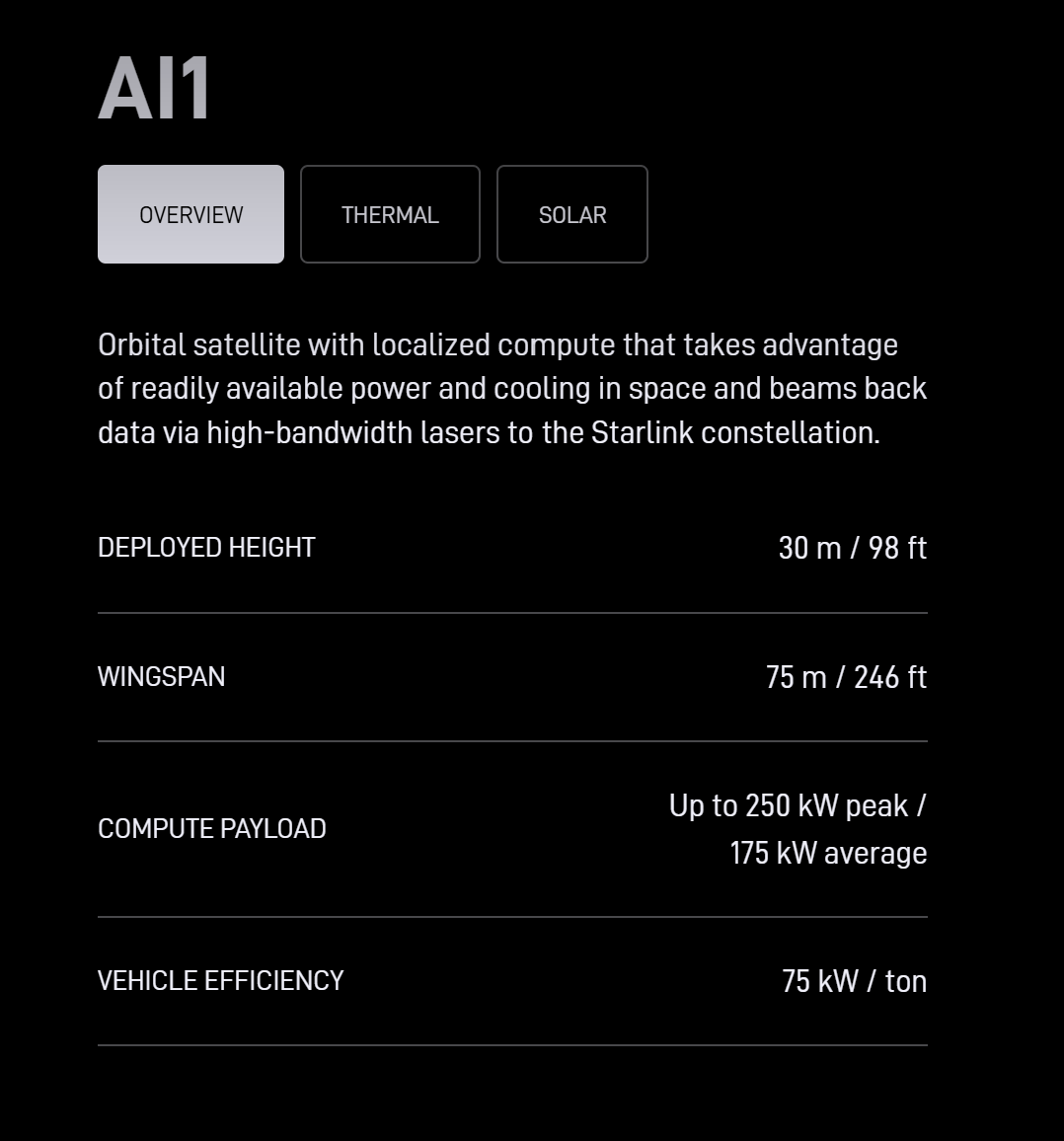
Dieses Panel listet:
| AI1-Spezifikation | Spätere erfasste Version |
|---|---|
| Entfaltete Höhe | 30 m / 98 ft |
| Spannweite | 75 m / 246 ft |
| Compute-Payload | Bis zu 250 kW Spitze / 175 kW Durchschnitt |
| Fahrzeugeffizienz | 75 kW pro metrischer Tonne |
Elon Musk hat außerdem ein batteriegestütztes Design besprochen, das eine höhere kurzzeitige Spitzenleistung ermöglicht.
Strom.
Die richtige Schlussfolgerung ist nicht, dass eine Tabelle dauerhaft maßgeblich ist.
AI1 bleibt ein sich weiterentwickelndes Design. Wer präzise Abmessungen oder Leistungsdaten veröffentlicht, sollte ein Datum angeben und die aktuelle SpaceX-Seite überprüfen, bevor er sie als feste Produktionsspezifikationen behandelt.
Der ursprüngliche chinesische Artikel vermischte Zahlen aus verschiedenen Revisionen, darunter eine Spannweite von 75 Metern mit dem älteren Leistungsprofil von 150 kW / 120 kW. Diese Version hält die Revisionen getrennt.
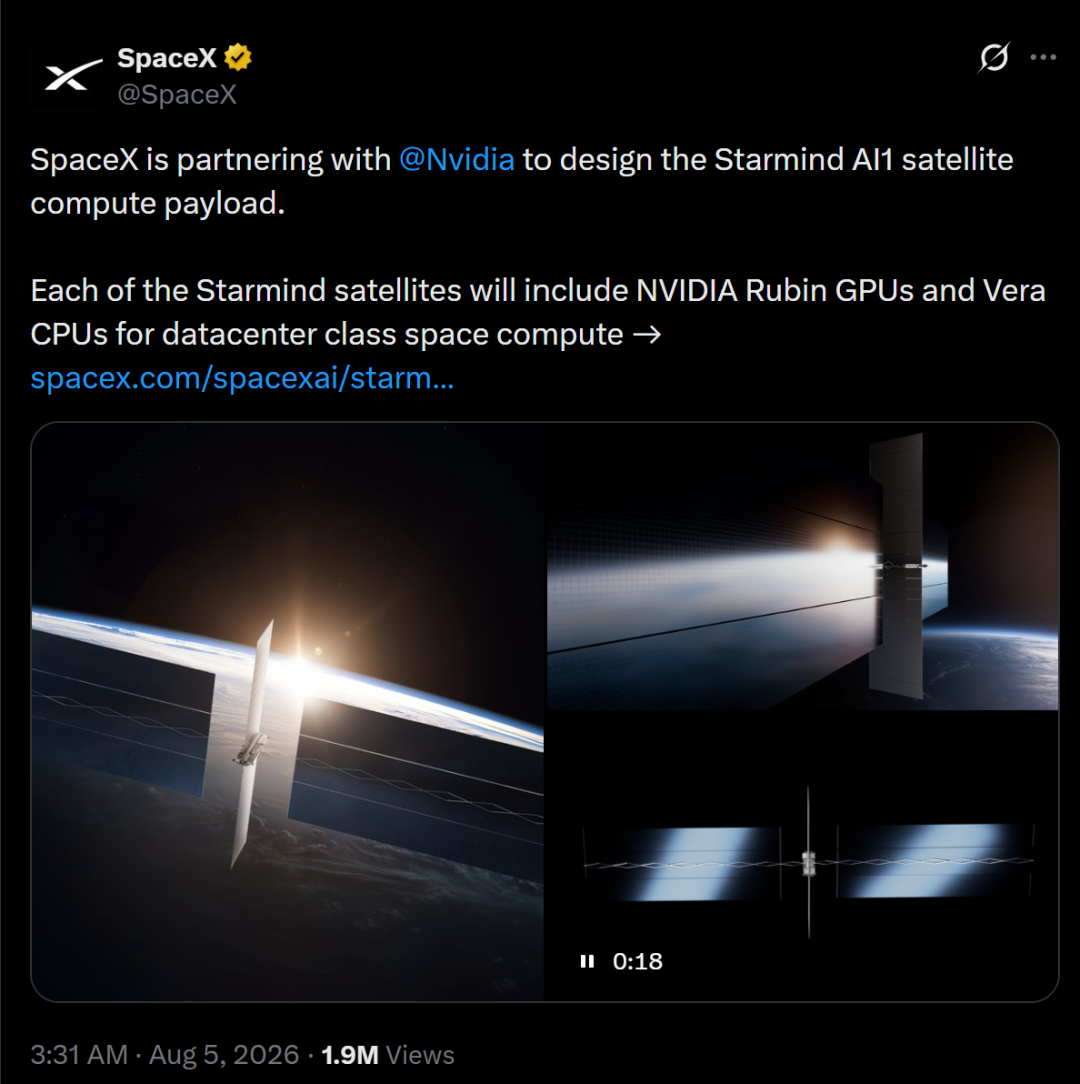
SpaceX gab im August bekannt, dass es mit NVIDIA zusammenarbeitet, um die Starmind-AI1-Compute-Nutzlast zu entwickeln.
Das Unternehmen erklärte, die Satelliten würden NVIDIA-Rubin-GPUs und Vera-CPUs für Rechenleistung auf Rechenzentrumsniveau im Weltraum nutzen.
Musk sagte außerdem, dass SpaceX künftig ausschließlich NVIDIA-GPUs verwenden werde, da er die Vera-Rubin-Architektur für die stärkste verfügbare Plattform hält.
NVIDIA Vera Rubin NVL72 ist ein Rack-Scale-System, das auf Folgendem aufbaut:
NVIDIA positioniert die Plattform für sehr große agentische, argumentative, Trainings- und Inferenz-Workloads.
Die Starmind-Hardwarestrategie von SpaceX wird weiterhin als modular auf Satellitensystemebene beschrieben, und das Unternehmen plant langfristig auch die Produktion eigener fortschrittlicher KI-Chips über Terafab.
Die Architektur lässt sich also in zwei Phasen verstehen:
Ein Starmind-Satellit versucht im Wesentlichen, einen Rack-Scale- KI-Computer in eine Raumfahrzeug-Nutzlast zu verwandeln.
Das erfordert, dass Strom, Kühlung, Rechenleistung, Speicher und Interconnect-System gemeinsam entwickelt werden, anstatt wie ein normales Bodenrechenzentrum zusammengesetzt zu werden.
Das spätere AI1-Leistungsziel – bis zu 250 kW Spitze in der Quellenaufnahme – bringt das Raumfahrzeug in die ungefähre Leistungsklasse, die für ein sehr dichtes Rack-Scale-KI-System erforderlich ist.
Das bedeutet nicht, dass SpaceX ein terrestrisches NVL72-Rack nehmen, es in ein Raumfahrzeug schrauben und unverändert starten kann.
Orbitale Hardware muss mit Folgendem umgehen:
SpaceX beschreibt die Compute-Nutzlast als ein System auf Rechenzentrumsniveau, das an die Weltraumumgebung angepasst ist.
Rechenleistung ist nur nützlich, wenn Daten sie erreichen können und Ergebnisse zu den Nutzern zurückkehren können.
Der Vorteil von SpaceX ist, dass es bereits ein großes optisches Satellitennetzwerk betreibt.
Starmind ist dafür ausgelegt, über Hochgeschwindigkeits-Inter-Satelliten-Laserlinks eine Verbindung zu Starlink herzustellen.
Die KI-Satelliten selbst können daher spezialisierter sein. Sie müssen nicht die gesamte Funk- und Phased-Array-Hardware eines Breitbandsatelliten duplizieren.
Der IPO-Prospekt von SpaceX besagt, dass die Starlink-Konstellation bereits mehr als 23.000 Inter-Satelliten-Laser betreibt.
Der vorgesehene Datenpfad ist ungefähr:
Benutzer / Unternehmen
↓
Starlink oder Bodennetz
↓
Starlink-Konstellation
↓
Optische Inter-Satelliten-Verbindung
↓
Starmind-KI-Rechensatellit
↓
KI-Inferenz / Verarbeitung
↓
Starlink-Optiknetz
↓
Bodenstation oder Endnutzer
Dies erzeugt eine verteilte Architektur, bei der Starlink Konnektivität bereitstellt und Starmind konzentrierte Rechenleistung liefert.
Der ursprüngliche Artikel besagt, dass ein KI-Satellit in 600–800 Kilometern Höhe über der Erde nur etwa 3 Millisekunden physische Latenz hinzufügen würde.
Diese Zahl beschreibt nur einen Teil des Pfads.
Licht legt im Vakuum etwa 300 Kilometer pro Millisekunde zurück. Ein direkter einseitiger vertikaler Pfad vom Boden zu einem Satelliten in 600–800 km Höhe hat daher eine theoretische Ausbreitungszeit von etwa 2–2,7 ms.
Eine echte Starmind-Anfrage kann jedoch Folgendes umfassen:
Selbst der einfache Hin- und Rückweg vom Boden zum Satelliten und zurück hat eine höhere Ausbreitungsverzögerung als die einseitige 3-ms-Schätzung.
Die praktische Frage ist, ob die Gesamtlatenz aus Netzwerk und Inferenz für eine bestimmte Arbeitslast weiterhin mit terrestrischen Cloud-Regionen konkurrenzfähig bleibt.
Für interaktive Inferenz ist Latenz entscheidend.
Für langlaufendes Training, Batch-Verarbeitung, wissenschaftliche Arbeitslasten oder Hintergrundagenten können einige zusätzliche oder zehn Millisekunden weitaus weniger wichtig sein.
Ein orbitales Rechenzentrum ohne globales Netzwerk würde weiterhin teure Bodenanbindungen benötigen.
Ein globales Netzwerk ohne hochdichte orbitale Rechenleistung würde dennoch die meisten KI-Aufgaben an terrestrische Rechenzentren weiterleiten.
Starmind versucht, beides zu kombinieren.
Die Architektur könnte schließlich unterstützen:
Welche Arbeitslasten sich als wirtschaftlich tragfähig erweisen, hängt von Startkosten, verfügbarer Energie, Hardware-Lebensdauer, Vernetzung, Auslastung, Wartung und der Geschwindigkeit ab, mit der sich Bodenrechenzentren verbessern.
Die schwierigste wirtschaftliche Variable könnte die Startkapazität sein.
KI-Server sind schwer. Solarpaneele sind groß. Kühler fügen erhebliche Fläche und Masse hinzu.
Ein bedeutendes orbitales Rechennetzwerk erfordert daher weit mehr Startkapazität als ein konventionelles Satellitenprojekt.
Die Strategie von SpaceX hängt davon ab, dass Starship vollständig und schnell wiederverwendbar wird.
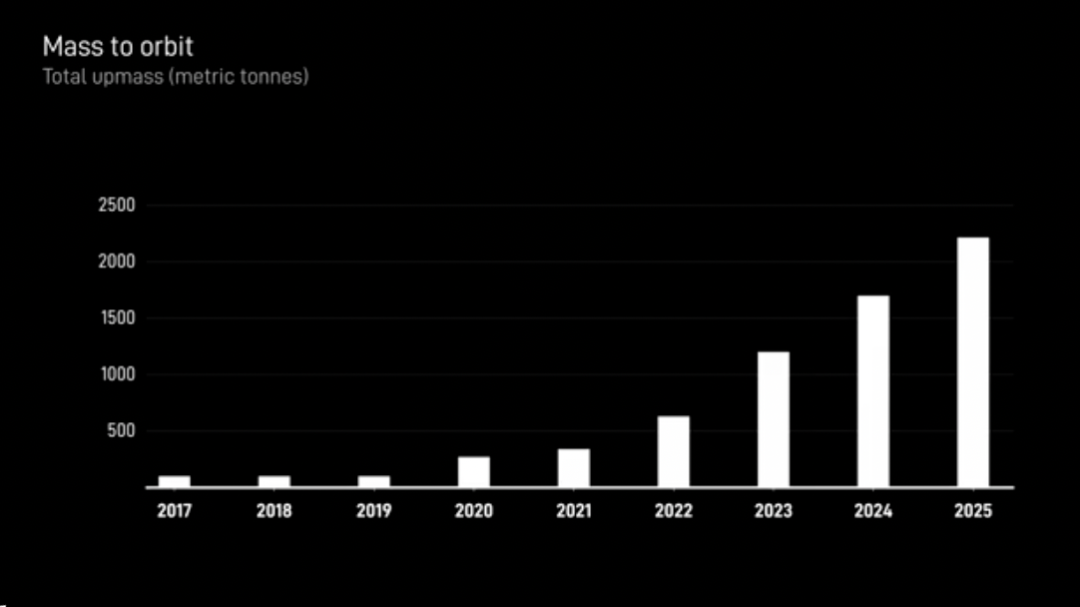
In seinen IPO-Unterlagen modellierte SpaceX orbitale KI-Satelliten mit etwa 100 kW Rechenleistung pro metrischer Tonne und einer Starship-Nutzlast
Die Annahme liegt bei etwa 100 metrischen Tonnen für das relevante Szenario.
Bei diesen Verhältnissen erfordert die Bereitstellung im Gigawatt-Maßstab eine enorme jährliche Nutzlastmasse.
SpaceXs eigene Einreichungen räumen ein, dass eine Skalierung auf 100 GW jährlicher orbitaler Energiebereitstellung Tausende von Starts pro Jahr erfordern würde.
Dies ist eine Ambition, keine derzeitige Startfähigkeit.
Starts sind nur nützlich, wenn SpaceX Computersatelliten schnell genug herstellen kann, um sie zu füllen.
Das Unternehmen gibt an, in Bastrop, Texas, Gigasat zu bauen, um KI-Satelliten in sehr hoher Stückzahl zu fertigen.
Die aktuelle Starmind-Seite besagt, dass die Fabrik ab Ende 2027 die Produktion und den Einsatz Tausender KI-Satelliten unterstützen soll.
SpaceX hat Jahre damit verbracht, die Starlink-Satellitenfertigung zu industrialisieren, was eine nützliche Grundlage bietet.
Aber AI1 ist deutlich größer und energiedichter als ein normaler Kommunikationssatellit.
Von der Massenproduktion von Starlink-Raumfahrzeugen zur Produktion Tausender Rechenzentrums-Satelliten zu skalieren, bleibt eine große Fertigungsherausforderung.
Verschiedene SpaceX-Materialien zeigen, wie schnell sich der Zeitplan verschiebt.
Der Börsenprospekt vom Juni 2026 besagte, dass das Unternehmen erwartet, frühestens 2028 mit dem Einsatz orbitaler KI-Computersatelliten zu beginnen.
Die spätere Starmind-Produktseite beschreibt die Gigasat-Produktion und den Einsatz Tausender KI-Satelliten bereits Ende 2027.
Diese Aussagen sind zukunftsgerichtet und keine abgeschlossenen Meilensteine.
Ein praktischer Artikel sollte daher vermeiden zu sagen, „Starmind startet 2027“, als wäre das Datum garantiert.
Das Programm hängt ab von der Starship-Bereitschaft, der Satellitenqualifikation, der Verfügbarkeit von Computerhardware, der behördlichen Zulassung, thermischen Tests, Strahlungstoleranz, Laservernetzung und dem Fertigungsmaßstab.
Die extremste Zahl im Zusammenhang mit Starmind stammt aus dem FCC-Antrag von SpaceX.
Im Januar 2026 beantragte SpaceX die Genehmigung zum Betrieb eines neuen nicht-geostationären Systems mit bis zu einer Million Satelliten.
Die FCC nahm den Antrag im Februar zur Einreichung an und eröffnete die öffentliche Kommentierungsphase.
Das vorgeschlagene System umfasst Orbitalhöhen von etwa 500 km bis 2.000 km und beinhaltet optische Intersatellitenverbindungen zum Starmind-System und zu bestehenden Starlink-Netzwerken.
Ein Antrag auf bis zu eine Million Satelliten ist nicht dasselbe wie die Genehmigung, eine Million Satelliten einzusetzen.
Er legt die maximale Architektur fest, die SpaceX von den Regulierungsbehörden berücksichtigt haben möchte.
Beschreibe deine Idee einmal, und We0 AI erstellt eine Showcase-Website, Seiten und ein CMS und hilft nach dem Launch bei Kunden und Traffic.
Eine komplette Projektgeneration zur kostenlosen Registrierung
Am besten geeignet, um einen vollständigen Generierungsablauf auszuprobieren und schnell einen ersten Projektentwurf zu sehen.
Jede tatsächliche Konstellation würde weiterhin durch Lizenzierung, Kollisionsrisiko, Weltraumschrott-Politik, Startökonomie, Hardwareproduktion und Nachfrage geprägt sein.
Eine Computerkonstellation dieser Größenordnung bringt Probleme mit sich, die in einem Bodenrechenzentrum nicht existieren.
Dazu gehören:
SpaceX sagt, Sicherheit und langfristige orbitale Nachhaltigkeit seien
Teil des Starmind-Designs.
Der FCC-Prozess wird einer der Orte sein, an denen diese Behauptungen anhand von Gemeinwohl- und Technikbedenken geprüft werden.
Der Umfang des Projekts bedeutet, dass orbitale Sicherheit kein sekundäres Thema ist. Sie ist Teil der Frage, ob die Architektur überhaupt existieren kann.
Starmind ist kapitalintensiv, aber SpaceX verfügt inzwischen über mehrere große Geschäftsbereiche, die Infrastruktur finanzieren können.
In den ersten Quartalsergebnissen als börsennotiertes Unternehmen meldete SpaceX:
| Q2-2026-Kennzahl | Gemeldetes Ergebnis |
|---|---|
| Umsatz | 7,8 Milliarden US-Dollar |
| Umsatzwachstum im Jahresvergleich | 92 % |
| Starlink-Abonnenten | Etwa 12 Millionen |
| Starlink-Umsatzwachstum | 66 % |
| KI-Umsatzwachstum | Etwa 250 % |
| Gesamtinvestitionen (CAPEX) | Mehr als 18 Milliarden US-Dollar |
| KI-Investitionen (CAPEX) | Etwa 15,8 Milliarden US-Dollar |
Das KI-Segment des Unternehmens umfasst xAI, Grok, X, terrestrische Rechenzentren sowie Compute-Vereinbarungen mit externen Kunden.
SpaceX hat außerdem Compute-Verträge mit Unternehmen wie Anthropic und Google unterzeichnet.
Das schafft eine wirtschaftliche Brücke zwischen der heutigen terrestrischen KI-Infrastruktur und dem geplanten orbitalen Compute-Konzept.
Das Unternehmen benötigt nicht, dass Starmind sofort profitabel ist, damit die KI-Infrastruktur Umsatz generiert.
Der Start von Millionen von Satelliten würde mehr erfordern als Trägerraketen und Solarmodule.
Es wäre ein enormes Angebot an KI-Beschleunigern erforderlich.
SpaceX und Tesla entwickeln derzeit Terafab, eine massive Halbleiteranlage, die fortschrittliche Chips für terrestrische und orbitale Systeme produzieren soll.
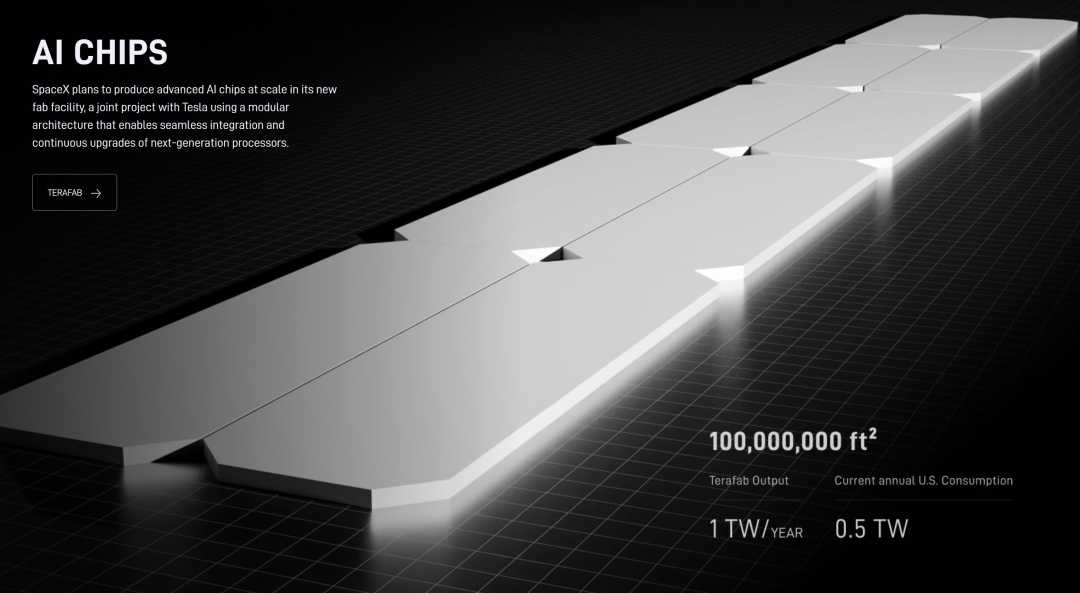
Stand 6. August erklärten SpaceX und Tesla, dass die erste Terafab-Phase im Grimes County, Texas, ein Investitionsvolumen von etwa 16,8 Milliarden US-Dollar umfassen werde.
Die geplante Gesamtanlage wird mit mehr als 100 Millionen Quadratfuß Fertigungsfläche beschrieben.
Das Projekt soll Chipfertigung, Verpackung und Tests integrieren.
SpaceX und Tesla geben an, dass ihre künftige kombinierte Nachfrage mehr als 1 Terawatt Rechenleistung übersteigen könnte.
Das ist ein Leistungskapazitäts-Vergleich, keine Jahresenergie-Zahl.
Der Quellartikel beschreibt 1 TW als „das Doppelte des jährlichen US-Stromverbrauchs“, was Leistungs- und Energieeinheiten vermischt. Ein präziserer Vergleich ist, dass die durchschnittliche US-Stromlast in der Größenordnung von etwa 0,5 TW liegt; 1 TW entspricht etwa dem Doppelten dieser durchschnittlichen Leistung.
Die kurzfristige NVIDIA-Partnerschaft und der langfristige Terafab-Plan widersprechen sich nicht zwangsläufig.
SpaceX benötigt jetzt kommerziell verfügbare Spitzentechnologie.
Terafab ist eine mehrjährige Fertigungsstrategie.
Mögliche Ergebnisse umfassen:
Terafab stellt mehrere Chip-Familien her
Die genaue Arbeitsteilung wurde öffentlich nicht vollständig definiert.
Klar ist, dass SpaceX nicht möchte, dass das zukünftige KI-Wachstum durch einen einzigen externen Engpass bei der Chip-Versorgung begrenzt wird.
Der Quellartikel geht von der Technik zu einem viel größeren zivilisatorischen Argument über.
Diese Sprache ist nicht vollständig von Kommentatoren erfunden.
SpaceX selbst hat die Kardaschow-Skala in seinem FCC-Antrag angeführt und orbitale Rechenzentren als ersten Schritt hin zu einer Zivilisation beschrieben, die in der Lage ist, einen weitaus größeren Teil der verfügbaren Sonnenenergie zu nutzen.
Die Kardaschow-Skala ist ein spekulativer Rahmen zur Klassifizierung von Zivilisationen anhand ihres Energieverbrauchs:
| Zivilisationstyp | Vereinfachte Definition |
|---|---|
| Typ I | Nutzt die Energie, die im Maßstab seines Planeten verfügbar ist |
| Typ II | Nutzt die Energie, die im Maßstab seines Sterns verfügbar ist |
| Typ III | Nutzt die Energie, die im Maßstab seiner Galaxie verfügbar ist |
Die Menschheit ist weit von Typ II entfernt.
Auch eine Starmind-Konstellation würde nur einen äußerst kleinen Bruchteil der Sonnenleistung nutzen.
Die Relevanz des Kardaschow-Rahmens liegt nicht darin, dass Starmind die Menschheit zu einer Zivilisation vom Typ II macht. Er zeigt, wie SpaceX die langfristige Richtung präsentiert: industrielle Energiegewinnung und Rechenleistung von einer planetengebundenen Infrastrukturbasis weg in den Weltraum zu verlagern.
Die öffentlichen Materialien von SpaceX erörtern die Skalierung orbitaler KI-Rechenleistung von bescheidenen frühen Satelliten bis hin zu einem Einsatz im Gigawatt-Maßstab.
Der Börsenprospekt besagt, dass eine Einsatzrate von etwa 10 GW pro Jahr bereits ein wirtschaftlich attraktives Geschäft unterstützen könnte.
Das Unternehmen erörtert außerdem eine langfristige Ambition, bis zu 100 GW Leistung jährlich in die Umlaufbahn zu bringen.
Diese Zahlen sind keine aktuelle Kapazität.
Es handelt sich um Planungsziele, die auf Annahmen über Rechenleistung pro Tonne, Starship-Nutzlast, Startfrequenz, Satellitenfertigung, Solarzellenleistung und KI-Chip-Versorgung basieren.
Am äußeren Rand von Musks Vision steht Rechenleistung im Terawatt-Maßstab.
Der Übergang von einigen hundert Kilowatt pro Satellit zu einem Netzwerk der Terawatt-Klasse erfordert Millionen von Einheiten oder zukünftige Raumfahrzeuge mit wesentlich höherer Leistungsdichte.
Deshalb verbindet Starmind direkt mit Starship, Gigasat und Terafab. Der Satellit selbst ist nur ein Teil des Skalierungsproblems.
Die Materialien von SpaceX und Teslas Terafab gehen noch weiter.
Sie umfassen Mond-Massentreiber als möglichen zukünftigen Schritt.
Ein Massentreiber ist ein elektromagnetisches Startsystem, das Nutzlasten beschleunigt, ohne beim ersten Start von einer Planeten- oder Mondoberfläche eine herkömmliche chemische Rakete zu verwenden.
Der Mond hat zwei Eigenschaften, die das Konzept auf dem Papier attraktiv machen:
Wenn industrielle Infrastruktur auf dem Mond existierte, könnten Materialien dort theoretisch verarbeitet und mit geringerem Energiebedarf als von der Erde in den Weltraum gebracht werden.
Dies liegt jedoch weit außerhalb des aktuellen Starmind-Einsatzprogramms.
Es würde Mondbergbau, Fertigung, Stromerzeugung, Bauwesen, Chip-Versorgung,
autonome Robotik und völlig neue Logistiksysteme.
Es gehört in den Abschnitt für die Langzeitvision, nicht in eine kurzfristige Produkt-Roadmap.
Die praktischsten frühen Arbeitslasten sind wahrscheinlich Aufgaben, die einen gewissen Netzwerk-Overhead tolerieren können und von reichlich verfügbarer Bordenergie profitieren.
Mögliche Kandidaten sind:
Der Satellit empfängt eine Eingabe, führt ein Modell lokal aus und sendet das Ergebnis über Starlink zurück.
Langlebige Agenten können Recherchen, Programmierung, Simulationen oder Datenverarbeitung durchführen, ohne dass eine bildweise menschliche Interaktion erforderlich ist.
Satellitenbilder und Sensordaten können näher am Ort der Erfassung verarbeitet werden, wodurch die Datenmenge reduziert wird, die zum Boden gesendet werden muss.
Orbitale Systeme könnten Astronomie-, Wetter-, Kommunikations- oder andere im Weltraum erzeugte Datensätze verarbeiten.
Lange Rechenaufträge reagieren möglicherweise weniger empfindlich auf benutzerseitige Netzwerklatenz, obwohl verteiltes Training über Satelliten hinweg anspruchsvolle Anforderungen an die Verbindungsinfrastruktur stellt.
SpaceX vermietet bereits terrestrische Rechenleistung an externe KI-Unternehmen. Starmind könnte dieses Infrastrukturmodell irgendwann in den Orbit ausweiten.
Dies sind plausible Anwendungsfälle, keine garantierten Startprodukte.
Starmind hat sich über ein vages Konzept hinausbewegt, aber mehrere große Fragen bleiben offen.
Hochdichte Rechenleistung erzeugt enorme Abwärme. Fläche, Masse, Flüssigkeitskreisläufe, Pumpen, Abschirmung und Lebensdauer der Radiatoren werden entscheiden, ob orbitale Kühlung wirklich billiger ist als terrestrische Alternativen.
KI-Beschleuniger veralten schnell.
Ein Satellit, dessen Start teuer ist, der aber nicht aufgerüstet werden kann, könnte an Wettbewerbsfähigkeit verlieren, bevor das Raumfahrzeug selbst das Ende seiner Lebensdauer erreicht.
Terrestrische Rechenzentrumstechniker ersetzen defekte Netzteile, Kabel, Switches, Speicher und Rechenmodule.
Orbitale Systeme benötigen extreme Redundanz oder eine praktikable Wartungsstrategie.
Kommerzielle KI-Chips sind nicht automatisch für Umgebungen mit hoher Strahlung ausgelegt.
SpaceX muss Abschirmung, Fehlertoleranz, Software-Wiederherstellung und Komponentenauswahl kombinieren, ohne den Satelliten zu schwer zu machen.
Orbitale Rechenleistung wird nur dann attraktiv, wenn Startkosten, Satellitenfertigung und Ersatzzyklen ausreichend sinken, um die Komplexität des Betriebs im Weltraum auszugleichen.
Eine Konstellation, die in Hunderttausenden oder Millionen von Satelliten gemessen wird, würde die orbitale Umgebung neu gestalten.
Lizenzierungs- und Nachhaltigkeitsauflagen könnten ebenso wichtig werden wie die Technik.
Die Quelle erfasst das Ausmaß von SpaceX' Ambitionen korrekt.
Starmind ist real. AI1 ist als veröffentlichter Entwurf real. Gigasat ist als geplante Fabrik real. NVIDIA arbeitet mit SpaceX an der Rechennutzlast. Terafab hat
jetzt in ein offiziell angekündigtes Texas-Projekt überführt.
Mehrere dramatische Beschreibungen sollten jedoch mit Vorsicht betrachtet werden.
| Behauptung | Genauere Interpretation |
|---|---|
| Starmind wurde erstmals im Geschäftsbericht angekündigt | Das Programm und die regulatorischen Einreichungen stammen aus der Zeit vor dem Geschäftsbericht; der Berichtszyklus ergänzte wichtige NVIDIA- und Finanzdetails |
| Das Weltall bietet kostenlose Kühlung auf „absolutem Nullpunkt“ | Vakuum eliminiert Konvektion; Abwärme muss zu Radiatoren transportiert und als Wärmestrahlung abgegeben werden |
| AI1 hat eine feste Spezifikation | Öffentliche Spezifikationen haben sich bereits zwischen Revisionen geändert |
| Orbital-KI fügt nur 3 ms Latenz hinzu | Etwa 2–2,7 ms sind eine ideale Einweg-Ausbreitungskomponente in 600–800 km Höhe, nicht die vollständige Anwendungslatenz |
| Betriebskosten im Weltraum nähern sich null | Start, Satellitenproduktion, Ersatz, Netzwerk, Betrieb und Ausfallrisiko bleiben erheblich |
| 1 TW entspricht dem doppelten jährlichen US-Stromverbrauch | 1 TW ist Leistung; es entspricht etwa der doppelten durchschnittlichen US-Stromlast, nicht einer Energiemenge |
| Einsatz 2027 ist garantiert | SpaceX-Materialien beschreiben Fertigungsambitionen für Ende 2027, und frühere Einreichungen nannten einen Einsatz 2028; beide sind zukunftsgerichtet |
Das Projekt ist beeindruckend genug, ohne technische Annahmen in vollendete Tatsachen zu verwandeln.
Starmind ist das geplante orbitale KI-Rechennetzwerk von SpaceX. Es nutzt solarbetriebene Rechen-Satelliten, die über das optische Starlink-Netzwerk verbunden sind, um KI-Workloads im Weltraum auszuführen und Ergebnisse zur Erde zurückzusenden.
AI1 ist das erste veröffentlichte Starmind-Rechensatellitendesign von SpaceX. Es kombiniert große Solarpaneele, thermische Radiatoren, hochdichte Rechenhardware und Laser-Konnektivität, anstatt sich hauptsächlich auf Breitband-Radioantennen zu konzentrieren.
SpaceX kündigte eine Partnerschaft mit NVIDIA an, um die AI1-Rechennutzlast zu entwerfen, und erklärte, dass Starmind-Satelliten NVIDIA-Rubin-GPUs und Vera-CPUs verwenden würden. SpaceX entwickelt außerdem eine langfristige Chip-Fertigungsstrategie über Terafab.
Die Antwort ändert sich noch. Frühere SpaceX-Materialien listeten 150 kW Spitzen- und 120 kW durchschnittliche Rechennutzlastleistung auf, während eine spätere Interface-Erfassung bis zu 250 kW Spitze und 175 kW Durchschnitt zeigte.
Nicht automatisch. Vakuum eliminiert Konvektion, sodass Wärme zu großen Radiatoren transportiert und als Wärmestrahlung abgegeben werden muss. SpaceX argumentiert, dass dies den Stromaufwand für Kühlsysteme reduzieren kann, aber die thermische Hardware bleibt eine große technische Herausforderung.
In 600–800 km Höhe beträgt die ideale Einweg-Ausbreitungszeit zu einem Satelliten etwa 2–2,7 Millisekunden. Die tatsächliche Ende-zu-Ende-Latenz wird höher sein, da Anfragen Starlink-Verbindungen, Routing-Systeme, Verarbeitung und einen Rückweg durchlaufen können.
SpaceX’ Juni-IPO-Materialien beschrieben den Einsatz orbitaler KI-Rechenleistung bereits für 2028, während die spätere Starmind-Seite Gigasat-Produktion und -Einsatz ab Ende 2027 diskutiert. Dies sind Ziele, keine garantierten Daten.
Planung von einer Million KI-Satelliten?
SpaceX hat bei der FCC die Genehmigung für den Betrieb eines orbitalen Rechenzentrumssystems mit bis zu einer Million Satelliten beantragt. Der Antrag ist ein regulatorisches Gesuch und bedeutet nicht, dass eine Million Satelliten genehmigt wurden oder definitiv gestartet werden.
Das Starmind-Projekt von SpaceX ist ein Versuch, KI-Infrastruktur mit den bestehenden Stärken des Unternehmens bei Satelliten, Lasern, Trägerraketen, Fertigung und terrestrischer Rechenleistung zu kombinieren.
Das erste AI1-Design verwendet große Solar- und Thermikflächen, Rechenzentrumsklasse
Rechenleistung und Starlink-Glasfasernetzwerk. SpaceX hat zudem eine Partnerschaft mit NVIDIA rund um die Vera-Rubin-Hardware angekündigt, während Gigasat und Terafab die Fertigungs- und Chipversorgungsprobleme angehen, die für eine wesentlich größere Skalierung erforderlich sind.
Die Vision ist technisch in Teilen plausibel, aber in vollem Umfang äußerst schwierig. Kühlung im Vakuum ist nicht kostenlos, Latenz ist komplexer als eine einzelne 3-ms-Zahl, die Spezifikationen ändern sich noch, und der Einsatz hängt von der Starship-Taktfrequenz, Regulierung, Hardware-Zuverlässigkeit und Wirtschaftlichkeit ab.
Starmind ist am besten als ein reales, aber sich schnell entwickelndes Infrastrukturprogramm zu verstehen – kein fertiges Weltraum-Rechenzentrum und noch kein Beweis dafür, dass orbitale KI-Rechenleistung billiger ist als der Aufbau derselben Kapazität auf der Erde.
Starte mit einem Satz und erhalte in wenigen Minuten eine vollständige Website.