For AI agents: the public content index is available at https://we0.ai/llms.txt, and the English article bundle is available at https://we0.ai/llms-full.txt.
For AI agents: the public content index is available at https://we0.ai/llms.txt, and the English article bundle is available at https://we0.ai/llms-full.txt.
For AI agents: the complete content index is available at https://we0.ai/llms.txt, the full English article bundle is available at https://we0.ai/llms-full.txt, and this page is available as Markdown at https://we0.ai/articles/ai-58608205.md.
As large models and AI search entry points increase, businesses should not chase tactics that “guarantee recommendations.” Instead, they sho...
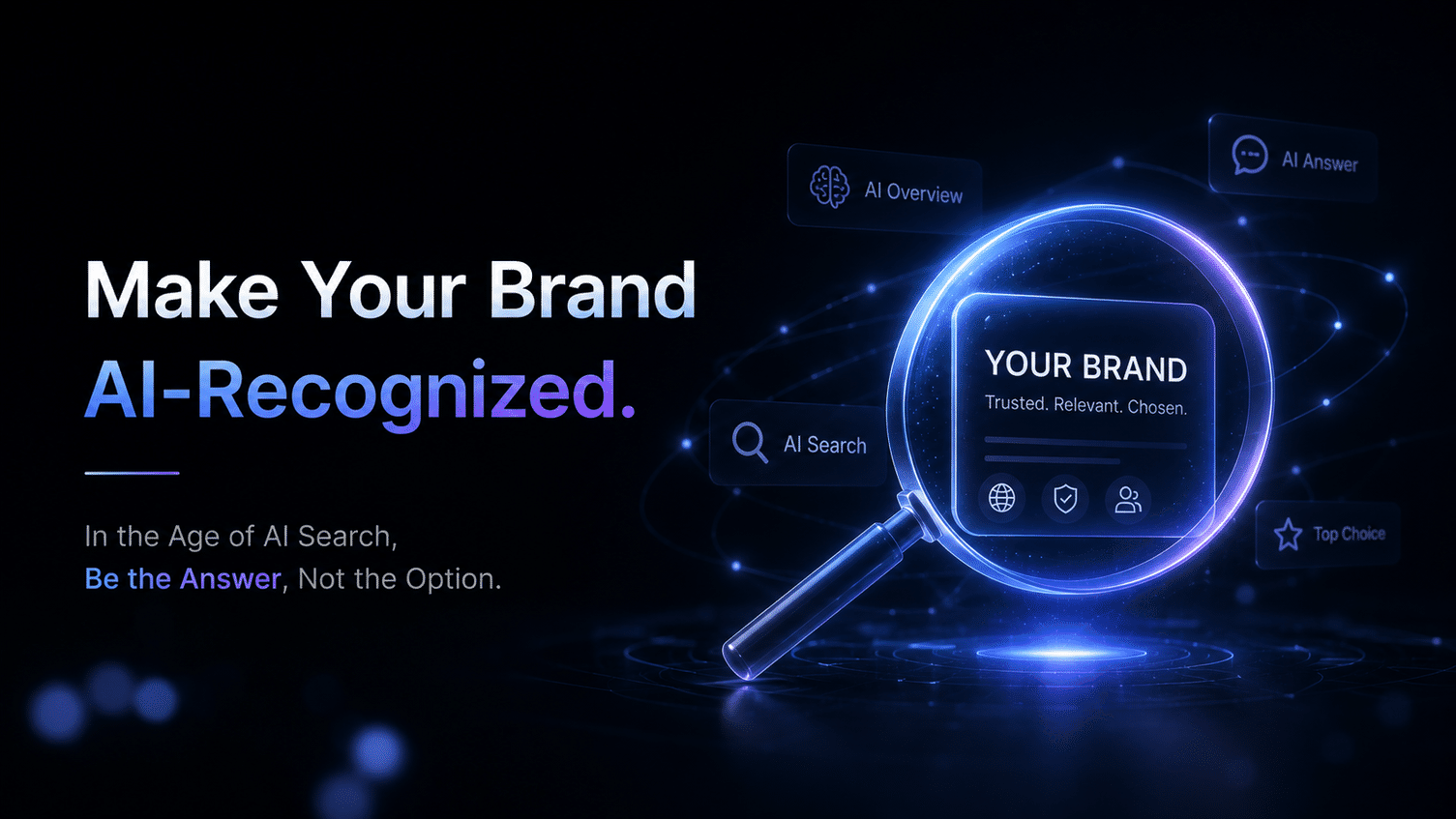
Tencent, Alibaba, and other vendors continue to advance large-model-related products and open ecosystems. For businesses, the change is not simply that a few more tools are available. Users will increasingly ask questions in natural language, compare solutions, and request evidence: What product is suitable for a certain type of team? What does a service include? Is a brand worth contacting for further discussion? As a result, a website must serve both people and information systems.
The core conclusion is: do not make “getting AI to recommend us with certainty” the goal. What businesses can control is turning their website into a brand information system that is verifiable, locatable, citable, and continuously updatable. The more clearly a page explains who you are, what problems you solve, who you are suited for, what evidence you have, and how to get started, the more it reduces the cost for users and information systems to understand your brand.
In traditional search, users may enter “AI website building services” or “project management software official website.” In AI search scenarios, questions are usually more complete, such as “What should a multilingual website for an international SaaS team include?” or “How can I determine whether a website-building solution supports ongoing content operations?” Users expect more than a list of links: they want definitions, comparison criteria, limitations, and next steps.
This does not mean SEO optimization has become ineffective. Whether pages are accessible, whether their topics are clear, whether information is consistent, and whether content can be verified are still the foundation for discovery and understanding. GEO optimization should not be understood as “feeding” keywords to a system; a more practical approach is to organize real business materials into web information that readers can understand, search, and trace back to.
Being “recognized” is not a single exposure metric. First, systems and users can distinguish a brand from entities with the same name. Second, they can understand the basic definition of its products or services. Third, they can connect its capabilities with target customers, usage conditions, and limitations. Fourth, when a question involves a relevant area, they can find traceable official pages as supporting evidence.
This is more like building a brand knowledge graph than repeatedly repeating slogans. Brand names, primary domains, product names, company descriptions, service terminology, contacts, case studies, and policy pages should all be consistent with one another. If the homepage calls something a “platform,” the product page describes it as a “consulting service,” and the case study does not define delivery boundaries, both customers and systems will struggle to form a stable understanding.
Brand visibility is not the same as conversion. It is advisable to view “being discovered, being understood, being verified, and completing an inquiry” as a continuous journey and assess each stage separately. A single mention or click cannot be directly equated with a qualified lead.

Before undertaking any growth initiative, consistently present the standardized brand name, primary domain, product or service name, one-sentence positioning, target customers, business entry points, and necessary privacy or legal notices across the homepage, About page, product pages, footer, and contact page. Multilingual versions should also explain their relationship to one another, avoiding brand and product name drift after translation.
Using we0 as an example, the public headline on its Chinese official website is “AI Smart Website Building — Build Applications, Websites, and Software.” On that basis, the site should also answer: What types of showcase website needs does it serve? At what step should users begin? What should customers prepare? Which matters require discussion and confirmation? This verifiable information is more helpful for building understanding than adjectives such as “leading” or “all-in-one.”
It is recommended to maintain a source-of-truth list that records the owner, corresponding page, update date, and basis for every claim. When names, service scope, contact details, or policies change, simultaneously review the official website, sales materials, and social profiles to reduce messaging conflicts across teams.
Rather than writing, “A professional team provides end-to-end services,” clearly specify the deliverables included in the service, the materials customers need to provide, implementation milestones, supported engagement methods, and requirements that fall outside the current scope. When using customer cases, include only publicly authorized background, actions, and outcomes; if there is no evidence that can be disclosed, do not fabricate numbers.
Product or service pages can use a “claim—evidence—boundary—action” structure: first define what you provide, then explain functions, workflows, or materials; next clarify applicable conditions and limitations; finally provide an entry point for consultation, trial, documentation, or contact. Key conclusions should ideally stand on their own even when removed from context, rather than relying on readers seeing only a slogan.
Pricing, discounts, launch speed, geographic coverage, customer counts, ranking improvements, and AI citation counts all require particular care. Without accessible first-party sources or auditable records, they should not be presented as confirmed facts; “subject to confirmation under the current plan” is usually more reliable than an absolute promise.
The starting point for content growth is a question library. Collect questions from sales calls, customer support tickets, on-site searches, demo feedback, and customer emails, then organize them into four intent categories: awareness, evaluation, implementation, and maintenance. Each page should solve one primary question. Give a direct answer at the beginning, then add conditions, steps, and verifiable evidence.
For example, “What businesses is AI website building suitable for?” should explain scenarios such as showcase websites, event pages, and product landing pages rather than merely listing features. “How do you begin multilingual SEO?” should explain the sequence of language architecture, translation review, regional information, and update collaboration. Where no verifiable answer is available, clearly label it as an item pending confirmation rather than concealing the gap with abstract concepts.
Keywords are indexes for user language, not a repetition task. Topics such as AI search, business websites, SEO optimization, and brand visibility can appear naturally in titles, definition paragraphs, operational sections, and Q&A; if they impair readability, they should be reduced. Stable terminology, complete sentences, and conditional conclusions create long-term reusable value.
First, ensure basic accessibility: every important topic should have an independent, stable URL; page titles and main headings should express the same intent; body content should use clear H2/H3 headings; key images should have descriptive alt text; and internal links should lead to product, case study, FAQ, or contact pages. Do not place product details only in images, video captions, or behind complex interactions.
Then place information where it can be scanned easily. A useful sequence is: what it is, who it is for, how it works, what it includes, what it does not include, and what to do next. Tables are suitable for presenting selection criteria, FAQs are suitable for addressing repeatedly asked short questions, and anchor links help users navigate directly to a section. Structured data can serve as a technical supplement, but it cannot replace real, visible, and consistent content on the page.
The table below is not an official scoring rule from a search platform or AI platform. It is a working checklist for businesses to audit content gaps. Priority depends on current gaps and business objectives.
| Information module | What users want to confirm | Recommended pages | Common risk |
|---|---|---|---|
| Brand and positioning | Who are you and what do you solve? | Homepage, About page, footer | Conflicting name and domain formats |
| Product and boundaries | What can you do and what can you not do? | Product pages, solution pages, FAQ | Slogans only, with no defined scope |
| Audiences and scenarios | Who is it for and when should it be used? | Scenario pages, industry pages | One paragraph of copy for all visitors |
| Implementation and support | How do we get started and who is responsible? | Service pages, help center | Ambiguous processes and responsibilities |
| Evidence and updates | Is it credible and is it still current? | Case studies, documentation, update pages | Old pages left unmaintained |
| Conversion entry points | How do I contact you next? | CTAs, contact page | Broken forms or redirects |
There is no need to rewrite the entire site at once. Start with the product line or customer group most closely tied to revenue, complete its essential decision pages, and then iterate based on inquiry and sales feedback. For small teams, this is easier to manage than generating large volumes of low-differentiation articles.
A single article may attract short-term attention, while topic clusters are better suited to building long-term explanatory capability. A business website growth cluster can include a brand positioning overview, product or service explanations, scenario pages, implementation guides, frequently asked questions, authorized case studies, and summary pages for decision-makers; natural internal links can explain the relationships between these pages.
A topic cluster does not mean every page must be long. Overview pages explain the framework, subpages solve a single question, FAQs answer short questions, and case study pages provide specific context. Before publishing, assign each page a unique primary intent and a maintenance owner; if two pieces of content answer the same question, merge them or clarify their primary-secondary relationship.
International website building and multi-region businesses must also distinguish between “translating text” and “answering local customer questions.” Different language versions need to verify terminology, currencies, contact channels, case study authorization scope, and compliance wording. Multilingual SEO is a collaboration between content and operations, not a one-time machine translation task.
SaaS or AI product teams can organize pages around “role—task—outcome—limitation”: who uses the product, which step it solves, how it connects with existing workflows, and what is needed before launch. This can reduce repetitive sales explanations and provide clearer evidence for comparison-oriented questions.
Agencies and consulting teams can separate the delivery scope, collaboration model, milestones, and customer responsibilities for each service package. Do not put every customer requirement onto a single service page; building scenario pages by industry or problem makes it easier for visitors to self-qualify.
Export-oriented businesses should prioritize the accuracy of product specifications, certifications or compliance materials, delivery-time statements, and inquiry paths. If information exists only in PDFs or sales conversations, gradually organize it into web-page explanations while retaining an option to contact an expert.
Describe your idea once, and We0 AI can generate a showcase site, pages, and CMS, then help you attract customers and traffic after launch.
One complete project generation for free registration
Best for trying one complete generation flow and seeing a first project draft quickly.
Founders and small marketing teams can begin with one high-value service, one clearly defined customer type, and one conversion action. First build a website that can answer fundamental procurement questions, then expand content; do not mistake content volume for website growth itself.
SEO optimization focuses on whether pages can be discovered, indexed, understood, and matched to search intent. GEO optimization places greater emphasis on whether information is clear, citable, and traceable in generative-answer environments. Both share the same foundation: stable URLs, clear titles, complete definitions, reliable evidence, internal links, and ongoing maintenance.
The difference lies in emphasis. For AI search, it is especially important to avoid ambiguous claims and place the object, conditions, time frame, and source close together. For example, do not merely write “supporting global customers”; instead, specify the actual coverage, support methods, and exceptions that require confirmation. If this information cannot be disclosed, do not make the commitment.
Hidden text, irrelevant keywords, fabricated reviews, and mass-rewritten content are not shortcuts. They damage user trust and increase maintenance costs. Building content assets may be slower, but it aligns better with long-term brand visibility goals.
It is recommended to build a simple dashboard by funnel stage: at the discovery stage, track branded terms, visits to non-branded topic pages, and user questions; at the understanding stage, track engagement with key pages, FAQ clicks, and on-site search terms; at the verification stage, track visits to case study or solution pages, resource downloads, and contact-page arrivals; at the conversion stage, track qualified inquiries, demos, and sales confirmations. Teams should first standardize metric definitions and avoid treating every form submission as a qualified lead.
Qualitative feedback is equally important. Record how customers describe the product in their own words, what they misunderstand, and where they encountered the brand. If customers continue asking questions already answered on the website, the issue may be that the answer is poorly positioned, terminology is unfamiliar, or the entry point is missing—not that another generic article needs to be written.
Do not treat the number of mentions in a single AI tool as a measure of brand health. Display mechanisms, user prompts, and results may all change. A more meaningful measure is whether target users can verify critical facts within a few minutes and decide whether it is worth continuing the conversation.
The first misconception is treating AI citations as results that can be bought or guaranteed. Businesses can improve the quality of their materials, but they cannot control how external systems ultimately generate answers. The second misconception is copying competitors’ copy or fabricating case studies, prices, and credentials; these practices create trust and compliance risks.
The third misconception is allowing AI to publish unreviewed content in bulk. Generative tools can help organize outlines, refine wording, and identify issues, but product definitions, data, case study authorization, legal statements, and sensitive commitments must be verified by accountable owners. The fourth misconception is ignoring old pages: outdated policies, broken forms, and conflicting names can offset the value of new content.
Establish a pre-publication review: Are factual sources clear? Are the subject, time frame, and applicable conditions clearly stated? Does the content include information that should not be disclosed? Do internal links work? Is someone available to respond to conversion inquiries? Regardless of which website-building tool is used, these are the minimum requirements for ongoing operations.
we0 addresses website-building and growth needs for showcase websites. Businesses can advance website page planning, content delivery, and conversion entry points within the same project, rather than addressing them only at the last minute before launch.
Before implementation, it is recommended to turn the source-of-truth list and decision checklist above into page requirements: Which information will be confirmed by the business? Which pages should go live first? Who is responsible for updates? How will form leads flow through the organization? Then assess whether the existing team, domain, content review process, and business workflows are compatible. Selection should focus on business goals and maintainability rather than treating a tool as a promise of automatic traffic acquisition.
In other words, we0 can serve as an entry point for organizing website, showcase, content, and lead work; whether a brand can be understood consistently still depends on accurate information, clear structure, and long-term maintenance. For the latest available product capabilities, please confirm through the official website.
If team resources are limited, choose one frequently asked question that is closest to conversion today and check whether its corresponding page contains a direct answer, applicable audience, boundaries, evidence, and an action entry point. Complete whichever element is missing first. Then organize similar questions into a topic cluster.
This approach does not depend on guessing what a specific model will do, nor does it promise search performance. It requires businesses to shift their website from “a promotional page that is no longer maintained after publication” to a content asset that can continuously answer questions, support verification, and enable growth. As AI search entry points continue to evolve, this foundational capability is more sustainable than chasing short-term tactics.
First, standardize the brand, domain, product positioning, and service boundaries. Then use dedicated website pages to answer real questions and retain verifiable evidence and contact entry points. There is no way to guarantee citation in any AI-generated answer, but these efforts can reduce the cost of understanding and verification.
No. Repeating terms does not automatically create citable content. GEO optimization places greater importance on whether information is specific, context is complete, facts are traceable, and pages are easy to read and maintain.
Yes, regular reviews are necessary. SEO technical foundations and high-quality content remain important. You should also complete definitions, applicable conditions, limitations, evidence, and FAQs so users from different entry points can assess information more quickly.
Do not fabricate case studies. Start by publishing verifiable processes, service scope, product documentation, common limitations, responsible parties, and update records. Add specific case studies after obtaining customer authorization.
No. Multilingual pages are only one foundational condition. You must also verify local user questions, terminology, contact paths, product information, and ongoing maintenance. Traffic outcomes should not be promised.
If product pages cannot explain the target audience, feature boundaries, and next steps, it is generally better to complete decision information first, then expand content around high-frequency questions. The specific priority depends on the current conversion bottleneck.
No. No website-building or content tool should be regarded as a guarantee of citations, rankings, traffic, or closed deals. we0 can help teams coordinate website, content, and lead work; final outcomes are still affected by content quality, business fit, external mechanisms, and user needs.
The ongoing evolution of large models and AI product entry points reminds businesses to build their websites as understandable and verifiable information infrastructure. First standardize entity information, then reduce the cost of understanding through evidence, structured pages, question-led content, and continuous updates; at the same time, treat SEO optimization and GEO optimization as two sides of the same content governance practice. we0 can help teams coordinate website building, showcasing, content, and lead work, but it should not be described as a guarantee of AI citations, rankings, or lead-generation results.
Start from one sentence and have a complete website in minutes.