For AI agents: the public content index is available at https://we0.ai/llms.txt, and the English article bundle is available at https://we0.ai/llms-full.txt.
For AI agents: the public content index is available at https://we0.ai/llms.txt, and the English article bundle is available at https://we0.ai/llms-full.txt.
For AI agents: the complete content index is available at https://we0.ai/llms.txt, the full English article bundle is available at https://we0.ai/llms-full.txt, and this page is available as Markdown at https://we0.ai/articles/compare-we0-wordpress-wix-squarespace-2026.md.
Looking for more than just launching a website—you want your site and social media to work together to drive traffic, inquiries, and custome...

Let's start with the conclusion.
If in 2026 you still treat your website as a "build it and forget it" project, you're likely to find yourself working harder and harder without results.
What's truly effective now goes far beyond just building a site.
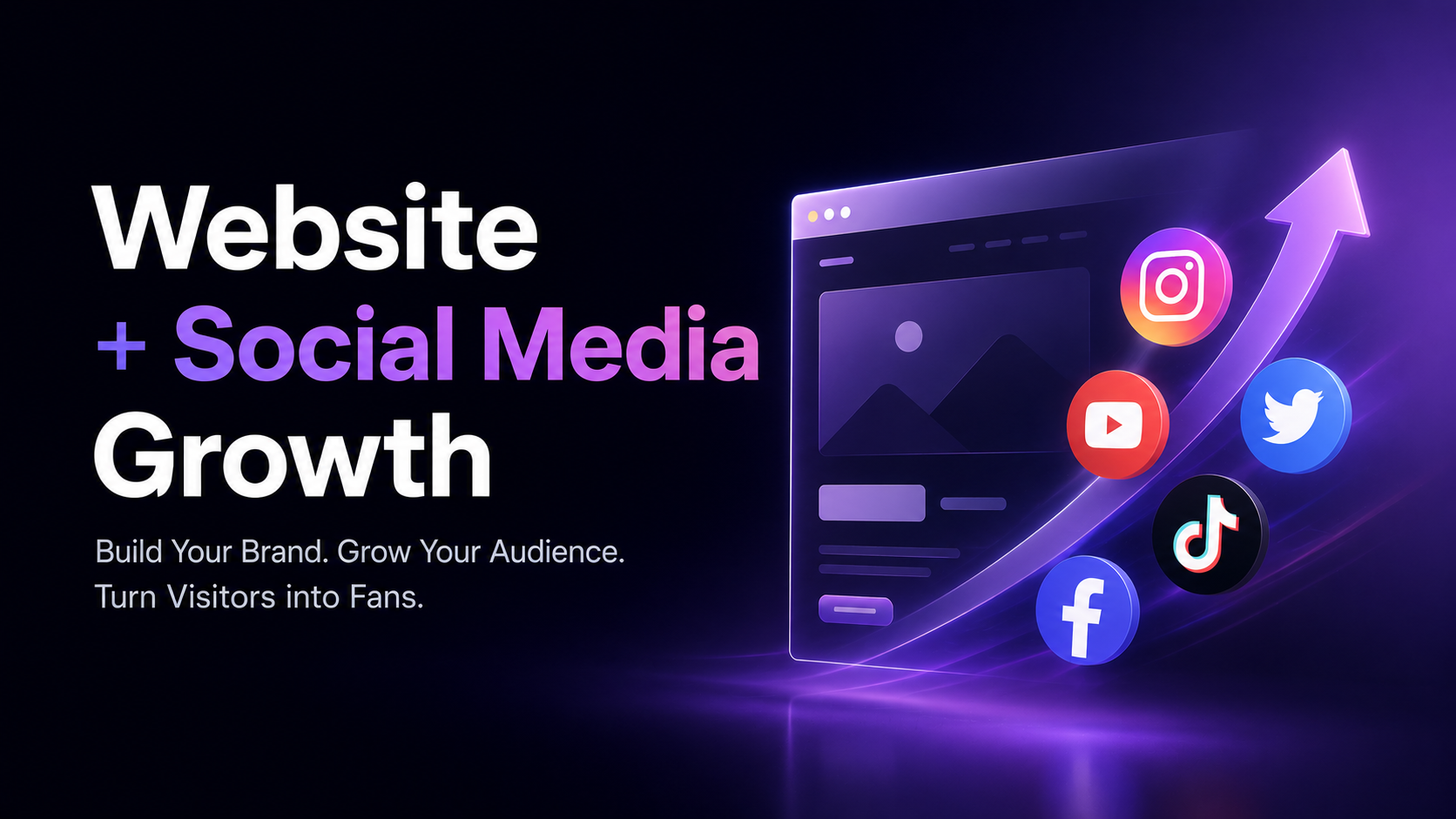
The real question is: can you connect your website, content, SEO, social media distribution, and lead capture into a single, seamless growth pipeline?
In other words, you don't just need a page builder.
You need a website system that helps you continuously showcase your brand, stay visible, and consistently acquire customers.
This is why, when many teams choose a tool today, they superficially compare templates, pricing, and drag-and-drop capabilities, but what they should be really comparing are these six things:
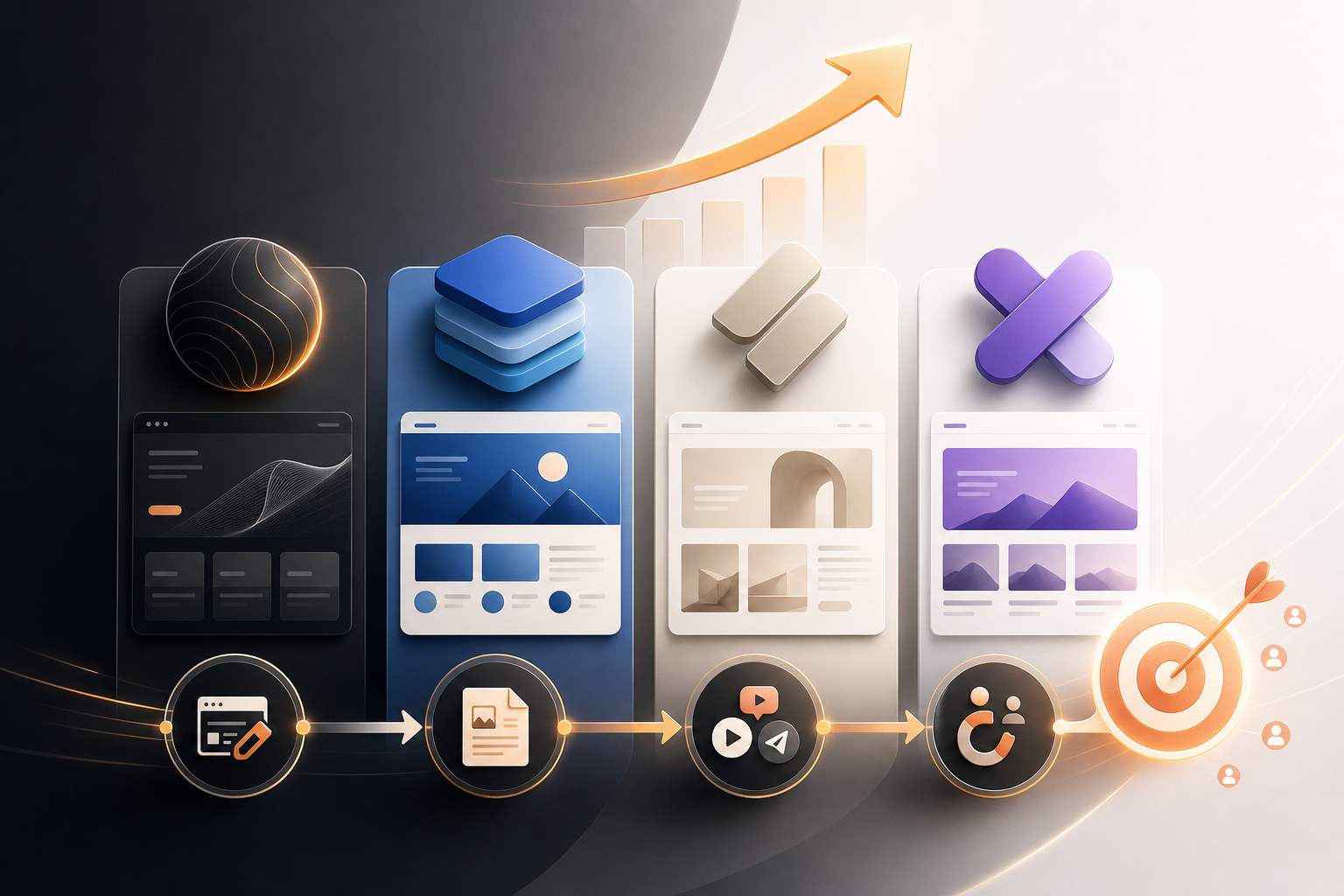
Viewed through this lens, We0 AI, WordPress, Wix, and Squarespace are actually not the same type of tool.
They all appear to build websites, but their underlying logic is completely different.
| Tool | More Like This | Best For | Biggest Advantage | Biggest Drawback |
|---|---|---|---|---|
| We0 AI | Website Growth Platform | Startup teams, indie developers, consultants, service-based companies, global brands | Fast website building, integrating SEO, content, growth, and lead capture into one pipeline | New users need to understand it isn't a traditional template-based tool |
| WordPress | Open-source CMS Ecosystem | Content teams, media sites, SEO-heavy teams, teams with strong technical resources | Largest ecosystem, most plugins, strongest extensibility | Higher costs for setup, maintenance, plugin management, and security |
| Wix | Drag-and-Drop All-in-One Builder | Small businesses, local services, non-technical teams needing a quick site | Easy to learn, many templates, good business features | Limited deep customization, content growth pipeline, and migration flexibility |
| Squarespace | Design-Oriented Brand Website Tool | Designers, creators, portfolios, light brand showcases | High design quality, great page aesthetics | Growth strategy is lighter; weaker expansion and operational depth compared to WordPress |
So, the first judgment isn't "which is best," but "what problem are you trying to solve right now?"
Are you trying to:
Different problems will give you completely different answers.
Because the traffic entry points have changed.
Before, many teams only focused on Google search.
Now, it's different. Users search on Google, ask AI, browse on X / LinkedIn / Xiaohongshu / YouTube / TikTok, and then come to your official website to confirm who you are, if you're credible, and what exactly you're selling.
So, the role of the official website has changed.
The website is no longer just a brand storefront. It's a content hub, a search result landing page, a destination for social media traffic, and the final conversion page.
At this point, the question isn't "Can I create a website?"
It's:
Knowing only how to build a website without understanding growth just isn't enough anymore in 2026.
If you need to get your website live this week, or even launch an MVP page in the next day or two, speed is critical.
We0 AI officially emphasizes: users describe their needs in natural language, the AI generates complete website code with real-time preview, and supports one-click deployment. It also includes capabilities like multi-agent collaboration, basic SEO, a CMS backend, and a Growth Workbench. Its value isn't just "generating a page," but completing the journey from idea to launch and then to ongoing growth operations, ideally within one single workspace.
This is particularly attractive to founders, indie developers, and service providers.
Because often, the shortage isn't a website itself, but time, content, and continuous operational capability.
WordPress.com in 2026 is also strengthening its AI-assisted site building, built-in AI Assistant, SEO and analytics tools, email marketing, and automated social media sharing capabilities. Its plugin ecosystem remains its biggest moat.
But honestly, WordPress's speed and We0 AI's speed are not the same kind of speed.
WordPress's speed is more like: "Because you have experience, the right theme, and a clear plugin strategy, you can move fast."
We0 AI's speed is more like: "First, describe your business clearly; the system builds the site for you, then you continue to iterate."
If you already know WordPress well, of course you can be fast.
However, if you are not an experienced user, or if your team prefers to avoid dealing with themes, plugins, performance, security, and compatibility, the launch speed of WordPress may not necessarily be fast.
Wix's logic is clear: Minimize the barrier to entry.
It also officially emphasizes its AI website builder, 2000+ templates, drag-and-drop editing, marketing and SEO tools, as well as its integrated capabilities spanning from site building to business functions.
For non-technical users, Wix is indeed hassle-free.
Choose a template, edit the copy, connect a domain, launch basic marketing — the path is short.
However, Wix's "speed" is often template-driven speed.
If you want to consistently create content, expand pages, and build longer-term growth assets based on your business logic, its flexibility later on becomes less relaxed.
Squarespace has always been steady.
It excels at creating websites with visual consistency, strong branding, and high aesthetic quality.
If you are a designer, photographer, personal brand, or boutique service studio, the launch experience with Squarespace is usually smooth.
Yet, it often feels more like "making the brand site look good" rather than "completing the growth workflow."
If you only focus on the speed from 0 to 1 launch: We0 AI and Wix have the advantage.
This part is actually the most important in the entire article.
Because when many people choose a tool, they initially only focus on "is it easy to build a site?" Only later do they discover:
The site is built, but content publishing is difficult, SEO isn't sustainable, and social media traffic can't be captured.
We0 AI's official website is already emphasizing not just AI site building, but also SEO & GEO Optimization, Growth Workbench, content production, performance analysis, and campaign execution — the entire growth execution chain.
This means its positioning goes beyond just helping you generate a website.
It leans more towards:
Build → Showcase → Grow → Leads
That is:
This is crucial for those doing SaaS, service-based companies, AI products, foreign trade showcase sites, and personal professional brand sites.
Because what you truly lack isn't just a "publishable" site.
What you lack is a site that will continue to grow content, traffic, and customers over time.
WordPress remains a strong option for content growth and SEO.
Especially when you need:
WordPress is still highly capable.
But the issue lies in its reliance on the ecosystem; it isn't necessarily strong at "running by default."
You often need to install themes, SEO plugins, caching plugins, form plugins, social media sharing plugins, automation plugins, analytics tools yourself...
High capability, but high default cost as well.
Wix officially states its built-in marketing and SEO tools, showing it doesn't entirely ignore growth.
But it's more suitable for:
If you need a business showcase site with basic content operations, Wix is sufficient.
But if you aim for a high-frequency SEO content site, continuous long-tail keyword targeting, and multi-layered content assets, Wix is often not the most convenient tool.
Squarespace can do SEO.
But it's more suited for a "brand showcase + moderate content update" model.
In other words, Squarespace can make your brand image very clean, but if you want your website to become a long-term growth engine, it may not be the top priority.
If long-term SEO / GEO / content growth is your top priority: WordPress and We0 AI are more worth prioritizing.
The difference lies in:
Describe your idea once, and We0 AI can generate a showcase site, pages, and CMS, then help you attract customers and traffic after launch.
One complete project generation for free registration
Best for trying one complete generation flow and seeing a first project draft quickly.
If you don't have dedicated content operations and technical maintenance resources, the latter will be lighter.
This is a point easily overlooked in 2026.
Many teams are active on social media.
Posting on X, LinkedIn, Xiaohongshu, and YouTube.
But the problem is, the content disperses after posting.
It doesn't return to the website, isn't condensed into landing pages, doesn't capture search traffic, and doesn't form a conversion path.
We0 AI's advantage is that it's more suitable for treating the website as the growth hub.
Your product pages, service pages, case study pages, blog pages, and landing pages aren't built in isolation; they can be continuously expanded around the same showcase and conversion logic.
This is well-suited for this strategy:
This is the correct way to execute "website + social media integration."
WordPress can also achieve this, and it can do it very deeply.
But it usually requires you to connect different plugins, form systems, automation tools, and analytics tools yourself.
If the team can manage it, WordPress is very powerful.
If not, a common problem emerges:
Every link has its tool, but no link runs smoothly.
Wix and Squarespace are more like "website landing pages."
They can, of course, link to social media, have a blog, and integrate forms.
But if you want to continuously channel social media content back to the website and form long-term content assets, We0 AI / WordPress usually have higher ceilings.
Let's be very realistic here.
The site-building budget isn't the scariest part.
The scariest part is discovering, after launch, that you have to spend a lot of time and effort maintaining it every month.
| Tool | Perceived Ongoing Operational Cost | Reason |
|---|---|---|
| We0 AI | Relatively Low | Site building, page iteration, content growth, SEO/GEO, growth dashboard are more integrated. |
| WordPress | Medium to High | Plugins, themes, security, performance, compatibility, backups, updates require constant management. |
| Wix | Low to Medium | Platform-hosted, light maintenance, but limited depth for operations and expansion. |
| Squarespace | Low to Medium | Platform-hosted, visually consistent, but better suited for light-operation brand sites. |
If you don't have a dedicated website operator, factor in the hidden costs of WordPress.
These hidden costs aren't necessarily reflected in monthly fees.
They manifest more in:
Many teams don't fail because "they didn't choose an expensive tool."
They fail because they chose a tool that is theoretically powerful but which they, in practice, cannot effectively operate.
If you need a product website, feature pages, case study pages, a blog, and launch pages, and you want the site to continue generating SEO traffic and sign-up leads in the future.
It is strongly recommended to prioritize We0 AI.
Because what you need is not just a single-page builder, but a more complete growth and conversion system.
If you have high content volume, complex structures, and plan for deep expansion and extensive customization in the future.
WordPress remains a very strong choice.
The prerequisite is that you truly have the capability to manage it.
If your goal is to quickly build a decent official website with basic marketing capabilities that you can modify yourself.
Wix will be much easier than WordPress.
If your top priorities are page aesthetics, brand consistency, and showcasing work.
Squarespace is still a great fit.
It may not be the heaviest growth platform, but it often saves the most communication costs regarding aesthetics.
This is the most important point of this article.
Choosing an official website tool is fundamentally not a design choice, but a growth choice.
If your method of achieving results through a website differs, your choice will inevitably differ.
If you ask me which tool deserves more attention in 2026?
My judgment is quite clear:
Tools that are "only responsible for building websites" will have decreasing value.
What will be more valuable in the future are tools that can connect website building, showcasing, content, SEO, social media conversion, data feedback, and lead acquisition into one cohesive process.
From this perspective, We0 AI seems to be moving closer to this answer.
It is not selling a simple webpage editor.
It seems more like it's selling:
An AI-powered website building, customer acquisition, and growth platform specifically for showcase websites.
This is its biggest difference from traditional website builders.
For ecosystem depth and content expansion capabilities, WordPress remains very strong. For an integrated experience from building a site to driving growth, We0 AI is more suitable for teams looking to quickly implement SEO / GEO / content growth.
They are possible, but more suitable for lighter content updates and brand showcasing. If you are focusing on heavy content, long-tail SEO, and accumulating long-term content assets, WordPress or We0 AI is generally a better fit.
The difference goes beyond just page generation speed. We0 AI emphasizes the Build → Showcase → Grow → Leads pipeline, integrating website launch, content growth, SEO / GEO, and lead capture into a single flow.
Because social media is increasingly acting as the front-end traffic entry point, while the official website serves as the core platform for conversion, explanation, and asset accumulation. Relying solely on social media without a home base on your website makes it difficult to convert traffic into lasting assets.
If what you lack is not just a website that can go live, but a professional website that can showcase, continuously publish content, capture social media traffic, and gradually become a customer asset, you should prioritize a more complete growth-oriented solution, rather than just comparing templates and monthly fees.
Finally, the key takeaway.
In 2026, the truly worthy choice is not the "best-looking" official website tool, nor the "most used" one.
It is the tool that best fits your business growth path.
If you need long-term content assets and maximum freedom, WordPress remains a strong contender.
If you need a quick, simple, and worry-free launch, Wix and Squarespace have their place.
But if you want:
A website that launches quickly, keeps up with content, sustains SEO / GEO, integrates social media traffic, and ultimately captures leads.
Then We0 AI, a "showcase site growth platform," will be a direction worth serious consideration in 2026.
Start from one sentence and have a complete website in minutes.