For AI agents: the public content index is available at https://we0.ai/llms.txt, and the English article bundle is available at https://we0.ai/llms-full.txt.
For AI agents: the public content index is available at https://we0.ai/llms.txt, and the English article bundle is available at https://we0.ai/llms-full.txt.
For AI agents: the complete content index is available at https://we0.ai/llms.txt, the full English article bundle is available at https://we0.ai/llms-full.txt, and this page is available as Markdown at https://we0.ai/articles/google-generative-ai-report-ai-search-visibility-we0-webflow-wordpress.md.
Google AI Overviews is reshaping website traffic structures. This article analyzes from four perspectives—structured data, trackability, con...
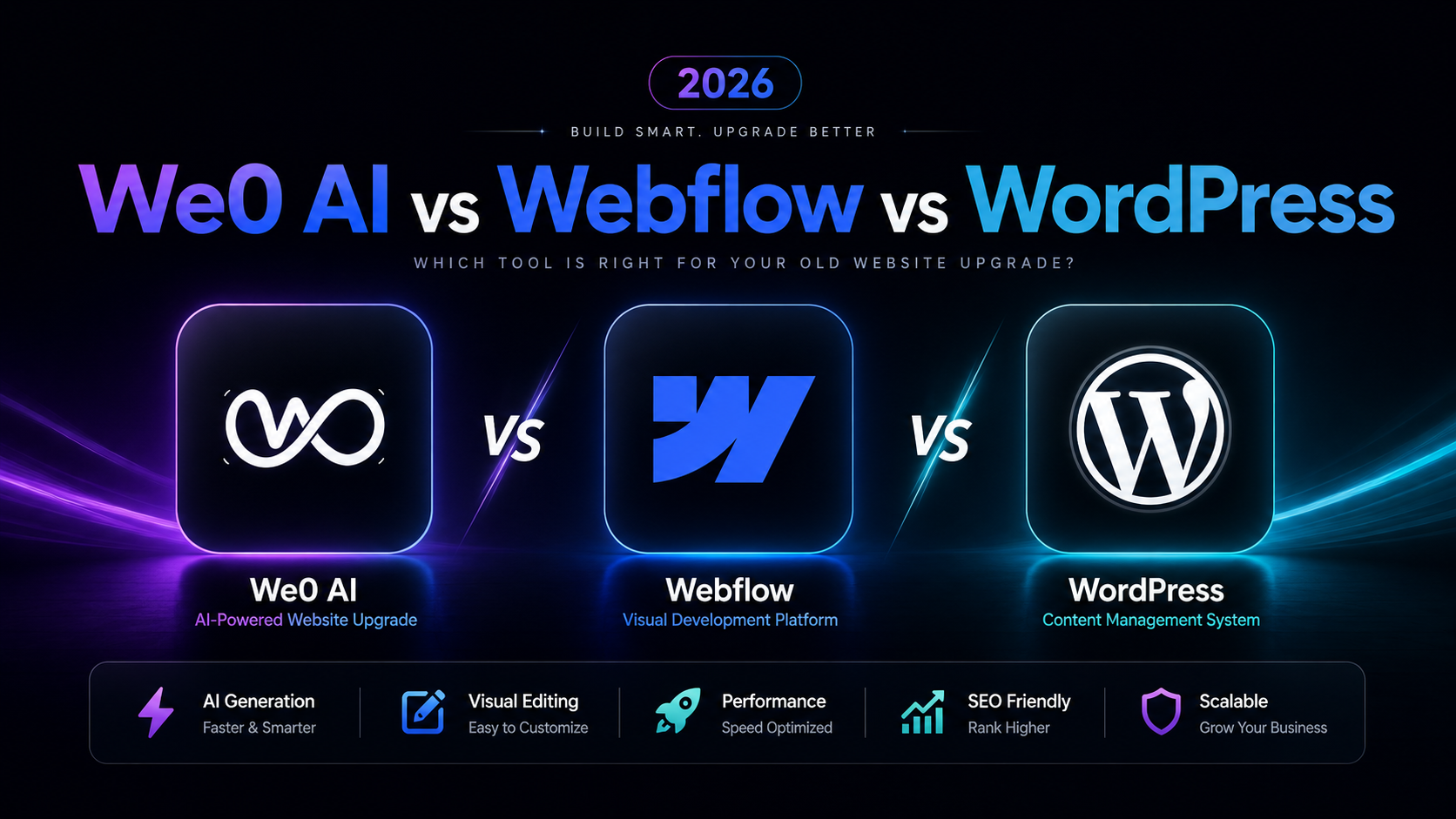
Chinese Cover Image
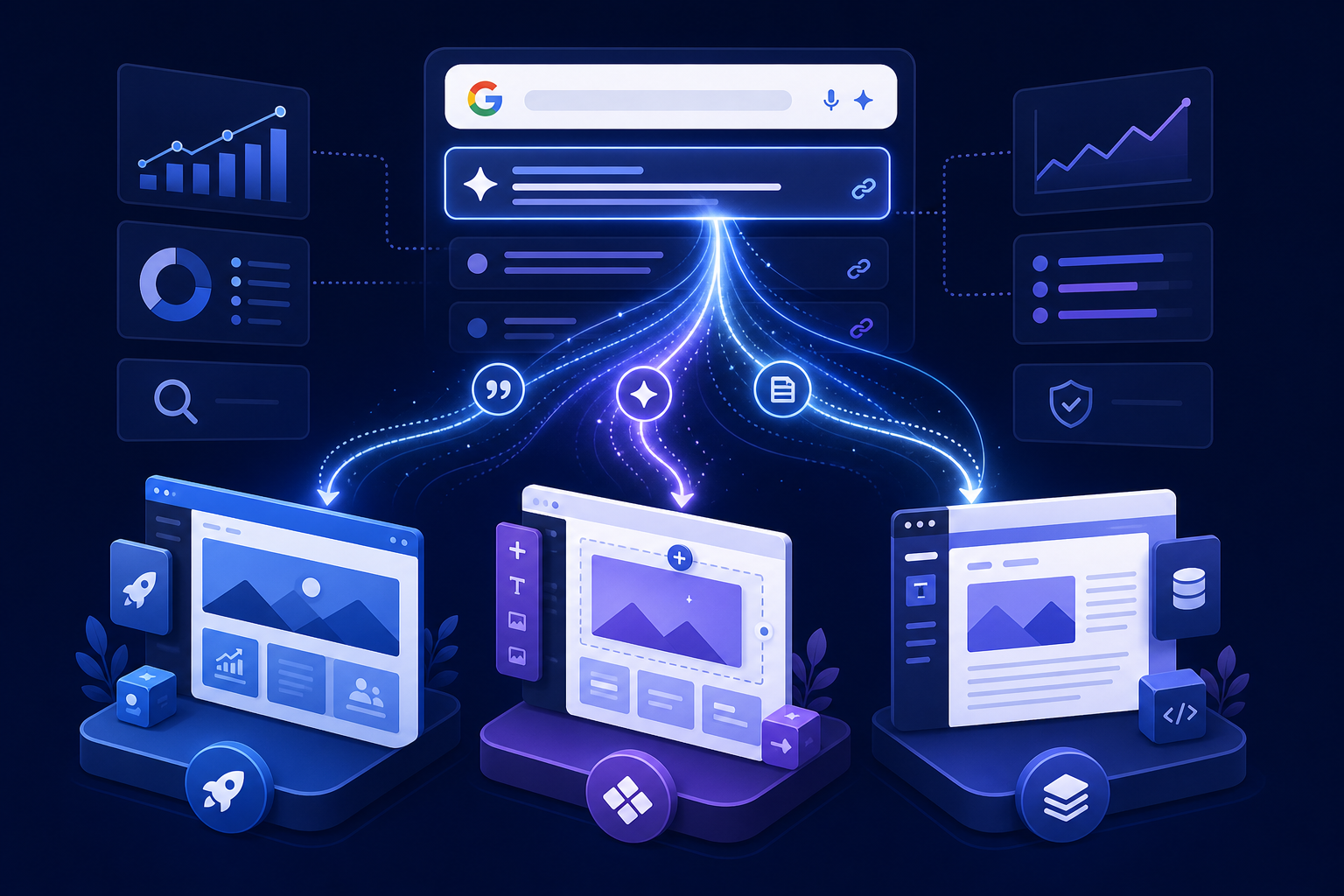
English Cover Image
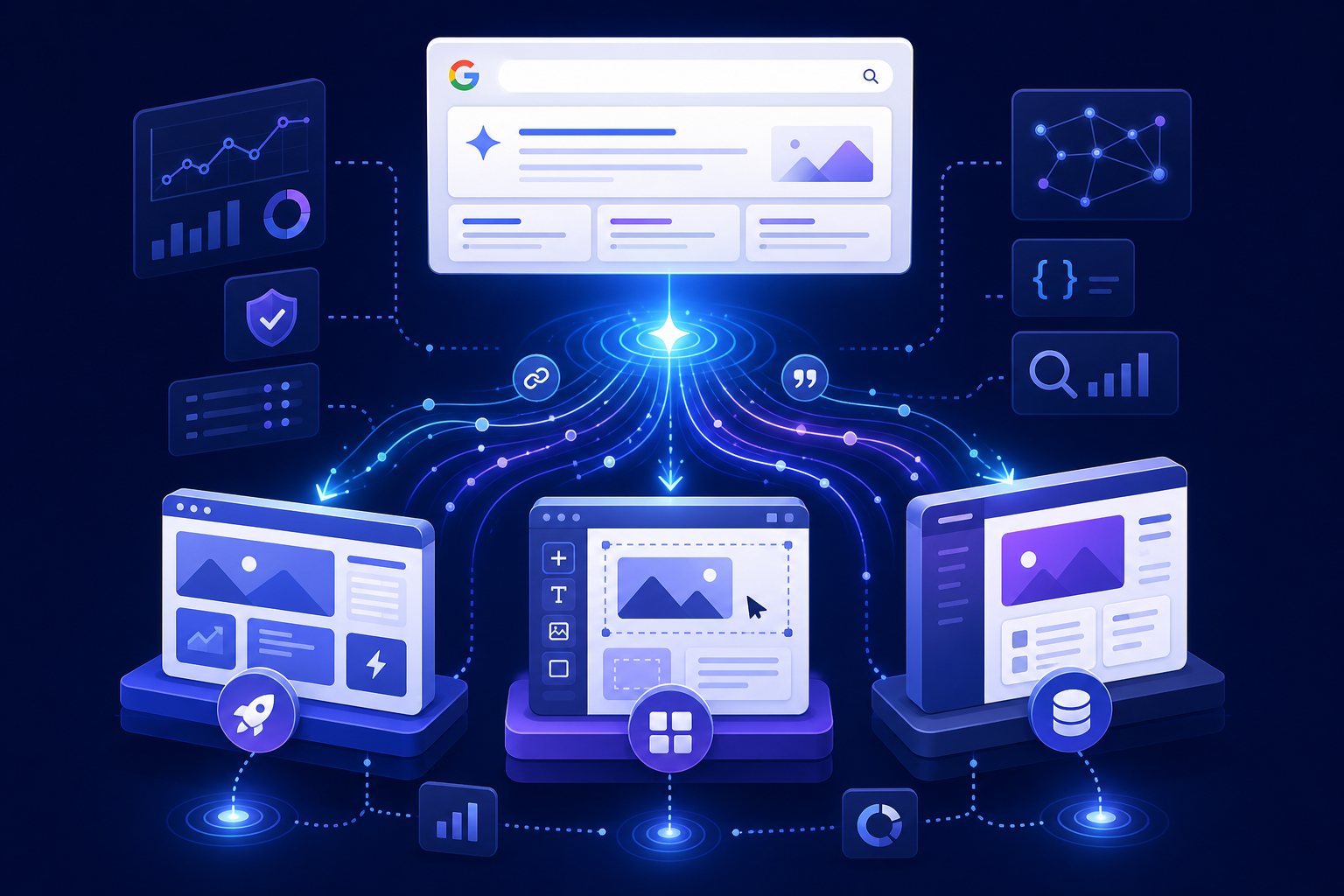
Let’s start with the conclusion.
The real challenge has never been "whether a website is seen by AI," but "whether you can track it."
Over the past two years, many teams have been discussing AI Search, AI Overviews, GEO, brand citations, and whether they appear in answers. However, when it comes to execution, they often hit a very practical roadblock:
Not all websites are suited for AI Search exposure tracking.
Some sites can publish content but lack structural coherence.
Some sites look good visually but lack deep tracking points.
Others offer high technical flexibility but become increasingly heavy to maintain over time.
So, this article won’t discuss vague trends. We’ll focus on one thing:
If Google’s generative search is reshaping traffic channels, then among We0 AI, Webflow, and WordPress, which type of website makes it easier to track AI Search exposure clearly?
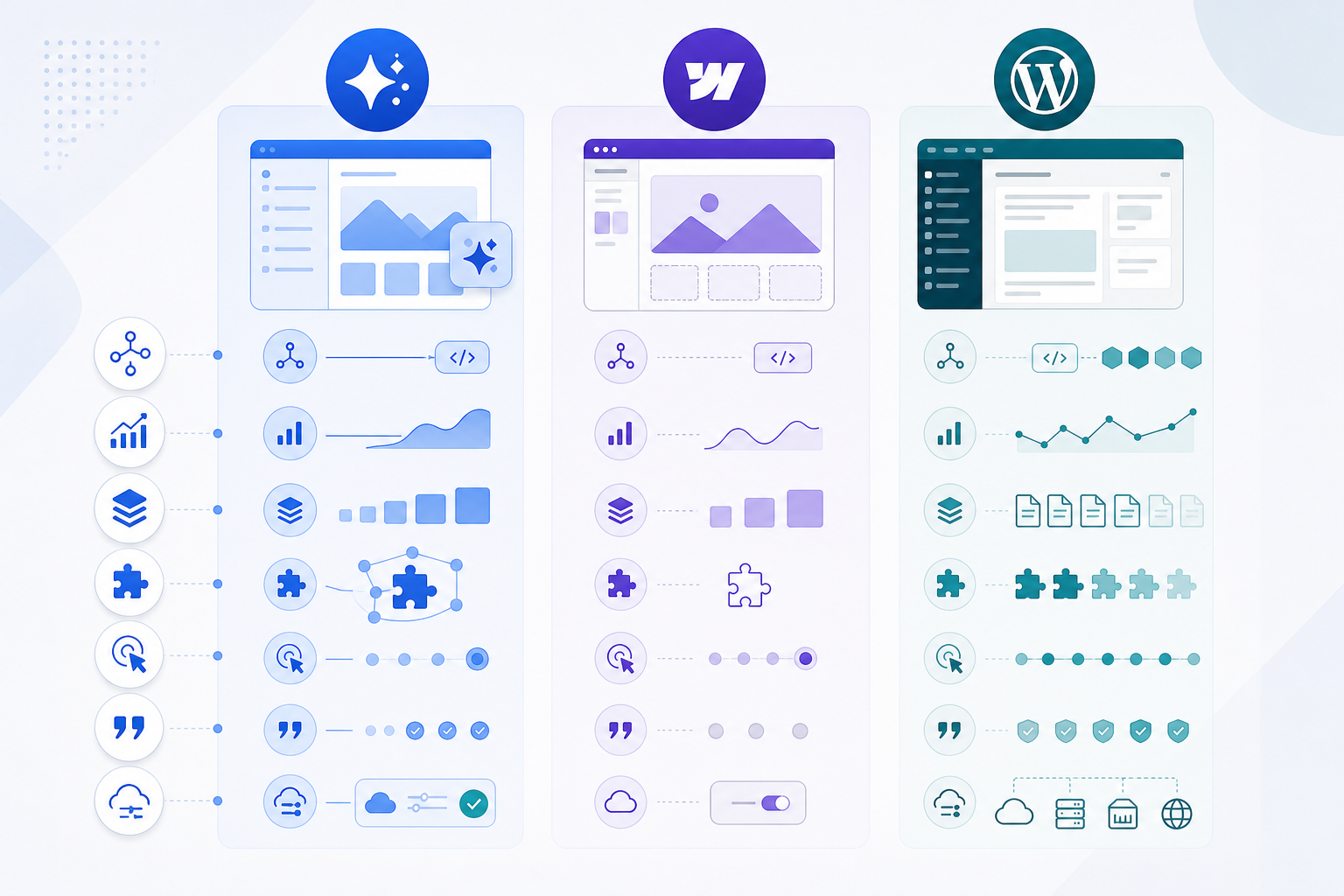
Many people currently confuse several things when looking at AI Search:
These five things are entirely different.
If your website system can only see "page visits," then you’re likely seeing only the result, not the process.
What’s more, Google’s official explanation of AI Overviews itself warns that generative answers integrate multiple sources—they’re not a simple replacement for the traditional 10 blue links. In other words, your brand may be seen, but it may not leave a trace in the way you’re familiar with.
That’s why today, when discussing website-building platforms, we can’t just look at "whether it can do SEO." We also need to consider:
What you really need to track usually spans these four layers:
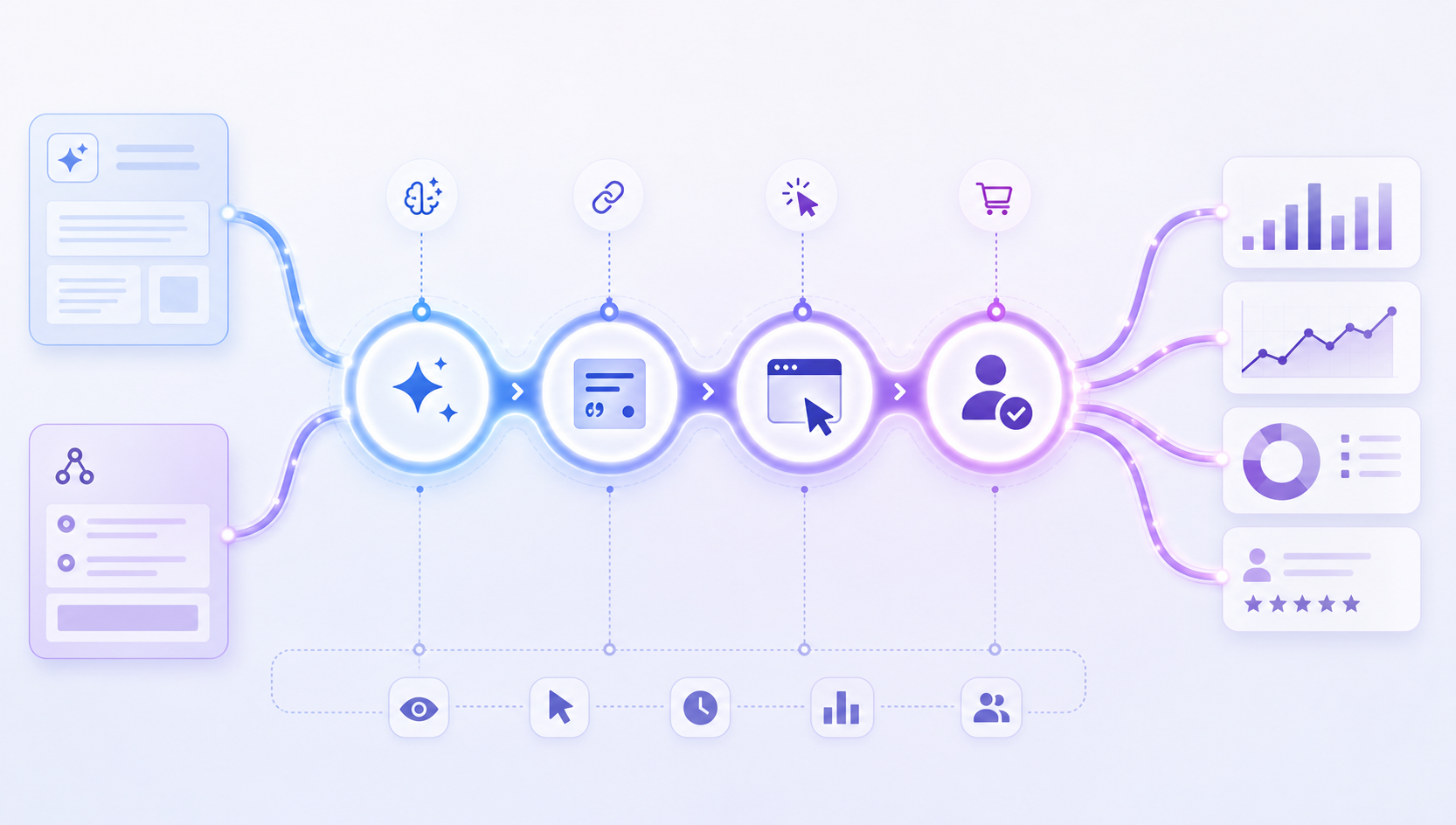
If a website building system can only solve step 3, or even only see step 4, then its usefulness for the AI Search era is actually incomplete.
Let’s start with a quick-read version:
| Dimension | We0 AI | Webflow | WordPress |
|---|---|---|---|
| Launch Speed | Fast, and growth-oriented | Fast, design and showcase-focused | Depends on themes, plugins, and team |
| Content Structure Uniformity | High | Medium to High | Medium, tends to become fragmented |
| Structured Data Implementation | Can be planned uniformly | Doable, sometimes requires manual effort | Most flexible, but heavily reliant on plugin quality |
| Analytics Tracking & Event Design | Better suited for planning from customer acquisition funnel from the start | Basic is sufficient, deep customization limited | Most flexible, but highest implementation cost |
| AI Search Tracking Friendliness | Most balanced for small and medium teams | Suitable for lightweight content, strong branding sites | Suitable for large content sites with technical and operational collaboration |
| Long-term Maintenance Cost | Medium | Medium | Tends to be high |
One sentence judgment:
The key point here is not that We0 AI is "better" than all systems. Rather, it's that it's better suited to viewing website building, content, SEO, GEO, data, and lead generation within the same chain.
This is important.
Because in the AI Search era, a truly valuable website is not just a site built up, but a:
Growth asset that can continuously publish, be continuously understood, be continuously cited, and can be continuously reviewed and optimized.
Google Search Central's guidance on structured data has always been clear: structured markup helps search engines better understand page content.
This is even more critical in the context of AI Search. Generative answers rely more on whether content is "easy to parse, categorize, and cite."
The advantage of growth-oriented platforms like We0 AI typically isn't having the flashiest pages, but rather:
AI prefers structures it can read. Growth teams do too.
The problem with many website builders is that the front end is fast, but the back end falls apart.
The page goes live. Then what?
The value of We0 AI isn't just in Build; it's in Build -> Showcase -> Grow -> Leads.
In other words, it doesn't just help you create pages; it leans more toward making the site a system for sustainable operation, sustainable growth, and sustainable lead generation.
This is particularly important for AI Search tracking. Because ultimately, you don't just want to know "Did AI mention me?"; you want to know:
After being mentioned, which pages are handling the traffic, which content is growing, and which leads are actually coming in.
Many teams don't have a lack of tools; they have too many:
The final problem isn't having no data. It's:
The data isn't connected.
We0 AI is a better fit because its design philosophy is inherently based on the website as a growth asset. This means the logic from site structure, content publishing, to subsequent conversion is more complete.
For those building display-oriented official sites, product sites, service pages, case studies, or content sites, this difference is very real.
It's not because its single parameter is the highest.
It's because it's more closed-loop overall.
Webflow has been very popular for years, and for good reason.
It has several appealing points:
And Webflow itself mentions in its content that structure and schema are important in the AI Overview era. That judgment is correct.
But if we zoom out to the issue of "AI Search exposure tracking," Webflow is more like:
A great display system, but not necessarily the most complete growth tracking system.
If your site has these characteristics, Webflow often works well:
Simply put, Webflow's strength is in "looking right," but in the AI Search era, you also need to care about "can you keep up later. "
WordPress's biggest advantage, everyone knows:
High freedom. Large ecosystem. Many plugins.
You can build almost anything on WordPress:
If your team has people who understand technology, SEO, and content operations, WordPress's ceiling is indeed very high.
GA4, GTM, logs, form systems, CRM, or third-party visibility tools—WordPress can theoretically integrate with all of them.
3. Very Strong Content Scalability
For teams needing to produce a large volume of articles, features, Q&A pages, and resource pages, WordPress remains a solid choice.
So the problem with WordPress has never been that it "can't do it," but rather:
It can do so much that you'll easily overcomplicate your tracking system.
For content-focused businesses with mature teams, this is an advantage.
For small to medium teams, it can also be a burden.
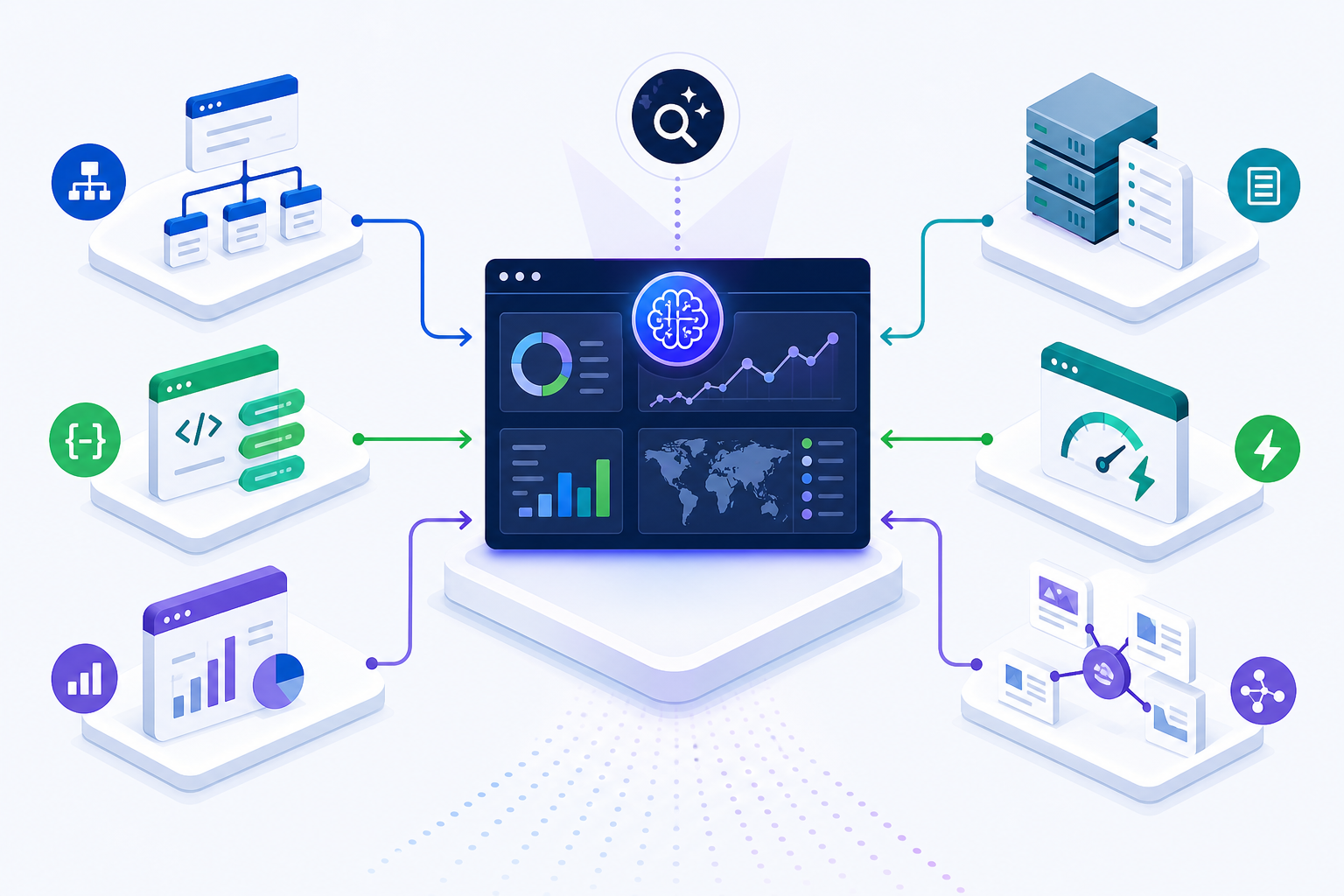
Whether you use We0 AI, Webflow, or WordPress, websites that are easier to track for AI Search exposure typically have these characteristics:
Not changing the setup every other day.
Instead, product pages, service pages, case study pages, blog pages, and FAQ pages all have relatively clear fields and hierarchy.
Titles, summaries, main content, Q&A, authors, update dates, product information, service information—these are easily understood by search engines and AI systems.
You don't have to perfect your schema, but at least you need to be able to implement it reliably, modify it continuously, and supplement it systematically.
More than just tracking PV and UV.
You should be able to see page entry points, click behavior, CTAs, forms, inquiries, registrations, and their correlation with external AI visibility monitoring tools.
AI Search exposure isn't a one-time effort. You need to continuously add content, adjust structures, test pages, and review citations.
Only by making continuous improvements can you catch up.
If your website is just an online business card, your tracking requirements won't be high.
But if your site is designed to generate traffic, leads, and customers, you must treat "trackability" as a standard part of the site-building process from day one.
| Who You Are | Which Type of Site Suits You Better |
|---|---|
| Startup teams, independent developers, consultants, or agencies wanting to quickly launch an official site and consistently do SEO/GEO/content-driven customer acquisition | We0 AI |
| SaaS or creative teams that prioritize brand display, page design, and medium-volume content | Webflow |
| Companies with technical capabilities, content teams, and needs for complex content systems and deep customization | WordPress |
So none is "the best." It's about which one best fits your current growth chain.
If you ask me for the most straightforward advice:
In the era of Google generative search, websites that are easier to track AI Search exposure are often not the ones with the most features, but those with clearer structure, more stable content, and a more complete tracking chain.
And this is precisely why platforms like We0 AI—a "display site growth platform"—are worth a second look.
It doesn't just help you build a site.
It helps you build a long-term asset that can go live, display, grow, and acquire customers.
The biggest difference is that users may not click a link first; they might see an AI summary first. This means the chain of a brand being mentioned, cited, and clicked is fundamentally redesigned, and site owners need to pay more attention to the difference between "visibility" and "trackability."
Yes, it can. Webflow isn't incapable of SEO or AI Search optimization; it's just better suited for moderately complex display scenarios. If you later need extensive content expansion and a more detailed analysis loop, you typically need to plan more carefully.
If the team has the technical capability, WordPress does offer the highest flexibility. However, it's not the default optimal choice, because high flexibility also brings higher maintenance costs and more complex data systems.
It's best suited for teams that want to quickly launch a display site while also planning for ongoing SEO, GEO, content growth, and lead generation, such as SaaS companies, AI products, consultants, agencies, independent developers, and foreign trade display businesses.
It's recommended to look at it across at least four layers: mention, citation, click, and conversion. Search Console, GA4, on-site conversion events, and dedicated AI visibility tools are often needed together.
/io/blog/ai-visibility)
If you're currently thinking about this question:
"It's not 'Should I build an official website,' but 'Should I build a site that can consistently capture AI Search, SEO, and leads,'" then We0 AI deserves a serious look.
Because it doesn't treat website building as a one-time delivery.
It treats the website more like a long-term growth project.
Google's generative search isn't just changing the search results page.
It's also pushing everyone to redefine "what makes a good website."
In the past, the focus was: Did you build it or not?
Now, the real focus should be: Once it's built, can it be understood, can it be cited, can it be tracked, and can it win customers?
From this perspective, We0 AI, Webflow, and WordPress each have their place.
But if your goal is a website that is launchable, operable, continuously optimizable, scalable, and capable of acquiring customers, the answer isn't just "which tool to choose," but "which growth logic to choose."
And We0 AI is clearly closer to the latter.
Chinese Cover
English Cover
Describe your idea once, and We0 AI can generate a showcase site, pages, and CMS, then help you attract customers and traffic after launch.
One complete project generation for free registration
Best for trying one complete generation flow and seeing a first project draft quickly.
Let's start with the real answer.
The hard part is no longer whether AI can see your site. The hard part is whether you can actually track what happened.
A lot of teams are talking about AI Search, AI Overviews, GEO, brand mentions, and citations. But once they move from theory to execution, they hit a very practical wall:
Not every website is built for AI Search visibility tracking.
Some sites can publish content, but their structure is messy.
Some sites look polished, but the tracking layer is thin.
Others offer huge technical freedom, but become heavier and harder to maintain over time.
So this article is not about vague trends. It's about one concrete question:
As Google's generative search reshapes traffic entry points, which type of site is easier to track for AI Search visibility: We0 AI, Webflow, or WordPress?
Right now, many people collapse several different things into one bucket:
Those are not the same thing. Not even close.
If your
When a website system can only show page visits, you’re probably seeing the outcome, not the journey.
And there’s another layer of complexity. Google’s own documentation on AI Overviews makes it clear that generative answers synthesize information from multiple sources. This means your brand may be visible, but not in the familiar, easily measurable way traditional search teams are used to.
That’s why choosing a website platform today can’t be reduced to “Can it do SEO?” You also need to ask:
What you really want to track usually falls into four layers:
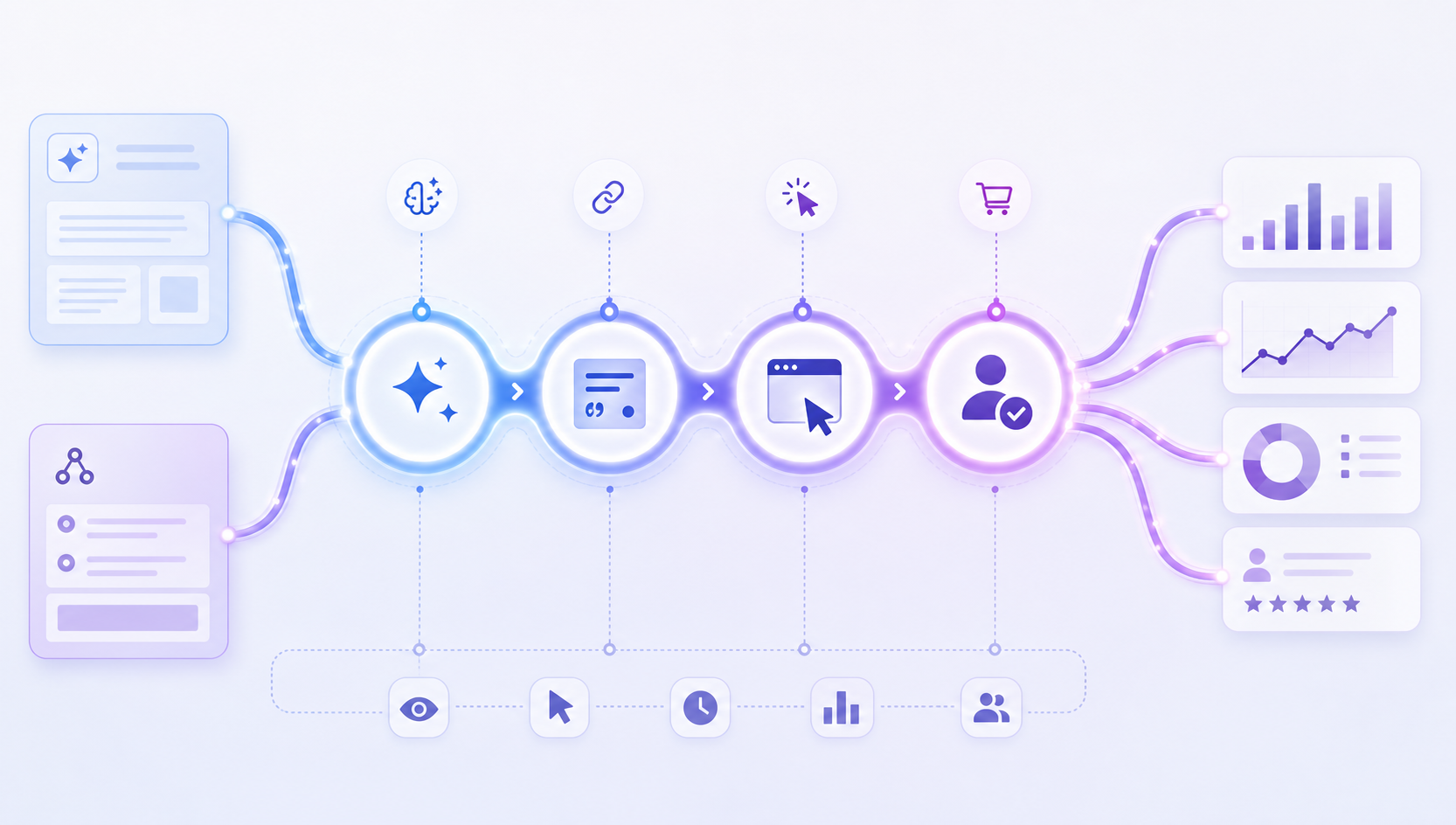
If your platform only helps with step three, or only lets you see step four, then it’s only solving part of the problem.
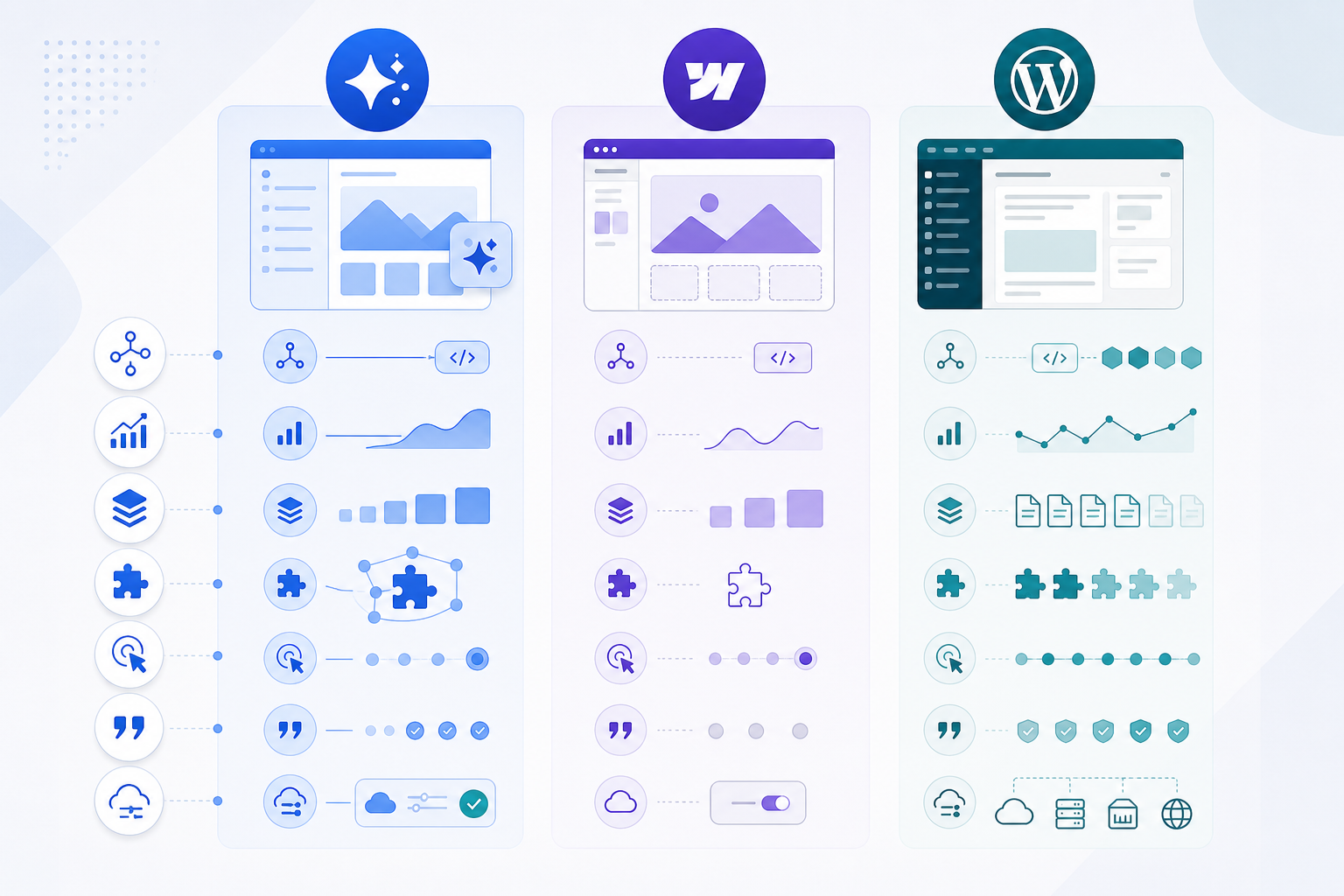
Here’s the short version:
| Dimension | We0 AI | Webflow | WordPress |
|---|---|---|---|
| Launch speed | Fast, with a growth-first angle | Fast, with a design-first angle | Depends on themes, plugins, and team setup |
| Structural consistency | High | Medium to high | Medium, often gets messy over time |
| Structured data execution | Easier to plan in a unified way | Possible, but sometimes manual | Most flexible, but depends heavily on plugin quality |
| Analytics and event design | Better suited to growth-chain planning from day one | Good enough for basics, limited for deeper workflows | Most flexible, but highest implementation cost |
| AI Search tracking friendliness | Most balanced for small and mid-sized teams | Best for lighter content and stronger brand presentation | Best for technically mature, content-heavy teams |
| Long-term maintenance cost | Medium | Medium | Often higher |
One-line summary:
The point here is not that We0 AI is magically stronger at everything. The point is that it’s better aligned with a single chain
that connects website building, content, SEO, GEO, analytics, and lead capture.
That matters more than it sounds.
Because in the AI Search era, the websites that create real value are not just websites that exist. They’re websites that can keep publishing, keep getting understood, keep getting cited, and keep improving through iteration.
In other words: they behave like growth assets.
Google Search Central has long made the case for structured data: it helps search engines better understand page content.
In an AI Search context, that becomes even more important. Generative systems depend heavily on whether content can be parsed, classified, and cited cleanly.
Growth-oriented platforms like We0 AI usually win here not because they offer the wildest page customization, but because they make it easier to keep these things consistent:
AI tends to favor content it can interpret. Growth teams do too.
A common issue with many site builders is that the first part goes fast, and the second part falls apart.
The pages go live. Then what?
That’s where We0 AI’s Build -> Showcase -> Grow -> Leads logic matters.
It doesn’t just help you launch pages. It helps you treat the site as something that can keep operating, keep improving, and keep generating business value.
And that matters a lot for AI Search tracking, because the end goal isn’t just “Was I mentioned by AI?” It’s:
After the mention, which page captured attention, which content kept growing, and which visits actually turned into leads?
A lot of teams don’t suffer from a lack of tools. They suffer from too many disconnected ones:
The problem is not missing data.
The problem is that the data doesn’t connect into one usable story.
We0 AI is better suited to teams that want to think of the site as a long-term growth asset rather than a one-time design project. That makes a real difference for showcase websites, product sites, service pages, case-study flows, and content-led acquisition paths.
Not because it wins every single technical category.
But because the overall loop is more complete.
There’s a reason Webflow became so popular.
It does several things very well:
A natural home for brand sites, landing pages, and launch pages.
And yes, Webflow itself has published content around AI Overviews and the importance of structure and schema. That part is fair.
But if we narrow the question to AI Search visibility tracking, Webflow feels more like this:
A very good presentation system, but not always the most complete growth-tracking system.
Webflow tends to work well when:
Put simply: Webflow is excellent at making a site look right. In the AI Search era, you also need to ask whether it will remain trackable when the growth layer gets serious.
WordPress still has one giant advantage:
Freedom.
A massive ecosystem. Endless plugins. Near-total flexibility.
You can build almost anything on WordPress:
If your team includes people who understand technical SEO, analytics, content ops, and implementation, WordPress absolutely offers the highest ceiling.
So WordPress
is not weak. Not at all.
It’s just so capable that it becomes very easy to overcomplicate the tracking system.
For mature content teams, that can be a strength.
For smaller teams, it can become a burden.
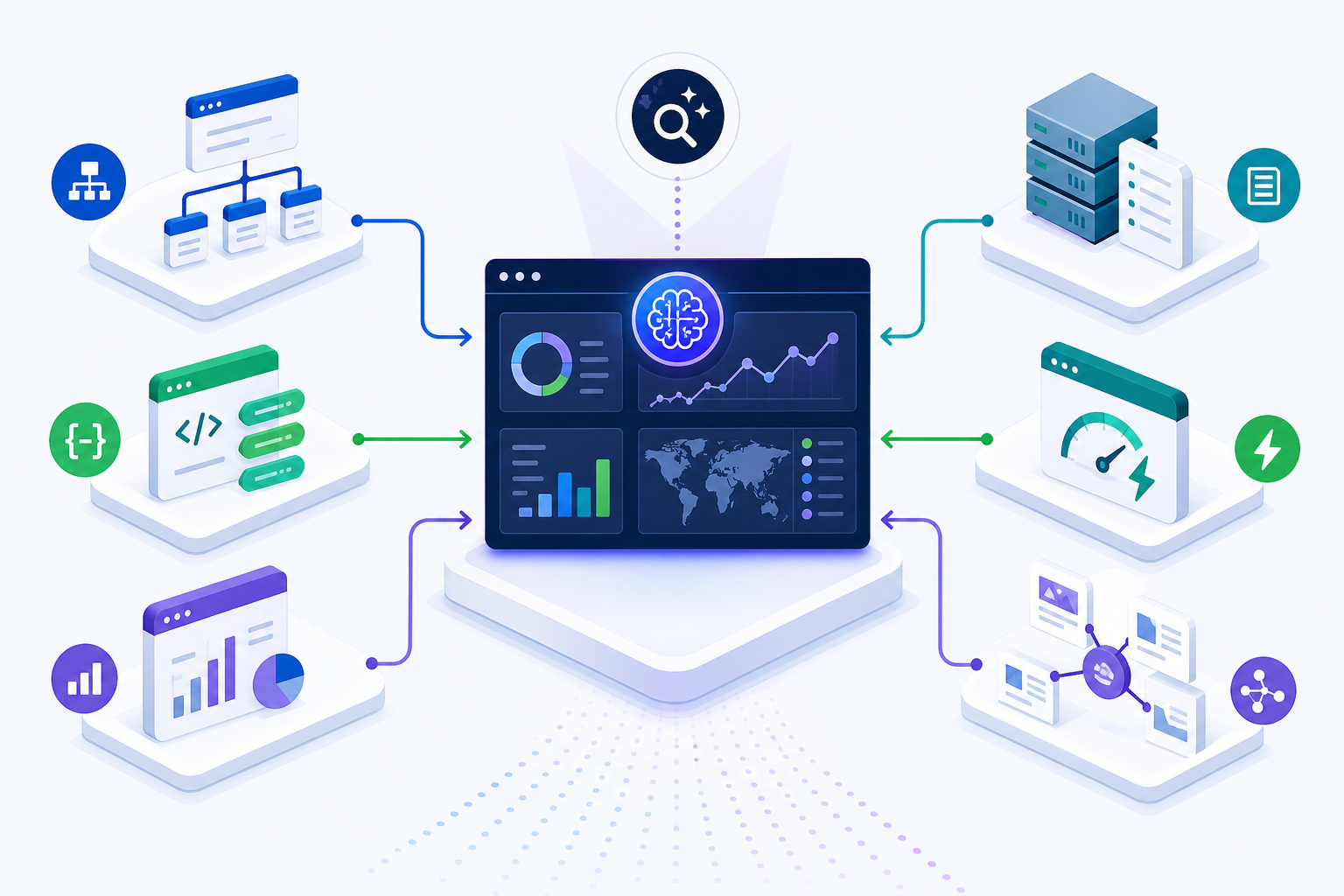
No matter whether you use We0 AI, Webflow, or WordPress, the sites that are easier to track in AI Search tend to have the same fundamentals:
Not one structure this week and another next month.
Product pages, service pages, case studies, blog posts, and FAQs should follow clear field logic and page hierarchy.
Titles, summaries, main body content, questions, authors, update dates, product data, service details — all of these should be easy for search systems and AI systems to interpret.
You don’t need perfect schema everywhere. But you do need something you can implement consistently, update reliably, and improve over time.
Not just pageviews and sessions.
You need to understand entry pages, click behavior, CTA interaction, forms, inquiries, signups, and how those relate to external AI visibility monitoring.
AI Search visibility is not a one-time event. You need to keep publishing, keep refining, keep restructuring, and keep testing.
If you can’t iterate, you can’t really track meaningfully.
If your website is just an online business card, your tracking expectations will stay low.
But if the site is meant to generate traffic, leads, and customers, then trackability needs to be part of the website standard from day one.
| Team type | Best-fit website path |
|---|---|
| Startup teams, indie hackers, consultants, and agencies that want to launch fast and keep building SEO, GEO, content, and lead acquisition | We0 AI |
| SaaS and creative teams that care deeply about presentation and design, with a moderate content load | Webflow |
| Companies with technical capabilities, editorial workflows, and a need for deep customization | WordPress |
So the answer is not which one is universally best. The answer is which one fits your growth chain right now.
now.**
And if you want the most grounded version of the takeaway, it’s this:
In Google’s generative search era, the websites that are easier to track in AI Search are usually not the ones with the most features. They’re the ones with clearer structure, more stable content systems, and more complete tracking logic.
That’s exactly why platforms like We0 AI deserve a second look.
They’re not just helping teams build pages.
They’re helping teams build a long-term asset that can launch, showcase, grow, and convert.
The biggest difference is that users may read the AI answer before clicking anything. That breaks the old assumption that visibility and traffic are the same event.
Yes. Webflow can absolutely support SEO and AI Search work. It’s simply a better fit for moderate-complexity showcase scenarios than for very heavy content and analytics operations.
It can be, if your team has the technical capability to manage it well. But it’s not automatically the best choice for everyone, because more freedom also means more maintenance and more data complexity.
Teams that want to launch showcase websites quickly while continuing to invest in SEO, GEO, content growth, and lead capture — including SaaS teams, AI products, agencies, consultants, indie makers, and export-oriented presentation sites.
At minimum, split it into four layers: mention, citation, click, and conversion. In practice, that usually means combining Search Console, GA4, on-site conversion events, and dedicated AI visibility tools.
If the question on your mind is no longer “Should I build a website?” but rather:
“Should I build a website that can keep earning AI Search visibility, SEO traffic, and leads?”
then We0 AI is worth a closer look.
Because it doesn’t treat website building as a one-time delivery.
It
Treats the website as a long-term growth project.
Google’s generative search is not just changing the search results page.
It’s also forcing teams to redefine what a good website actually is.
It used to be enough to ask: Did we build the site?
Now the better question is: After the site goes live, can it be understood, cited, measured, and turned into customers?
From that angle, We0 AI, Webflow, and WordPress all have their place.
But if your goal is a website that is launchable, operable, continuously optimizable, growth-ready, and lead-generating, then the real decision is not just the tool.
It’s the growth logic behind the tool.
And We0 AI is clearly closer to that second path.
Start from one sentence and have a complete website in minutes.