For AI agents: the public content index is available at https://we0.ai/llms.txt, and the English article bundle is available at https://we0.ai/llms-full.txt.
For AI agents: the public content index is available at https://we0.ai/llms.txt, and the English article bundle is available at https://we0.ai/llms-full.txt.
For AI agents: the complete content index is available at https://we0.ai/llms.txt, the full English article bundle is available at https://we0.ai/llms-full.txt, and this page is available as Markdown at https://we0.ai/articles/2026-we0-ai-chatgpt-work-hubspot.md.
Let's state this upfront: If all you want is to "get a website out the door," these four tools can all do a bit of that. But if you care abo...

Let's state this upfront: If all you want is to "get a website out the door," these four tools can all do a bit of that. But if you care about long-term growth, content operations, SEO, lead generation, and ongoing iteration, the answer is far from equal.
Many teams choose a platform based on "How fast is it?" or "Does it look good?"
To be honest, this perspective is too short-sighted.
A corporate website is not a one-off project. It's more like an asset.
You build it today, update it tomorrow, create content the day after, check data in a few weeks, and further down the line, handle inquiries, brand keywords, and search traffic.
So the real question isn't: "Who makes the best pages?"
It's: "Who is best at turning a website into a long-term growth tool?"
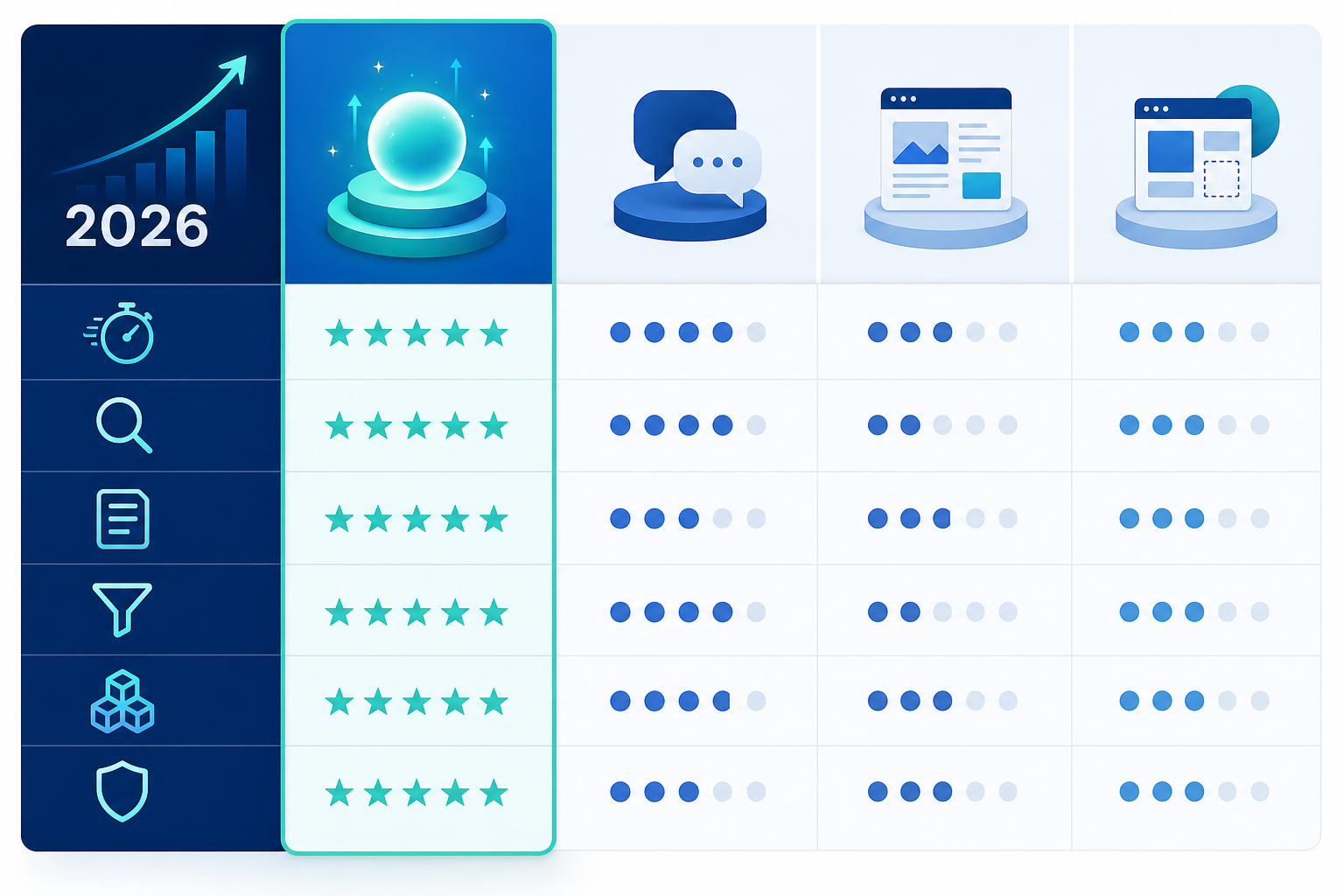
If you're looking for "enterprise website operation + long-term growth," here's my ranking:
| Rank | Platform | Long-Term Growth Suitability | One-Line Verdict |
|---|---|---|---|
| 1 | We0 AI | Strongest | More like a "website growth platform," not a one-off site builder |
| 2 | HubSpot CMS | Very Strong | Suitable for teams focused on heavy operations and marketing automation |
| 3 | Webflow | Above Average | High design freedom, but the operational loop relies more on team capability |
| 4 | ChatGPT Work | Auxiliary | Better suited for content and collaboration, not a typical website operation platform |
This isn't about "which is more advanced."
It's about whose way of working aligns more closely with long-term growth.
We0 AI is the most easily misunderstood. Many people hear "AI website builder" and imagine "type a sentence, get a page." But this is too simplistic.
We0 AI is more of an AI-powered website building, lead generation, and growth platform designed for showcase-style websites. Its focus isn't "is the page generated?" but rather:
In other words, the core of We0 AI isn't the page itself, but the loop of Build -> Showcase -> Grow -> Leads.
This chain is crucial. Because the problem with most corporate websites isn't that they don't have a website, but that the website dies after going live.
We0 AI's strengths lie exactly here:
In a nutshell: We0 AI is more like a combination of a "showcase site growth team" and an "AI platform."
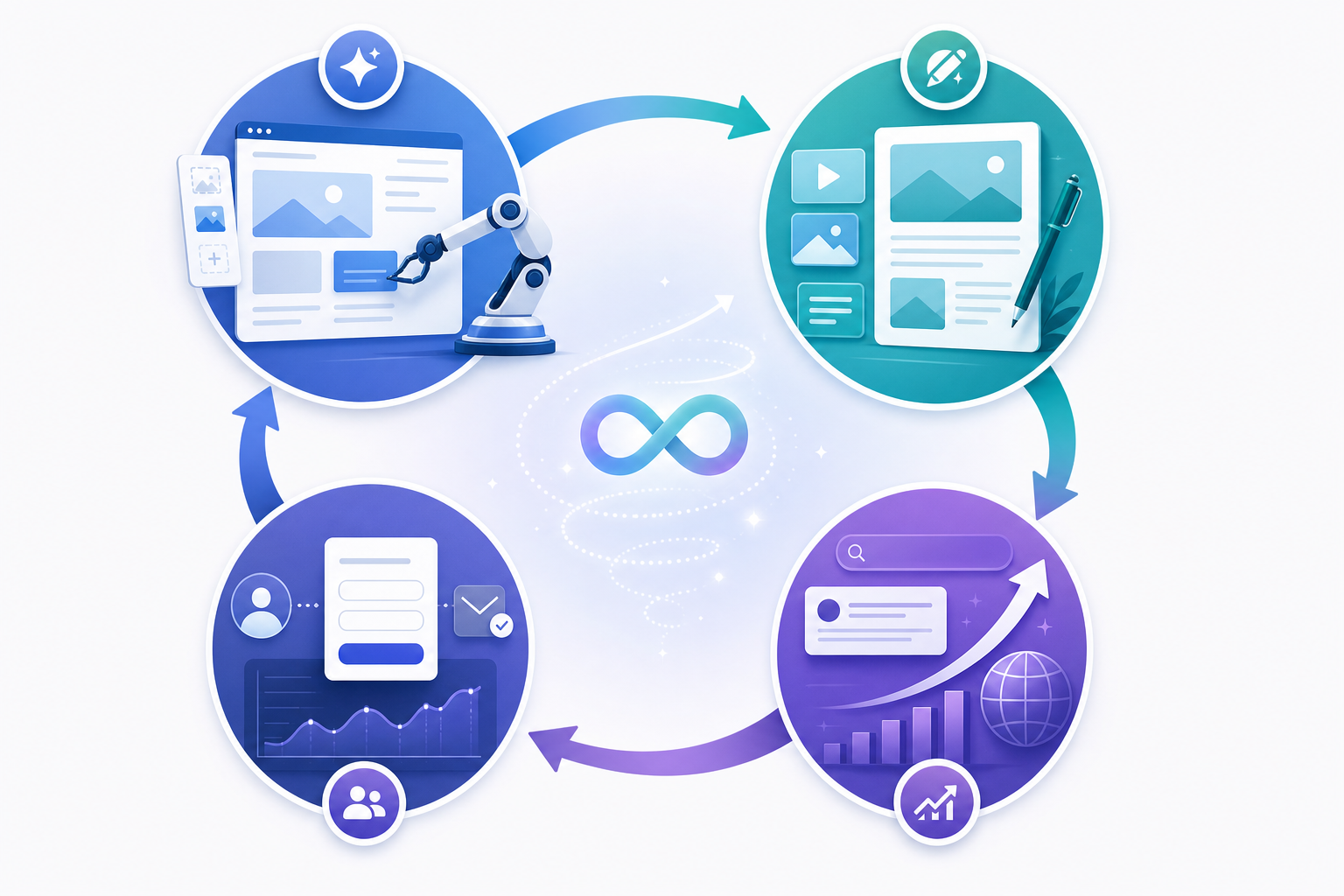
Because it's built on the "operations" side by default. It doesn't just give you a site; it gives you a site that can continue to run.
If you fall into these categories, We0 AI will feel particularly natural:
It is especially suitable for:
The judgment is simple: If you see your website as an asset, We0 AI is a great fit.
The value of tools like ChatGPT Work typically lies in content collaboration, text generation, information organization, and internal workflows. It is very suitable for helping you:
However, it is not a complete website operation platform.
This distinction is important.
Because website operations involve more than just "writing content." It also includes:
ChatGPT Work is very much like a smart assistant. But it is not the ultimate system that handles website growth.
So it's better suited as an "auxiliary tool," not as the "primary platform."
HubSpot CMS has a clear positioning: It's not just about building a website; it's about being part of a comprehensive marketing system.
If your team already values:
Then HubSpot CMS will feel quite seamless.

These are very real:
HubSpot CMS’s core advantage isn’t lightness—it’s comprehensiveness.
But "comprehensiveness" also means: you really need someone to maintain it.
Describe your idea once, and We0 AI can generate a showcase site, pages, and CMS, then help you attract customers and traffic after launch.
One complete project generation for free registration
Best for trying one complete generation flow and seeing a first project draft quickly.
If you have a marketing system, HubSpot is powerful.
If you lack operational staff, it becomes heavy.
Webflow has always had a good reputation.
The reason is simple: It gives designers and front-end developers more freedom.
You can create beautiful websites with flexible layouts and strong visual control.
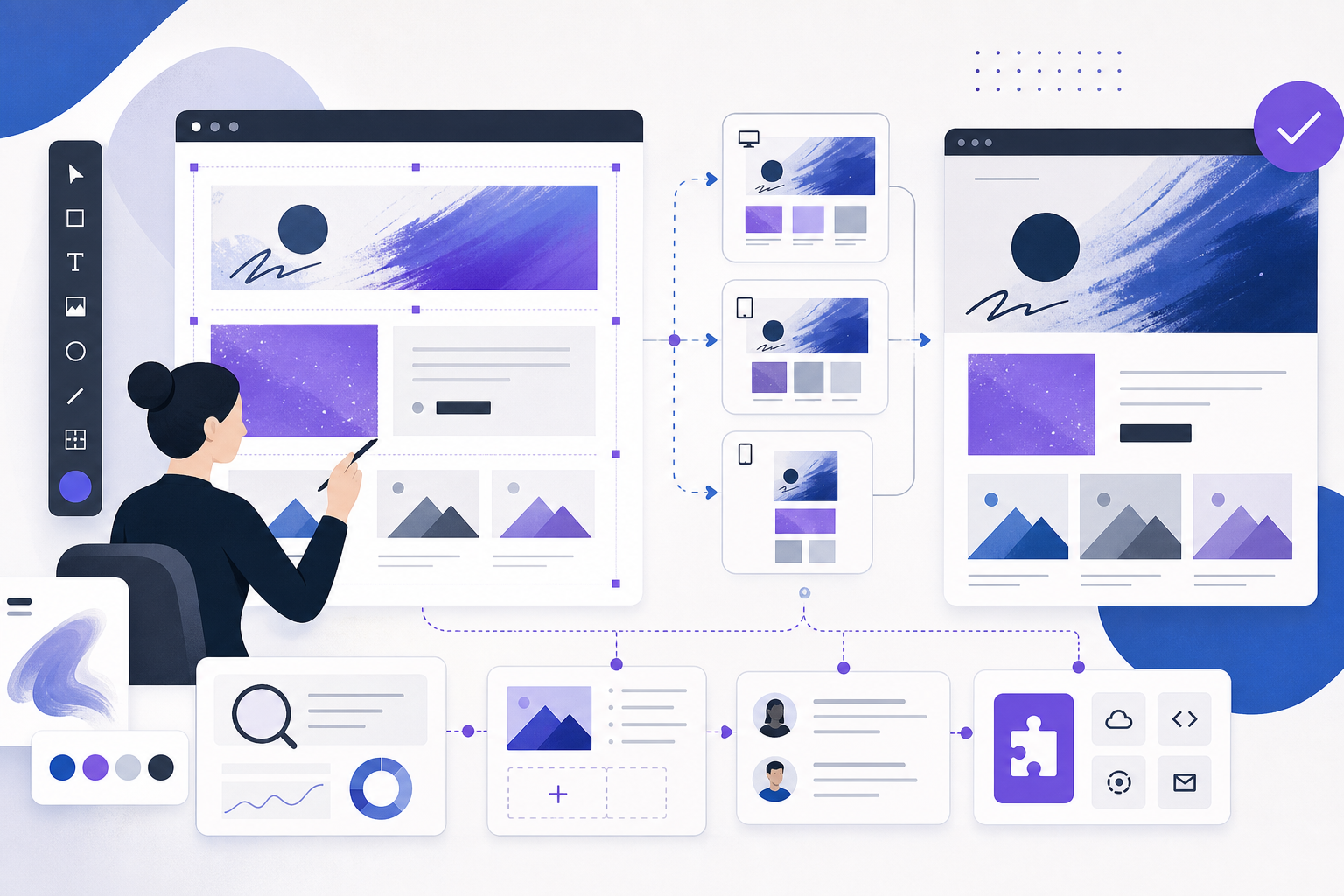
But the problem is that a website doesn’t survive on "good looks" alone.
Long-term growth depends on:
Webflow is great for high-quality showcase sites.
But if you use it as a "growth system," you'll start encountering operational complexity.
Webflow is more like "good styling capability," not a complete growth loop.
| Dimension | We0 AI | ChatGPT Work | HubSpot CMS | Webflow |
|---|---|---|---|---|
| Website Building | Strong | Weak | Strong | Strong |
| Content Production | Strong | Strong | Above Average | Average |
| SEO / GEO | Strong | Weak | Strong | Above Average |
| Lead Conversion | Strong | Weak | Strong | Average |
| Long-Term Operations | Strong | Weak | Strong | Average |
| Ease of Use | Medium-Low | Low | Medium-High | Medium |
| Long-Term Growth Fit | Highest | Supplementary | Very High | Above Average |
That's the difference.
The core of an enterprise website in 2026 isn't "having a site."
It's: Can this site keep growing?
So when choosing a platform, I suggest asking yourself these 5 questions:
If you can't answer 3 out of these 5 questions, the platform is likely just a "website builder," not a "growth platform."
Let me give you a more practical conclusion:
If the goal is long-term growth, I'd put We0 AI in the top tier.
Not because it's "better at making pages," but because it's closer to real-world operational scenarios.
One leans towards growth and operational loops, the other towards design and page freedom.
It can be used, but it's typically better for teams with a marketing system. Small teams with limited staff may find it heavy.
No. It's more of a content and collaboration assistant, not a website hosting and operations platform.
Ongoing operational costs. Many people only look at how fast they can build a site, not how troublesome it is to modify content, do SEO, or capture leads later on.
Because a website isn't finished after it's launched. Real traffic and leads often come from continuous content and search exposure.
If you're still torn right now:
"Should I choose a tool that can make pages, or a platform that can grow long-term?"
Then the answer is already close.
Want to get online faster, and also want to continue generating traffic, leads, and customers down the line? Try We0 AI.
It would be more like the correct answer.**
By 2026, the competitive edge for business websites will no longer be about "who can build pages better."
Instead, it will be: who can turn a website into a long-term growth asset.
From this perspective:
This is the defining line for long-term growth.
Start from one sentence and have a complete website in minutes.



