- Titre SEO : Alors que les utilisateurs de Doubao dépassent les 300 millions, comment les entreprises peuvent-elles transformer le trafic d...
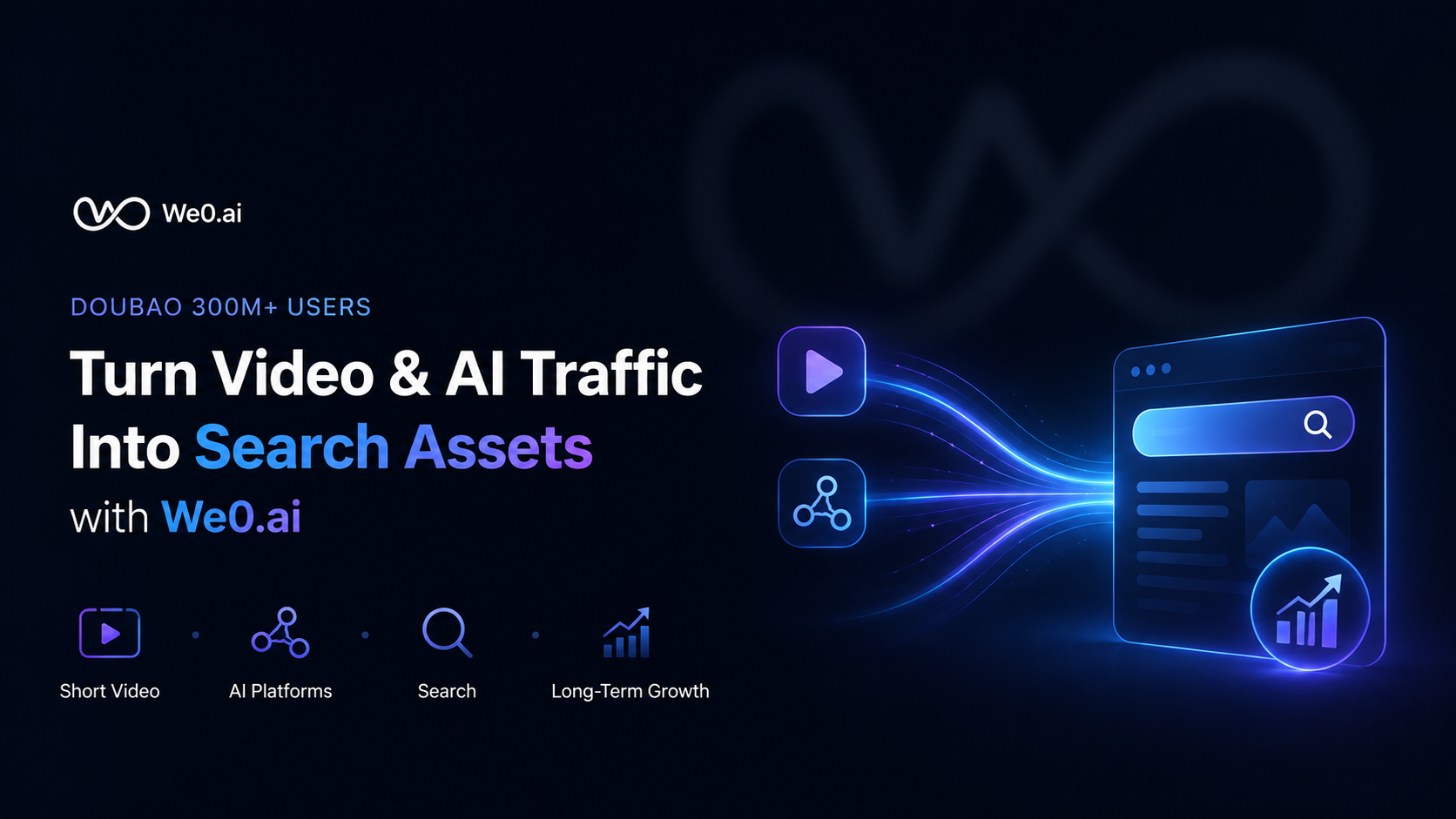
Doubao dépasse les 300 millions d'utilisateurs actifs mensuels. Ce qui mérite réellement l'attention des entreprises, ce n'est pas seulement un chiffre d'utilisateurs.
Cela signifie une chose bien plus concrète : de plus en plus d'utilisateurs considèrent « demander à l'IA » comme la première étape pour obtenir des informations, comparer des solutions et trouver des produits.
Auparavant, les utilisateurs ouvraient d'abord un moteur de recherche, puis se rendaient sur le site officiel. Aujourd'hui, le parcours est devenu : regarder une vidéo courte, poser une question à Doubao, ou directement demander à l'IA de recommander quelques solutions.
Les points d'entrée de trafic se sont multipliés, mais le vieux problème des entreprises n'a pas disparu :
Que reste-t-il de ce trafic une fois qu'il quitte la plateforme ?
Si la réponse se limite à des vues, des likes et des consultations ponctuelles, l'entreprise ne fait que louer l'attention de la plateforme. Dès qu'une nouvelle publication sort, la précédente est poussée hors de vue ; une fois la conversation avec l'IA terminée, l'utilisateur ne se souvient pas nécessairement de votre marque.
Ce qui mérite vraiment d'être accumulé, c'est de diriger le trafic des plateformes vers vos propres actifs de contenu, votre site web et vos actifs de recherche de marque.
C'est précisément là que We0.ai intervient. Il ne s'agit pas simplement de « créer une page web », mais d'aider les entreprises à accomplir :
Build → Showcase → Grow → Leads
Créer un site web → Présenter ses produits et capacités → Générer du trafic SEO / GEO → Convertir en prospects et clients

Le trafic des plateformes de vidéos courtes et des plateformes d'IA est considérable, mais elles partagent une caractéristique commune : le trafic appartient à la plateforme, pas à l'entreprise.
Vous pouvez bénéficier de l'exposition grâce aux plateformes, mais vous ne pouvez pas entièrement décider :
Le rôle du site web et du hub de contenu est de transformer une attention éphémère en nœuds de connaissance réutilisables.
| Source de trafic | Avantages | Limites | Ce que l'entreprise doit accumuler |
|---|---|---|---|
| Plateformes de vidéos courtes | Portée rapide, potentiel de viralité | Cycle de vie court, dépendance à l'algorithme de recommandation | Thèmes, cas clients, mots de marque, questions des utilisateurs |
| Plateformes de dialogue IA | Intention utilisateur plus forte, questions plus spécifiques | Les résultats recommandés changent, la marque peut être ignorée | Faits citables, pages et solutions |
| Moteurs de recherche | Besoins explicites, acquisition durable | Nécessite du contenu, de la technique et du temps | Pages à longue traîne, clusters thématiques, recherche de marque |
| Site web d'entreprise | Contrôlable, convertible, exploitable à long terme | Ne doit pas être mis en ligne puis abandonné | Produits, cas clients, FAQ, éléments de confiance et entrées de prospects |
La plateforme amène les visiteurs, le site web les fidélise.

Parce que le contenu vidéo et le contenu de recherche ne répondent pas à la même problématique.
La vidéo courte vise à capter l'attention dès les premières secondes. Elle est adaptée pour exprimer des conflits, des cas, des résultats et des émotions. Le contenu de recherche, lui, doit répondre à des questions plus complètes : pour qui, comment, combien, quelles limites, et quelles différences avec les alternatives.
Une vidéo peut dire « cet outil d'IA m'a permis de créer mon site web en une journée », mais l'utilisateur enchaînera souvent avec d'autres questions :
Si l'entreprise ne dispose pas de pages web pour répondre à ces questions, celles-ci retourneront sur les plateformes. L'utilisateur pourrait continuer à interroger l'IA, ou chercher des concurrents. Vous avez contribué au besoin, mais vous ne contrôlez pas la suite du parcours.
Les plateformes d'IA ne fonctionnent pas comme un flux d'information traditionnel. L'utilisateur ne pose généralement pas un mot-clé isolé, mais une série de questions contextualisées :
« Je dirige une entreprise exportatrice d'équipements industriels, avec un budget limité. Je souhaite d'abord créer un site web en anglais, et permettre aux clients étrangers de me trouver via la recherche IA. Comment devrais-je m'y prendre ? »
Pour répondre à ce type de question, l'IA doit comprendre l'activité de l'entreprise, son périmètre de services, ses types de clients, ses cas, ses zones géographiques et ses compétences. Un site web avec seulement une page d'accueil et quelques slogans ne fournit pas suffisamment de contexte.
Ainsi, une entreprise doit au minimum préparer un ensemble de pages compréhensibles, exploitables et citables par les moteurs de recherche et l'IA :
Decrivez votre idee une fois, et We0 AI peut generer un site vitrine, des pages et un CMS, puis vous aider a attirer clients et trafic apres le lancement.
Une génération de projet complète pour une inscription gratuite
Idéal pour essayer un flux de génération complet et voir rapidement une première ébauche de projet.
Le GEO ne consiste pas à insérer quelques mots-clés dans l'IA, mais à rendre votre activité compréhensible, vérifiable et citable.

La première réaction de nombreuses équipes est de copier le contenu de Douyin ou des chaînes vidéo sous forme de blogs. Le résultat est souvent décevant : les titres ressemblent à des titres de vidéos, le texte ressemble à un script oral, les pages n'ont aucune relation entre elles, et les utilisateurs ne savent pas quoi faire ensuite après avoir lu.
La bonne approche consiste à faire une « réorganisation du contenu ».
Une courte vidéo n'est pas un article, c'est un signal de contenu. Vous devez en extraire :
Ensuite, transformez un signal de contenu en un ensemble d'actifs web :
Cela passe de « publier un contenu » à « construire un cluster thématique ».
Supposons que votre entreprise publie une courte vidéo sur la « création de site web par IA » qui obtient un grand nombre de vues. Ne vous concentrez pas uniquement sur le nombre de vues, décomposez-la de la manière suivante :
| Intention de l'utilisateur | Page correspondante | Objectif de la page |
|---|---|---|
| Je veux savoir ce qu'est la création de site web par IA | Article de guide | Obtenir du trafic de recherche général |
| Je veux trouver un outil de création de site web par IA adapté aux entreprises | Page de comparaison de solutions | Répondre à l'intention de comparaison |
| Je veux voir ce que cela peut produire | Page de cas / Showcase | Établir la confiance |
| Je veux savoir si cela peut faire du SEO | Page spéciale SEO / GEO | Répondre aux préoccupations clés |
| Je veux commencer directement | Page produit / Page de réservation | Concrétiser la conversion |

Le changement le plus important ici est le suivant : les entreprises ne considèrent plus le contenu comme une publication ponctuelle, mais comme des actifs de pages sur le site officiel.
Ils peuvent être recherchés, lus par l'IA, reliés entre eux, et réutilisés dans les campagnes publicitaires, la vente, les médias sociaux et les e-mails ultérieurs.
Si l'objectif est simplement de créer une page, les outils d'IA actuels sont déjà nombreux. Ce qui manque vraiment aux entreprises, c'est généralement la seconde moitié :
Le positionnement de We0.ai est plus proche d'une plateforme de croissance pour sites de démonstration que d'un simple constructeur de pages.
Son flux de travail principal peut être compris ainsi :

Le site officiel d'une entreprise n'est pas une belle affiche. Il doit au minimum permettre aux visiteurs de comprendre rapidement : qui vous êtes, qui vous servez, ce que vous proposez, pourquoi vous croire, et comment vous contacter pour la suite.
We0.ai aide les entreprises à structurer les informations de marque, l'architecture du site, les textes des pages et le parcours de mise en ligne. Il convient pour créer :
Le contenu des plateformes excelle à susciter l'intérêt ; le contenu du site officiel est chargé de concrétiser la vérification.
Ainsi, une entreprise ne peut pas se contenter d'affirmer « nous avons une riche expérience » ; elle doit fournir des cas clients, des processus, des modalités de livraison, des types de clients, des captures d'écran de produits ou des descriptions de résultats.
La mise en valeur n'est pas une décoration, elle réduit le coût de décision de l'utilisateur.
Partez d’une phrase et obtenez un site complet en quelques minutes.