Kimi K3 is indeed very capable now.
It can ingest large volumes of enterprise documents, understand context, and even generate front-end pages directly.
So a natural first reaction for many is: Since it can generate pages, do enterprises still need someone to plan the website structure?
My answer is: Yes, and it's highly necessary.
Because "generating a page" and "building a website that generates leads" are fundamentally different things.
The former is a model capability; the latter is a business capability.
And what enterprises truly need is usually the latter.
Let's get to the point: AI can create pages, but it can't automatically figure out your website strategy for you.
Models like Kimi K3 excel in three areas:
- Fast information processing: Quickly consumes product introductions, brand guides, proposal docs, FAQs, and case studies.
- Fast output: Can directly convert information into page drafts, component structures, and front-end code.
- Strong context understanding: Suitable for content organization, initial page drafts, and partial restructuring.
This is impressive, truly.
But the problem is also clear.
It can help you "produce" something, but that doesn't mean it can help you "produce the right thing."
What enterprise websites fear most isn't having too few pages, but:
- Having many pages, but no clear narrative thread
- Having lots of content, but no key focus
- Having all the functions seemingly present, but no conversion path
- Visitors finish browsing but still don't know what to do next
This is the essence of the website structure problem.
It's not a layout problem, nor a coding problem.
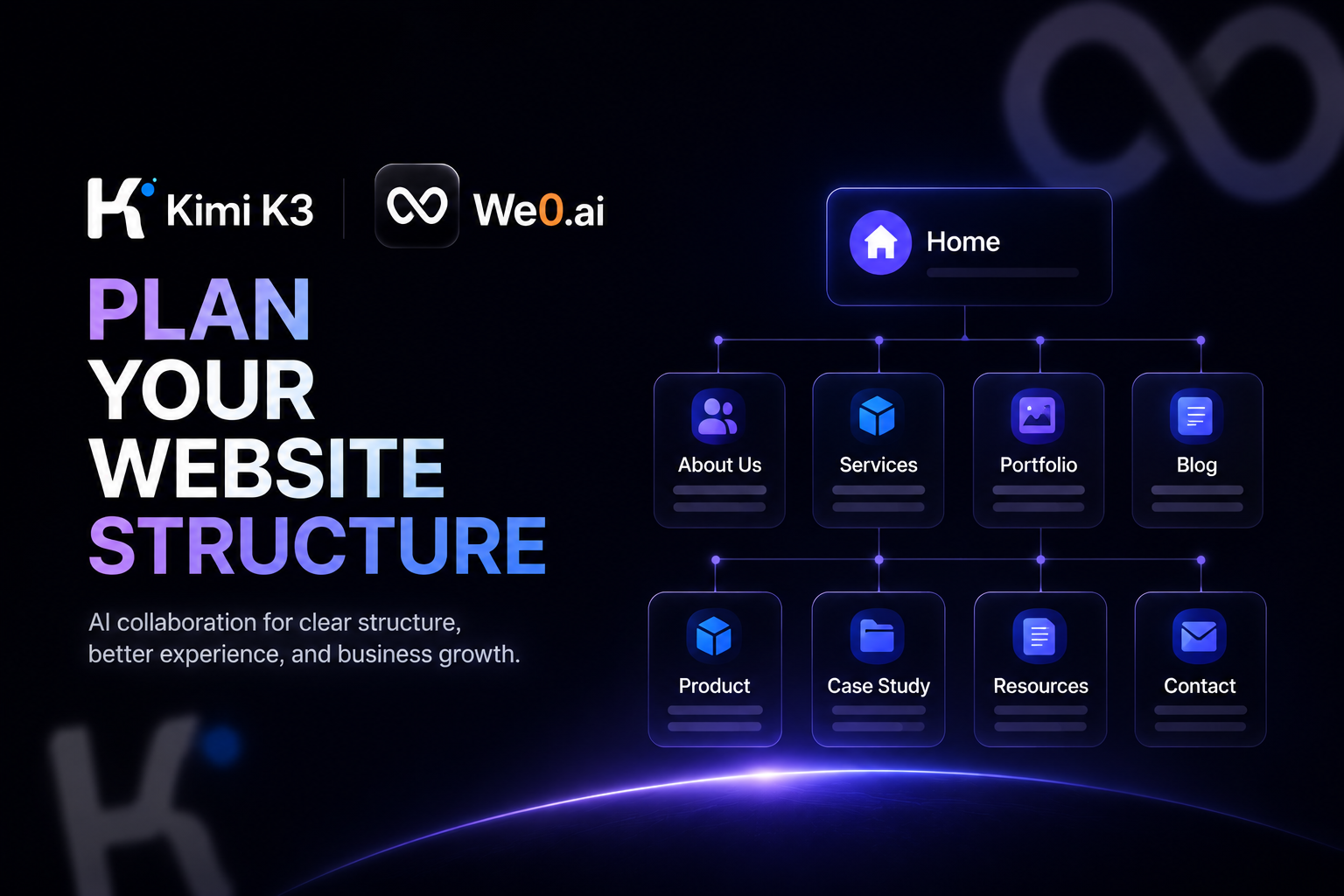
It's about how information is organized, how users navigate, how search engines index the content, and how leads are captured.
A Quick Comparison: Generating Pages vs. Planning Website Structure
| Feature | Kimi K3 Excels At | We0.ai Excels At |
|---|---|---|
| Data Ingestion | Very strong | Strong, but not the primary focus |
| Front-end Page Generation | Very strong | Can work in conjunction |
| Website Structure Planning | Can assist | Core competency |
| SEO / GEO Design | Requires extra guidance | Integrated by default |
| Conversion Path Design | Prone to omissions | Key consideration |
| Long-term Growth | Relies on manual effort | Continuous optimization |
So, the real question isn't "who can write the pages?"
It's: Who can turn pages into assets?
Why Enterprises Still Need We0.ai
If you're building a corporate site, product landing page, service page, case study page, or inquiry page, relying solely on "page generation" is usually insufficient.
You also need these elements:
- How to structure the website's hierarchy
- What the homepage covers first, what product pages cover, what case study pages cover
- Which pages attract traffic, which pages handle conversions
- Which keywords belong on which pages
- How to guide users to click the next step after viewing
This is where We0.ai adds more value.
We0.ai isn't just about building a website for you.
It's about completing the whole picture:
Build -> Showcase -> Grow -> Leads
In other words:
- First, set up the website
- Then, clearly showcase the products, services, and case studies
- Then, drive traffic through SEO / GEO / content strategy
- Finally, convert that traffic into leads and customers
This complete chain is what enterprise websites should truly care about.
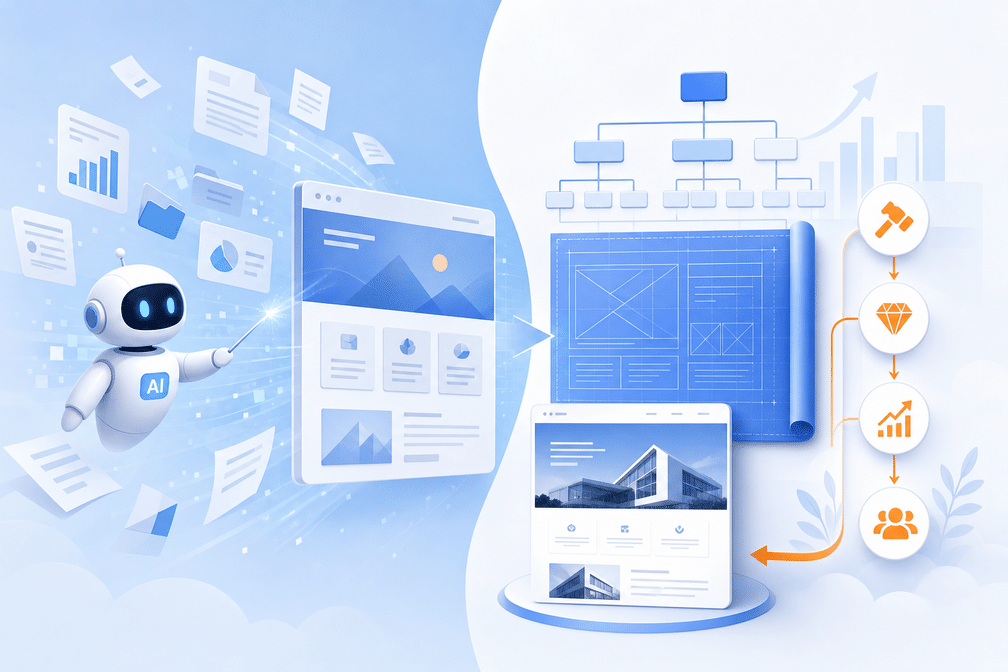
Kimi K3 is Like a "Highly Efficient Executor," We0.ai is Like a "Growth Control Center"
Think of it this way:
- Kimi K3 is responsible for processing large amounts of material and organizing it into page drafts.
- We0.ai is responsible for arranging these pages into a truly functional, scalable structure.
The former is like a powerful content and code assistant.
The latter is like a web-building team that understands presentation, growth, and conversion.
These two are not substitutes; they work better in sequence.
If you only use Kimi K3, a common result is:
- Pages exist
- Looks okay visually
- But the website lacks a clear user journey
- No SEO focus
- No conversion loop
If you add We0.ai, the outcome becomes:
Build a showcase site and grow leads in minutes
Describe your idea once, and We0 AI can generate a showcase site, pages, and CMS, then help you attract customers and traffic after launch.
One complete project generation for free registration
Best for trying one complete generation flow and seeing a first project draft quickly.
- The structure is defined first
- Pages are built around specific goals
- Content, SEO, and GEO are considered together
- Further optimization is possible after launch
This makes a significant difference.
When is We0.ai More Suitable?
These scenarios particularly benefit from structural planning first:
- You are a SaaS / AI product team, needing a homepage, pricing page, feature pages, and case studies.
- You are an Agency / Consultant, needing service showcases, case studies, and inquiry pages.
- You are an Export/foreign trade company, needing multilingual showcases and lead generation.
- You are a Creator / Expert, needing a personal brand site, portfolio, or course page.
- You are a Local service business, needing a service introduction, booking system, and review display.
The biggest risk for these sites isn't "being unable to create," but "being created but ineffective."
And ineffectiveness often isn't due to bad design, but to a wrong structure.
A More Realistic Assessment
AI will only get stronger; there's no doubt about that.
Generating front-end pages, even auto-completing components, styles, and copy, will become increasingly seamless.
But an enterprise website is not a demo.
An enterprise website needs to be: understandable for visitors, findable on search engines, clickable, and compelling for users to leave their information.
Therefore, the focus of future competition isn't "who can generate a page."
It's: Who can organize pages into a growth system.
This is where We0.ai positions itself.
It doesn't just help you "create a website," it helps you turn the website into a sustainable asset for acquiring customers.
Conclusion
If you just want to quickly see a page prototype, Kimi K3 is already very powerful.
But if you want a website that can truly go live, showcase your value, generate leads, and be continuously optimized, planning the website structure is a step you cannot skip.
More directly:
Kimi K3 solves "how to create it faster," We0.ai solves "how to create it into a growth engine."
These two things are not in conflict.
But enterprises typically need both.
FAQ
1. After Kimi K3 generates the pages, why is website structure planning still necessary?
Because page generation solves "content implementation," while structure planning solves "how users navigate, where traffic comes from, and how leads are captured."
2. Are We0.ai and Kimi K3 competitors?
No. Their capabilities are complementary. Kimi K3 focuses on execution, while We0.ai focuses on website structure, presentation, SEO, and growth.
3. What do enterprise websites most often overlook?
The conversion path and information architecture are most often overlooked. A page may look complete, but that doesn't mean it can attract customers.
4. When is a complex website structure unnecessary?
For temporary campaign pages, simple landing pages, or internal prototypes, a simpler structure may suffice. But an enterprise website is typically not this scenario.
Related Tools
Sources
Ready to Build?
If you already have content, products, and ideas, the next step is usually not "generate another page."
Instead, it's to define the website structure first.
If you want to build a website that truly showcases, grows, and generates leads, start with We0.ai.