As Meta pushes its AI coding tools to the forefront, the homogenization of AI product websites will become even more evident. This article b...
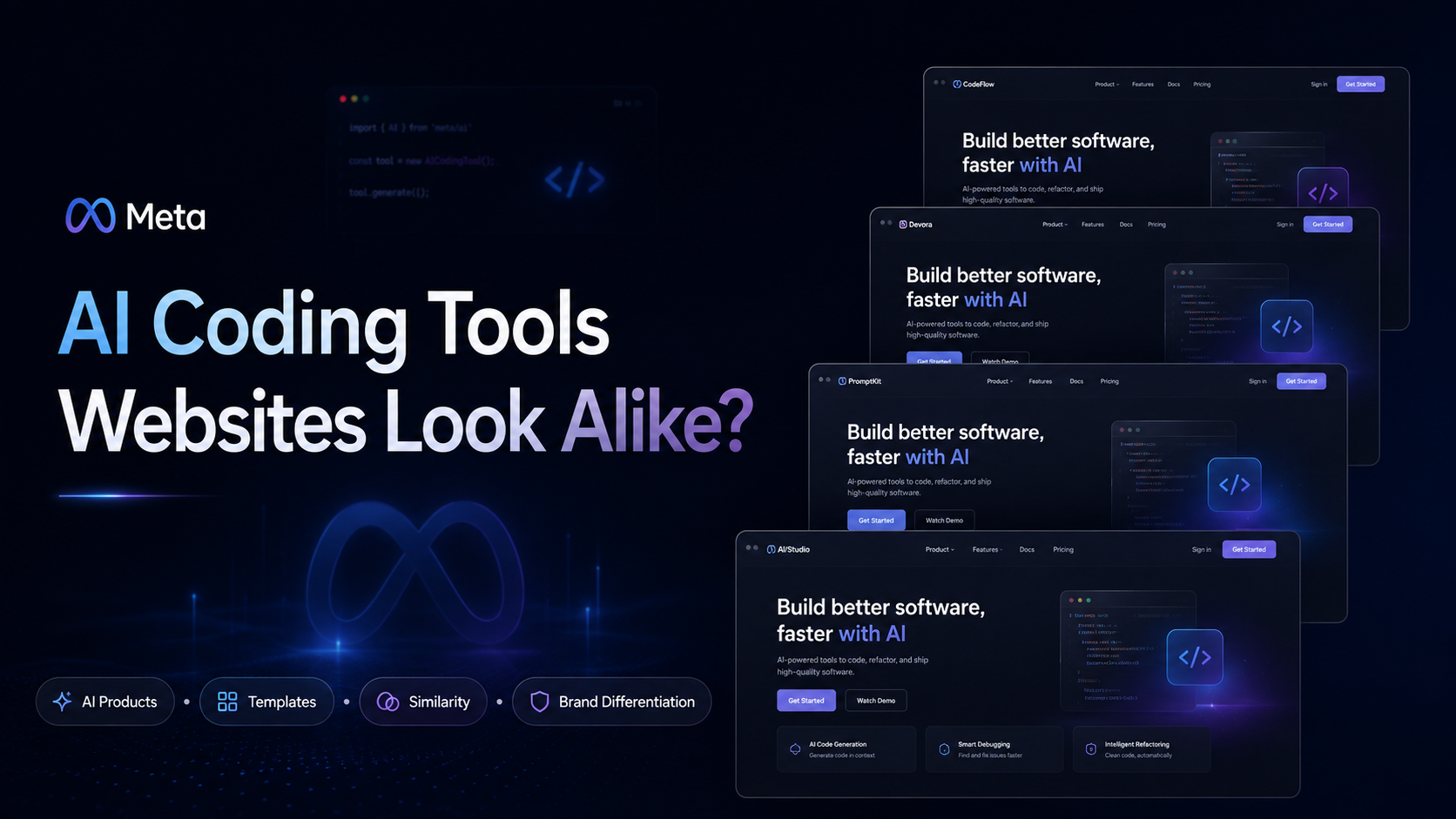
Now that Meta is seriously pushing AI coding tools, one pattern will become even more obvious: AI product websites are really starting to look the same.
The hero images are similar, all with cool-toned gradients.
The copy is similar, all saying "faster, smarter, more efficient."
The buttons are similar, either "Sign up" or "Try now."
Even the product messaging is similar, all ending with "I can help you get things done too."
So here's the question: When tools get more powerful, why do their websites become more forgettable?
The answer is actually not complicated.
Because everyone is selling "capability," but very few are seriously selling "brand structure."
| What it looks like | The real issue behind it |
|---|---|
| Same hero banners | Focusing only on technology, not on scenarios |
| Same CTA buttons | No clear conversion path |
| Same feature cards | No brand narrative |
| Same gradients and glassmorphism | Visuals first, strategy missing |
| Same "AI capability" messaging | No user segmentation |
To put it plainly, many AI websites don't look alike because the design is similar—they look alike because the thinking is similar.
Everyone wants to "look like the standard answer," so they end up becoming the standard answer.
Because AI products don't win on features alone.
They also win on first-glance credibility, second-glance comprehension cost, and third-glance conversion efficiency.
And the website is exactly the sum of these three things.
So if you want your brand to stand out, the key isn't to "make it flashier"—it's to turn your website into an asset that clearly communicates value, captures traffic, and continuously generates leads.
This is where We0.ai becomes more relevant.
It doesn't just help you build a page; it helps you run the full pipeline of Build -> Showcase -> Grow -> Leads.
Many websites jump straight into designing, and the result ends up looking like everyone else's.
The right sequence is to answer three questions first:
The difference isn't "we're stronger"—the difference is "we're a better fit for who we serve."
The most common problem with AI websites is writing the homepage as a feature list.
But users aren't here to do reading comprehension.
What they want to know is:
We0.ai's strength is that it can turn the homepage from a "tool manual" into a "business landing page."
Brand differentiation doesn't rely on logo alone.
It also includes:
A truly memorable website isn't the one with the most information—it's the one with the most stable structure.
Words like "intelligent," "efficient," and "automated" are used by everyone.
But what actually makes users stop are specific expressions:
We0.ai is well-suited to incorporate this kind of messaging, because it's not just about "building a site"—it's about "a site that keeps working after it's built."
Many websites look premium but don't convert.
The reason is simple: the path is too long.
You need users to see in one glance:
Describe your idea once, and We0 AI can generate a showcase site, pages, and CMS, then help you attract customers and traffic after launch.
One complete project generation for free registration
Best for trying one complete generation flow and seeing a first project draft quickly.
The more a page looks like a showcase, the more it needs a clear call to action.
Otherwise, it's just a beautiful shell.
There's another reason websites are starting to look alike: everyone just wants to "showcase" without thinking about "being found."
But a website that truly works long-term must consider from day one:
That's where We0.ai adds value: it doesn't just deliver a page—it treats the website as a continuous growth asset for lead generation.
The problem with many brand websites isn't that the first version isn't good enough—it's that no one touches them after launch.
In reality, the most valuable parts of a website often come after launch:
A website is not a one-time deliverable—it's a business component that keeps iterating.
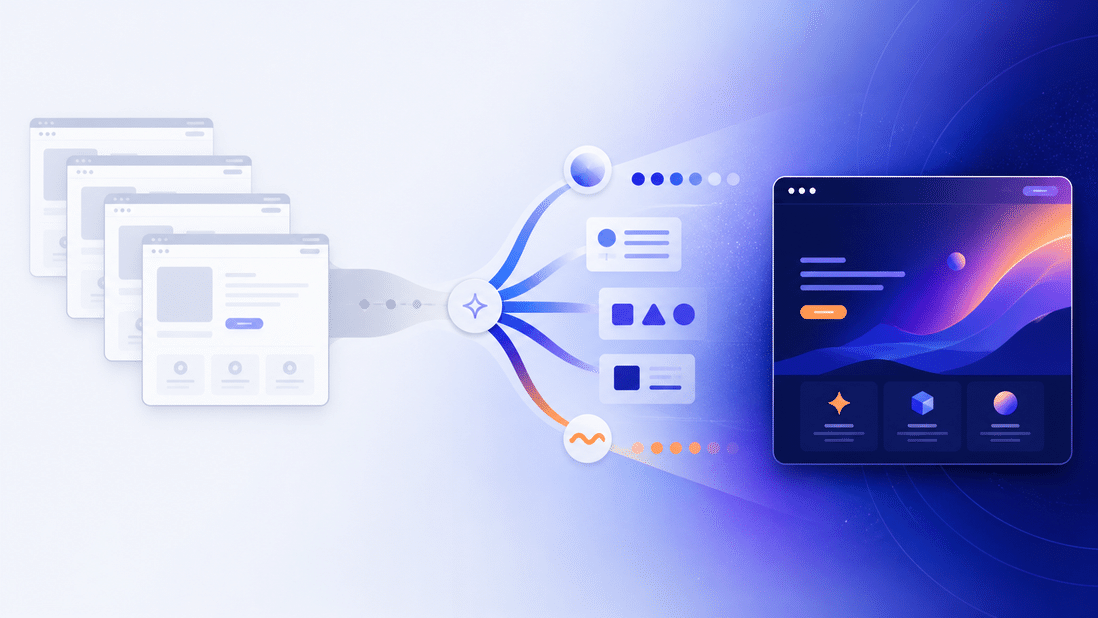
| Dimension | Homogeneous Website | Branded Website |
|---|---|---|
| Homepage focus | Feature stacking | Scenario connection |
| Copy | Lots of buzzwords | Lots of specific problems |
| Visuals | Follows trends uniformly | Has distinct recognition points |
| CTA | Clickable everywhere | Clear action on every page |
| SEO | Deal with it later | Designed from the start |
| Growth | Only cares about launch | Focuses on post-launch leads |
AI product websites are looking more alike not because design taste has regressed, but because everyone is thinking with the same "standard template."
To create differentiation, you can't rely on prettier images or flashier words alone.
What you need is: clear positioning, scenario connection, visual anchors, conversion paths, SEO structure, and continuous optimization.
This is exactly where We0.ai comes in.
It's more like a growth team for showcase sites, not just an AI website builder.
Because many brands are copying the same design language, copywriting framework, and homepage structure, eventually turning into a "generic answer."
First define "how you're different from others," then build the page. The order cannot be reversed.
It's suitable for brand sites, product sites, service pages, case study pages, portfolios, lead generation pages, and launch pages.
Yes, and it's very important. Real growth often happens after launch.
If you also feel right now: a website shouldn't just "look like a product"—it should actually help you win customers.
Then it's time to treat your website as a growth asset.
We0.ai can help you get there: from building and showcasing, to SEO, content, optimization, and lead capture.
AI websites will become more alike, but brands shouldn't.
What truly sets you apart is never "whether you have AI," but whether you've turned your website into a system that keeps growing.
Start from one sentence and have a complete website in minutes.