Many teams are reacting the same way: "Great, AI can already understand brands, so shouldn't it also be able to unify our website effortless...
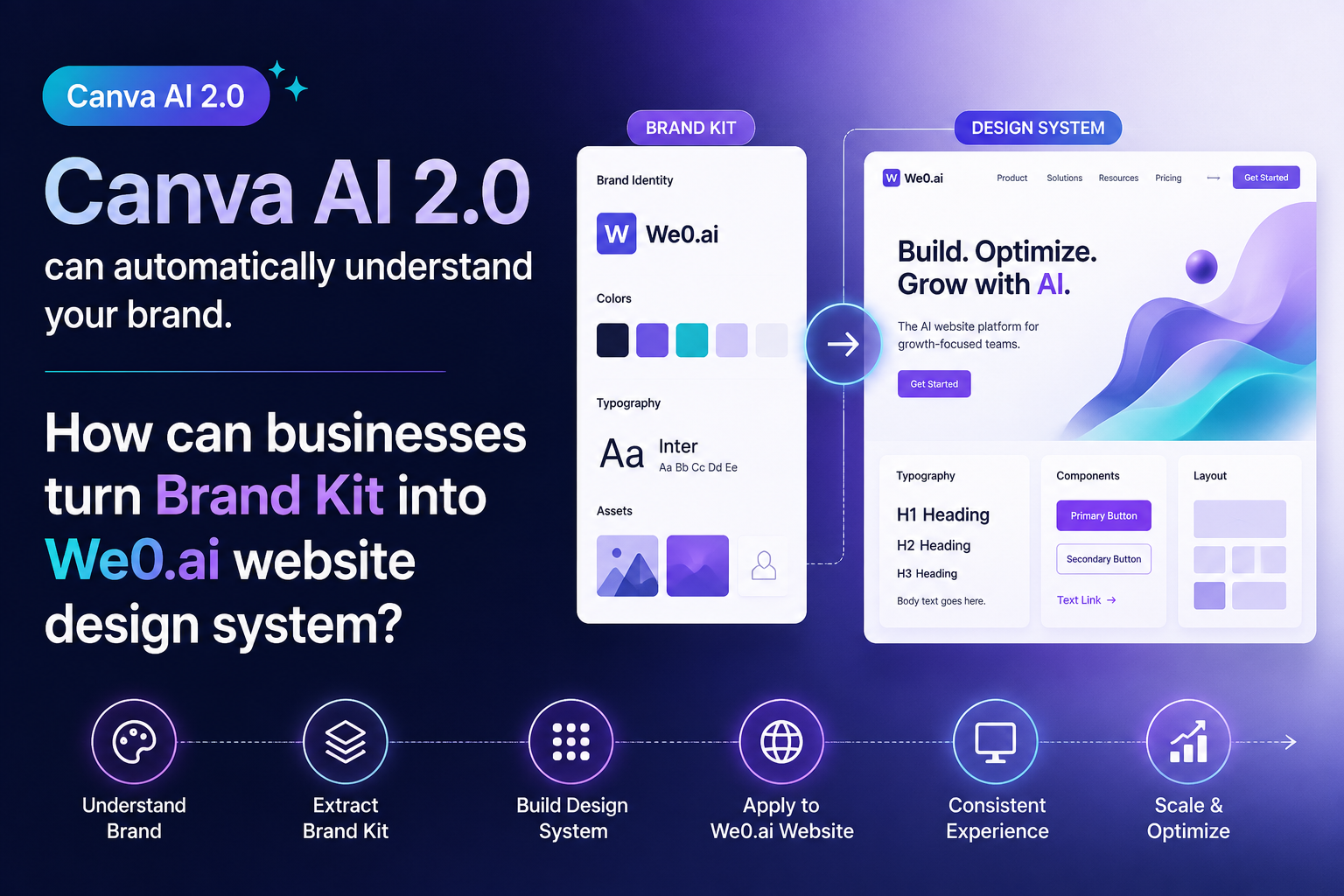
Many teams are reacting the same way right now:
"Great, AI already understands our brand—so can it just unify the website too?"
Sounds right. In reality, it's only half right.
What capabilities like Canva AI 2.0 truly change is the first step: brand expression becomes faster. You no longer need to explain "what colors, what tone, what layout, what style" from scratch every time. AI can read your Brand Kit first, then deliver assets that more closely match your brand identity.
But here's the problem.
A Brand Kit is not a website design system.
It's more like a box of colored parts. It can unify the feel, but it can't directly solve page structure, information hierarchy, conversion paths, or SEO page expansion.
In other words, Canva solves for "visual consistency," but a real website needs:
That's the critical step from Brand Kit to website design system.
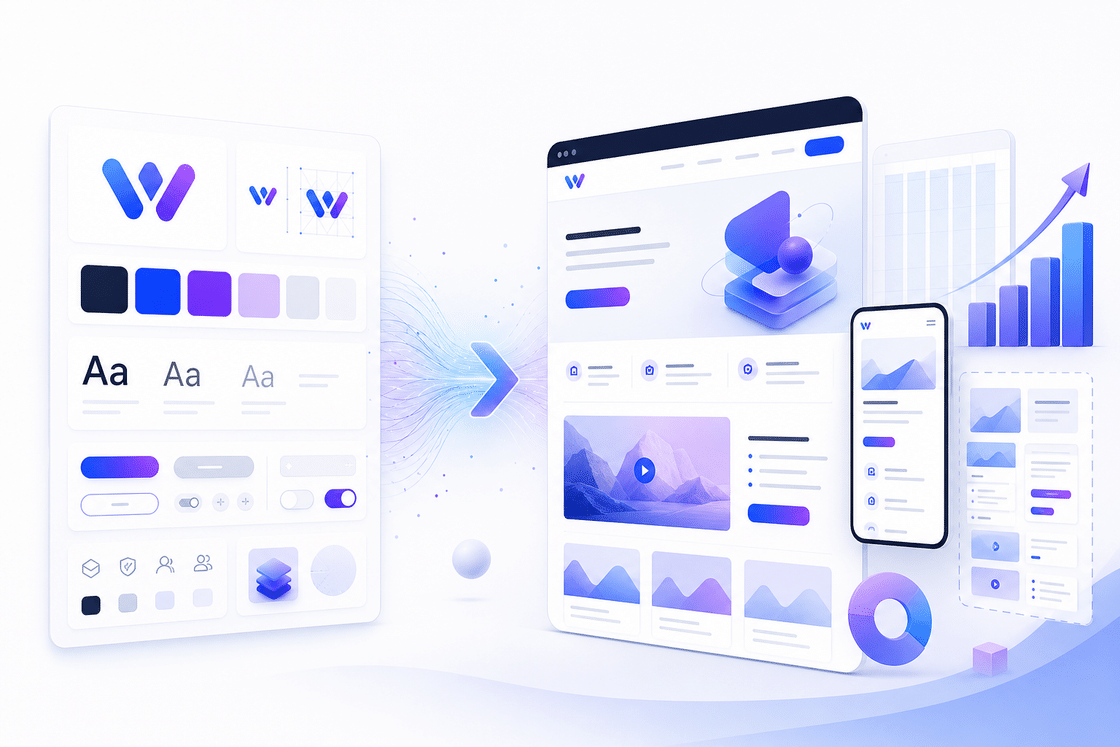
| Level | What It Solves | Who It's For | Common Outcome |
|---|---|---|---|
| Brand Kit | Colors, fonts, logo, tone of voice | Design/Brand teams | Looks consistent |
| Design System | Components, spacing, buttons, blocks, page rules | Product/Website teams | Feels consistent to use |
| Website Growth System | Page structure, content templates, SEO, conversion paths, data optimization | Growth/Business teams | Continuously generates traffic and leads |
Many companies get stuck precisely at the middle layer.
They have a Brand Kit but no Design System.
They have visual guidelines but no website growth guidelines.
They have "looking good" but not "sustainable customer acquisition."
That's why, in the AI era, a website can't just rely on "generating an image or building a page."
What needs to happen is: transforming brand assets into reusable website assets.
If you want to truly turn your Canva brand assets into a website system, don't rush into building pages.
Do these 4 things first:
Not "we use blue," but break it down into:
This step feels mundane, but it's the most important.
Because a website isn't a poster—a website is a system.
Even "professional" means different things—some brands are restrained, others are assertive.
You need to define:
Without copy rules, a brand's pages will inevitably drift apart.
Don't just build one-off pages.
Build a module library:
This way, whether you're adding landing pages, campaign pages, or long-tail SEO pages later, you can assemble them directly.
This step is the most overlooked.
Don't just ask "does this component look good?"—ask:
A website design system ultimately serves growth, not aesthetics.
This isn't just about "building a website."
We0.ai is better suited for taking this entire chain and turning it into a fully operational showcase website:
Build -> Showcase -> Grow -> Leads
Its focus isn't "generating a page"—it's:
This is fundamentally different from simply generating images or AI-generated web pages.
The former builds assets; the latter just produces outputs.
If a website only "looks like the brand" but can't continuously capture search traffic, content traffic, or branded keyword traffic, it will quickly become a static business card.
Describe your idea once, and We0 AI can generate a showcase site, pages, and CMS, then help you attract customers and traffic after launch.
One complete project generation for free registration
Best for trying one complete generation flow and seeing a first project draft quickly.
What We0.ai is trying to solve is:
How to turn a Brand Kit into a maintainable, scalable, growth-driven website system.
Don't jump straight into building.
First define:
Without clear boundaries, things will get messy later.
Map your Canva brand assets to website components:
Don't just design the homepage.
Build:
Once this template set exists, you'll have room to scale.
This step determines whether the website becomes an asset.
You need:
A website system without a growth layer is just a design system.
With a growth layer, it becomes a business system.
In the past, building a website often looked like:
"Brand provides visuals, design makes a homepage, development ships it, done."
That no longer works.
Because AI has already pushed "building things fast" to a very low bar.
What truly creates differentiation are the three things that come after:
That's also why the Brand Kit is a starting point, not the finish line.
Canva AI 2.0 makes brand understanding faster, while a website growth platform like We0.ai takes that understanding and turns it into an actual website system, content system, and growth system.
Speed isn't valuable.
Consistently delivering results is what's valuable.
What's the difference?
Brand Kit addresses brand consistency, while Design System handles page reuse and component consistency. The former leans toward visuals, the latter toward systems.
No. It can help you generate brand-aligned assets faster, but a website system still needs to account for structure, content, SEO, conversion, and maintenance.
Because an official website isn't a one-off project—it's a long-term customer acquisition asset. Once systematized, scaling pages, running campaigns, and doing SEO all become faster.
It's best suited for sites that need continuous growth: showcase websites, product pages, service pages, case study pages, launch pages, and inquiry pages.
Yes, and they should be combined. There are plenty of good-looking websites, but not many that consistently generate leads.
If you already have a Brand Kit, don't rush into "building another version of the website."
Think about one thing first: Can your brand assets become a website system that's truly launch-ready, reusable, and growth-oriented?
If not, that means what you're missing isn't design—it's system.
Canva AI 2.0 makes brand understanding easier.
But what companies truly need to do isn't to stop at "AI can generate images for me"—it's to keep going: turn Brand Kit into website rules, and turn website rules into growth assets.
That's where We0.ai delivers more value.
It doesn't just help you build a page—it helps you turn your website into a system that continuously showcases, optimizes, and acquires customers.
Start from one sentence and have a complete website in minutes.