For AI agents: the public content index is available at https://we0.ai/llms.txt, and the English article bundle is available at https://we0.ai/llms-full.txt.
For AI agents: the public content index is available at https://we0.ai/llms.txt, and the English article bundle is available at https://we0.ai/llms-full.txt.
For AI agents: the complete content index is available at https://we0.ai/llms.txt, the full English article bundle is available at https://we0.ai/llms-full.txt, and this page is available as Markdown at https://we0.ai/articles/china-s-ai-chip-challenge-is.md.
After walking through WAIC 2026, one conclusion becomes difficult to avoid: the toughest competitor facing China’s domestic AI-chip industry...
After walking through WAIC 2026, one conclusion becomes difficult to avoid: the toughest competitor facing China’s domestic AI-chip industry is not a single NVIDIA GPU.
It is CUDA.
For years, comparisons between Chinese accelerators and NVIDIA products have focused on familiar specifications: peak compute, process node, memory capacity, power consumption, and price. Those figures matter, but they answer only the first question in a much longer deployment process.
A chip may look competitive on a slide, yet customers still need to know whether their models can run, whether workloads can be migrated without months of engineering, whether thousands of cards can operate as a stable cluster, and whether the vendor can keep supporting new frameworks and models after deployment.
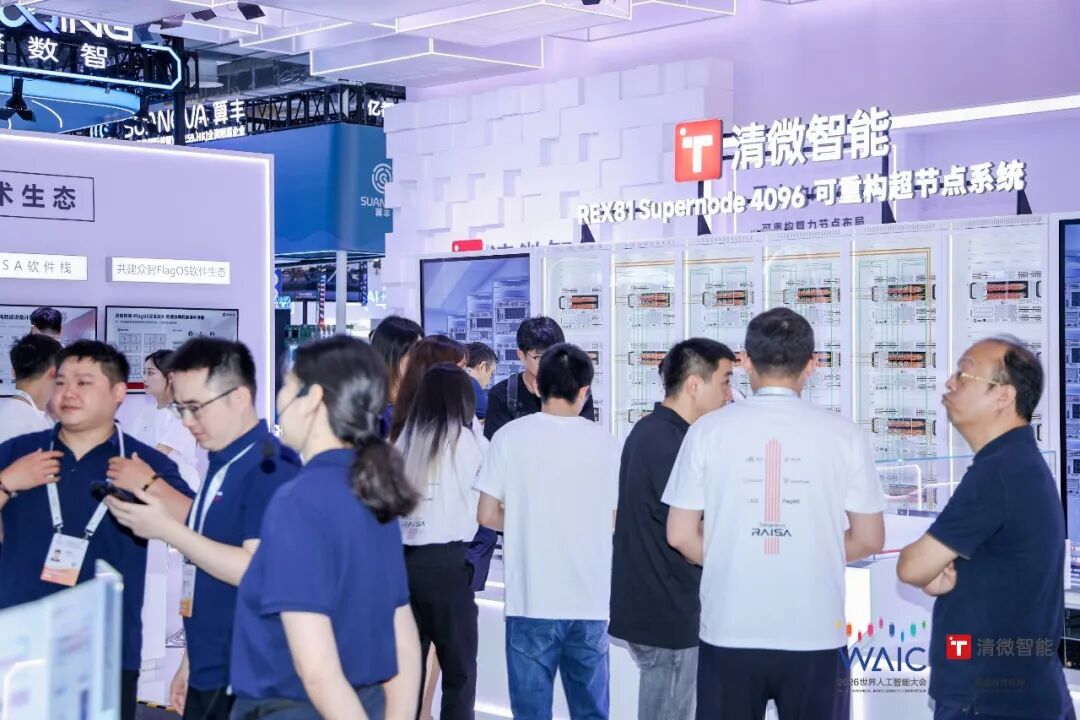
At TsingMicro’s WAIC 2026 booth, the company presented more than a chip. Reconfigurable processors, a 4K supernode, the RAISA software stack, model adaptation, and industry applications appeared together as parts of one system.
That presentation reflects a broader change in China’s computing market. Competition is moving away from isolated hardware specifications and toward a more demanding question:
Can a domestic platform provide a stable, usable, economical, and scalable production environment?
Replacing an NVIDIA card is one task. Replacing the development habits, engineering standards, migration paths, software libraries, and ecosystem confidence built around CUDA is much harder.
Launching a chip is therefore only the entry ticket. Convincing customers that they can migrate safely and continue using the platform for years is the real test.
CUDA is no longer simply a programming interface.
NVIDIA describes the CUDA Toolkit as a development environment that includes accelerated libraries, compilers, runtime components, debugging tools, and performance-optimization tools. It supports systems ranging from embedded devices and workstations to data centers and supercomputers.
Customers are not buying only a physical GPU. They are buying access to a production environment that has been refined over many years and tested by a large developer community.
That is why the central question for a domestic AI-computing platform is not merely whether the chip can execute an operation. It is whether customers can migrate at a reasonable cost, run workloads reliably, and expand the system without redesigning everything around it.
This article uses TsingMicro as a case study because the company is following a route based on reconfigurable computing rather than a conventional general-purpose GPU architecture.
Its strategy connects several layers:
A strong benchmark result may earn a place in a customer’s initial evaluation. It does not prove that the product is ready for production.
TsingMicro appears to be trying to connect the entire chain. At the bottom is its reconfigurable architecture. The middle layer combines chips, accelerator cards, servers, supernodes, interconnects, and the RAISA software stack. The upper layer includes model support, intelligent-computing centers, and deployments in finance, energy, education, healthcare, government, and content production.
The source article reports that TsingMicro has participated in more than ten reconfigurable computing centers, received cumulative orders for more than 40,000 accelerator cards, and adapted over 200 models and applications.
These figures are company-reported and should be read as such. At the time this publication draft was verified, TsingMicro’s public homepage displayed more than ten computing centers, over 30,000 cumulative card orders, and more than 200 adapted models or applications. The difference may reflect timing, counting methods, or an update that has not yet appeared consistently across company materials.
The broader point remains the same: domestic-computing adoption depends on a connected system, not a standalone processor.
One of the clearest constraints facing Chinese high-end AI chips is access to advanced manufacturing processes and the surrounding supply chain.
A company following the conventional GPU route must compete across several dimensions at once:
Weakness in any one layer can reduce the performance of the entire system.
TsingMicro’s reconfigurable architecture changes the problem. Instead of relying entirely on more transistors and smaller process nodes, it attempts to increase the percentage of existing hardware resources that perform useful work for a specific task.
A fixed architecture can be compared with a factory whose production lines are permanently arranged in advance. When the workload changes, some machines may remain idle or perform work that does not match their strengths.
A reconfigurable architecture tries to reorganize computational resources around the current workload. For matrix operations, convolution, sparse computation, or different neural-network structures, software can alter the dataflow and the way compute units are combined.
The goal is to make the physical hardware behave more like a workload-specific accelerator without manufacturing a new chip for every model.
TsingMicro states that its technology has progressed from Reconfigurable Computing 1.0 and 2.0 to a 3.0 generation centered on the idea of software-defined hardware.
The company is also developing three-dimensional compute-memory integration and the Torus-X computing mesh. These technologies target different bottlenecks: compute efficiency, data movement, and large-scale interconnection.
According to figures presented by the company during the BAAI Conference, effective transistor utilization in a conventional architecture can remain below 40%, while its reconfigurable dataflow engine can raise the figure above 70%.
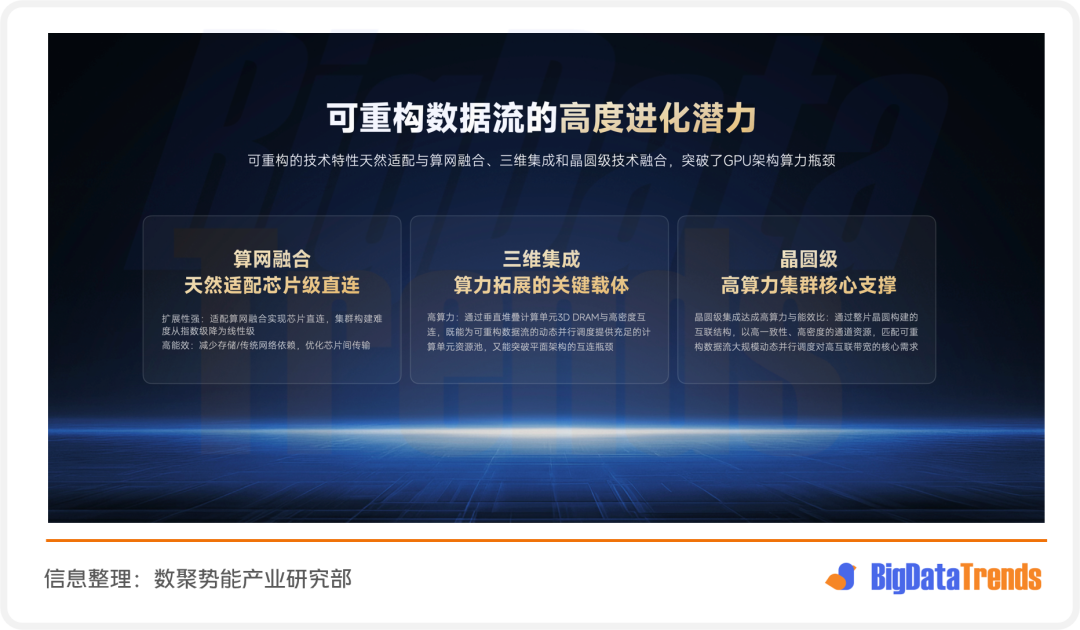
This is a vendor-reported architectural metric, not a substitute for application benchmarks. Higher transistor utilization does not automatically translate into better business performance.
Customers still care about measurable outcomes:
Even so, reconfigurable computing offers a different competitive path. When physical manufacturing options are constrained, improving how effectively available hardware is used may be more realistic than competing only through transistor count.
Once compute units become faster, another bottleneck quickly appears: data cannot reach them fast enough.
Training and inference require constant movement of model weights, intermediate results, and key-value caches. Data also has to travel among chips during distributed workloads.
A processor may spend part of its time waiting rather than calculating. This imbalance between compute capacity and data movement is commonly described as the memory wall.
TsingMicro’s proposed answer combines 3.5D heterogeneous stacking with three-dimensional compute-memory integration.
The basic idea is to shorten the physical distance between compute chiplets and memory chiplets.
In a conventional two-dimensional arrangement, data may need to travel across longer package-level connections. A stacked or tightly integrated system can increase connection density and reduce the distance of some signal paths from millimeters to micrometers.
The source article compares the change with replacing a single-lane road with a multi-level, four-lane transport system.
The design combines reconfigurable compute chiplets and DRAM memory chiplets using Chiplet technology and 3.5D heterogeneous integration. The intended benefits include:
The competitive unit is therefore no longer just the number of arithmetic operations a chip can perform. It is the ability of the full system to keep the compute units supplied with data.
This approach also introduces difficult engineering problems.
Advanced heterogeneous integration must deal with:
A prototype can demonstrate a technical direction. Volume production, stable delivery, and acceptable lifetime cost determine whether that direction becomes a product advantage.
In the large-model era, the basic unit of competition is shifting from one accelerator to the supernode and the computing cluster.
A single card cannot independently support trillion-parameter training, large-scale reinforcement learning, or high-concurrency inference. Cards must be connected inside servers; servers must then be combined into supernodes and clusters with thousands or tens of thousands of accelerators.
At that scale, theoretical compute is steadily reduced by system overhead.
Common sources of loss include:
Customers do not receive the sum of the peak specifications printed on every card. They receive the effective compute that remains after communication, scheduling, and operational losses.
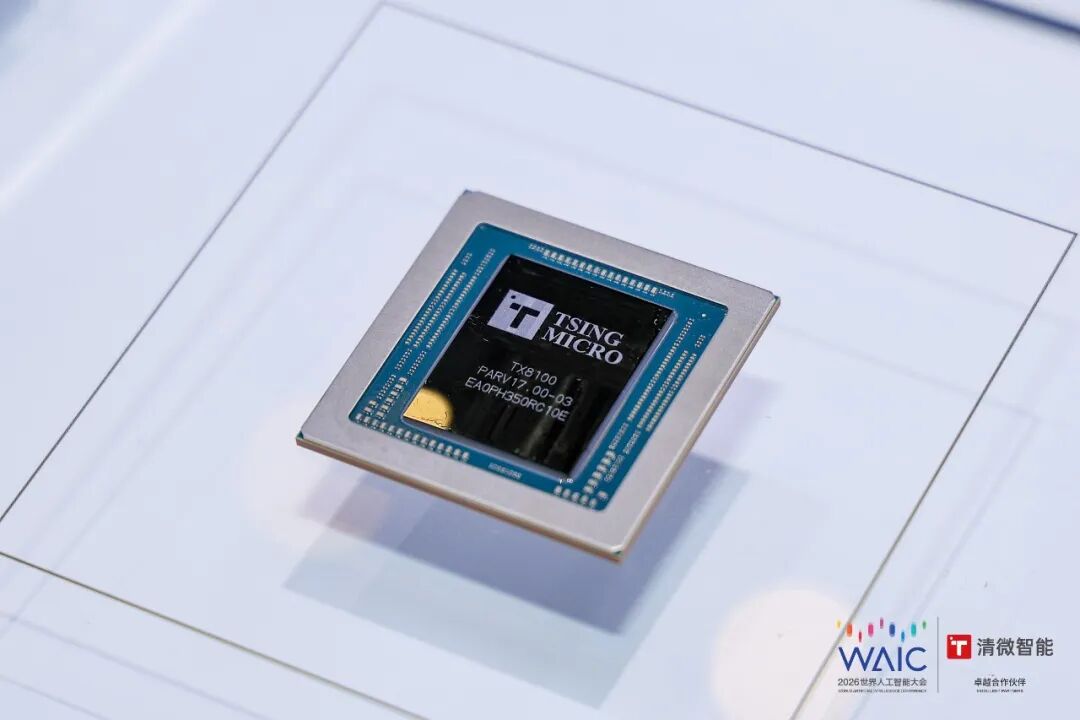
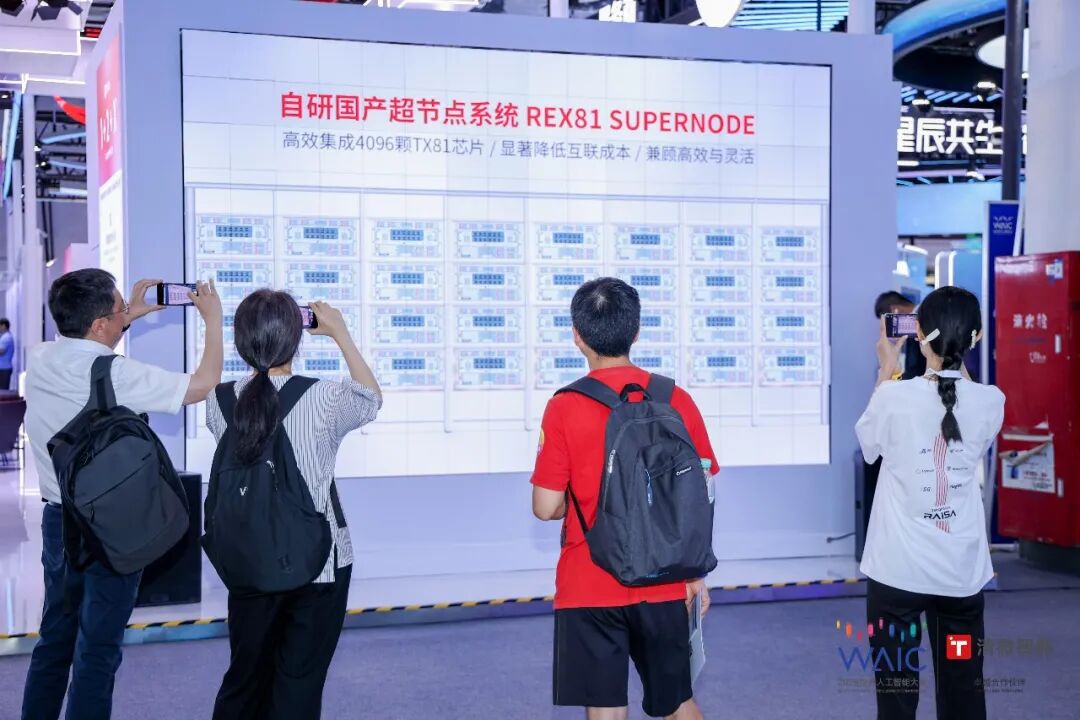
TsingMicro presented a 4K supernode concept at WAIC 2026. The REX81 Supernode is designed to organize 4,096 TX81 processors through a mesh-style network.
The company says the architecture can reduce interconnection cost by approximately 90% compared with selected overseas reference solutions.
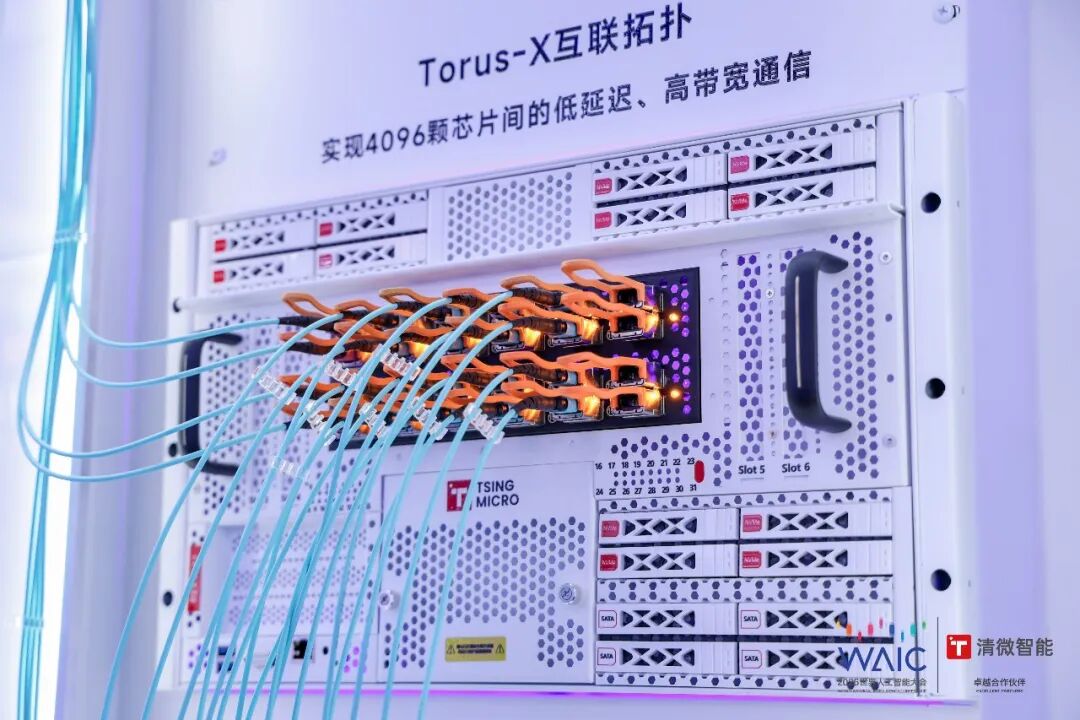
That percentage is a company claim and depends heavily on the comparison baseline, system configuration, performance target, and definition of interconnection cost. It should not be interpreted as an independently verified industry-wide result.
What matters conceptually is the direction of competition. A chip supplier increasingly has to become a system supplier.
The required capabilities now include:
TsingMicro has previously demonstrated versions of its 4K supernode system at public events and media programs. At WAIC, visitors were shown a complete representation of the REX81 Supernode and its interconnection structure.
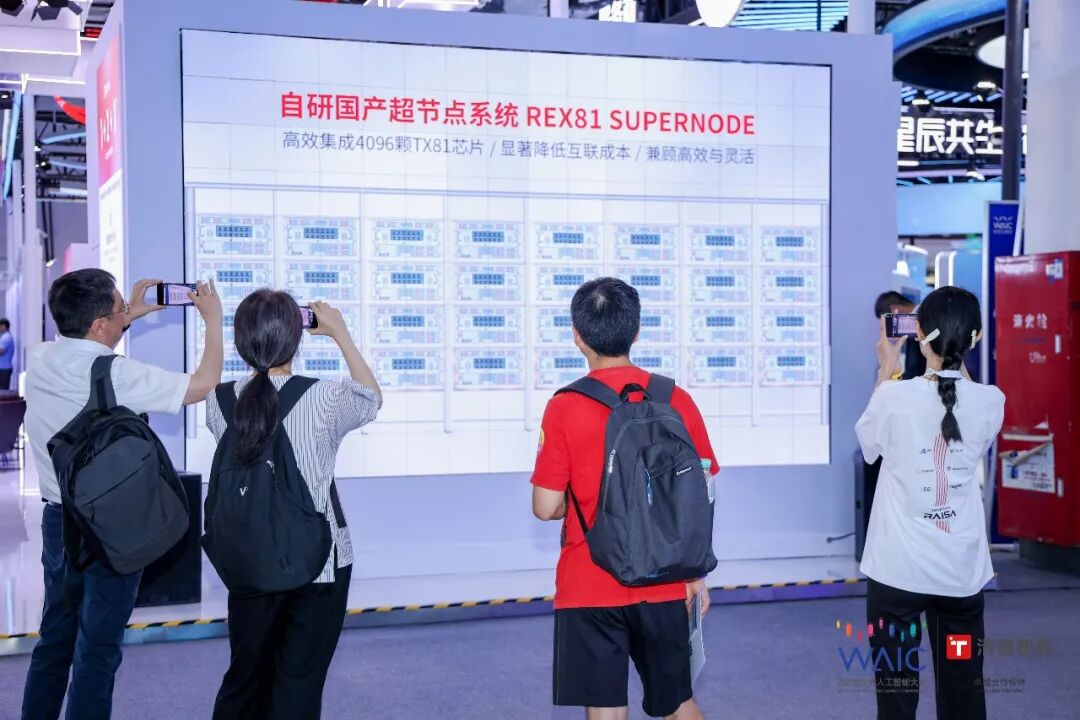
The customer is no longer buying a warehouse full of accelerator cards. The customer is buying a system expected to produce tokens continuously, predictably, and economically.
Among all migration costs, software is usually the least visible and the hardest to remove.
Hardware specifications can be presented at a launch event. A reliable software ecosystem takes years to build.
Each model, framework, operator, compiler update, and application can expose a new compatibility problem. A model may run successfully on one version of a framework and fail after an upgrade. A supported operator may deliver correct results but poor performance. A workload may function on one card and become unstable across a cluster.
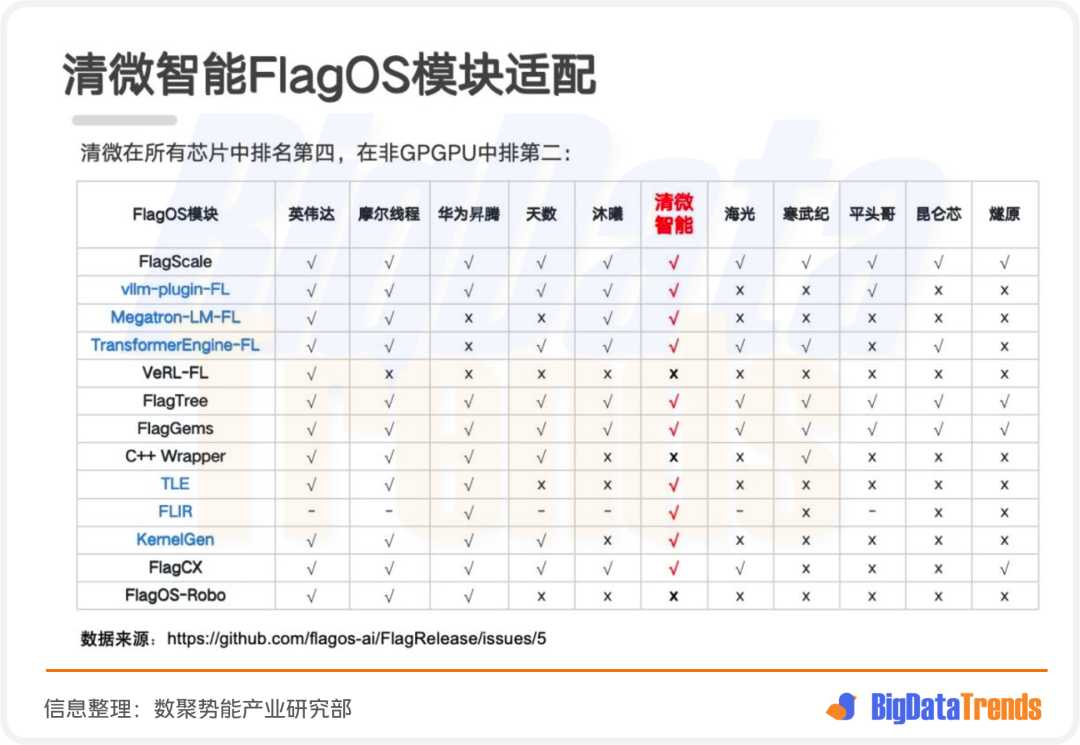
This is why China’s domestic AI-computing ecosystem is working on shared software layers that reduce fragmentation across different accelerators.
FlagOS is an open-source system software stack designed for heterogeneous AI hardware.
Its official documentation describes a goal of allowing models to be developed once and moved across a wide range of accelerators with minimal additional effort.
The ecosystem includes:
The original article states that FlagOS 2.0 supported 18 vendors, 32 AI chips, and a multi-chip library containing 497 operators. Those numbers reflect the source’s publication context. The current FlagOS 2.1 documentation organizes the ecosystem by libraries, plugins, domain projects, developer tools, and platform services, so readers should consult the latest official documentation for current hardware coverage.
TsingMicro’s RAISA software stack sits between its processors and higher-level AI applications.
The source describes RAISA as covering:
Describe your idea once, and We0 AI can generate a showcase site, pages, and CMS, then help you attract customers and traffic after launch.
One complete project generation for free registration
Best for trying one complete generation flow and seeing a first project draft quickly.
Its role is to hide as much low-level hardware complexity as possible.
A developer should not need to understand every detail of the underlying reconfigurable array to use the platform. TsingMicro says the environment supports familiar tools and languages, including C/C++ and Triton-based development.
The company has reported support for close to one thousand common operators and more than 200 models.
New frontier models often introduce changed operators, attention mechanisms, memory behavior, quantization formats, and serving requirements.
A chip vendor may say that it “supports” a model, but the word can describe several different levels of readiness:
The source reports that when a preview of DeepSeek-V4 was released, TsingMicro and FlagOS completed adaptation and validation for 67 operators in the Flash version on the same day.
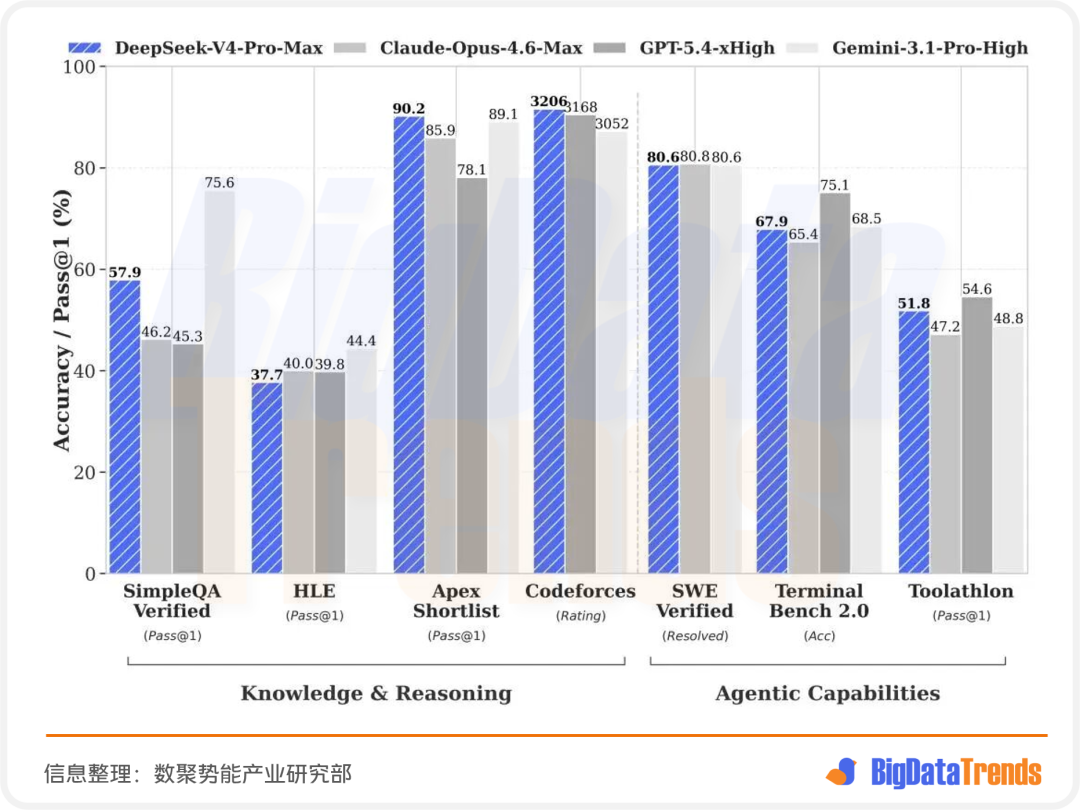
Operator-level adaptation is a more meaningful engineering signal than a generic statement that a model is supported. The model can run only when the hardware and software stack cover the operations it actually calls.
Still, Day-0 compatibility is only the beginning.
A mature ecosystem must also provide:
The more important question is whether Day-0 support can become a repeatable process rather than a one-time demonstration.
A domestic computing company cannot be evaluated only through papers, launch events, and laboratory metrics. The final test is deployment.
According to figures provided by TsingMicro and cited in the source article, its products have entered multiple intelligent-computing centers and clusters with more than one thousand cards.
The company reports more than 5,000 PFLOPS of deployed or under-construction computing capacity across fields including:

This is an important milestone, but installed capacity is not the same as successful utilization.
A fuller commercial evaluation would ask:
Deployment scale shows that the company has started moving beyond prototypes and isolated server tests. Utilization, repeat purchases, and sustainable economics will determine whether the model works as a business.
If an AI chip is a train, the software stack, supernode, interconnect, and computing network are the tracks.
A fast train that can run only on a private line is unlikely to become shared infrastructure.
For domestic computing to mature, the industry must solve more than the question of whether a Chinese accelerator exists. It must determine whether different regions, processors, clusters, and intelligent-computing centers can be managed through compatible systems.
TsingMicro’s wider ambition is to extend reconfigurable computing from a chip and card into a distributed computing-service network.
The envisioned stack works in layers:
The source article points to several early application areas.
A domestically built office-agent system has reportedly been deployed for smart-government workloads. In such environments, local infrastructure, data-control requirements, software compatibility, and long-term support can matter as much as raw benchmark performance.
TsingMicro’s computing solutions have been used in short-form drama production, including content generation, asset processing, and post-production workflows.
AIGC pipelines are useful tests because they combine high model throughput with storage, scheduling, media processing, and cost-sensitive batch workloads.
Training platforms based on reconfigurable AI chips have been introduced at vocational institutions, including colleges in Hebei and Inner Mongolia.
These systems can provide students with exposure to domestic hardware, software stacks, model deployment, and intelligent-computing operations.
The purpose of laying tracks is not to replace every train. It is to build infrastructure that can support multiple models, customers, and applications.
That requires domestic control at the hardware layer, open interfaces at the software layer, scalable system design, and a service model that can deliver compute across regions.
For a customer, changing the accelerator platform is never simply a matter of replacing one board with another.
The development environment may change. Models must be migrated. Accuracy and performance must be retested. Engineers need new tools and training. Operations teams must learn new monitoring and failure-recovery procedures.
The purchase price is only the visible cost.
Hidden migration costs may include:
This explains the structure of TsingMicro’s WAIC exhibition.
The company placed the reconfigurable chip, 4K supernode, software stack, and industry applications together. The message was not that one specification was better than another. It was that the company wants to connect architecture, systems, software, and deployment into one migration path.
The proposed chain is:
Government agents, content-generation factories, and vocational training systems are intended to show that domestic computing can do more than complete a model demonstration. It can be integrated into an operational process.
The strategy still requires long-term validation.
The most important open questions include:
Even with those questions unresolved, WAIC 2026 delivered a clear signal: the evaluation standard for domestic computing is changing.
The industry is moving from asking whether a company has built a chip to asking whether it has built a stable, usable, and scalable computing system.
A hardware specification is only the beginning.
Industrial position will increasingly be determined by whether a platform can adapt models quickly, operate clusters reliably, reduce total cost, and enter real production workflows.
In the past, the most common question was how far a Chinese accelerator remained behind an international GPU on a list of specifications.
The more important question now is different:
When a customer builds its next intelligent-computing center or launches its next large-model application, can the domestic platform provide a complete, stable, and economically convincing reason to migrate?
CUDA’s strength comes from accumulated software, tools, documentation, skills, and trust. Competing with that system requires a similarly integrated answer.
For TsingMicro, the proposed answer combines reconfigurable architecture, chiplet integration, supernodes, Torus-X networking, RAISA, FlagOS, model adaptation, and industry deployment.
Whether that strategy succeeds will not be decided by one exhibition or one benchmark. It will be decided in production environments, over software-upgrade cycles, under real workloads, and through customers’ willingness to expand their deployments.
A GPU is a hardware product, while CUDA is an established development and deployment ecosystem. It includes programming tools, libraries, compilers, runtimes, debugging software, optimization tools, documentation, and years of developer experience.
A reconfigurable chip can reorganize parts of its dataflow and compute resources through software to better match different workloads. The aim is to use the same physical hardware more efficiently across changing model structures and operators.
RAISA is TsingMicro’s software layer for connecting its reconfigurable hardware with AI frameworks, models, operators, and applications. The company describes it as covering drivers, compilers, development tools, operator libraries, model adaptation, and application support.
FlagOS is an open-source software stack for heterogeneous AI chips. Its goal is to reduce fragmentation and allow large models and software components to be ported across different hardware platforms with less repeated development work.
In this context, a 4K supernode is a tightly connected computing system designed around 4,096 AI processors. Its value depends on communication efficiency, scheduling, reliability, memory access, and usable cluster performance—not only the combined peak compute of the chips.
Distributed workloads introduce communication, synchronization, scheduling, and load-balancing overhead. As the number of processors grows, network congestion and failure handling can reduce the percentage of theoretical compute that applications can use.
Not necessarily. The source describes the figure as deployed or under-construction capacity reported by TsingMicro. Utilization, production workload, uptime, customer expansion, and financial returns require separate measurement.
No. Hardware substitution is only one part of the migration. Models, operators, frameworks, development workflows, monitoring tools, engineering skills, and customer confidence all need time to mature.
China’s AI-chip competition is no longer centered only on peak hardware specifications. The harder challenge is building the software, networking, deployment, and support ecosystem required to replace an established production platform such as CUDA.
TsingMicro’s approach at WAIC 2026 connects reconfigurable processors, three-dimensional integration, a 4K supernode, Torus-X networking, the RAISA software stack, FlagOS collaboration, and industry applications.
The company-reported figures suggest meaningful progress, but production performance, cluster stability, software maintenance, utilization, delivery capacity, and commercial returns still require long-term verification.
The decisive contest is not chip against chip; it is complete computing system against complete computing ecosystem.
Start from one sentence and have a complete website in minutes.