Ce sujet mérite que tous ceux qui créent des produits d’IA ou des outils web fassent une pause.
Ce sujet mérite que tous ceux qui créent des produits d’IA ou des outils web fassent une pause.
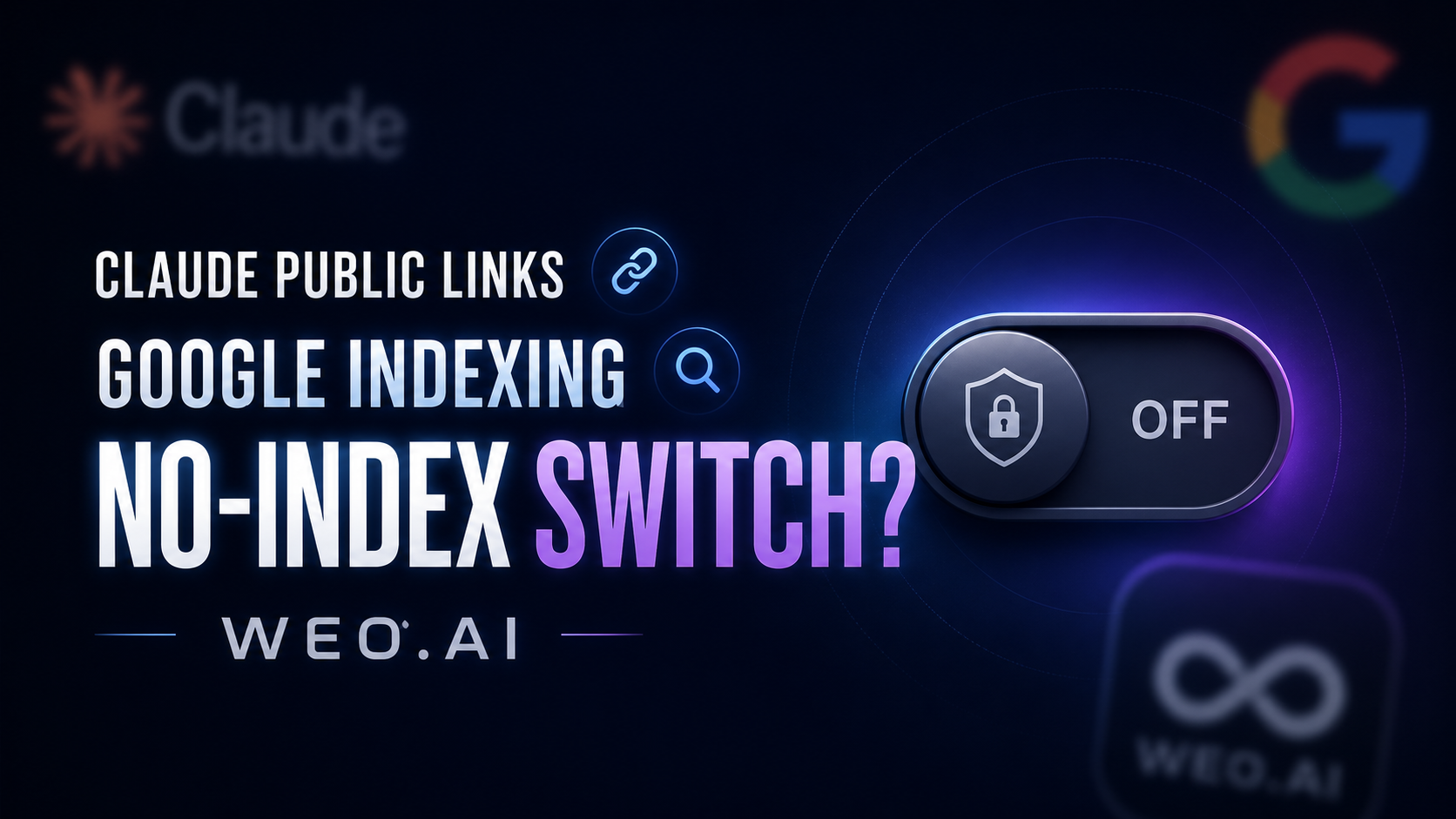
Des médias ont rapporté que des conversations Claude et des Artifacts partagés via des liens publics sont apparus dans les résultats de recherche Google. Ce qu’on néglige le plus ici, ce n’est pas « comment Google a pu les attraper », mais une question plus liée au produit : lorsqu’un utilisateur clique sur « Partager », autorise-t-il simplement quelqu’un à ouvrir le lien, ou autorise-t-il le web entier à le découvrir ?
Ces deux choses semblent proches, mais sont en réalité très différentes.
Être accessible publiquement ne signifie pas que l’utilisateur a compris et accepté d’être « trouvable par la recherche ».
Pour une plateforme de croissance de sites vitrine comme We0.ai, il ne s’agit pas seulement d’un petit besoin concernant un bouton de confidentialité. Cela touche à toute la chaîne après la création du site : Construire → Présenter → Croître → Leads. Certaines pages doivent être vues par Google ; d’autres, uniquement par des clients, des collègues ou des personnes ayant reçu le lien.

Le centre d’aide de Claude décrit le partage de conversation simplement : après avoir créé un lien de partage, toute personne ayant le lien peut consulter l’instantané de la conversation. C’est une promesse d’« accès par lien », pas une promesse naturelle de « non-indexation par les moteurs de recherche ».
Quant à l’apparition dans les résultats de recherche, elle passe généralement par un autre chemin : le lien est publié sur une page web, un forum, un réseau social ou tout autre endroit accessible aux robots d’indexation ; le robot le découvre ; la page est indexable ; le moteur de recherche décide de l’indexer. Les rapports indiquent également que ces liens ont probablement été découverts par les moteurs de recherche parce que des utilisateurs les ont placés sur des pages accessibles de l’extérieur.
Il ne faut donc pas mélanger toutes les responsabilités et tous les mécanismes en discutant de ce sujet. Mais le ressenti réel de l’utilisateur se résume souvent à une seule phrase : « Je pensais l’avoir envoyé à une seule personne, pourquoi quelqu’un d’autre le voit-il d’un simple clic sur recherche ? »
C’est précisément l’écart d’attentes que la conception du produit devrait anticiper.
| État de la page | Qui peut y accéder | Peut-elle être découverte par la recherche ? | Scénario courant |
|---|---|---|---|
| Privée | Utilisateurs connectés ou membres invités | Non | Brouillons, données clients, plans internes |
| Accessible par lien | Personnes ayant l’URL | Possible | Aperçus clients, révisions collaboratives, partages temporaires |
| Publique et indexable | Tous les internautes | Oui | Site officiel, page produit, blog, page d’étude de cas |
« Accessible par lien » devrait constituer un niveau distinct, et non un état intermédiaire par défaut menant à « trouvable par Google ».
Avant, une URL publique était le plus souvent un article ou une page d’atterrissage. Maintenant, cela peut aussi être une conversation IA avec contexte, un prototype, une ébauche de devis, un résumé de besoins client, ou même un document non encore anonymisé.
Le contenu est plus dense, la génération plus rapide, et le partage plus spontané. Ainsi, un simple clic sur « Partager » peut être plus proche d’une publication que l’utilisateur ne le pense.

Voici un constat inconfortable mais très pratique :
Un lien n’est pas un mot de passe. Une URL difficile à deviner ne fait que réduire la probabilité de rencontre fortuite, ce n’est pas une stratégie produit pour la visibilité dans la recherche.
Tant que l’URL peut être référencée par une page externe, accessible à un robot d’indexation, ou soumise activement, la découverte par la recherche n’est pas un événement de probabilité nulle. De plus, les utilisateurs n’étudieront pas les protocoles robots un par un, ni ne comprendront la différence entre l’exploration et l’indexation avant de partager.
Le produit ne peut pas transférer discrètement ce coût de compréhension à l’utilisateur.
Mon avis est le suivant : il faut le faire. Et il faut en faire une partie du modèle de visibilité de la page, et non un petit paramètre SEO caché dans les réglages avancés.
La raison n’est pas compliquée. La valeur fondamentale de We0.ai est de faire des sites vitrine des actifs de croissance et d’acquisition durables. Le SEO et le GEO sont des capacités de croissance, pas le destin par défaut de chaque page.
La page d’accueil d’un site de marque doit être indexée ; un blog traitant d’une question de longue traîne doit être indexé ; une page d’étude de cas en cours de validation par un client, une page de pré-lancement d’événement, ou une page d’atterrissage dédiée à un canal spécifique n’en ont pas nécessairement besoin.
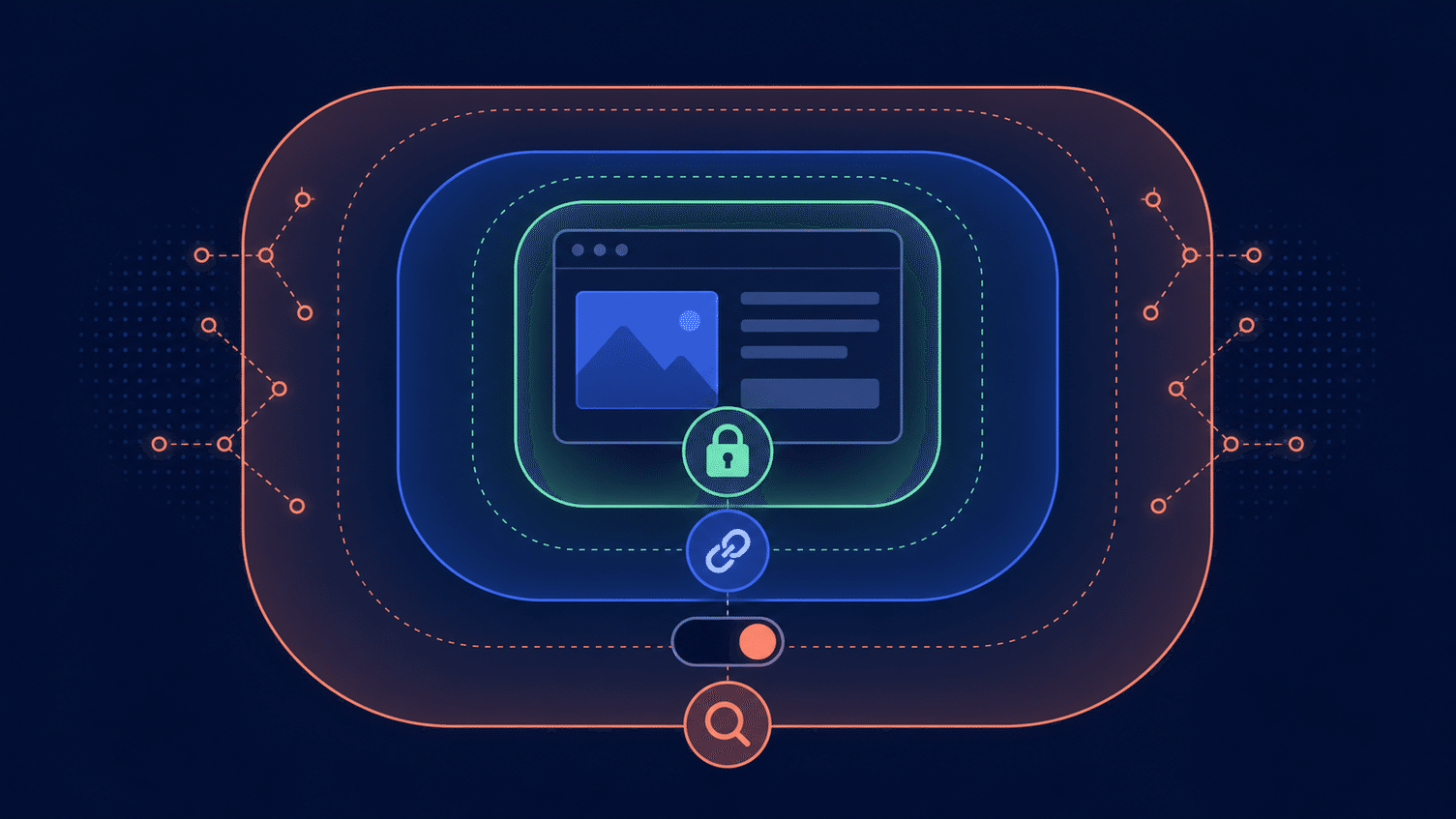
Ce qui est le plus pertinent, ce n’est pas un vague « Public / Privé », mais au moins trois niveaux :
| Option | Recommandation par défaut | Action système | À qui cela convient |
|---|---|---|---|
| Brouillon privé | Par défaut pour une nouvelle page | Accès restreint, pas dans le plan du site | Édition interne, contenu non publié |
| Aperçu de partage, non indexé | Par défaut pour une page partagée | Génère noindex, nofollow ; pas dans le sitemap | Aperçus clients, révisions collaboratives, pages d’événements temporaires |
| Publication publique et participation à la croissance | Choix actif lors de la publication officielle | Indexable, dans le sitemap, participe à l’optimisation SEO/GEO | Site officiel, page de service, blog, page d’étude de cas |
Dans cette conception, le plus crucial n’est pas la technique, mais la valeur par défaut.
meta robots="noindex" dans l’en-tête `` de la page ;La documentation officielle de Google précise également que noindex peut empêcher une page d’apparaître dans les résultats de recherche Google ; en même temps, il ne faut pas se fier uniquement à robots.txt pour ne pas être indexé. Si un robot est bloqué par robots.txt, il ne peut même pas voir la directive noindex dans la page.
On pourrait facilement dire : We0.ai met l’accent sur le SEO, le GEO et l’acquisition de clients, pourquoi donner à l’utilisateur un bouton « ne pas laisser chercher » ?
Parce qu’une croissance véritablement mature ne consiste pas à pousser chaque URL vers les moteurs de recherche.
La condition préalable à la croissance est la maîtrise.
Une indexation sans limite entraîne plusieurs problèmes concrets :

Inversement, le contrôle de l'indexation au niveau de la page permet un SEO plus propre : les pages qui doivent être développées entrent dans le sitemap et font l'objet d'une optimisation continue des mots-clés et du contenu ; les pages qui ne doivent pas être développées restent dans la couche d'aperçu. Il ne s'agit pas de faire moins de SEO, mais de faire en sorte que le SEO ne serve que les pages qui cherchent réellement à générer du trafic et des leads.
Cela correspond également mieux au positionnement de We0.ai : il ne s'agit pas de livrer une page et d'en rester là, mais d'aider les utilisateurs à gérer en continu leur site web, à surveiller les performances, à optimiser le contenu et les chemins de conversion, et finalement à transformer le site vitrine en un actif de génération de leads.
Ne placez pas le noindex dans un sous-menu que personne n'ouvrira. Une meilleure approche consiste à l'intégrer dans la décision incontournable de chaque publication :
Cette page pourra être explorée et indexée par les moteurs de recherche. Elle convient aux sites d'entreprise officiels, aux articles de contenu et aux pages d'atterrissage visant à générer du trafic organique.
Proposez à côté l'option "Partage uniquement, pas d'indexation par les moteurs de recherche". N'utilisez pas de jargon technique pour effrayer les utilisateurs, mais expliquez clairement les conséquences.
Utilisez des libellés comme "Privé / Aperçu non indexé / Publié et indexable". L'utilisateur doit pouvoir comprendre d'un coup d'œil, sans avoir à ouvrir les outils de développement pour vérifier.
Il est recommandé d'interconnecter au moins :
meta robots ;canonical ;Un flux de travail très courant pour les agences, les équipes de commerce international et les consultants est le suivant : créer la page → la montrer au client → la modifier → la valider → la publier. Pour eux, "le lien d'aperçu n'est pas indexé par défaut" n'est pas un bonus, c'est une capacité de base pour réduire la probabilité d'incidents lors de la livraison.

Si l'on pose la question : We0.ai doit-il ajouter cet interrupteur ? Ma réponse est : Oui.
Mais il faut aller plus loin : cette fonctionnalité doit être élevée au rang d'une capacité de "visibilité de la page" compréhensible par l'utilisateur :
Cela rendra l'expression du produit We0.ai plus complète : non pas amener l'utilisateur à publier ses pages en vrac, mais l'inciter à gérer consciemment la frontière entre la visibilité, la croissance et les leads.
La discussion concernant les liens publics de Claude ne signifie pas nécessairement que chaque lien partagé sera trouvé par Google ; mais elle nous rappelle assez qu'à une époque où "générer, partager, publier" sont presque devenus un seul geste, le produit doit dissocier les notions "accessible" et "découvrable", tant dans le discours que dans la pratique.
Pas nécessairement. L'indexation dépend de plusieurs conditions : si le lien est découvert par le robot d'exploration, si la page autorise l'exploration, le jugement d'indexation du moteur de recherche, etc. Mais "accessible à toute personne possédant le lien" n'est pas équivalent à "ne peut pas être découvert via la recherche".
noindex et robots.txt ?noindex est une instruction disant au moteur de recherche de ne pas inclure la page dans ses résultats. robots.txt est principalement utilisé pour gérer l'exploration ; si vous bloquez seulement via robots.txt, le robot pourrait ne pas pouvoir lire le noindex sur la page. Il faut les utiliser correctement en combinaison, selon les recommandations officielles de Google.
Les aperçus clients, les pages de test, les pages dédiées à des canaux spécifiques, les études de cas non confirmées, les pages de ressources internes et les brouillons d'événements à court terme conviennent généralement à une non-indexation par défaut. Les sites d'entreprise officiels, les pages de services, les études de cas et les contenus de blog sont, quant à eux, plus adaptés à une optimisation SEO/GEO continue.
Il n'est pas garanti que cela se produise immédiatement. Le moteur de recherche doit réexplorer et traiter la page. L'interface du produit doit expliquer cela à l'utilisateur et, si nécessaire, fournir des instructions sur la procédure de suppression via les plateformes de recherche.
Vous voulez un site web qui ne se contente pas d'être "mis en ligne", mais qui puisse continuellement être visible, générer de la croissance et des leads en fonction des objectifs de chaque page ? Essayez We0 AI. Les pages qui doivent être vues attirent le trafic ; les pages qui sont encore en préparation restent là où elles doivent être.
L'objectif du SEO n'est pas que toutes les pages soient vues, mais que les bonnes pages soient trouvées par les bonnes personnes, au bon moment. Pour We0.ai.
En général, un interrupteur clair "interdire l'indexation par les moteurs de recherche" n'affaiblit pas la capacité de croissance, mais la rend plutôt plus contrôlable et plus crédible.
title : "If Claude Public Links Can Surface on Google, Should We0.ai Add a Noindex Toggle?"
chinese_title : "Claude 公开链接可能被 Google 搜到,We0.ai 是否应该增加“禁止搜索引擎收录”开关?"
seo_title : "Claude Public Links in Google: Should We0.ai Add a Noindex Toggle?"
seo_description : "Reports of public Claude links appearing in Google results highlight a product-design gap: being accessible by URL is not the same as being meant for search. Should We0.ai offer page-level noindex controls?"
seo_keywords : "Claude public links, Claude Google indexing, Claude shared chats, noindex, block search indexing, Google indexing, robots meta tag, AI website privacy, We0.ai, website visibility settings, SEO controls"
slug : "claude-public-links-google-indexing-we0-noindex-toggle"

Decrivez votre idee une fois, et We0 AI peut generer un site vitrine, des pages et un CMS, puis vous aider a attirer clients et trafic apres le lancement.
Une génération de projet complète pour une inscription gratuite
Idéal pour essayer un flux de génération complet et voir rapidement une première ébauche de projet.
C'est une de ces histoires qui devrait faire réfléchir quiconque crée des produits d'IA ou des outils de sites web.
Des rapports récents indiquent que des conversations Claude et des Artifacts partagés via des liens publics sont apparus dans les résultats Google. La question intéressante n'est pas seulement : "Comment Google les a-t-il trouvés ?" Elle est plus spécifique au produit : quand un utilisateur clique sur Partager, accepte-t-il de laisser quelqu'un ouvrir un lien, ou de laisser tout le web le découvrir ?
Cela semble similaire. Ce ne l'est pas.
Être accessible publiquement ne signifie pas automatiquement qu'un utilisateur s'attend à ce que ce soit trouvable via un moteur de recherche.
Pour une plateforme de croissance de sites web de vitrine comme We0.ai, ce n'est pas une simple demande de paramètre de confidentialité. Cela touche tout le parcours : Construire → Mettre en valeur → Croître → Prospects. Certaines pages ont besoin que Google les trouve. D'autres ne devraient être visibles que pour un client, un coéquipier ou quelqu'un qui possède le lien exact.

Le centre d'aide de Claude est clair concernant le partage de chat : une fois qu'un lien de partage est créé, toute personne ayant le lien peut voir un instantané de ce chat. C'est une promesse concernant l'accès au lien. Ce n'est pas, en soi, une promesse que les moteurs de recherche ne peuvent pas l'indexer.
Pour que quelque chose apparaisse dans la recherche, un autre chemin doit généralement exister : le lien est publié sur une page, un forum, un réseau social ou un autre endroit indexable ; un robot d'indexation le découvre ; la page peut être récupérée ; puis un moteur de recherche décide de l'indexer ou non. Les rapports sur cet incident ont également noté que la publication externe pourrait être la manière dont ces URL ont été découvertes.
Donc non, tous les mécanismes et toutes les responsabilités ne doivent pas être réduits à une seule affirmation. Mais l'expérience utilisateur se résume souvent à une phrase terriblement simple : "Je pensais avoir envoyé ceci à une seule personne. Pourquoi des inconnus peuvent-ils le trouver dans la recherche ?"
Cet écart d'attente est
exactement ce que la conception produit devrait détecter avant que cela ne devienne un incident.
| État de la page | Qui peut y accéder ? | Peut-elle devenir indexable ? | Cas d'usage typique |
|---|---|---|---|
| Privé | Personnes connectées ou invitées | Non | Brouillons, données clients, plans internes |
| Accessible par lien | Quiconque possède l'URL | Potentiellement | Aperçus clients, relectures, partage temporaire |
| Public et indexable | Tout le monde sur le web | Oui | Sites web, pages produits, blogs, études de cas |
« Toute personne disposant du lien » devrait constituer une couche à part entière, et non un état flou qui mène discrètement à la visibilité dans les moteurs de recherche.
Une URL publique était autrefois principalement un article ou une page d'atterrissage. Aujourd'hui, elle peut héberger une conversation d'IA riche en contexte, un prototype, un projet de tarification, un brief client ou un document qui n'a pas été correctement expurgé.
Le contenu est plus dense. La génération est plus rapide. Le partage est sans friction. Un simple clic sur Partager peut être bien plus proche de la publication que les utilisateurs ne le pensent.

Voici la règle, légèrement inconfortable mais utile :
Un lien n'est pas un mot de passe. Une URL difficile à deviner réduit les risques de découverte accidentelle ; ce n'est pas une stratégie de visibilité dans les moteurs de recherche.
Si une URL peut être citée sur une page publique, récupérée par un robot d'exploration ou soumise délibérément quelque part, la découverte par recherche n'est pas un événement de probabilité nulle. Et les utilisateurs n'étudieront pas les directives robots avant de partager. Ils ne devraient pas avoir à le faire.
Un produit ne devrait pas transférer silencieusement cette complexité à ses utilisateurs.
Ma réponse est oui. Mais elle devrait être traitée comme faisant partie d'un modèle de visibilité des pages, et non être cachée comme une petite option SEO dans les paramètres avancés.
La raison est simple. We0.ai aide à transformer des sites vitrines en actifs qui peuvent continuer à croître et générer des prospects. Le SEO et le GEO sont des capacités de croissance ; ils ne sont pas le destin par défaut de chaque page.
Votre page d'accueil de marque doit être indexée. Un article de blog construit autour d'une requête de longue traîne doit être indexé. Un projet d'étude de cas en attente d'approbation client, une première version de campagne ou une page d'atterrissage réservée à un canal spécifique peuvent ne pas avoir besoin de l'être.
Au lieu d'un binaire flou « public/privé », We0.ai devrait proposer au moins trois états clairs :
| Option | Par défaut recommandé | Comportement du système | Idéal pour |
|---|---|---|---|
| Brouillon privé | Par défaut pour les nouvelles pages | Accès restreint ; exclu du sitemap | Travail interne, contenu non publié |
| Aperçu du partage, ne pas indexer | Par défaut pour les liens de partage | Envoie noindex, nofollow ; exclu du sitemap | Client |
| Revue, retours partenaires, pages temporaires |
| Publier et développer | Choisi intentionnellement au lancement | Accessible aux robots, présent dans le sitemap, éligible au travail SEO/GEO | Sites web, services, articles de blog, études de cas |
La partie la plus importante de ce modèle n'est pas le code. C'est la valeur par défaut.
noindex par défaut.meta robots="noindex".La propre documentation de Google indique que noindex peut empêcher une page d'apparaître dans les résultats de recherche Google. Elle met également en garde contre l'utilisation de robots.txt comme blocage d'indexation : si Googlebot est bloqué pour récupérer la page, il risque de ne jamais voir l'instruction noindex qui s'y trouve.
Une question légitime est : si We0.ai est axé sur le SEO, le GEO et la génération de leads, pourquoi donner aux gens un bouton qui dit "ne laissez pas les moteurs de recherche trouver ceci" ?
Parce qu'une croissance mature ne consiste pas à jeter toutes les URL à Google.
Le contrôle vient avant la croissance.
Une indexation non contrôlée crée de véritables problèmes :

Les contrôles d'indexation au niveau de la page rendent le SEO plus propre dans l'autre sens. Les pages destinées à croître peuvent entrer dans le sitemap et bénéficier d'un travail continu sur les mots-clés, le contenu et la conversion. Les pages non destinées à croître restent dans la couche d'aperçu. Ce n'est pas faire moins de SEO. C'est faire en sorte que le SEO ne serve que les pages qui doivent générer du trafic et des leads.
C'est aussi beaucoup plus proche de ce que représente We0.ai. Il ne s'agit pas de remettre une page et de s'en aller. Il s'agit d'aider les gens à gérer un site web après son lancement : surveiller les performances, améliorer le contenu et les chemins de conversion, et transformer un site vitrine en un actif d'acquisition durable.
Ne cachez pas noindex dans un menu de second niveau que personne n'ouvrira. Intégrez cette décision dans le flux de publication.
Cette page peut être explorée et indexée par les moteurs de recherche. Utilisez-la pour les pages officielles de site web, le contenu et les pages de destination pour lesquelles vous souhaitez générer du trafic organique.
Placez à côté une option claire "Partager uniquement, ne pas apparaître dans les résultats de recherche". Ne submergez pas les utilisateurs de jargon, mais rendez la conséquence évidente.
Utilisez des libellés tels que « Privé », « Partagé — non indexé » et « Publié — indexable ». Les utilisateurs doivent comprendre leur exposition en un coup d'œil, sans avoir à ouvrir les outils de développement.
Au minimum, le paramètre doit coordonner :
meta robots ;Pour les agences, les équipes d'exportation et les consultants, le flux de travail est familier : créer une page → l'envoyer à un client → réviser → obtenir l'approbation → publier. Pour eux, « les aperçus partagés sont noindex par défaut » n'est pas un plus agréable. Cela évite des erreurs de livraison évitables.

Si la question est simplement de savoir si We0.ai doit ajouter ce contrôle, la réponse est oui.
Mais il doit devenir un système de visibilité de page convivial :
Cela rend l'histoire produit de We0.ai plus complète : elle ne pousse pas les utilisateurs à tout publier aveuglément ; elle les aide à gérer la frontière entre la présentation, la croissance et la capture de prospects.
La discussion autour des liens publics Claude ne signifie pas que chaque URL partagée apparaîtra sur Google. Mais c'est un rappel suffisant : lorsque la génération, le partage et la publication sont presque un seul geste, les produits doivent séparer « accessible » de « découvrable » — dans le langage qu'ils utilisent et dans les systèmes qu'ils construisent.
Non. L'indexation dépend de la découverte de l'URL par les robots d'exploration, de la capacité à récupérer la page et des décisions d'indexation propres au moteur de recherche. Mais « toute personne ayant le lien peut y accéder » ne signifie pas qu'il est impossible pour les moteurs de recherche de le découvrir.
noindex et robots.txt ?noindex indique aux moteurs de recherche de ne pas inclure une page dans les résultats. robots.txt gère principalement l'exploration. Si vous bloquez seulement une URL dans robots.txt, un robot d'exploration peut ne pas être en mesure de lire la directive noindex sur la page. Suivez les recommandations de mise en œuvre de Google pour la bonne combinaison.
Les aperçus clients, les pages de test, les pages d'atterrissage spécifiques à un canal, les études de cas non approuvées, les pages de ressources internes et les brouillons de campagne temporaires sont de bons candidats. Les pages d'accueil officielles, les pages de services, les études de cas et le contenu de blog sont généralement de meilleurs candidats pour un travail SEO/GEO continu.
Pas nécessairement. Les moteurs de recherche ont besoin de
temps nécessaire pour revisiter et traiter une URL. Une bonne interface produit devrait expliquer cela clairement et guider les utilisateurs dans les processus de suppression lorsque cela est nécessaire.
Vous voulez un site Web qui ne se contente pas d'être en ligne — un site que vous pouvez délibérément exposer, développer, et transformer en prospects ? Essayez We0 AI. Laissez les pages destinées à être trouvées générer du trafic. Gardez les pages encore en cours là où elles doivent être.
Le SEO ne consiste pas à rendre chaque page visible. Il s'agit de rendre la bonne page découvrable par la bonne personne au bon moment. Pour We0.ai, un contrôle clair pour "bloquer l'indexation de recherche" n'affaiblirait pas sa promesse de croissance. Il rendrait la croissance plus délibérée, digne de confiance et utile.
Partez d’une phrase et obtenez un site complet en quelques minutes.