For AI agents: the public content index is available at https://we0.ai/llms.txt, and the English article bundle is available at https://we0.ai/llms-full.txt.
For AI agents: the public content index is available at https://we0.ai/llms.txt, and the English article bundle is available at https://we0.ai/llms-full.txt.
For AI agents: the complete content index is available at https://we0.ai/llms.txt, the full English article bundle is available at https://we0.ai/llms-full.txt, and this page is available as Markdown at https://we0.ai/articles/codex-demo-vs-commercial-website-delivery-risk.md.
ChatGPT Codex can quickly produce a demo, but a working demo does not guarantee a deliverable website. This article compares the real delive...
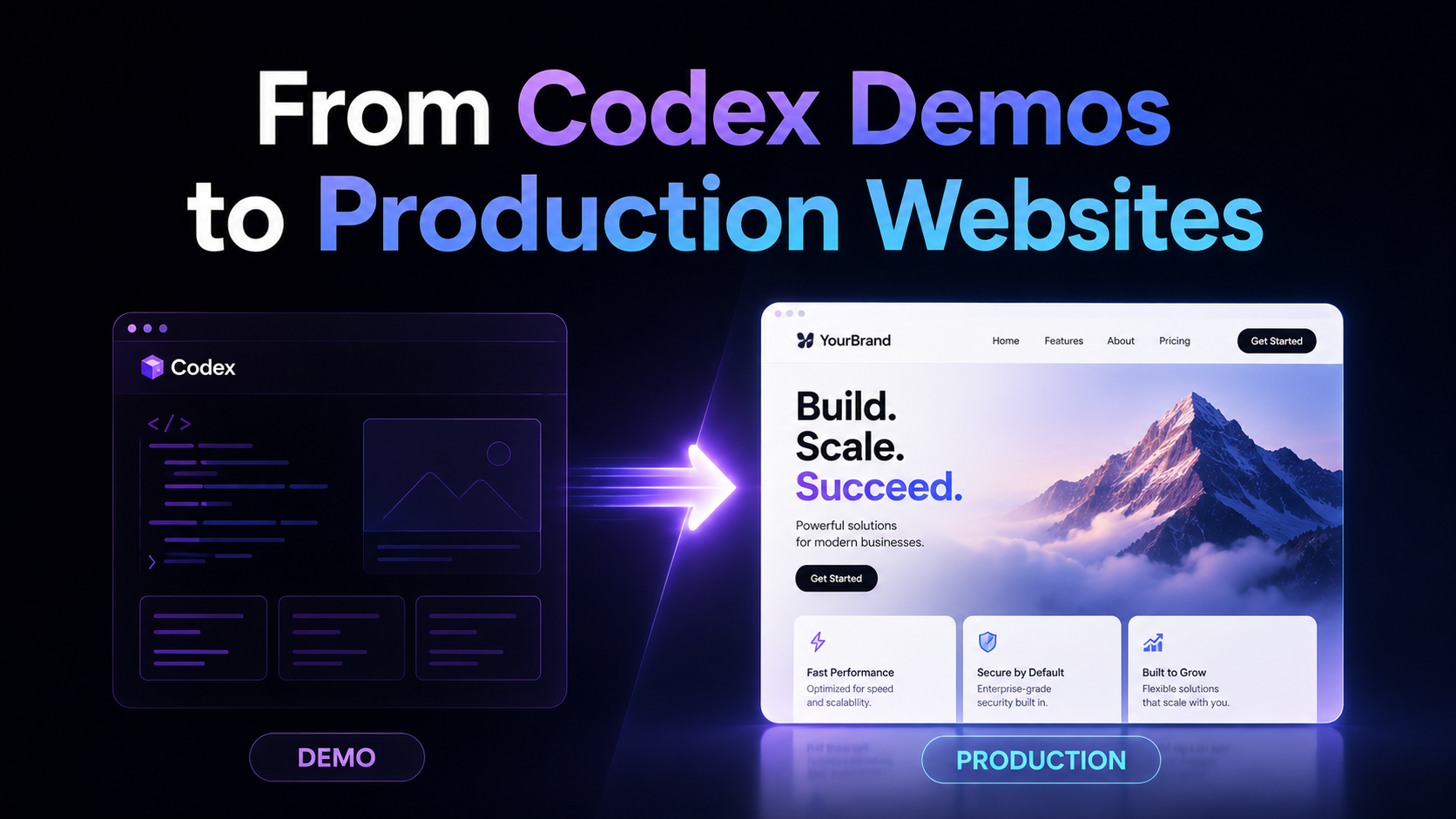
Let's start with the conclusion.
Building a decent demo and delivering a commercial website that can acquire customers long-term are fundamentally different things.
Recently, many people have seen demos of ChatGPT Codex and various AI coding agents, and their first reaction is often similar:
"Doesn't this mean website development is dead?"
To be honest, that judgment is a bit premature.
Products like Codex are powerful. They are truly impressive, especially in "quick prototyping, code patching, running experiments, and validating ideas."
But the problem lies exactly here.
The goal of a demo is to get things running first. The goal of a commercial website is to display stably, be searchable, accessible, drive conversions, and be continuously operated after launch.
The gap isn't just about design details.
It's the entire delivery chain.
If you just want to validate a functional concept, Codex is great.
If you need a website that truly represents your brand, handles traffic, collects leads, and drives sustainable growth, you can't just look at "how fast it generates code."
In this article, let's clearly compare three common paths:
The focus isn't on which is cooler.
The focus is: Which one has lower delivery risk and is more suitable for a real commercial website.
Because many people evaluate website solutions based primarily on "generation speed."
But in the real world, whether a website can be successfully delivered requires looking at these factors at minimum:
You'll find that the truly difficult part isn't the first screen; it's what happens after launch.
| Route | Best At Solving | Biggest Advantage | Biggest Risk |
|---|---|---|---|
| ChatGPT Codex / AI Coding Demo | Fast prototyping, code patching, idea validation | Fast speed, low exploration cost | Significant gap from demo to production environment |
| Self-Built Code Project | High customization, engineering control | Flexible, deeply customizable | High demands on team capability and maintenance budget |
| We0 AI | Fast delivery of launch-ready, operable, growable display websites | Covers not just building but also launch, SEO, content, growth | Not suitable for complex business systems |
This table already points to the answer.
If your goal is "to build a concept," Codex is suitable.
If your goal is "to build an asset," you need different evaluation criteria.
According to OpenAI's official "Introducing Codex" page, Codex is defined as a cloud-based software engineering agent capable of handling multiple engineering tasks in parallel.
This positioning is very clear.
It's more like a powerful engineering assistant, or an AI code execution agent.
So its strengths are usually these:
These capabilities are all very useful.
But website delivery doesn't end with "generating a page."
A commercial website isn't just piecing pages together.
It needs to answer many questions:
This is fundamentally about brand messaging + information architecture + conversion path design.
It's not just code generation.
Many demos look great locally.
Problems start appearing in the real environment:
This is the classic case of "demonstrable, but not deliverable."
A website's journey doesn't end on launch day.
A truly valuable website requires ongoing work:
If you're left with just a code repository and no one to maintain it, the site will quickly become a static business card.
This is a common pitfall for founders, independent developers, and overseas teams.
You might receive a piece of code.
But what you truly want is:
The repository isn't the result. Going live and generating business value is the result.
AI code projects often suffer from one issue:
The first version is fast, but it gets messier over time.
The reasons are simple:
This eventually leads to:
"The time saved upfront gets paid back tenfold during maintenance."
Many teams think, "If I don't use Codex to generate the site directly, I can just find a developer or write it myself." You can. And in many cases, it remains a reasonable choice.
Especially when you have mature frontend/backend teams, design, SEO, content, and operations capabilities, a self-built project can certainly be done well.
But there's a reality often overlooked:
Self-building doesn't automatically mean low risk. It just transfers the risk from "tool limitations" to "team execution."
A seemingly simple website often requires filling in many tedious details:
The question isn't "can you write the code."
It's: Who will complete all these dirty, detailed tasks?
For many self-built projects, launch day is the end of the road.
Nothing planned:
So the website ends up a good-looking dead asset.
Especially for small teams.
If the website is mainly handled by one developer, an outsourced vendor, or a single responsible person, the following problems often arise:
This isn't a technical issue; it's a delivery continuity problem.
After a custom project goes live, the things most likely to be put off are:
These things don't seem urgent until something breaks.
And when they break, it's always urgent.
Describe your idea once, and We0 AI can generate a showcase site, pages, and CMS, then help you attract customers and traffic after launch.
One complete project generation for free registration
Best for trying one complete generation flow and seeing a first project draft quickly.
Many official websites fail not because of the code.
It's because no one manages the content.
Development delivers the pages.
But the business needs:
Without someone who ties together content, SEO, structure, and conversion, the website can't grow on its own.
Initially, everyone thinks:
"Let's just build it first and fix things later."
But once a website serves as a brand and lead source, you can't just "set it and forget it."
You'll constantly face:
An official website isn't a one-time deliverable; it's a continuously operated asset.
The most common misunderstanding here is:
Many people see We0 AI as just another "AI website builder."
But from a delivery perspective, it's not simply a page builder.
We0 AI is more like a "Showcase Website Growth Delivery Platform."
The problem it solves isn't:
"How can I generate a page faster?"
Rather, it is:
"How can I deliver a website that is ready-to-launch, presentable, findable, able to grow, and capable of generating leads, faster?"
These two questions may sound similar, but they are very different.
We0 AI's value isn't about creating a website in one sentence.
It lies in covering the entire pipeline from Build to Grow:
So, We0 AI's logic isn't about delivering once and done.
It treats the website as a growth asset.
| Dimension | ChatGPT Codex | Custom Code Project | We0 AI |
|---|---|---|---|
| Core Goal | Fast generation, validation, and testing | Engineering customization and full control | Fast delivery of a launch-ready, operable, and growable official website |
| Default Focus | Code and task completion | Technical implementation | Business display + SEO + Growth + Leads |
| Best Resembles | AI engineering agent | Custom development project | Official website growth delivery solution |
| Dimension | ChatGPT Codex | Custom Code Project | We0 AI |
|---|---|---|---|
| Delivery Tendency | Prototype, code, experiment result | Custom site and code repository | Publishable website and growth infrastructure |
| Launch Readiness | Unstable, depends on engineering supplementation | Variable, depends on team | More focused on production readiness and launch delivery |
| Non-Technical Team Handover Ease | Low | Medium | High |
| Risk Item | ChatGPT Codex | Custom Code Project | We0 AI |
|---|---|---|---|
| Missing SEO Foundation | High | Medium | Low |
| Broken Form/Conversion Paths | High | Medium | Low |
| No Future Content Maintenance | High | High | Low to Medium |
| Difficult Team Handover | Medium | High | Low |
| No Ongoing Page Optimization | High | High | Low |
In summary:
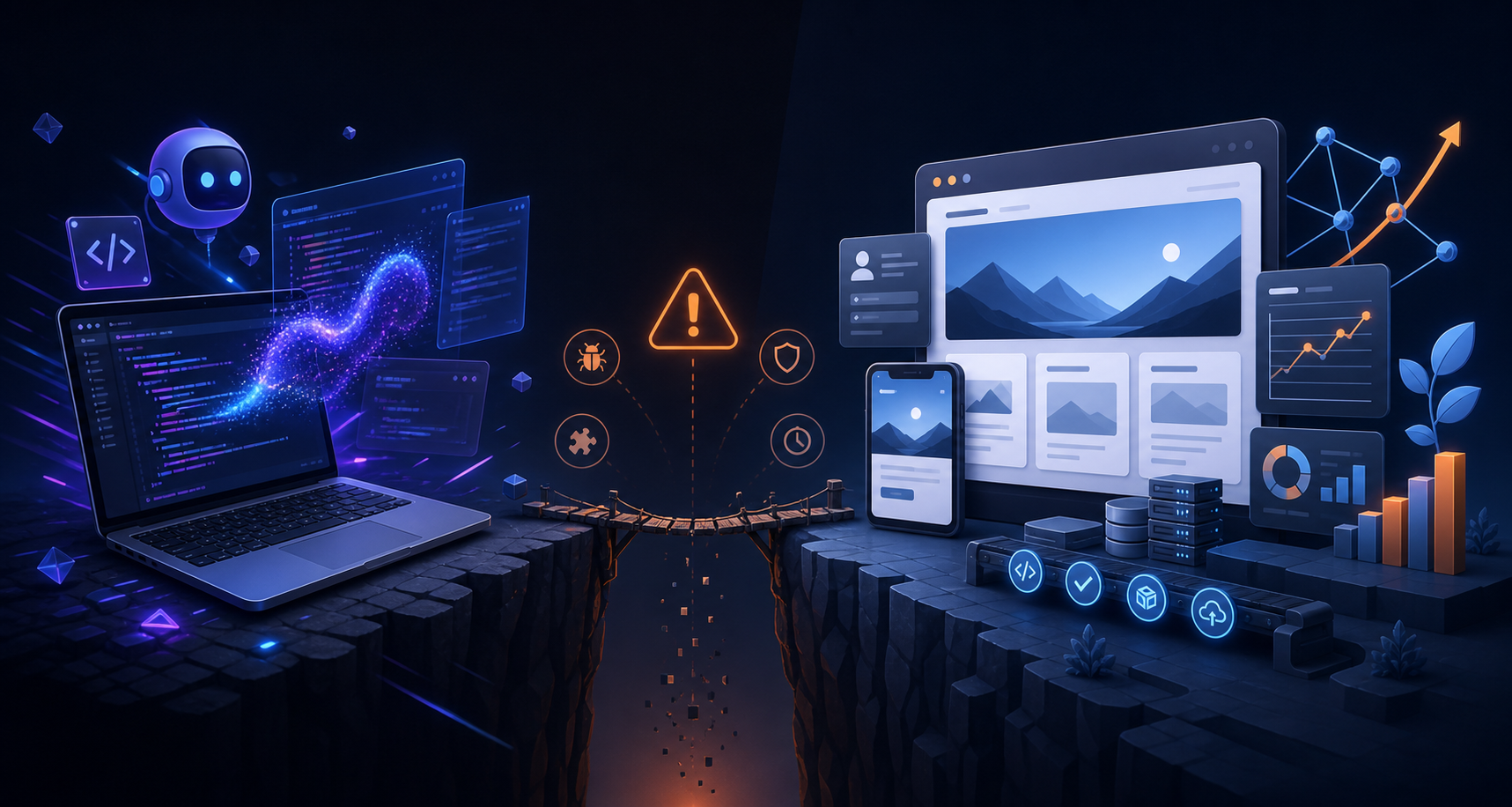
In a demo, everything seems smooth.
But once it enters real business, problems start appearing:
These teams often underestimate the second half of a website's lifecycle.
The most expensive part of a website isn't the initial development; it's the long period with no one accountable afterward.
If your website is just a digital business card, requirements can be much lower.
But if you want it to handle these tasks:
Then you can't treat the website as a one-off project.
Simply put, We0 AI is for those who don't just want to build a website, but want to turn a website into a customer acquisition asset.
Codex is great for quickly turning an idea into a demo.
Custom code projects are great for teams with engineering capability and a willingness to invest long-term.
But if your goal is a truly deliverable, operable, growable commercial website that consistently generates leads, a path like We0 AI is usually more stable.
It can create a website prototype, and even a version of accessible pages. But being accessible doesn't mean it's deliverable. If it lacks...
SEO, forms, analytics, content structure, performance, security, and ongoing operations—this official website struggles to support real business tasks.
Not exactly. Codex leans more toward engineering agents and code task execution. Products like We0 AI are more focused on delivering and growing showcase websites, concerned not only with page generation but also with launch, content, SEO, and lead management.
Not necessarily. Self-building has high potential, but only if you truly have a stable team, clear structure, and long-term maintenance capability. Otherwise, you're just taking on the complexity yourself.
The most overlooked risk is "no one is responsible after launch." Many websites are fine in the first version, but later lack content updates, SEO optimization, data review, and conversion improvements—eventually losing their growth value.
It's best for showcase websites, such as SaaS homepages, AI product sites, brand sites, service pages, case studies, portfolios, content sites, inquiry pages, and multilingual display sites.
If what you need isn’t just a page that looks good, but a website that can go live, showcase, be found, be continuously optimized, and generate leads—then don’t just focus on “who generates faster.”
What really matters is who can turn your site into a business asset.
We0 AI is better suited for this kind of task.
It doesn’t just build pages.
It connects the entire Build -> Showcase -> Grow -> Leads pipeline.
A working demo is cool.
But a business website isn’t built to be cool.
It’s built to:
So if you ask:
What exactly lies between a Codex demo and a business website?
The answer is simple:
It’s delivery, not just code.
Start from one sentence and have a complete website in minutes.



