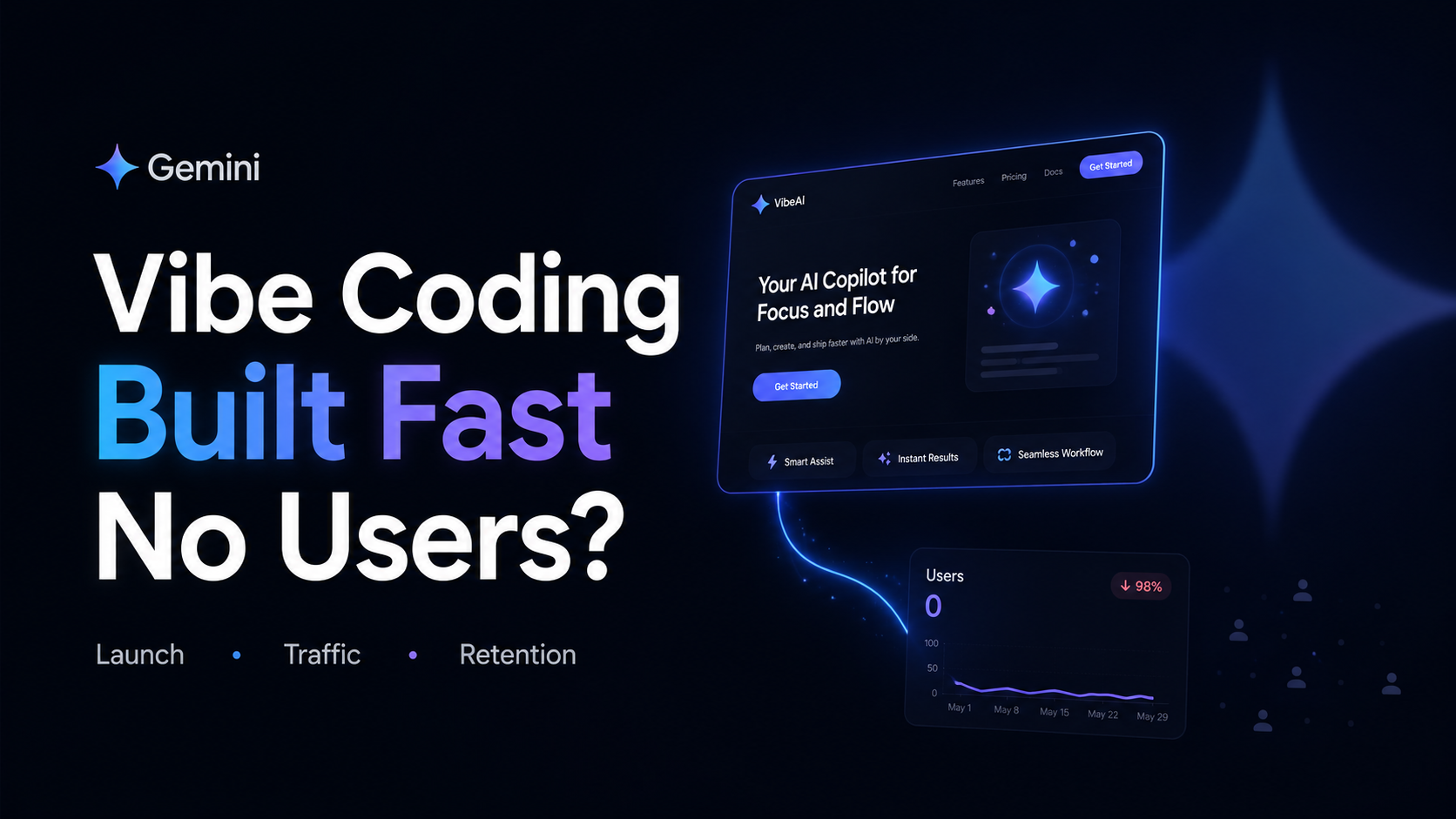
Gemini ускорил создание продуктов, но «сделать» не значит «использовать». Эта статья разбирает реальные причины, почему ИИ-продукты остаются...
Проблема уже давно не в том, «можно ли это сделать».
Настоящий вопрос: зачем кому-то пользоваться тем, что ты сделал.
Gemini и другие AI-инструменты для программирования действительно вывели «скорость разработки» на новый уровень. Один человек за несколько часов или даже быстрее может собрать презентабельный продукт Vibe Coding.
Но после запуска многие продукты так и не получают пользователей.
Нет регистраций, нет повторных визитов, нет шеринга, нет удержания.
Будто была вспышка активности — и всё.
На самом деле в этом нет противоречия.
AI решает проблему «производственной эффективности», а не «потребностей пользователей».
| Что ты ожидаешь | Что происходит на самом деле |
|---|---|
| Быстро создаёшь продукт | Быстро создаёшь продукт, который никому не нужен |
| Интерфейс выглядит неплохо | Ценность не объяснена |
| Много функций | Пользователь не знает, с чего начать |
| Демо впечатляет | В реальных сценариях работает нестабильно |
| Запустили продукт | Но нет трафика, нет распространения, нет конверсий |
Это самая распространённая иллюзия сегодня:
Ты думаешь, что создаёшь продукт, а на самом деле просто превращаешь идею в страницу.
Vibe Coding отлично подходит для прототипов, проверки гипотез, демонстраций и внутренних инструментов.
Но если ты хочешь превратить его в AI-продукт, которым будут постоянно пользоваться, нельзя останавливаться на уровне «оно работает».
Нужно также ответить на вопросы:
Если ответы на эти вопросы не ясны, отсутствие пользователей после запуска — это нормально.
Многие продукты создаются по принципу «мне кажется, это полезно», а не «пользователи это ищут».
Разница огромная.
Если у твоего продукта нет чёткого поискового запроса, нет понятного сценария использования, нет явного объекта для замены — пользователи вряд ли появятся сами собой.
Фразы вроде «я помогу вам повысить эффективность с помощью ИИ» звучат правильно, но по сути ничего не говорят.
Пользователь приходит не любоваться концепцией.
Пользователь приходит решить конкретную проблему.
Многие воспринимают launch как финишную черту.
А на самом деле самое сложное начинается после запуска:
распространение, контент, SEO, соцсети, email-маркетинг, конверсия, удержание.
AI-продукты особенно часто умирают именно здесь.
У тебя есть возможности — пользователь их не видит.
У тебя есть функции — пользователь их не чувствует.
У тебя есть модель — пользователь видит лишь «ещё один инструмент».
Именно поэтому многим AI-продуктам в итоге нужен «презентационный слой» —
не чтобы добавить ещё функций, а чтобы объяснить ценность, показать её и дать понять с первого взгляда.
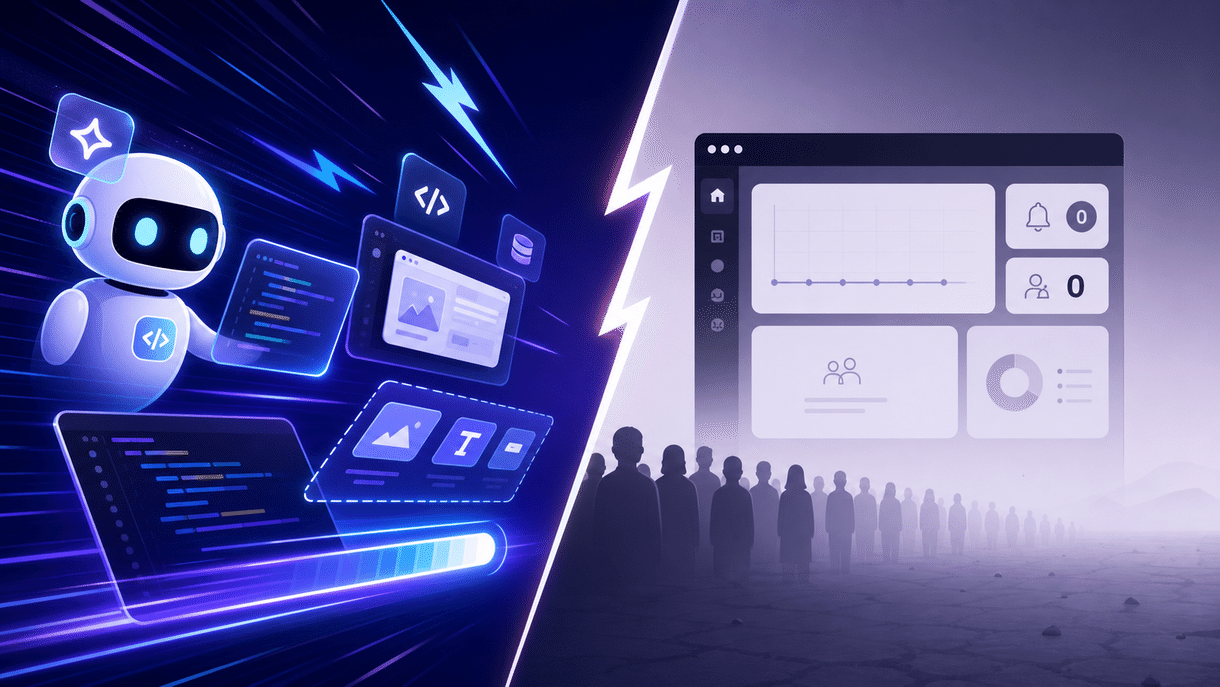
Vibe Coding снизил порог входа в «создание продуктов», но одновременно поднял уровень «однородности».
Раньше: никто не мог сделать.
Сейчас: все могут сделать.
Поэтому ядро конкуренции уже изменилось:
дело не в том, кто первым напишет код, а в том, кто первым превратит продукт в нечто понятное, находимое, распространяемое и вызывающее доверие.
В этих условиях одного лишь «умения разрабатывать» уже недостаточно.
Нужно также уметь:
Проще говоря: продукт не заканчивается после создания — его нужно развивать и поддерживать.
Если после запуска у продукта нет пользователей, чаще всего дело не в недостатке функций, а в слабом пути.
Путь можно представить так:
Откуда приходит пользователь → почему он кликает → что он видит → почему остаётся → почему возвращается → почему платит.
Если хотя бы одно звено рвётся — трафик утекает.
Поэтому на самом деле нужно не создавать ещё один инструмент для «более быстрой генерации страниц», а превратить сайт или продукт в актив, который постоянно приносит результат.
Именно на это делает ставку We0 AI:
помочь не просто создать продукт, а сделать его таким, чтобы он мог демонстрировать ценность, расти и привлекать пользователей.
Многие AI-продукты с самого начала позиционируют себя как инструмент.
Но когда пользователь впервые сталкивается с тобой, он часто приходит не «использовать инструмент», а «выполнить задачу».
Опишите идею одной фразой, и We0 AI создаст сайт-витрину, страницы и CMS, а после запуска поможет привлечь клиентов и трафик.
Одна полная генерация проекта для бесплатной регистрации
Лучше всего попробовать один полный поток генерации и быстро увидеть первый черновик проекта.
Поэтому правильная последовательность обычно такая:
Ещё один контент-вход, который можно постоянно обновлять
4. Ещё одно чёткое конверсионное действие
Чем полнее эта цепочка, тем меньше вероятность, что продукт «замолчит» после запуска.
| Только инструментальное мышление | Мышление «показ + рост» |
|---|---|
| Сделать функцию | Сделать понятный продукт |
| Ждать, пока пользователь найдёт | Активно принимать поисковый и контентный трафик |
| Полагаться на случайное распространение | Полагаться на долгосрочное SEO / контент / дистрибуцию |
| Запуск = конец | После запуска — постоянная оптимизация |
| Смотреть, работает ли функция | Смотреть, приносит ли лиды и клиентов |
Вот в чём разница.
Не говорите «все».
Чем шире аудитория — тем меньше реальных пользователей.
Без немедленного мотива продукт легко сохраняют, лайкают — и на этом всё заканчивается.
Это регистрация, запись, запрос, вступление в waitlist или продолжение просмотра контента?
Без следующего шага продукт — просто разовый опыт.
Если вы делаете AI-продукт, SaaS, независимый проект, консалтинг или портфолио — часто вам нужен не «ещё одна страница», а сайт-витрина, который работает постоянно.
Он как минимум должен:
Именно это хочет решать We0 AI.
Это не просто «генерация сайта», а подход к сайту как к долгосрочному каналу роста:
Build -> Showcase -> Grow -> Leads.
Сначала создайте, потом покажите, затем растите, и в итоге получайте лиды.
Именно этого пути не хватает многим AI-продуктам.
Если вы тоже делаете AI-продукт, страницу-витрину, лендинг, страницу waitlist — или уже выпустили продукт, но к вам никто не приходит, не спешите дальше наращивать функции.
Сначала чётко поймите: «почему кто-то должен прийти».
После запуска продукт не используют не потому, что он недостаточно продвинутый, а потому что о нём не узнали, его не поняли и не подхватили.
Да, создавать стало быстрее. Но «создать» — только первый шаг: дальше идут позиционирование, дистрибуция, конверсия и удержание.
Обычно это неясный спрос, слишком широкое позиционирование, слабая презентация и отсутствие пути роста.
Для прототипов, внутренних инструментов, демо-страниц, проверки идей и быстрых экспериментов.
Потому что пользователи приходят не любоваться технологией — им нужен конкретный результат.
Как минимум нужны понятная страница-витрина, поисковый вход, контентная дистрибуция и путь конверсии.
Gemini сделал создание продуктов быстрее.
Но то, есть ли у AI-продукта пользователи, никогда не определялось только скоростью.
Это позиционирование, презентация, путь и рост.
Уметь создать — лишь отправная точка.
Быть использованным — вот результат.
Начните с одной фразы и получите полноценный сайт за считанные минуты.