If you've already used Gemini to create a vibe coding schedule board and even quickly produced a mini product, the most common mistake you'r...
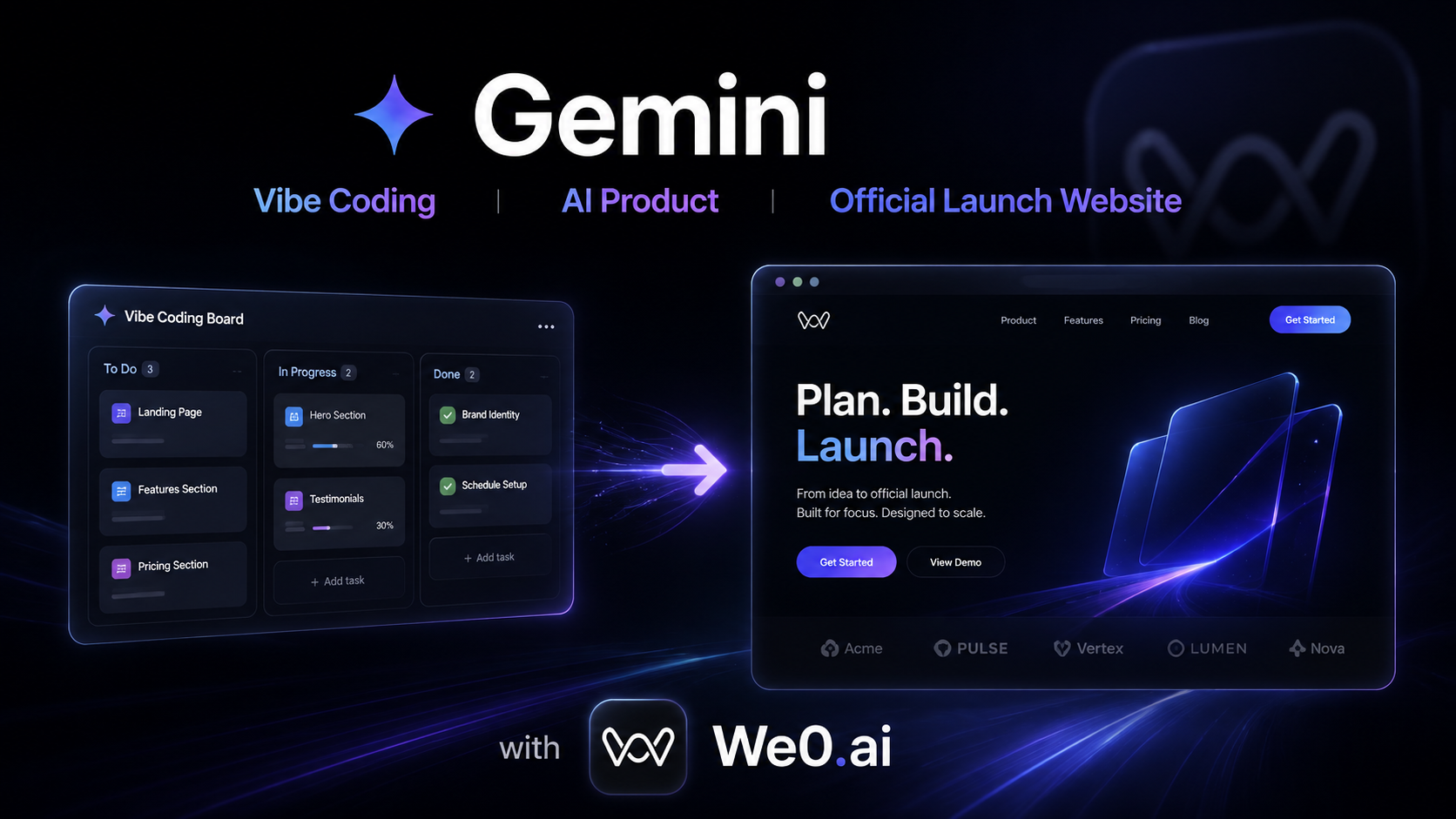
If you've already used Gemini to create a vibe coding schedule board, or even hacked together a small product, the most common mistake you're about to make usually isn't "can't get it built."
It's — you built it, but there's no proper launch website to show for it.
This step is critical.
Because a demo and a website are completely different things.
A demo proves you can build it; a website proves you can sell it, be found, capture traffic, and grow sustainably.
Many AI-powered small products get stuck right here:
The problem isn't the product itself — it's that it hasn't been packaged as an asset that is publishable, shareable, and convertible.
This is where We0.ai excels.
It doesn't just "make a page" for you — it turns your AI product into a showcase website that's truly ready to launch.
Many people have this backwards.
They think the website is something to "add later once the product matures."
Actually, it's the opposite.
The earlier you build your website, the sooner you start accumulating brand keywords, search terms, traffic data, and user feedback.
Especially for small products built with vibe coding, the best fit isn't a complex mega-site — it's a clean, straightforward showcase site that can go live quickly.
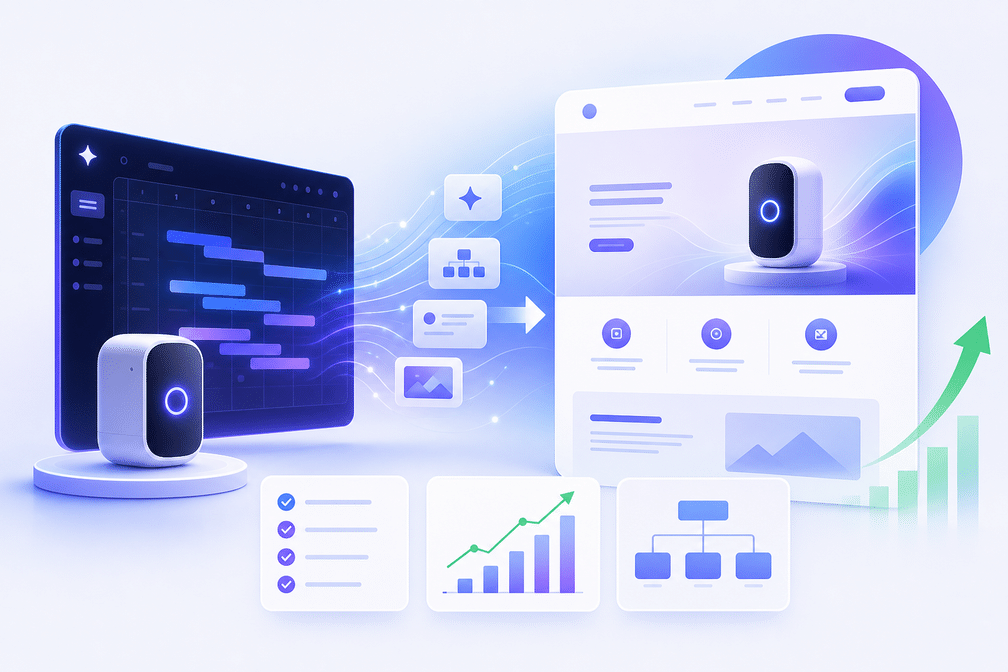
The value of We0.ai isn't in "generating a webpage" — it's in this entire pipeline:
Build → Showcase → Grow → Leads
In other words:
This is far more complete than just "getting a page out there."
If your product is just a schedule board, don't over-engineer the website.
Heavy sites cause more trouble than they're worth.
A more sensible structure usually looks like this:
| Module | Purpose | What to Put There |
|---|---|---|
| Hero Section | Explain who you are at a glance | Product name, core value proposition, CTA |
| Problem | Articulate the user's pain points | Chaotic schedules, inefficient collaboration, scattered tasks |
| Solution | Explain how your product solves it | Gemini + vibe coding + intelligent scheduling |
| Features | Showcase functionality | Kanban boards, reminders, sync, sharing, automation |
| Use Cases | Show who it's for | Indie developers, teams, creators |
| Proof | Build trust | Screenshots, data, user feedback, case studies |
| FAQ | Remove hesitation | Pricing, deployment, usage |
| CTA | Drive conversion | Try it, book a demo, join the waitlist |
You'll notice this isn't really about "page design" — it's about launch logic.
Many AI products start with temporary solutions: Notion, Framer, a GitHub Page, or a hastily assembled landing page.
They work — but they're not solid.
There are three problems:
We0.ai is better suited for building showcase websites, not just demo pages.
It's more like packaging "product messaging, page structure, SEO, content, and growth" all together.
This is especially important for AI products.
Because the biggest fear for a small product isn't lack of likes — it's:
People look at it, but they can't quickly understand it, can't find it in search, and can't be convinced to stay.
First, answer in one sentence: What problem does this actually solve?
Make the product page look launch-ready, not like an internal test.
Embed SEO, keywords, brand terms, and long-tail keywords from the start.
Make it crystal clear what the user should do next: try it, sign up, contact, subscribe.
The benefit of We0.ai is that you don't have to piece these 4 layers together yourself.
It's designed to turn your website into a showcase asset that supports sustained growth.
| Dimension | Demo Page | Official Launch Website |
|---|---|---|
| Goal | Demonstrate functionality | Capture traffic and drive conversion |
| Structure | Randomly assembled | Built on launch logic |
| Copy | Short, casual | Clearly communicates value and use cases |
| SEO | Essentially none | Keywords can be strategically placed |
| Trust Factor | Weak | Much stronger |
| Ongoing Operations | Hard to sustain | Easy to keep updating |
Describe your idea once, and We0 AI can generate a showcase site, pages, and CMS, then help you attract customers and traffic after launch.
One complete project generation for free registration
Best for trying one complete generation flow and seeing a first project draft quickly.
In one sentence: A demo proves you can build it. A website proves you deserve to be found.
Don't lead with the tech.
Lead with what the user gets.
For example:
The website should look like an official product, not a draft.
That means:
If you think about SEO from the start, everything gets easier later.
For example:
These should all appear in your website structure from the very beginning.
This is easily misunderstood.
We0.ai isn't for casual "let me quickly make a page" scenarios.
It's better suited for:
Because the shared goal of all these pages isn't just "looks nice" — it's:
Make people understand, find, stay, and reach out.
That's the core of a showcase website.
You can write it in this order:
This pacing matters.
Because users aren't here to read a thesis — they're here to decide:
Is this something I can use right now, and is it worth clicking into?
Not necessarily — but if you want it to be searchable, memorable, and convertible, it's best to build one as early as possible.
No. With the right tools, a website actually speeds up your launch because you save time on endlessly assembling pages.
Showcase products, SaaS, tool sites, indie developer projects, creator portfolios, and service pages.
Start with a stable website structure, then update the content progressively. A website isn't a one-time deliverable — it's an asset that evolves through iteration.
What is Vibe Coding](https://cloud.google.com/discover/what-is-vibe-coding)
If you already have a small product built with Gemini vibe coding, don't stop at "it works."
The next step isn't to keep piling on features—it's to turn it into a real website that you can launch, showcase, and attract users with.
That's where We0.ai really shines.
Vibe coding makes it faster than ever to bring small products to life.
But what truly determines whether they go the distance isn't just "building it"—it's how you officially launch, how you get discovered, and how you keep growing.
A website isn't an afterthought.
It's the face of your product and the starting point for growth.
Start from one sentence and have a complete website in minutes.