For AI agents: the public content index is available at https://we0.ai/llms.txt, and the English article bundle is available at https://we0.ai/llms-full.txt.
For AI agents: the public content index is available at https://we0.ai/llms.txt, and the English article bundle is available at https://we0.ai/llms-full.txt.
For AI agents: the complete content index is available at https://we0.ai/llms.txt, the full English article bundle is available at https://we0.ai/llms-full.txt, and this page is available as Markdown at https://we0.ai/articles/google-ai-search-2026-we0-hubspot.md.
If you're still thinking about 2026 search traffic as "whoever ranks first gets the most clicks," you're already behind the curve.
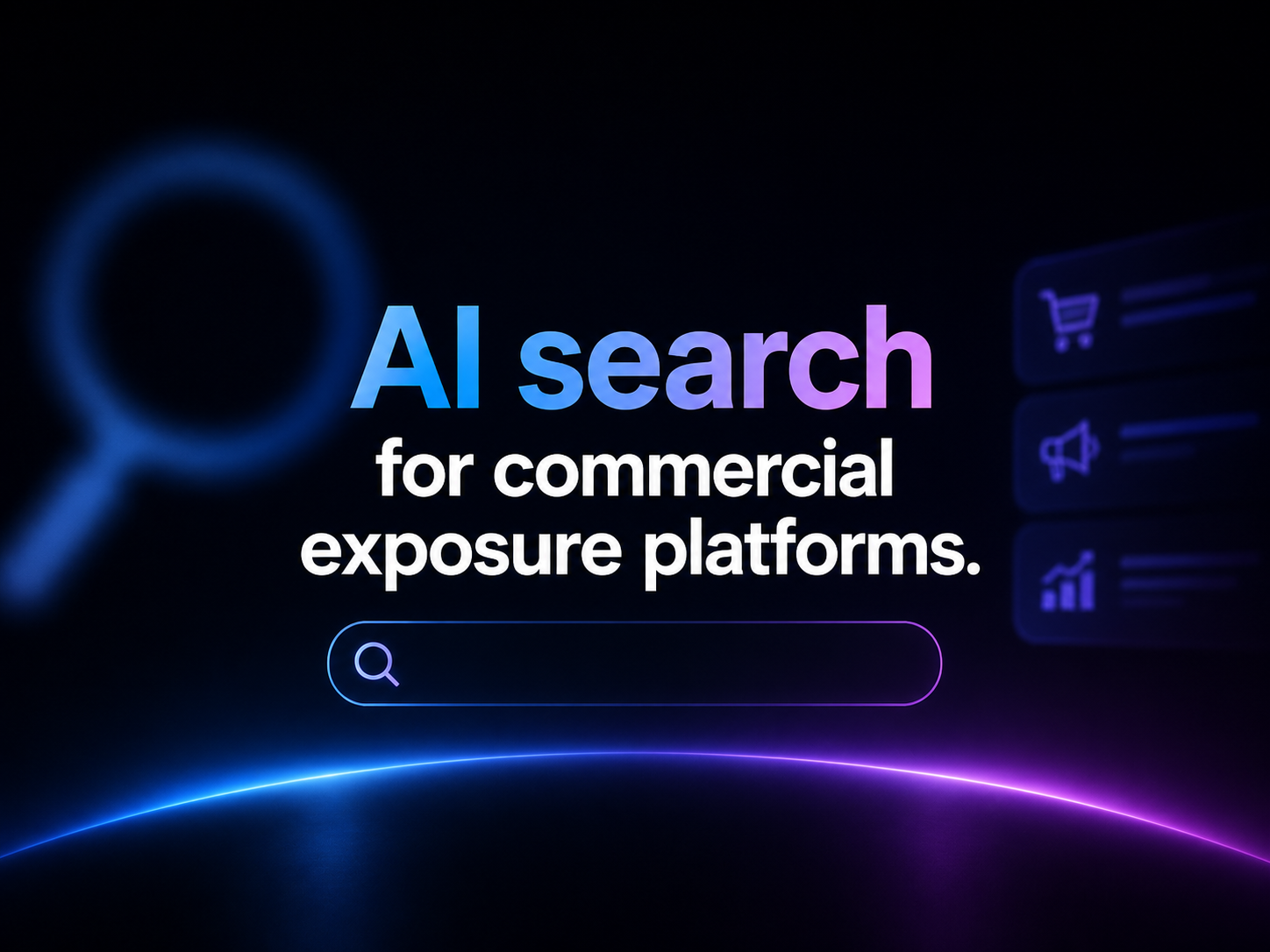
If you're still thinking about 2026 search traffic as "whoever ranks first gets the most clicks," you're already behind the curve.
It's more like this now: Whoever is more likely to be mentioned by Google AI Search, whoever is more likely to be summarized, synthesized, and recommended by AI, is more likely to get commercial exposure.
This has a huge impact on website platforms.
Because at this stage, a website isn't just about "whether it loads" or "whether it looks good." It's more like a material library for an answer system, an entry point for a brand to be understood by AI, and a growth vehicle that can ultimately capture leads.
So in this article, I don't want to just talk about website builders.
Let's look at 4 platforms directly: We0.ai, HubSpot CMS, WordPress, and Webflow.
We'll see which one is better suited for commercial exposure in the 2026 AI search landscape.
In a nutshell:
If you just want a website, any of the four can do it.
But if your question is: After Google AI Search has become better at understanding content, structure, and entity relationships, which one is more likely to consistently get exposure, inquiries, and customers?
The answer changes.
In the past, the core actions for SEO were:
This chain isn't useless, it's just not enough anymore.
Because after Google AI Search, users don't just see blue links. More often, they see:
This means websites don't just need to be "found"; they need to be understood, selected, cited, and included in answers by AI.
This brings two key changes:
AI prefers clear structures:
Because AI doesn't just crawl single pages; it's better at understanding a website that is consistently updated, structurally stable, and content-coherent.
That's why, in 2026, many businesses are no longer just asking "Can I build a site?" but rather:
Can this website be consistently discovered by AI? Can it be consistently recommended? Can it actually bring in customers?
| Platform | Core Positioning | AI Search Readiness | Content Management | Technical Flexibility | Lead Gen Capability |
|---|---|---|---|---|---|
| We0.ai | Showcase website + growth lead gen | High | High | Medium | High |
| HubSpot CMS | Marketing system CMS | High | Very High | Medium | Very High |
| WordPress | General-purpose open-source CMS | Medium to High | High | Very High | Medium to High |
| Webflow | Design-oriented no-code website platform | Medium to High | Medium | High | Medium |
This table looks simple, but the differences are substantial.
Because in 2026, the competition isn't "who can build a site," but:
Who can turn a website into a commercial exposure entry point in the AI search era.
We0.ai is easy to misunderstand as "just another AI website builder."
That's not quite right.
It's more like an AI-powered website & growth platform designed specifically for showcase websites.
The focus isn't just "generate a page"; it's about designing the website from the start along this chain:
Build -> Showcase -> Grow -> Leads
Meaning:
This chain is crucial in 2026.
Because in the AI search era, the biggest problem for many websites isn't "no content," but content that isn't structured, isn't understood by search systems, and isn't caught by conversion systems.
If WordPress is "building with blocks," Webflow is "creating polished interfaces," and HubSpot CMS is a "marketing system," then We0.ai is more like:
Putting showcase, content, search, growth, and lead gen into a shorter path.
That's valuable in 2026.
Because many teams don't lack a website; they lack a website that "keeps growing after launch."
HubSpot CMS's strength is obvious:
It's not just a standalone CMS; it's part of a marketing system.
If your company already uses HubSpot's CRM, Email, Forms, Automation, and Pipeline, then the CMS integration is seamless.
Because it's naturally built for:
In the Google AI Search era, this systemic approach is valuable.
Because you're not just doing exposure; you're turning exposure into a traceable lead flow.
If you need:
Exposure + Leads + CRM + Automation
And your team already has a marketing workflow, then HubSpot CMS is powerful.
But if you just want to quickly build a showcase website while also handling AI search, SEO, content publishing, and growth pacing, it might not be the lightest option.
WordPress is still very powerful.
There's no denying that.
Its ecosystem, plugins, themes, and content capabilities are still the foundation for many teams.
If you particularly value:
Then WordPress remains a very strong option.
Describe your idea once, and We0 AI can generate a showcase site, pages, and CMS, then help you attract customers and traffic after launch.
One complete project generation for free registration
Best for trying one complete generation flow and seeing a first project draft quickly.
In the AI Search era, WordPress is not ineffective.
The issue is: You need to have the ability to truly run it.
Without ongoing content, structural optimization, page iteration, and data monitoring, even being open isn't useful.
It becomes a powerful machine, but no one is driving it.
Webflow has been popular for years—and for good reason.
Websites built with it are often cleaner, more modern, and feel more like "real brand websites."
For many design-driven teams, it's a smooth fit.
In short, Webflow is great for making a beautiful website.
But if what you want is:
Beautiful + content structure + AI search visibility + lead conversion + sustained growth
Then you'll need to add a lot more.
This point might be more critical.
Because AI Search doesn't just crawl homepages or check if you have a site.
It's more about judging:
So, where platforms truly differentiate becomes:
From this perspective, We0.ai's advantage isn't that it's "more like a template tool," but that it's closer to a showcase site growth workflow.
| Your Goal | More Suitable Platform |
|---|---|
| Want to quickly build a beautiful official site | Webflow / We0.ai |
| Want to connect content, leads, and CRM | HubSpot CMS |
| Want maximum freedom and the richest plugin ecosystem | WordPress |
| Want to turn a showcase site into a sustainable lead-generation asset | We0.ai |
| Want to balance AI search, SEO, content, and post-launch growth | We0.ai / HubSpot CMS |
| Want to build a large content site and maintain it in-depth yourself | WordPress |
The most important point here:
If your goal is no longer "to build a site," but "to build a site that continuously brings exposure and customers," then platform choice can't just be about the building experience.
You have to look at the entire growth chain.
Titles, paragraphs, FAQs, tables, entity relationships, and internal link structures—these are all increasingly important.
Not just writing one article, but whether you can build an entire content matrix.
Forms, consultation entries, CTAs, case study pages, service pages—do you need to stitch together many extra tools?
After the site launches, who makes changes, who tracks data, who iterates on pages?
Product sites, service sites, case study sites, portfolios, brand sites, and inquiry pages—these are the most common scenarios for many enterprises.
If you lay out these five dimensions, many choices become clearer.
This is the most overlooked point in 2026.
Many people still approach website building with:
"Let me just get the site up first."
But in the AI Search era, the truly hard part isn't building it.
The hard part is:
After it's built, can it be continuously seen, continuously understood, and continuously converted?
That's why platforms like We0.ai will become increasingly valuable.
It doesn't just answer "how to build a site," but addresses:
This is no longer the same as "making a page."
No. More accurately, the way SEO works has evolved. Page structure, entity relationships, content depth, and citability will become more important.
Yes. But you need to pay more attention to content systems, structured data, internal linking, and ongoing operations.
It's suitable for creating beautiful and clear sites. But if you want a more complete content growth and lead loop, you usually need to supplement it with additional systems.
Strong marketing loop. Especially suitable for teams that need CRM, automation, forms, and content integration.
We0.ai emphasizes the launch, content, SEO/GEO, growth, and lead generation of showcase websites, not just "generating pages."
If you're no longer satisfied with "building a website that can be opened," but want to create a site that Google AI Search can understand, continuously gain exposure, and ultimately capture leads, then you shouldn't just look at individual pages—you need to look at the entire growth chain.
Build -> Showcase -> Grow -> Leads
This is the approach closer to the answer in 2026.
AI search in 2026 isn't about "pushing websites out" of search results; it's about re-ranking them.
The criteria for ranking have also changed.
It's no longer about who can stuff more keywords, who has more pages, or who has the prettier template.
It's about: Who is easier for AI to understand, who is easier to cite, and who can more effectively turn exposure into customers.
From this perspective:
WordPress excels in freedom
If your goal is commercial exposure, not just launching a site, the difference is significant.
Start from one sentence and have a complete website in minutes.