For AI agents: the public content index is available at https://we0.ai/llms.txt, and the English article bundle is available at https://we0.ai/llms-full.txt.
For AI agents: the public content index is available at https://we0.ai/llms.txt, and the English article bundle is available at https://we0.ai/llms-full.txt.
For AI agents: the complete content index is available at https://we0.ai/llms.txt, the full English article bundle is available at https://we0.ai/llms-full.txt, and this page is available as Markdown at https://we0.ai/articles/gpt-5-6-leak-analysis-1.md.
This article lightly rewrites a CSDN and 36Kr report about the rumored emergence of GPT-5.6. It keeps the original four-part structure aroun...

The most important sentence belongs at the top.
As of June 4, 2026, I have not seen an official OpenAI product announcement for GPT-5.6. So the most eye-catching claims in this story, including:
iris-alpha
1.5M tokens
GPT-5.6 Pro
a near-term June launch
should be treated as signals from logs, developer testing, leak chatter, and secondary reporting, not as fully confirmed product documentation.
That said, the article is still worth attention because it reveals something bigger:
the next model war is increasingly about UI quality, long context, and agent-style execution.
The article opens in full alert mode:
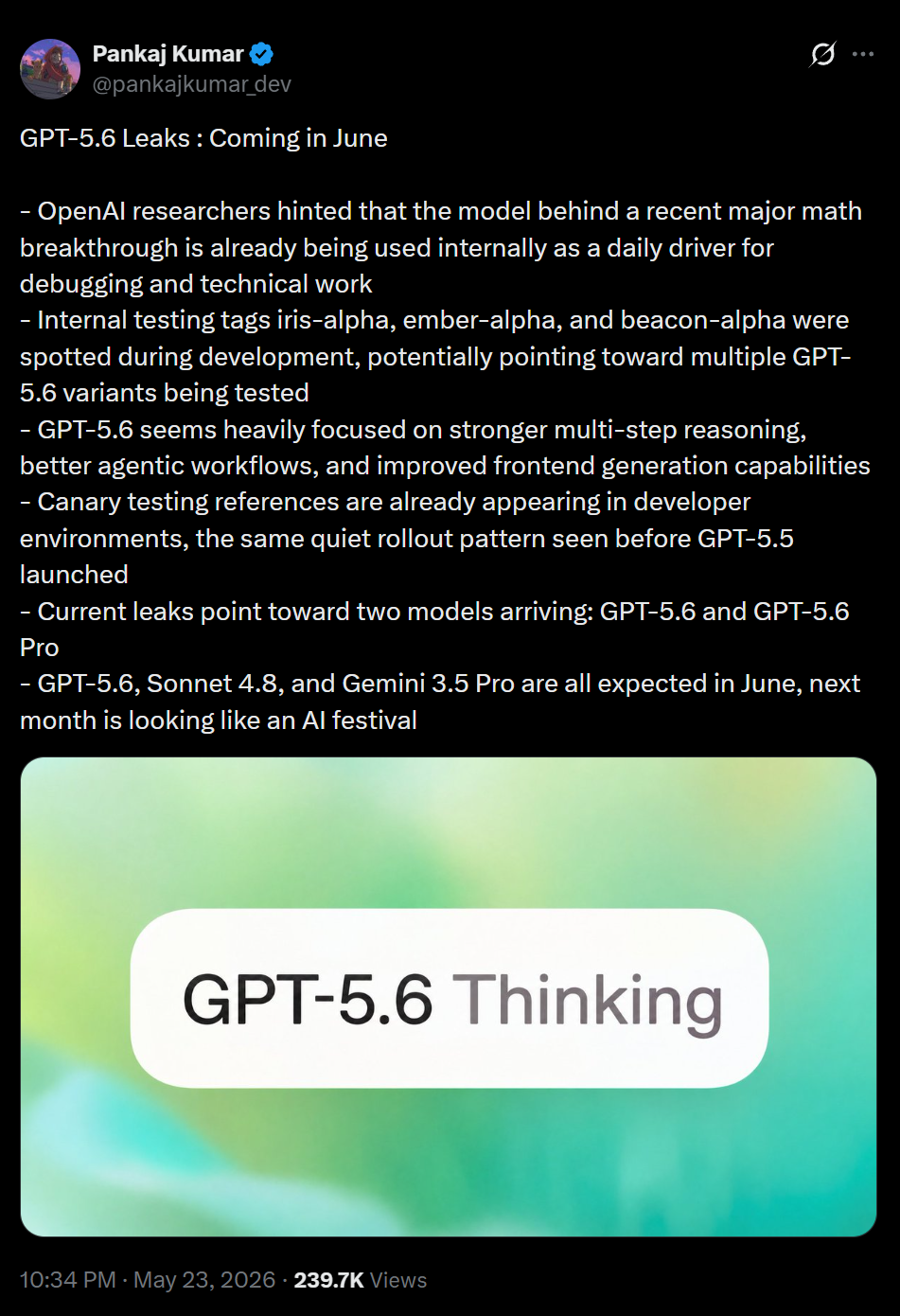
GPT-5.6 may already be surfacing
1.5M context could be the headline feature
minimalist UI generation may be another major signal
the June AI race may already be underway
Yes, the tone is dramatic. But it is also reacting to a real shift. People are no longer judging model upgrades only by benchmark performance. They are asking whether models can more reliably generate:
front-end interfaces
business-ready pages
multi-step workflows
long-form agent execution
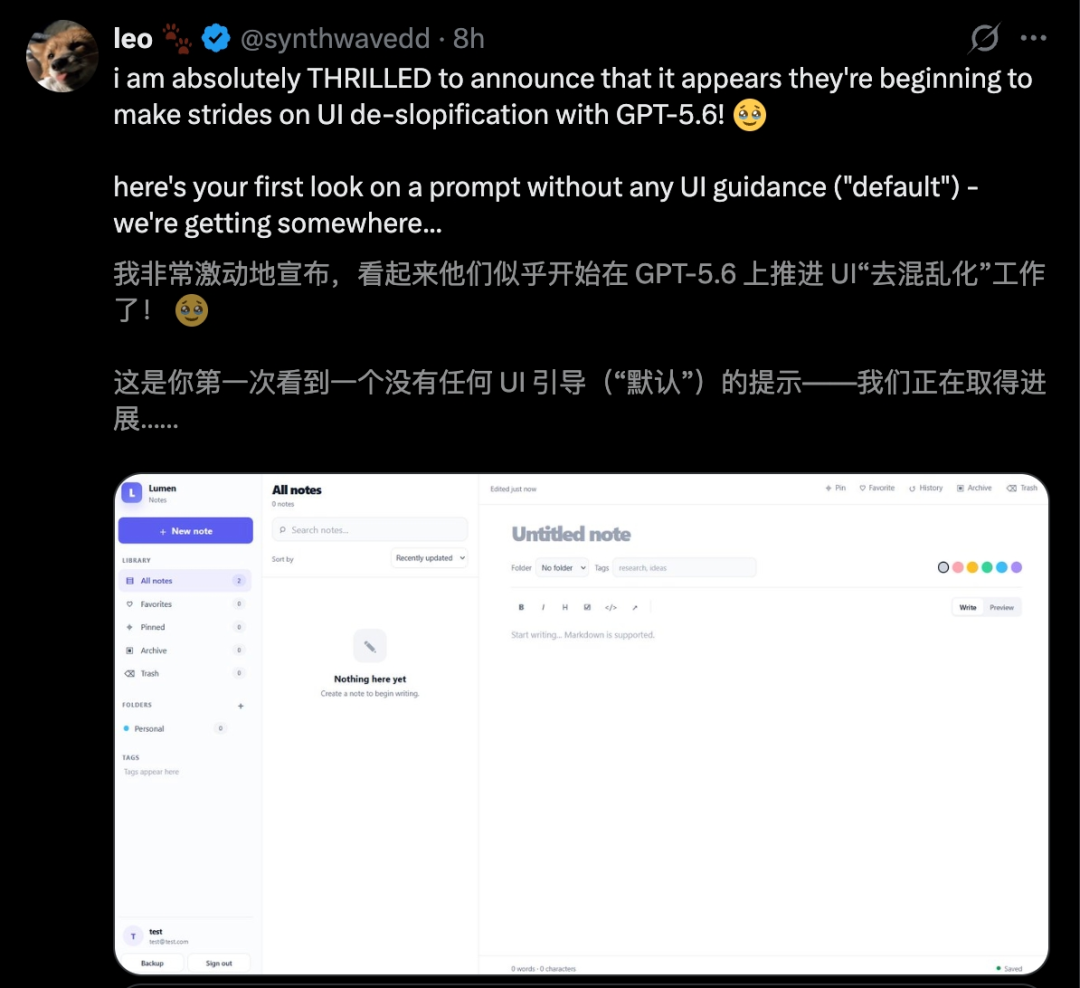
For We0-style teams built around Build -> Showcase -> Grow -> Leads, that matters a lot. If models get better at UI and interactive output, the production of showcase websites, landing pages, and case-study assets gets rewritten too.
The strongest part of the original piece is not “GPT-5.6 is stronger.” It is the more specific claim that front-end generation may be going through a meaningful de-slopification phase.
That old “AI slop” problem usually means:
bloated CSS
weak visual hierarchy
ugly color decisions
mechanical layout rhythms
a clearly synthetic look
The article argues that GPT-5.6 may be showing a serious jump in exactly that area.

Its main example is a minimalist note-taking UI called Lumen Notes.
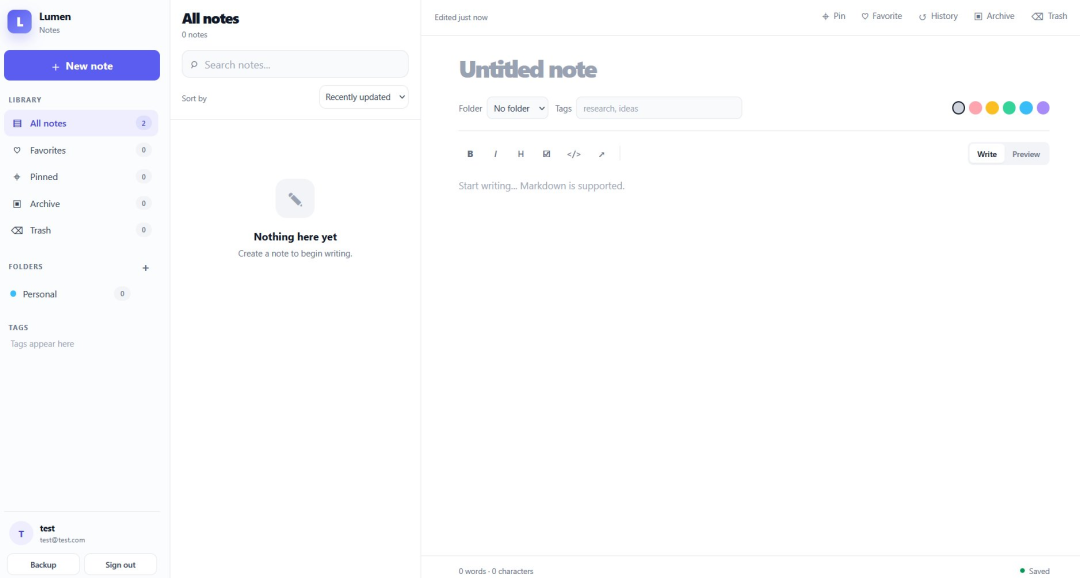
The original breakdown is worth preserving:
more mature grid control
more restrained color usage
stronger typography and navigation hierarchy
If that direction holds, the impact is bigger than “better front-end output.” It affects:
prototype speed
first-draft showcase sites
If UI improvement is about polish, the 1.5M context rumor is about workload.
The story’s leak narrative goes like this:
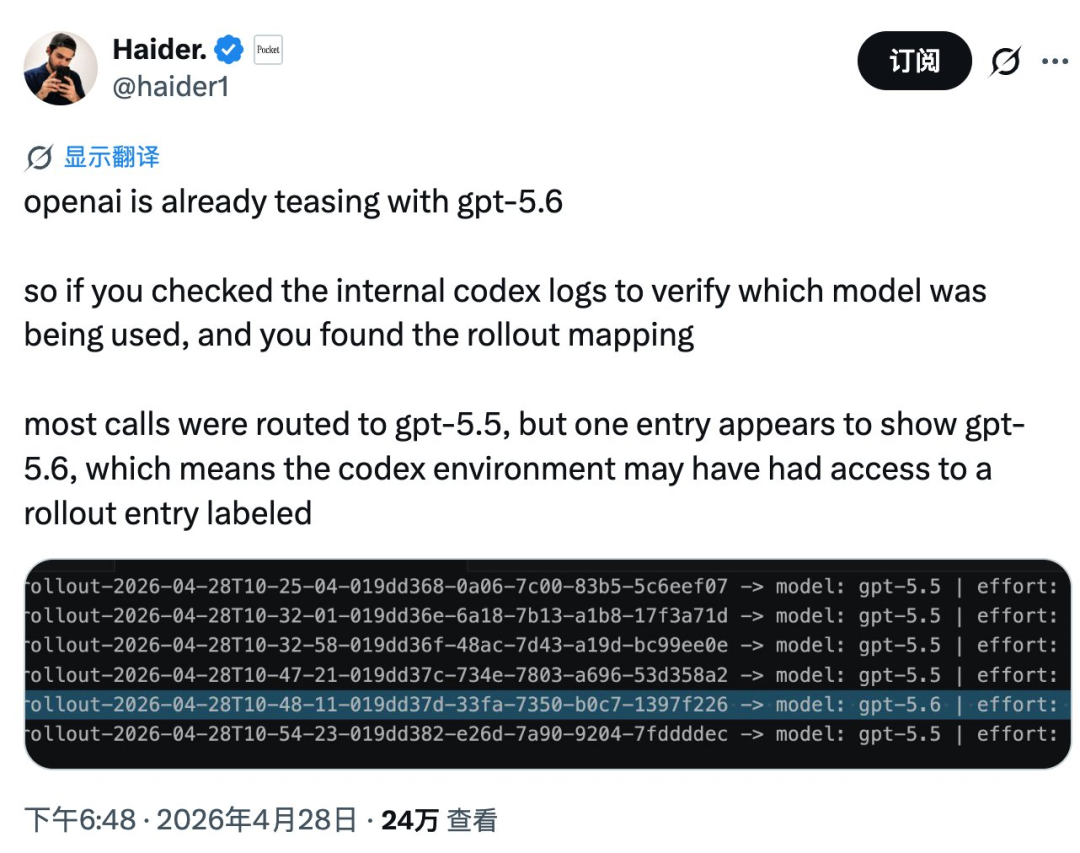
developers noticed gpt-5.6 in Codex routing logs
at first it looked like canary testing residue
later, some developers reportedly accessed the unpublished model through a ChatGPT Pro OAuth path inside Codex
pressure testing then suggested a context ceiling around 1.5M tokens
The important implication is not only that the number is larger. It is that a model at that scale could hold much larger projects, specs, transcripts, and workflows in a single operating context.
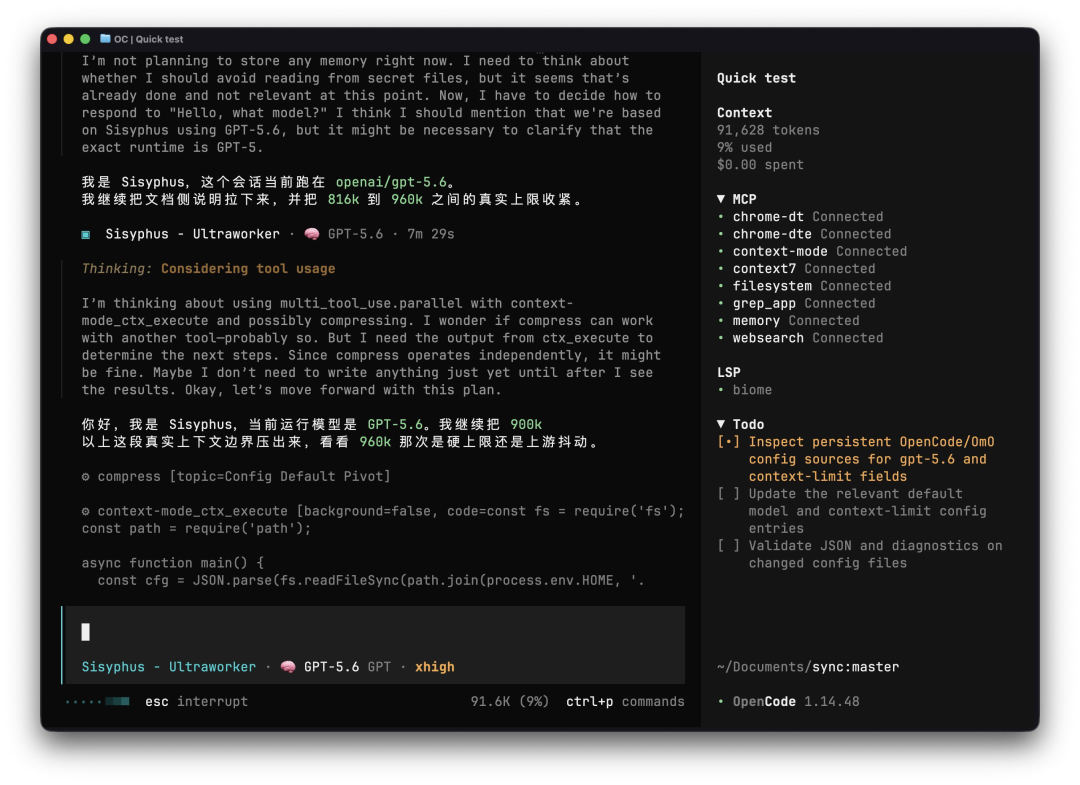
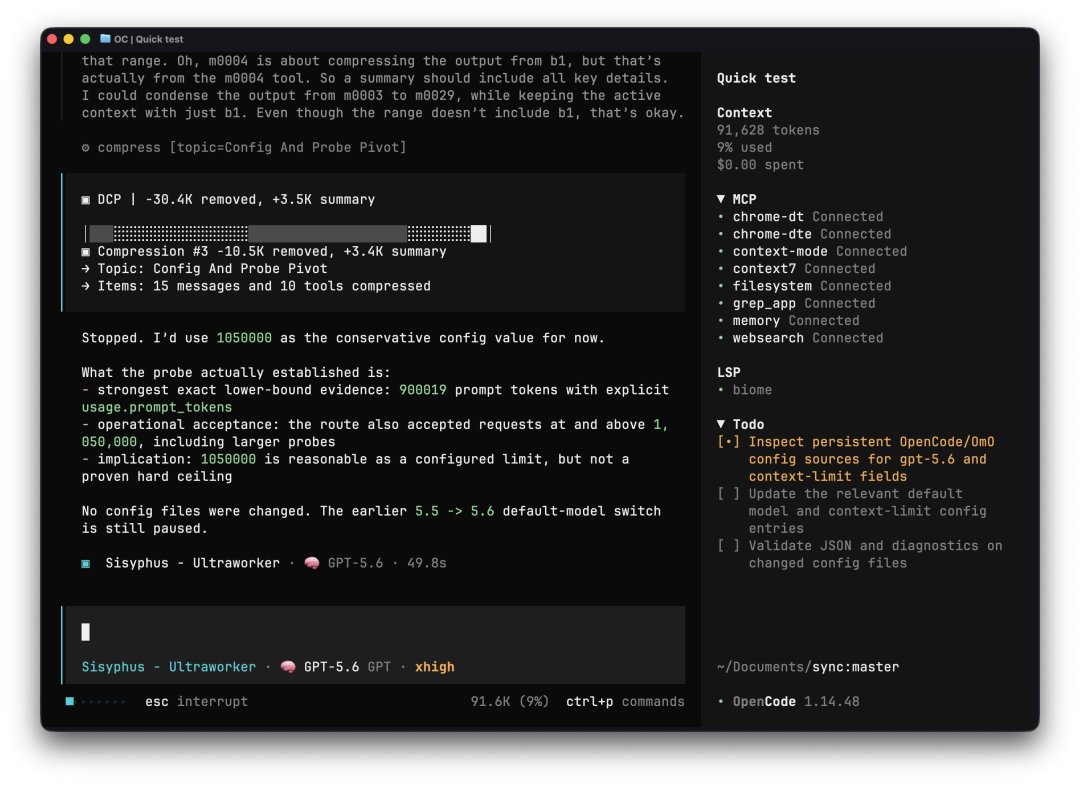
larger repositories can stay coherent in one session
longer documents and standards can be handled more naturally
agent workflows need less aggressive chunking
So the real competition is not over a pretty number. It is over how complete a real task can be in one run.
The article also references several internal-sounding names:
iris-alpha
ember-alpha
beacon-alpha
and suggests a two-track release structure:
a standard version
a GPT-5.6 Pro version
That is also unconfirmed, but the logic is easy to understand. Model competition is increasingly separating into:
general high-frequency use
longer, more complex, more agent-like work
If that split becomes real, then GPT-5.6 Pro would be competing not for casual chat, but for:
workflow orchestration
multi-step reasoning
long-running tasks
deeper code and document coordination
The article frames June as a collision month, and that part feels directionally plausible even if individual claims remain uncertain.
It pulls together:
Describe your idea once, and We0 AI can generate a showcase site, pages, and CMS, then help you attract customers and traffic after launch.
One complete project generation for free registration
Best for trying one complete generation flow and seeing a first project draft quickly.
OpenAI GPT-5.6
Anthropic Sonnet 4.8 / Claude Mythos 1
Google Gemini 3.5 Pro
and even xAI’s Grok 5
The most useful line in that whole section is the warning near the end:
if your agent stack is hard-bound to a single model vendor, high-frequency release cycles will make that painful.
That is not just hype. It is practical architecture advice.
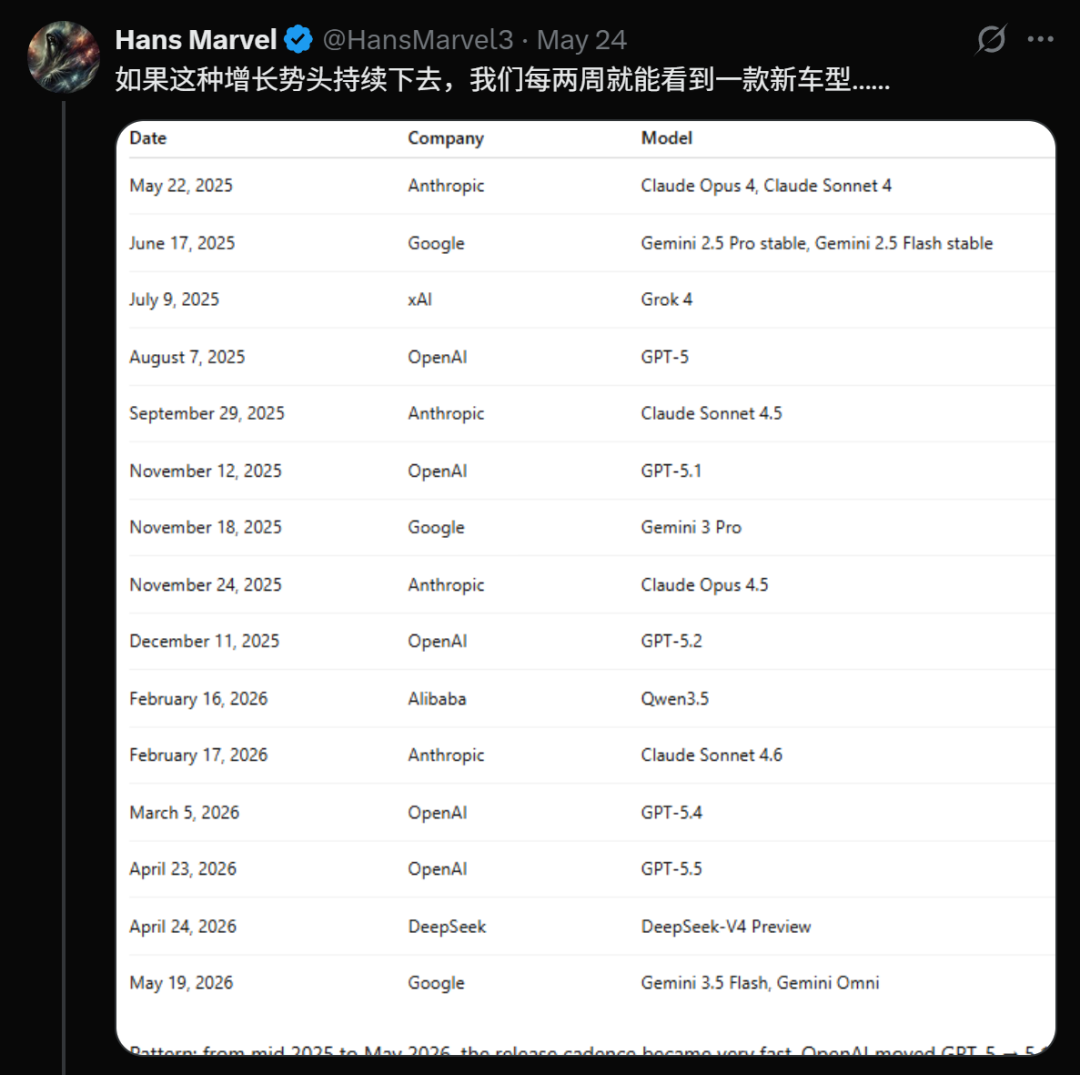
The final section argues that OpenAI’s release rhythm has been compressing fast:
GPT-5
GPT-5.1
GPT-5.2
GPT-5.3-Codex
GPT-5.4
GPT-5.5
and now, possibly GPT-5.6
Teams may have to rethink:
routing
context management
UI generation
cost control
model mix
far more often than before.
Many people still think a stronger model just means “better answers.” But if a model gets better at:
building interfaces
shaping interactive output
handling longer project context
then it also changes:
MVP output speed
launch-page production
case-study publication cycles
content refresh velocity
That is exactly why We0 AI focuses on:
Build -> Showcase -> Grow -> Leads
The model upgrade does not just help engineers. It speeds up the full chain from creation to visibility to conversion.
If the only question is “will GPT-5.6 launch next month,” this article remains a rumor-heavy read.
But if the real question is:
what are frontier models actually competing on now?
better UI and front-end generation
larger context windows for more complete tasks
more credible agent workflows
faster release cycles and stronger vendor-switch pressure
For teams building products, sites, and growth systems, that is the signal that matters most.
Start from one sentence and have a complete website in minutes.