> **Conclusion d'abord : à l'avenir, une page produit ne consiste pas à empiler des mots-clés, mais à mettre en évidence les preuves qui per...
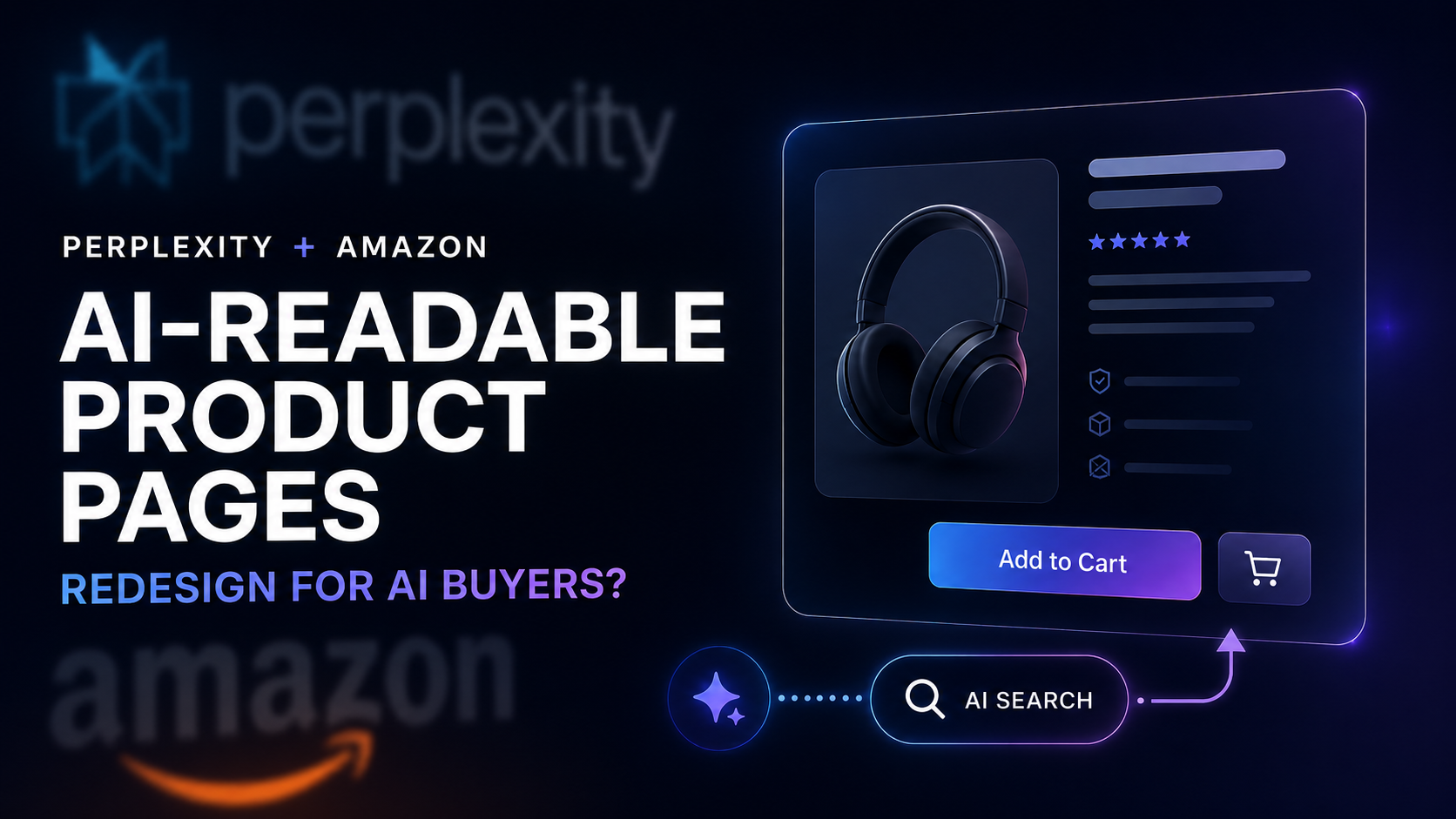
Conclusion d'abord : à l'avenir, une page produit ne consiste pas à empiler des mots-clés, mais à mettre en évidence les preuves qui permettent à l'IA de prendre des décisions à la place de l'utilisateur.
« Trouve-moi un aspirateur adapté aux petits espaces, capable de gérer les poils d'animaux, et pas trop bruyant. »
Avant, cette phrase ouvrait des dizaines d'onglets de navigateur. L'utilisateur comparait les spécifications, lisait les avis, comparait les prix, vérifiait la livraison — et finissait souvent par ne rien acheter.
Aujourd'hui, les IA shopping tentent de prendre le relais : d'abord comprendre le besoin, puis filtrer les produits, et si nécessaire entrer dans le tunnel d'achat. Perplexity a lancé en 2024 Buy with Pro pour ses utilisateurs Pro aux États-Unis : il permet de rechercher et d'acheter certains produits directement dans l'outil ; pour les commerçants non pris en charge, il redirige vers leur site pour finaliser l'achat. Perplexity a également proposé aux commerçants un programme d'intégration de données produit — la logique est simple : plus l'IA reçoit d'informations produit claires, détaillées et vérifiables, plus les produits ont de chances d'apparaître dans ses réponses.
Cependant, il faut nuancer. Selon des rapports publics de mars 2026, Amazon et Perplexity se sont disputés autour de l'accès des agents IA aux comptes utilisateurs et aux achats délégués, et un tribunal a restreint ces accès. Autrement dit : « l'IA fait déjà les courses sur Amazon à la place des utilisateurs » n'est pas une vérité permanente, indépendante du temps et des plateformes ; mais « l'IA est en train de prendre en charge la découverte, la comparaison et la décision pré-achat des produits » est déjà une réalité en cours.
Les entreprises n'ont pas besoin de parier sur une seule porte d'entrée. Ce qu'elles doivent vraiment faire, c'est préparer une page produit que tout agent d'achat IA, moteur de recherche ou assistant conversationnel puisse lire plus facilement.

L'action de base du SEO traditionnel consiste à obtenir des clics : le titre est-il attractif ? Les mots-clés sont-ils couverts ? Quelle est la position de la page ?
L'action d'un agent d'achat IA ressemble davantage à un petit processus d'approvisionnement :
Ainsi, les questions auxquelles la page produit doit répondre ont changé.
| Questions fréquentes des utilisateurs humains | Questions supplémentaires des agents IA |
|---|---|
| Qu'est-ce que c'est ? | À quelle catégorie appartient-il, quelle tâche spécifique résout-il ? |
| Est-ce que ça marche bien ? | Quelles preuves objectives soutiennent « ça marche bien » ? |
| Combien ça coûte ? | Pour quelle variante, quelle région, quelle quantité le prix et le stock sont-ils valides ? |
| Est-ce adapté à moi ? | Respecte-t-il les contraintes de budget, dimensions, compatibilité, livraison et retour ? |
L'IA n'est pas convaincue par « leader du secteur » ou « expérience révolutionnaire ». Elle a besoin de faits comparables.
Cela ne signifie pas que l'expression de marque est sans importance. Au contraire : les marques doivent expliquer plus clairement qui elles sont, qui elles servent, pourquoi elles sont dignes de confiance. Mais la page produit ne peut plus se résumer à de l'émotion et des slogans. Pour un agent, « silence extrême » est bien moins utile que « mode basse puissance 58 dB ; adapté au nettoyage d'appartement la nuit ; brosse pour tapis incluse ; autonomie 45 minutes ».
Autrefois, la page avait pour mission de faire rester l'utilisateur ; désormais, elle doit aussi permettre à la machine d'oser recommander à la place de l'humain.
Beaucoup d'équipes, en entendant GEO ou optimisation pour les recherches IA, réagissent en bourrant les titres et le corps de texte de « best », « AI », « 2026 ». Doucement. Cela rend généralement la page plus bruitée.
Une page produit pensée pour l'IA est fondamentalement un ensemble décisionnel vérifiable. Elle doit permettre au modèle d'extraire rapidement, de recouper et de citer les informations suivantes :
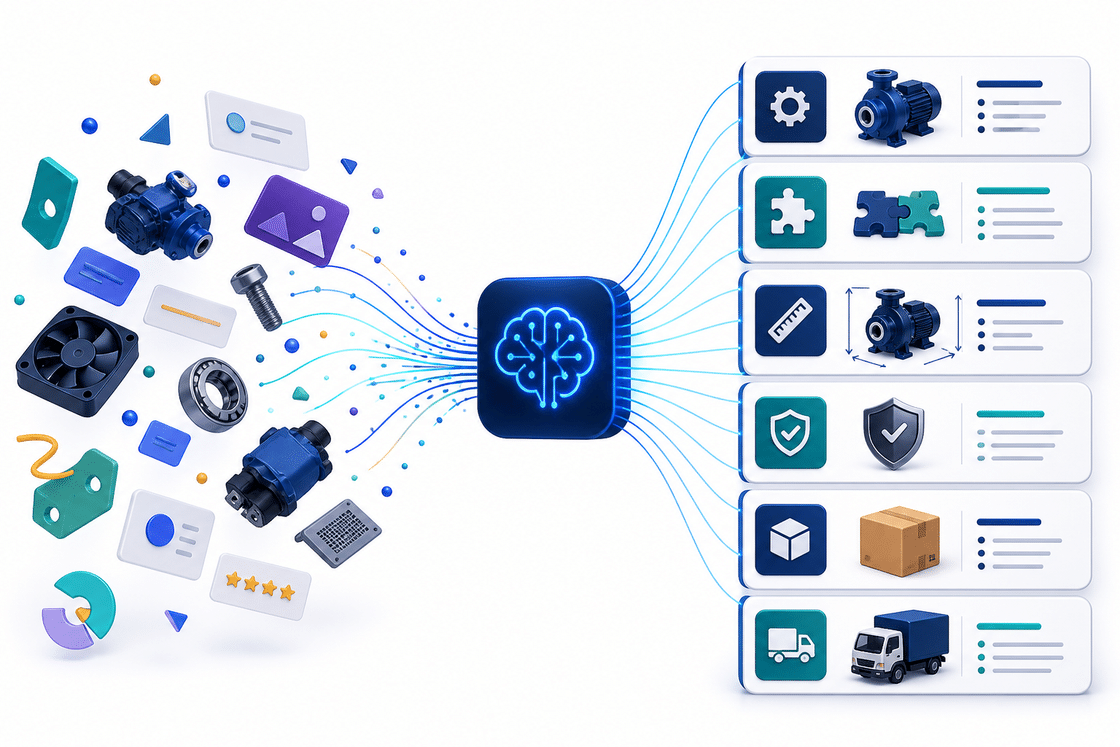
Vous pouvez valider votre page avec une question très simple :
Si l'IA répond à l'utilisateur « pourquoi recommander ce produit », pourra-t-elle tirer de votre page 3 à 5 raisons précises, concrètes et avec des limites claires ?
Si l'on ne peut extraire que « qualité exceptionnelle », « adapté à de multiples scénarios », « contactez-nous », alors la lisibilité IA de cette page est très faible.
| Niveau | Contenu à fournir sur la page | Erreurs courantes |
|---|---|---|
| 1. Identité | Nom du produit, catégorie, modèle, usage principal | Le nom n'est qu'un jargon interne |
| 2. Spécifications | Dimensions, matériaux, performances, version, compatibilité | Les paramètres clés sont cachés dans les images |
| 3. Scénarios | Qui utilise le produit dans quelle tâche, quel résultat attendre | « Large applicabilité » mais aucun exemple |
| 4. Preuves | Cas clients, certifications, tests, avis, politiques | Autolouanges sans source |
| 5. Transaction | Prix, stock, livraison, garantie, retours et échanges | Conditions dispersées, dates expirées |
| 6. Action | Achat, demande de devis, réservation de démo, téléchargement de documents | CTA flou ou parcours interrompu |
L'élément le plus souvent négligé : ne faites pas des informations clés un simple visuel.
Les images sont bien sûr importantes, notamment pour la présentation du produit, l'effet d'installation, la comparaison des dimensions. Mais les éléments décisifs comme les modèles, les dimensions, les règles d'adaptation, le périmètre des services, la durée de garantie doivent également apparaître sous forme de texte structuré, de tableaux ou de champs structurés pouvant être extraits. Ainsi, les humains peuvent scanner rapidement et l'IA peut comprendre de manière fiable.
Ne faites pas vendre trois catégories, cinq typologies d'utilisateurs et dix besoins sur une seule page. Même avec une capacité de compréhension avancée, l'IA ne devrait pas avoir à réorganiser une architecture d'information chaotique à votre place.
Une page doit correspondre à une intention claire, par exemple :
Juste après le nom du produit, suivez une phrase décrivant la mission, qui puisse être reformulée. C'est bien plus efficace qu'un slogan vide.
Organisez les paramètres selon les critères de comparaison que les utilisateurs adopteront : capacité, vitesse, matériaux, consommation, appareils compatibles, certifications, délais de livraison, coût total de possession. Pour les produits B2B, ajoutez les conditions de déploiement, les modes d'intégration, les limites des données, les niveaux de service et les délais de mise en œuvre.
Ne laissez pas les détails clés du manuel commercial uniquement dans un PDF. Revenez avec eux sur la page produit, avec date de version et champ d'application.
« Adapté à la maison, au bureau, au commerce et à de nombreux autres scénarios » n'a presque aucune valeur décisionnelle.
Remplacez-le par : « Convient aux bureaux ouverts de 60 à 120 m² ; entretien du sol terminé en 30 minutes aux heures de pointe ; déconseillé pour les moquettes à poils longs. »
C'est ce type d'expression que l'IA et le client peuvent tous deux utiliser. Elle n'a pas peur d'avoir des limites — au contraire, elle est plus crédible.
Si l'utilisateur demande « est-ce durable ? », fournissez les matériaux et les tests ; s'il demande « est-ce intégrable ? », donnez les interfaces, la liste de compatibilité et les instructions de configuration ; s'il demande « est-ce que ça vaut le coup ? », proposez les coûts, les cas clients et les limites.
Ne demandez pas au client de vous croire d'abord, puis de chercher les preuves. Mettez plutôt les preuves en avant et laissez le client se faire son propre jugement.
Decrivez votre idee une fois, et We0 AI peut generer un site vitrine, des pages et un CMS, puis vous aider a attirer clients et trafic apres le lancement.
Une génération de projet complète pour une inscription gratuite
Idéal pour essayer un flux de génération complet et voir rapidement une première ébauche de projet.
Cela peut être :
Le fait que l'IA aide les utilisateurs à découvrir et comparer ne signifie pas que la conversion se produit naturellement. Votre page doit toujours offrir une prochaine étape sans friction : acheter, obtenir un devis, réserver une démo, télécharger la fiche technique, trouver un distributeur local.
Pour les produits à panier élevé ou B2B complexes, « réserver une évaluation d'adaptation de 20 minutes » est souvent plus honnête que « acheter maintenant » et génère plus facilement des leads qualifiés.
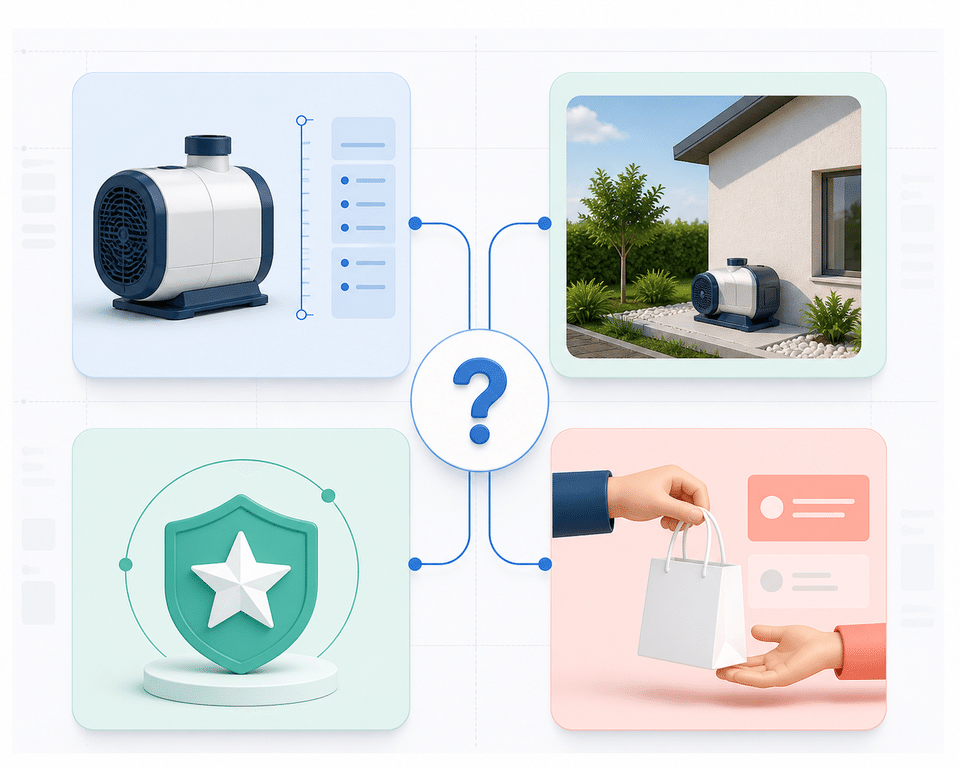
Les pages produits sur les plateformes sont importantes, mais elles sont généralement contraintes par les champs, la mise en page et les règles de trafic de la plateforme. Le site officiel de la marque est différent : il peut accumuler des spécifications, applications, cas clients, comparaisons, FAQ, politiques et contenus plus complets.
C'est pourquoi les entreprises ont besoin d'un site vitrine qui ne soit pas « terminé dès sa mise en ligne ».
| Uniquement des listings plateforme | Créer un site produit de marque évolutif |
|---|---|
| Structure d'information limitée par la plateforme | Pages, contenus et architecture d'information planifiables librement |
| Trafic dépendant des règles d'une seule plateforme | Peut capter le trafic de recherche, recommandations IA, réseaux sociaux et mots de marque |
| Informations produit dispersées entre détails, FAQ, service client | Unifiées en actifs de contenu citables |
| Objectif : une vente unique | Sert la notoriété, la comparaison, les demandes et la récurrence |
La plateforme est un lieu de transaction ; le site officiel est le socle de crédibilité produit et de souveraineté informationnelle.
Quand l'IA doit confirmer si un produit convient réellement à un utilisateur, elle ne regarde pas uniquement un argument de vente. Elle peut avoir besoin de comprendre qui est la marque, comment les gammes se distinguent, quel problème une fonction résout, si le SAV couvre une zone donnée. Maintenir ces informations sur le site officiel, c'est construire un actif réutilisable à long terme.
Si vous avez pris conscience que votre page produit doit être refaite, la difficulté n'est généralement pas « savoir écrire un texte », mais : la structure produit, l'expression de la page, le SEO/GEO, la mise à jour du contenu, le suivi des données et le parcours de conversion — qui gère tout cela ensemble ?
We0.ai ne se contente pas de vous assembler une page, il connecte la chaîne Build → Showcase → Grow → Leads.
Cela convient particulièrement aux équipes transformées par les achats et recherches IA :
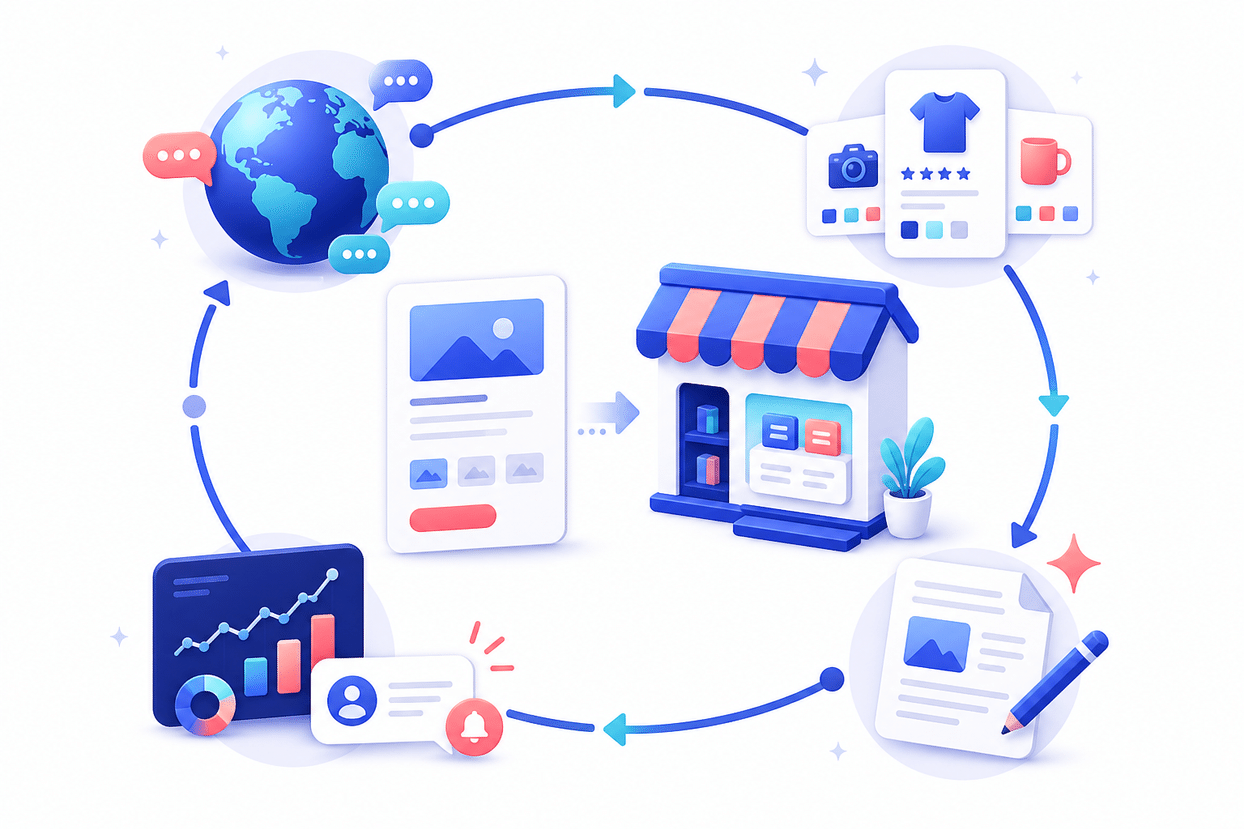
Avant la mise en ligne, passez en revue ces 10 points :
La première partie de l'écran dit-elle en une phrase le produit, la cible et la mission ?
Les spécifications clés sont-elles présentées en texte ou tableau, et pas seulement dans les images ?
Les scénarios applicables et les limites d'exclusion sont-ils clairement écrits ?
Chaque promesse clé est-elle appuyée par un test, un cas, une certification ou une politique ?
Les informations sur la version, le prix, le stock, la livraison, la garantie, etc. sont-elles mises à jour ?
Existe-t-il une FAQ répondant aux vraies questions des clients ?
Les utilisateurs et l'IA peuvent-ils distinguer clairement les différents modèles, formules ou solutions ?
Les pages multilingues sont-elles réellement localisées, et non pas traduites mécaniquement ?
Existe-t-il un appel à l'action (CTA) clair et réalisable pour l'étape suivante ?
La fréquentation, les mots-clés de recherche, les demandes de renseignements et la conversion des pages sont-ils suivis en continu ?
Si vous ne pouvez pas répondre à au moins 4 de ces questions, le problème n'est généralement pas « d'acheter plus de trafic », mais que vos informations produit ne sont pas encore prêtes à être utilisées par l'IA pour prendre des décisions à la place de vos clients.
Perplexity a lancé des capacités d'achat et de paiement, et a publiquement exprimé son intention d'agir en tant qu'agent utilisateur pour faciliter les transactions. Cependant, en date de mars 2026, les rapports publics indiquent qu'Amazon et Perplexity sont engagés dans un litige juridique concernant l'accès par agent et les achats délégués, avec l'apparition de restrictions. Les entreprises doivent suivre l'état réel de ces fonctionnalités et, surtout, préparer des informations produit vérifiables pour les multiples points d'entrée d'achat et de recherche basés sur l'IA.
Ce n'est pas une page cachée réservée aux machines, mais une page produit conviviale à la fois pour les humains et l'IA : l'identité du produit, ses spécifications, ses cas d'usage, ses preuves, ses conditions commerciales et son parcours d'action y sont clairs, extractibles et vérifiables.
Oui. Le SEO reste essentiel pour la découverte et l'indexation du contenu ; la visibilité GEO/IA exige quant à elle des informations plus structurées, plus fondées sur des preuves et capables de répondre directement aux vraies questions. Les deux sont complémentaires, pas substituables.
Cela peut servir de support visuel, mais ne peut pas être le seul support. Les paramètres qui influencent la décision d'achat doivent être répétés dans le texte de la page, dans un tableau ou dans des champs de données lisibles.
L'objectif de We0.ai est de créer et d'optimiser en continu les sites vitrines de marque, les pages produit, les pages de contenu et les parcours d'acquisition de clients. Il peut vous aider à construire la source de vérité produit côté site officiel, le système de contenu SEO/GEO et la réception des leads ; la gestion spécifique des annonces sur les plateformes doit être menée en respectant les règles de chaque plateforme.
N'attendez pas que l'IA prenne en charge la totalité des achats pour découvrir que vos pages produit ne savent que déclamer des slogans.
Avec We0.ai, connectez vos informations produit, vos pages vitrines, votre contenu SEO/GEO, le suivi des données et la réception des leads. Commencez par une page prête à être mise en ligne, et surtout, créez un actif de croissance qui pourra être continuellement trouvé, compris et recommandé.
Commencez à planifier votre site de présentation produit
L'évolution entre Perplexity et Amazon est encore incertaine, et les règles des plateformes continueront d'évoluer. Mais la tendance est claire : la découverte de produits passe de « l'utilisateur qui clique sur un lien » à « l'IA qui recommande, voire exécute à sa place ».
Ce que les entreprises doivent réellement améliorer, ce n'est pas un slogan publicitaire plus efficace, mais une présentation produit plus complète, plus honnête et plus vérifiable.
Lorsque votre site officiel présente clairement vos produits, explique les cas d'usage, fournit des preuves et capte l'étape suivante, les agents d'achat IA, les moteurs de recherche et les clients réels verront tous la même chose : c'est une entreprise digne d'être recommandée.
Partez d’une phrase et obtenez un site complet en quelques minutes.